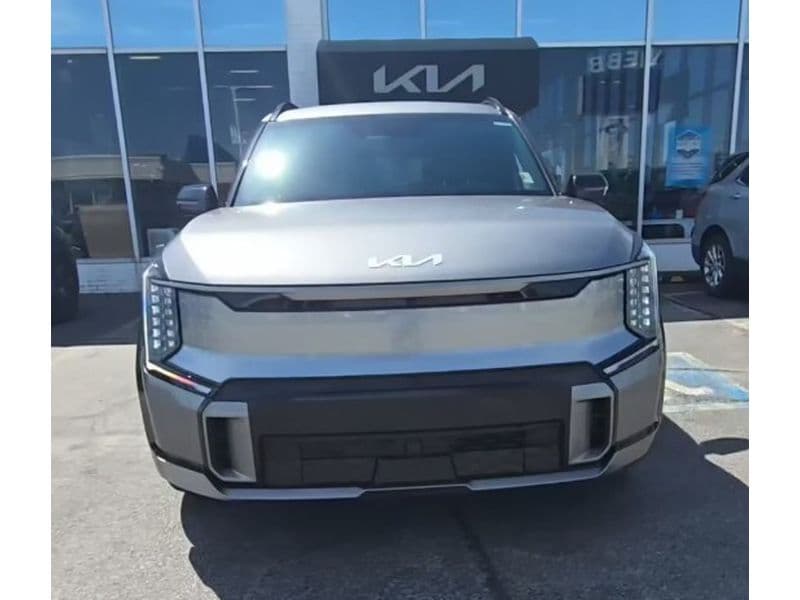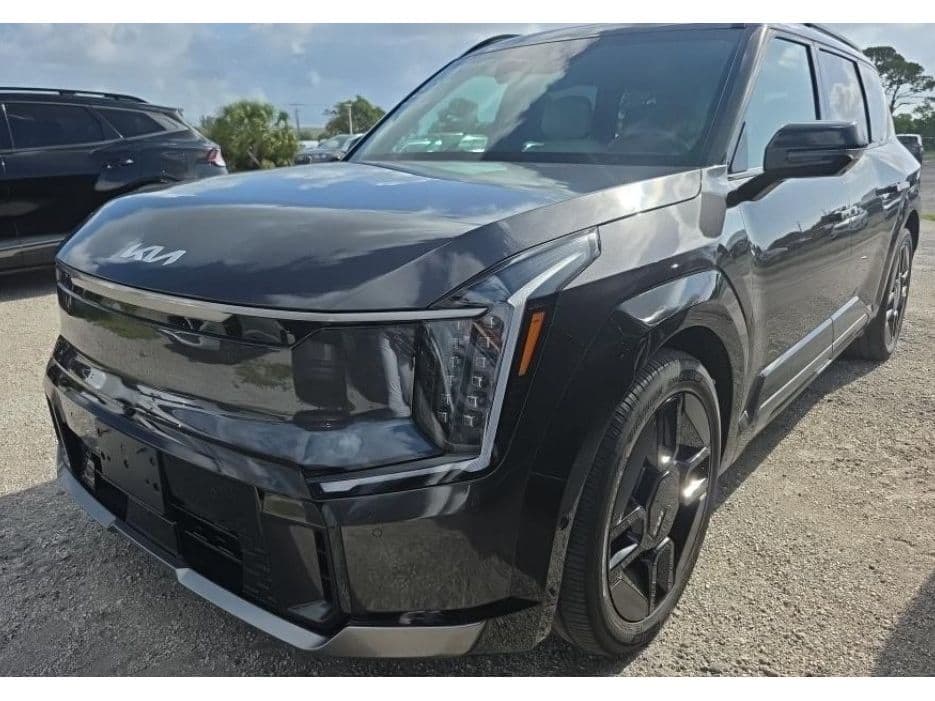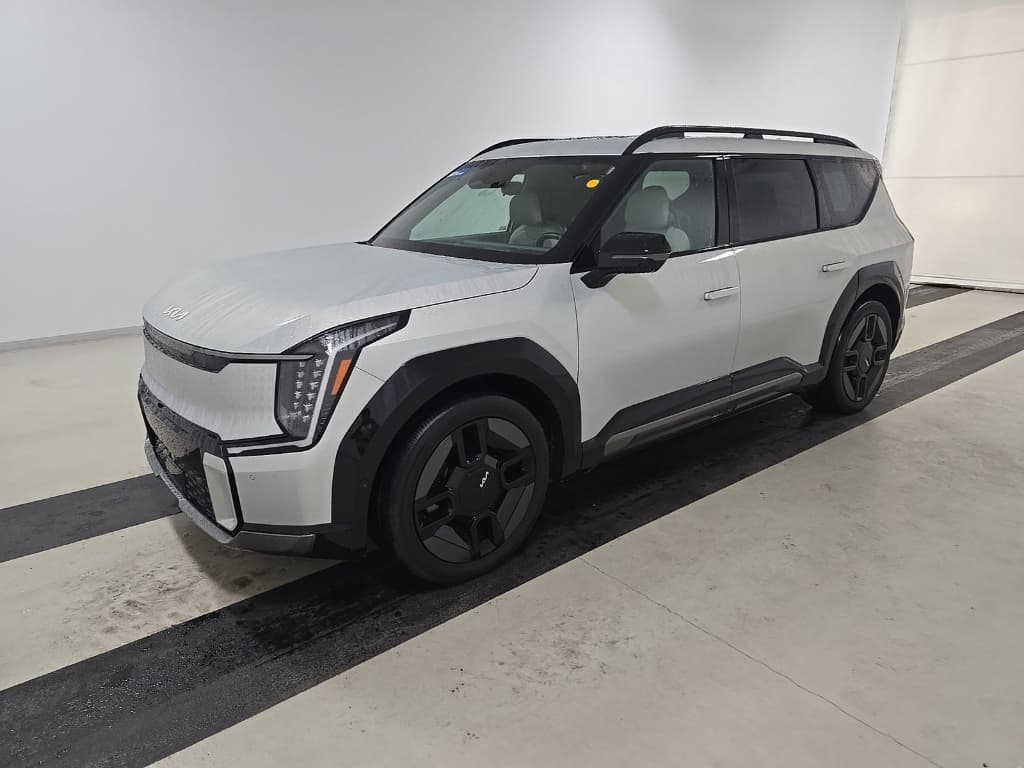
If you’re looking at a Kia EV9 or already own one, you’re probably wondering: can you charge a Kia EV9 at a Tesla Supercharger, and what kind of Tesla Supercharger connector do you actually need? In 2025, the answer is finally “yes” for most EV9 drivers in the U.S., but the details depend on your model year and which connector is on your SUV.
Quick answer
Can you charge a Kia EV9 at a Tesla Supercharger?
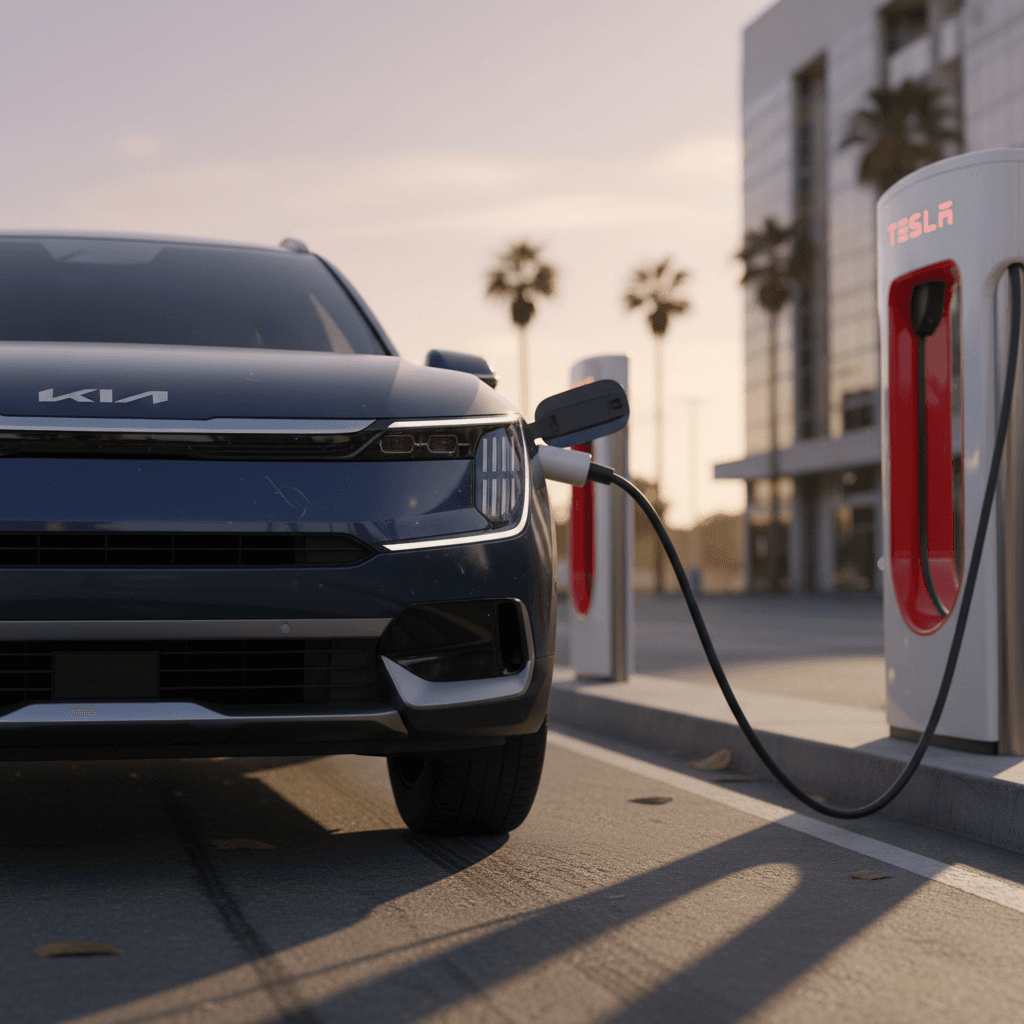
As of mid-2025, Kia has officially enabled EV9 access to over 21,500 Tesla Supercharger stalls across the U.S. and Canada. That means in practical terms, you can now plan trips in your EV9 assuming you’ll be able to use a significant portion of the Supercharger network, not just CCS fast chargers.
- If you own an early EV9 with a CCS1 port, you’ll need Kia’s official CCS1-to-NACS adapter to plug into a Tesla Supercharger connector.
- If you buy a newer EV9 with a native NACS port (starting with the 2026 model year), you’ll plug directly into the Supercharger, no adapter required.
- In both cases, you authorize and pay for charging through Kia’s software (Kia Access / Kia Connect), not by swiping a credit card at the station.
Not every Supercharger is open
How Tesla Supercharger connectors work (NACS vs CCS)
To understand what you need for your EV9, it helps to know what’s hanging from the Supercharger pedestal. Historically, Tesla used a proprietary connector that’s now known as the North American Charging Standard (NACS). Most non-Tesla EVs sold before 2025 use the bulkier CCS1 plug for DC fast charging.
Tesla Supercharger connector vs Kia EV9 inlet
Two pieces of hardware that need to speak the same language
Tesla NACS plug (Supercharger cable)
- Compact, lightweight connector
- Used on most U.S. Tesla Superchargers
- Handles AC and DC through the same port
- Now being adopted by multiple non-Tesla brands
Kia EV9 charge port
- Early EV9s: CCS1 DC fast-charging inlet
- 2026 EV9+: native NACS inlet from factory
- With adapter, CCS1 EV9 can mate to NACS plug
- Electronics inside the car handle the handshake & charging logic
When people talk about a Tesla Supercharger connector, they usually mean the NACS plug on the end of the Supercharger cable. Your EV9 either needs that same NACS-shaped inlet, or a properly engineered adapter between NACS and your CCS1 port, to make the physical connection. Kia’s adapter also includes the right signaling so the EV and charger can agree on voltage, current, and billing.
Which Kia EV9 models can use Tesla Superchargers?
Kia has staged this rollout over several model years. The good news is that all EV9s sold in the U.S. are designed for high-power DC fast charging, and most can now access the Tesla network once you match the connector properly.
Kia EV9 Supercharger compatibility by model year
Check which connector and adapter your EV9 needs to use Tesla Superchargers.
| EV9 model year | Charge port on vehicle | Tesla connector solution | What you need |
|---|---|---|---|
| 2024 EV9 | CCS1 | NACS via Kia CCS1→NACS adapter | Buy or claim Kia NACS adapter; activate access in Kia app |
| 2025 EV9 | CCS1 (most trims) | NACS via Kia CCS1→NACS adapter | Same as 2024; some late-build units may transition, check window sticker |
| 2026 EV9+ | Native NACS port | Direct NACS connection | No adapter for Superchargers; still may use CCS with separate adapter if offered |
Always confirm details with your dealer and in Kia’s latest documentation, as connector plans can evolve.
Buying used? Check the port first
How to charge a Kia EV9 at a Tesla Supercharger: step-by-step
Step-by-step: using a Tesla Supercharger with your EV9
1. Make sure you have the right hardware
If your EV9 has a CCS1 port, keep the Kia-branded CCS1-to-NACS adapter in the trunk or charge-cable bag. If it has a NACS port (2026+), no adapter is needed for most Superchargers.
2. Enable access in the Kia app
Log into the Kia Access / Kia Connect app and make sure your EV9 is linked, charging is enabled, and a valid payment method is on file. Some owners also need to enroll in a Supercharger or ‘Charge Pass’ program inside the app.
3. Find an open, supported Supercharger
Use your EV9’s built-in navigation or the Kia app to search specifically for Superchargers that support your vehicle. This filters out older or restricted sites and shows live stall availability and pricing where available.
4. Park carefully and connect
Back in so the Supercharger cable comfortably reaches your EV9’s charge port. Plug the NACS connector directly into your EV9 (NACS models) or into your Kia NACS adapter first, then into the car (CCS models). Avoid sharp bends or pulling the cable tight.
5. Start the session
On most supported sites, the session will start automatically after a short handshake, and you’ll see charging status in your EV9’s cluster and in the Kia app. If prompted, confirm the stall in the app.
6. Monitor and disconnect
Watch the charge curve for the first few minutes. When you’re near your target state of charge, often 80% on road trips, stop the session in the app, press the button on the connector (if present), and gently remove the plug. Stow the cable back in the pedestal.
Charging speeds: what to expect in your EV9
A big three-row SUV like the EV9 lives or dies on road trips based on charging speed. The EV9’s battery and 800-volt E-GMP platform are engineered for high-power DC fast charging, and Tesla’s newer Superchargers can take advantage of that, within the limits of your adapter and the site hardware.
Kia EV9 + Tesla Supercharger: ballpark numbers
Cold weather caveat
Costs and billing: using Tesla Superchargers with a Kia EV9
Pricing at Tesla Superchargers varies by location, time of day, and sometimes by membership or promotional programs. With a Kia EV9, the important thing to know is that billing flows through Kia’s ecosystem once Supercharger access is fully activated for your account.
- You typically don’t pay at the charger itself; instead, sessions are tied to your Kia account and billed to the card you set up in the app.
- Many Superchargers use time-of-day pricing, with off-peak rates late at night or mid-day and higher rates during local peaks.
- Supercharger prices are often competitive with other DC fast-charging networks, and sometimes cheaper, but it’s worth comparing in your route-planning app.
Compare rates in advance
Tesla Superchargers vs other fast chargers for EV9 owners
Tesla Superchargers
- Pros: Dense coverage along major U.S. corridors, generally reliable hardware, easy pull-through layouts, and strong integration with navigation apps.
- Cons: Not every site is yet open to non-Teslas; some locations have shorter cables that make parking angles tricky for side-port vehicles like the EV9.
Other DC fast-charging networks
- Pros: Widespread CCS coverage, especially near shopping and dining; growing number of 350 kW stations compatible with the EV9’s 800V architecture.
- Cons: Uptime and user experience can be inconsistent between networks; apps and RFID cards can be clunky compared with ‘plug-and-charge’ style solutions.
In practice, the best EV9 ownership experience comes from treating Tesla Superchargers as one strong tool in your toolbox, not the only option. For some routes, they’re the clear winners. On others, existing CCS sites may be closer, cheaper, or easier to access from the highway.
Common issues and how to avoid them
Avoid these common Supercharger pain points in your EV9
Most problems are preventable with a little preparation
Site doesn’t recognize your EV9
Symptom: You plug in and nothing happens, or you see an error in the app.
Fix: Confirm that Supercharger is marked compatible in the Kia app, verify your Kia account and payment method, and try a different stall. As a last resort, restart the app or your vehicle.
Adapter problems
Symptom: Intermittent connection, hot adapter, or repeated faults.
Fix: Use the official Kia NACS adapter, not a no-name third-party unit. Inspect adapters for damage, keep them dry, and avoid leaving them connected to the car full-time in harsh climates.
Cable too short
Symptom: You can’t quite reach the port without stretching the cable.
Fix: Re-park closer to the pedestal, even if that means slightly offsetting in the space. Back in slowly and check reach before finalizing your parking position.
Safety first
Tips for road-tripping in a Kia EV9 using Superchargers
Road-trip checklist for EV9 + Superchargers
Plan your route around 10–80% state of charge
The EV9, like most EVs, charges fastest when the battery is low. Aim to arrive with 10–20% and unplug around 70–80% for the best balance of speed and convenience.
Target newer V3/V4 Superchargers where possible
Newer sites tend to offer higher power, better layouts for non-Teslas, and improved uptime. Your Kia app or route planner often notes site power ratings.
Keep the family comfortable during short stops
Rather than one extended lunch-and-full-charge stop, consider several 20–30 minute breaks. That keeps kids fresher and stays in the EV9’s fastest part of the charge curve.
Use mixed networks to your advantage
Don’t ignore CCS sites entirely. Sometimes a well-placed CCS charger next to a grocery store is the best stop, especially in areas where Supercharger coverage is still catching up.
Store your adapter smartly
Keep the Kia NACS adapter in a dedicated pouch in the cargo area so it’s easy to find at night or in bad weather. Avoid leaving it loose where it can get damaged.
Watch your arrival SOC in the mountains
If you’re crossing high elevations, regen on long descents can add a surprising amount of charge. Don’t plan to arrive at a mountaintop Supercharger with 0–2% in winter conditions, build in margin.
FAQ: Kia EV9 and Tesla Supercharger connector questions
Frequently asked questions
Should Tesla Supercharger access affect which EV9 you buy?
For most shoppers, the answer is yes, at least a little. The ability to comfortably answer, “can you charge a Kia EV9 at a Tesla Supercharger?” with a confident “of course” removes a lot of road-trip anxiety. A native Tesla Supercharger connector (NACS port) on a newer EV9 makes life simpler, but even early CCS-equipped EV9s become far more versatile once they’re paired with the official Kia NACS adapter and the right software setup.
If you’re comparing EV9s, or cross-shopping with other three-row electric SUVs, a good approach is to look at the whole charging picture: battery health, maximum DC fast-charge rate, connector type, and how well the previous owner cared for the pack. At Recharged, every used EV we list comes with a Recharged Score Report that includes verified battery health and clear DC fast-charging details, so you know exactly what you’re getting before you buy or trade in. With the right EV9 and a solid handle on Tesla Supercharger access, you’ll be ready to cover serious ground with confidence.