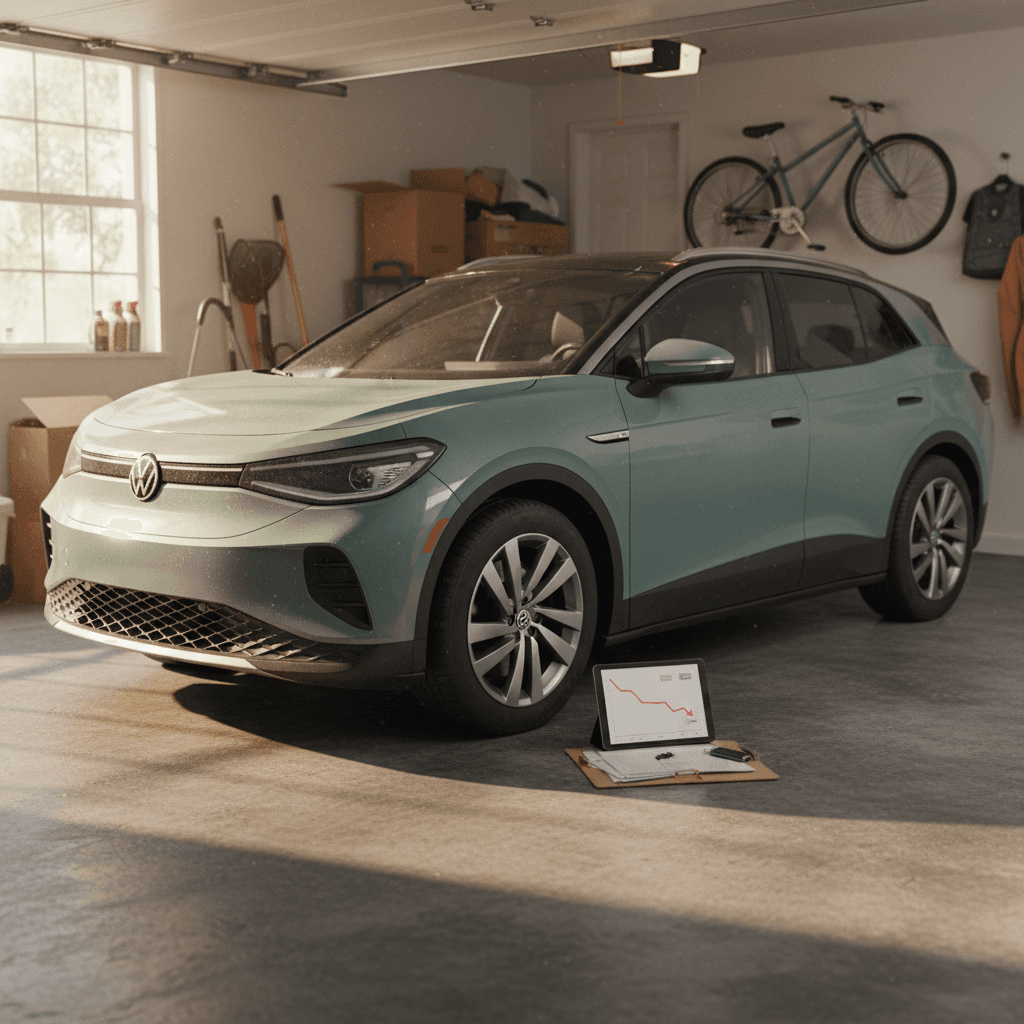
If you own a Volkswagen ID.4, or you’re shopping the used market, the big question is simple: **what is a Volkswagen ID.4 worth after 5 years**, and is that drop in value reasonable for a modern electric SUV? In a market where EV prices have whipsawed since 2022, you don’t want guesswork. You want numbers, patterns, and what they mean for your wallet.
Quick snapshot
VW ID.4 value after 5 years, in plain English
Volkswagen ID.4 value at 5 years: key numbers
Translated: the ID.4 is **not a resale rock star** like some Teslas, but it’s also **not a disaster**. It sits squarely in the middle of the EV pack, hurt by the same headwinds (fast‑moving tech, shifting tax credits, soft used‑EV prices) but cushioned by decent demand for compact electric SUVs and a long battery warranty.
How the ID.4’s depreciation compares to other EVs
To understand **Volkswagen ID.4 value after 5 years**, you have to stack it against its peers. Multiple 2024–2026 studies of 5‑year‑old vehicles show a clear pattern: **battery‑electric vehicles are the worst depreciators by segment**, losing around **57–59% of value in 5 years**, versus roughly **45% for the market as a whole** and mid‑30s for trucks and hybrids.
5‑year depreciation: ID.4 vs market averages
How a typical Volkswagen ID.4’s 5‑year value fits into the broader depreciation picture.
| Segment / model | Typical 5‑year depreciation | Value retained after 5 years | Notes |
|---|---|---|---|
| All vehicles (U.S. avg.) | ~45% | ~55% | Gas, hybrid and EV combined. |
| All EVs (segment avg.) | ~58–59% | ~41–42% | Battery‑electric vehicles only. |
| Volkswagen ID.4 | ~58–62% | ~38–42% | Roughly in line with EV average. |
| Tesla Model Y | ~45–50% | ~50–55% | One of the stronger EVs for value retention. |
| Hyundai Ioniq 5 / Kia EV6 | ~55–60% | ~40–45% | Similar value curve to ID.4 so far. |
Numbers are rounded estimates based on recent multi‑source studies and typical U.S. transaction data.
Depreciation is an average, not a verdict
What a 5‑year-old Volkswagen ID.4 is typically worth
Let’s put this into dollars. Early U.S. ID.4s launched around the **low‑to‑mid‑$40,000s** with options. Fast‑forward 5 years, assuming normal 12,000–15,000 miles per year and no major accidents, and you’re usually looking at something like this:
- Original MSRP: **$42,000–$48,000** (well‑equipped Pro/Pro S, including destination and typical options).
- 5‑year depreciation: **58–62%** in many models and tools.
- Estimated private‑party value at 5 years: roughly **$18,000–$22,000** for a clean, average‑mileage example.
- Dealer trade‑in value at 5 years: typically a few thousand less, often in the **mid‑teens to high‑teens**.
That spread is where details start to matter: rear‑wheel drive vs. all‑wheel drive, software history, accident reports, and whether the battery still looks healthy on a diagnostic scan. Two ID.4s with the same model year can easily differ by **$3,000–$5,000** based on those factors alone.
Why the Volkswagen ID.4 loses value fast, then slows
Like most EVs, the **Volkswagen ID.4 sheds a big chunk of value early**, then settles into a slower, more predictable slide. Think of it as a two‑act play.
The ID.4’s two depreciation phases
Why the curve hurts most in years 1–3, then calms down.
Phase 1: Years 0–3 (the cliff)
Most of the pain happens here:
- 30–40% drop in the first 3 years is common.
- New‑car discounts, tax credits and lease deals undercut used prices.
- Tech moves fast: software upgrades, range bumps and interior tweaks make early cars feel older, sooner.
Result: a 3‑year‑old ID.4 can be thousands less than you’d expect if you’re coming from the gas‑SUV world.
Phase 2: Years 3–5 (the glide)
After year 3, the curve usually flattens:
- Typical yearly loss slows to around 7–10% of remaining value.
- Much of the battery warranty is still intact, easing buyer fears.
- The ID.4’s role as a practical, family‑size EV keeps demand steady.
Result: if you ride out Phase 1, the next two years are gentler on your equity.
Owner strategy angle
Battery health, warranty, and their impact on value
With any EV, **battery confidence is resale confidence**. Here the ID.4 comes with a built‑in safety net: Volkswagen backs the high‑voltage battery for **8 years or 100,000 miles**, promising at least **70% of original capacity** within that window under normal use. That means a 5‑year‑old ID.4 still has **three years of factory battery coverage** left in most cases.
- A healthy battery (80–90% state of health) supports strong range and buyer confidence.
- Visible battery degradation, or fast DC‑fast‑charging‑only histories, can spook buyers and lenders.
- Third‑party testing, like the **Recharged Score battery health diagnostics**, can document that the pack is aging gracefully, which often translates into **higher offers and a quicker sale**.
“For modern EVs, the battery warranty isn’t just a service promise; it’s a line item on the resale‑value balance sheet.”
Silent value killer: unknown battery history
Factors that make one 5-year-old ID.4 worth more than another
Two ID.4s roll onto a lot. Same year, same color, both roughly 5 years old. One brings thousands more than the other. Here’s why.
Key value drivers for a 5‑year‑old ID.4
Mileage and use pattern
A 5‑year‑old ID.4 with 40,000 miles will appraise very differently from one with 90,000. Highway‑heavy, gently driven miles are easier on components than constant stop‑and‑go.
Trim, drivetrain and options
All‑wheel drive, larger‑capacity battery packs and higher trims (Pro S, etc.) tend to hold value better. A well‑equipped ID.4 with heated seats, premium audio and driver‑assist features is simply easier to sell.
Accident and repair history
Structural repairs, airbag deployments, or a branded title (salvage/rebuilt) can hammer resale value. Clean Carfax/AutoCheck and consistent body‑panel alignment matter more than most owners think.
Battery health and charging habits
An ID.4 that’s mostly AC‑charged at home and kept within reasonable state‑of‑charge ranges will generally have healthier battery metrics than one fast‑charged to 100% every day.
Software updates and recalls
Up‑to‑date software, completed recalls and smooth infotainment behavior all reassure buyers. A glitchy, out‑of‑date car feels older than its odometer suggests.
Warranty status and CPO coverage
Remaining factory bumper‑to‑bumper coverage or a strong certified‑pre‑owned program can add real dollars. At year five, the **battery warranty** becomes the headline.
How to protect your ID.4’s value over 5 years
You can’t repeal depreciation, but you **can** move your ID.4 from the bottom of the price range to the top. Think of it as managing a long‑term relationship with your future buyer.
1. Treat the battery like the asset it is
- Avoid living at 100% or 0% state of charge, most experts prefer keeping daily use roughly in the 20–80% window.
- Use DC fast charging for road trips, not daily commuting, when possible.
- Schedule periodic battery‑health checks, especially after year three. A documented, healthy pack pays you back later.
2. Keep the car “sale‑ready”
- Follow the maintenance schedule, even though EVs need less than gas cars.
- Fix windshield cracks, obvious curb rash and cosmetic issues as they appear.
- Keep charging cables and accessories with the car; missing gear is an easy negotiation lever for buyers.
3. Mind software and documentation
- Stay current on **software updates** and recall campaigns.
- Keep digital and paper records of services and repairs.
- When it’s time to sell or trade, be ready with a neat folder, or a PDF, from day one.
4. Time your exit smartly
- If you bought new, consider selling in the **5–7‑year window**, while the car is still inside the battery warranty.
- A pre‑sale inspection and independent battery‑health report, like a Recharged Score, can support higher offers and reduce haggling.
Where Recharged fits in
Ready to find your next EV?
Browse VehiclesBuying a 5-year-old ID.4: Is it a good used EV bet?
From a buyer’s standpoint, a **5‑year‑old Volkswagen ID.4** often sits in a sweet spot: the first owner took the big depreciation hit, and you’re picking up a still‑modern electric SUV at **roughly half of its original price** with **3 years of battery warranty** left in most cases.
Pros and cons of a 5‑year‑old ID.4
What you’re really getting for the money.
Big discount vs. new
You’re typically saving **tens of thousands** versus the original sticker, yet still getting a full‑size electric crossover with a usable real‑world range and DC fast‑charging capability.
Battery still under warranty
At year five, the **8‑year/100,000‑mile battery warranty** is still in play for most cars, which reduces the biggest fear around used EVs: an unexpected battery bill.
Lower running costs
EVs generally require **less routine maintenance** than gas SUVs. No oil changes, fewer moving parts, and regenerative braking that’s easy on pads and rotors.
But choose carefully
How Recharged evaluates used ID.4s
Used EV shopping doesn’t have to feel like a trust exercise. At Recharged, every ID.4 we list or buy is run through a **structured EV‑specific process** that goes far beyond a quick test drive and a Kelly Blue Book tab.
- **Recharged Score battery diagnostics** – We measure pack health, charging behavior and usable capacity, then roll that into a simple score and detailed report.
- **Market‑correct pricing** – We compare your ID.4 against live listings and recent sales for the same model year, trim, mileage and condition, not just generic EV averages.
- **Transparent history** – Title status, accidents, recalls and software/firmware updates are all checked and documented.
- **Flexible ways to sell or buy** – Instant offer, trade‑in, or consignment if you want to chase top dollar; financing and nationwide delivery if you’re buying.
Want to sanity‑check your ID.4’s value?
FAQ: Volkswagen ID.4 value after 5 years
Frequently asked questions about 5‑year ID.4 value
Bottom line: Is the ID.4’s 5‑year value good enough?
In a perfect world, your Volkswagen ID.4 would age like a vintage Leica, beloved, unbothered by the calendar, and mysteriously expensive forever. In the real 2026 EV market, it behaves like what it is: a **mass‑market electric crossover** in a rapidly evolving segment. Over 5 years, you should expect the ID.4 to lose **around 60% of its sticker price**, landing in the high‑teens or low‑twenties for a clean example.
The good news is that this depreciation is **predictable and manageable**. If you buy smart, treat the battery like the asset it is, and keep documentation tight, the Volkswagen ID.4 can be a **sensible long‑term daily driver** and a solid used buy at 5 years old. And if you’d rather not decode values and battery graphs alone, Recharged is built for exactly this moment, helping you understand not just what your ID.4 is worth today, but what it’s likely to be worth tomorrow.