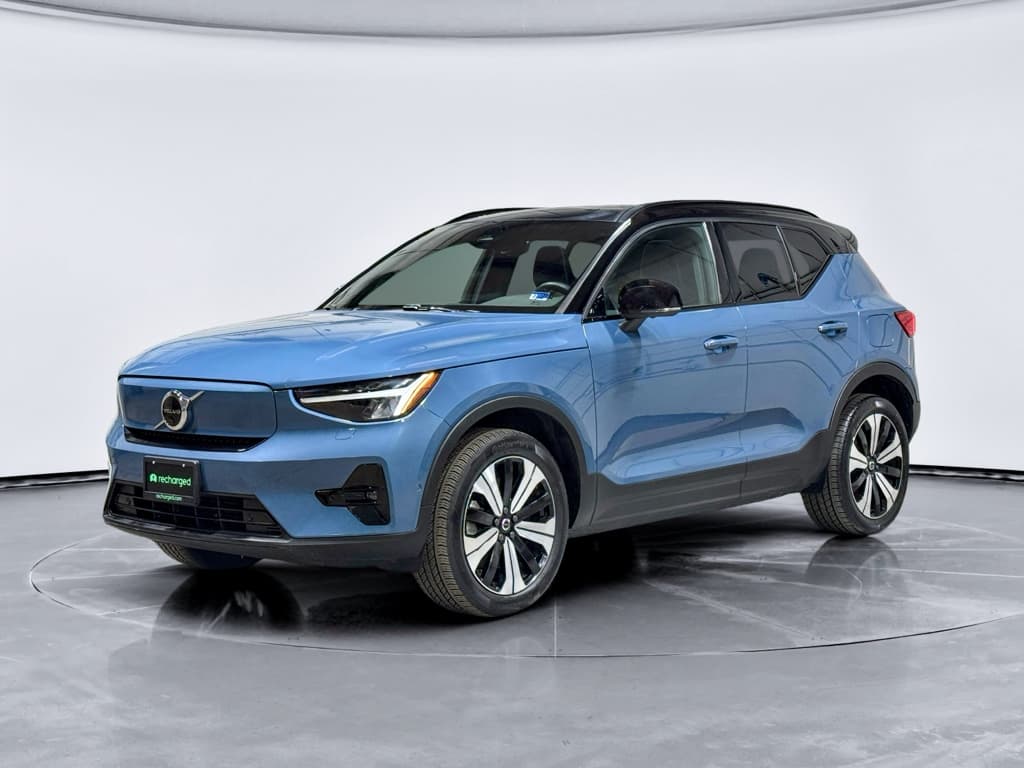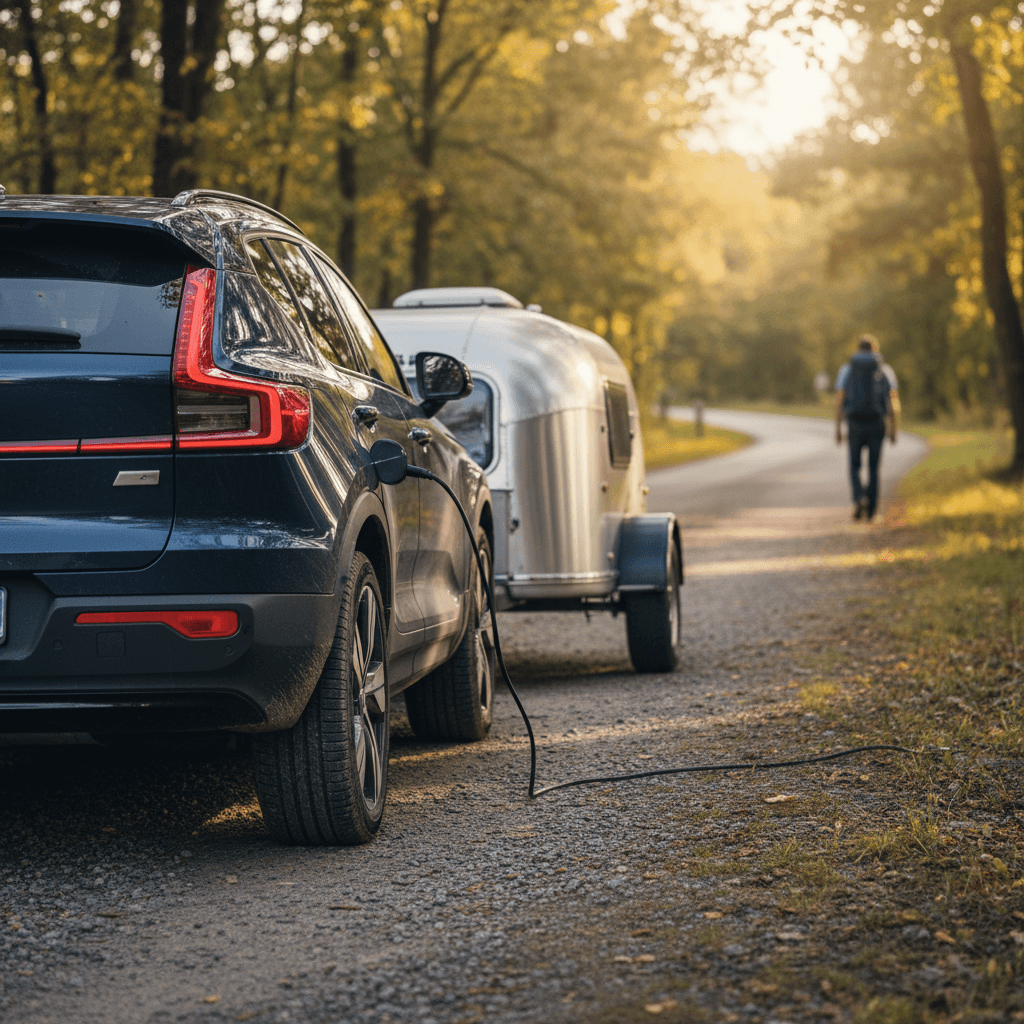
If you’re eyeing that sleek Volvo C40 Recharge and wondering, **“can this thing actually tow a trailer?”** the answer is yes, within limits. The C40 is a compact electric crossover with real towing capability, but it’s not a half‑ton pickup. Understanding those limits is the difference between a relaxed weekend getaway and white‑knuckle range anxiety.
Short version
Quick answer: can the Volvo C40 Recharge tow a trailer?
Yes, the Volvo C40 Recharge **can tow a trailer**, as long as your specific car is **factory‑rated for towing** and fitted with a proper hitch. In many markets, C40 models with the official tow package are rated for roughly **900 kg braked (about 1,980 lb)** and **750 kg (1,650 lb) unbraked**. In U.S. specs, you’ll often see a round **2,000 lb maximum towing capacity** listed for 2023–2024 C40 Recharge models with the tow package.
- It’s **designed for light towing**, not heavy car haulers or big travel trailers.
- You’ll feel the trailer, especially in range and charging stops, but the instant EV torque makes pulling away from a stop effortless.
- Some C40 Recharges, especially in North America, were sold **without any rated towing capacity**; for those cars, legally, you shouldn’t tow at all.
Double‑check before you hitch up
Official Volvo C40 Recharge towing capacity
Volvo’s numbers move around a bit between markets and model years, but here’s the pattern you’ll see if you dig through spec sheets and dealer guides.
Typical Volvo C40 Recharge towing specs
Approximate factory towing ratings for the C40 Recharge when properly equipped. Always confirm for your exact VIN.
| Configuration | Market example | Max braked trailer | Max unbraked trailer | Max tongue weight | Notes |
|---|---|---|---|---|---|
| Single Motor (earlier 69–78 kWh cars) | Europe/Canada | 900 kg (~1,984 lb) | 750 kg (~1,650 lb) | 75–90 kg (165–198 lb) | Towbar and trailer stability software required. |
| Single Motor Extended Range / EC40 | Europe/Canada | Up to 1,200–1,500 kg (2,650–3,300 lb) | 750 kg (~1,650 lb) | 75–100 kg (165–220 lb) | Higher ratings mainly outside the U.S. |
| Twin Motor AWD (2023–2024 C40 Recharge) | U.S. example | 2,000 lb (~907 kg) | Typically 1,650 lb (~750 kg) | ~200 lb | Trailer hitch often an extra‑cost option. |
| Non‑towing‑rated C40 | Some U.S. builds | 0 lb | 0 lb | N/A | Legally not approved to tow, even if you add an aftermarket hitch. |
These are ballpark figures; your local owner’s manual and registration documents are the final word.
Why the ratings differ by country
What kind of trailer can a C40 Recharge safely tow?
Think of the C40 Recharge as a **light‑duty lifestyle tow vehicle**. It’s perfect for toys and chores, not for dragging a cabin behind you.
Good vs. bad trailer matches for a C40 Recharge
Stay in the green zone and your C40 will be happy.
Great match
- Small teardrop or micro‑camper
- Single‑axle utility trailer with yard waste or furniture
- 1–2 dirt bikes, scooters, or a small ATV
- Compact cargo trailer for weekend moves
Borderline
- Larger box trailer pushed up near 2,000 lb
- Light, low‑profile boat on a trailer
- Small pop‑up camper, carefully loaded
These are possible but require conservative speeds and careful weight management.
Poor idea
- Full‑size travel trailer or RV
- Car hauler with a vehicle on it
- Enclosed race trailer
- Anything that exceeds rated weight or tongue load
Aim lighter than the brochure number
How towing affects range in a C40 Recharge
On paper, a 2024 C40 Recharge can deliver **roughly 257–297 miles** of EPA range depending on drivetrain and battery size. Bolt a trailer on the back and those numbers become theoretical fiction. Aero drag and extra mass are merciless.
Realistic range expectations while towing
In plain terms: if your C40 is rated for ~260–290 miles, expect **something like 120–170 miles** of comfortable towing range at freeway speeds with a small trailer, less if you’re running 75 mph into a headwind. Around town at lower speeds, the penalty is smaller, but you still don’t get “free” weight.
Think in segments, not total trip length
Hitch options: factory vs. aftermarket on the C40 Recharge
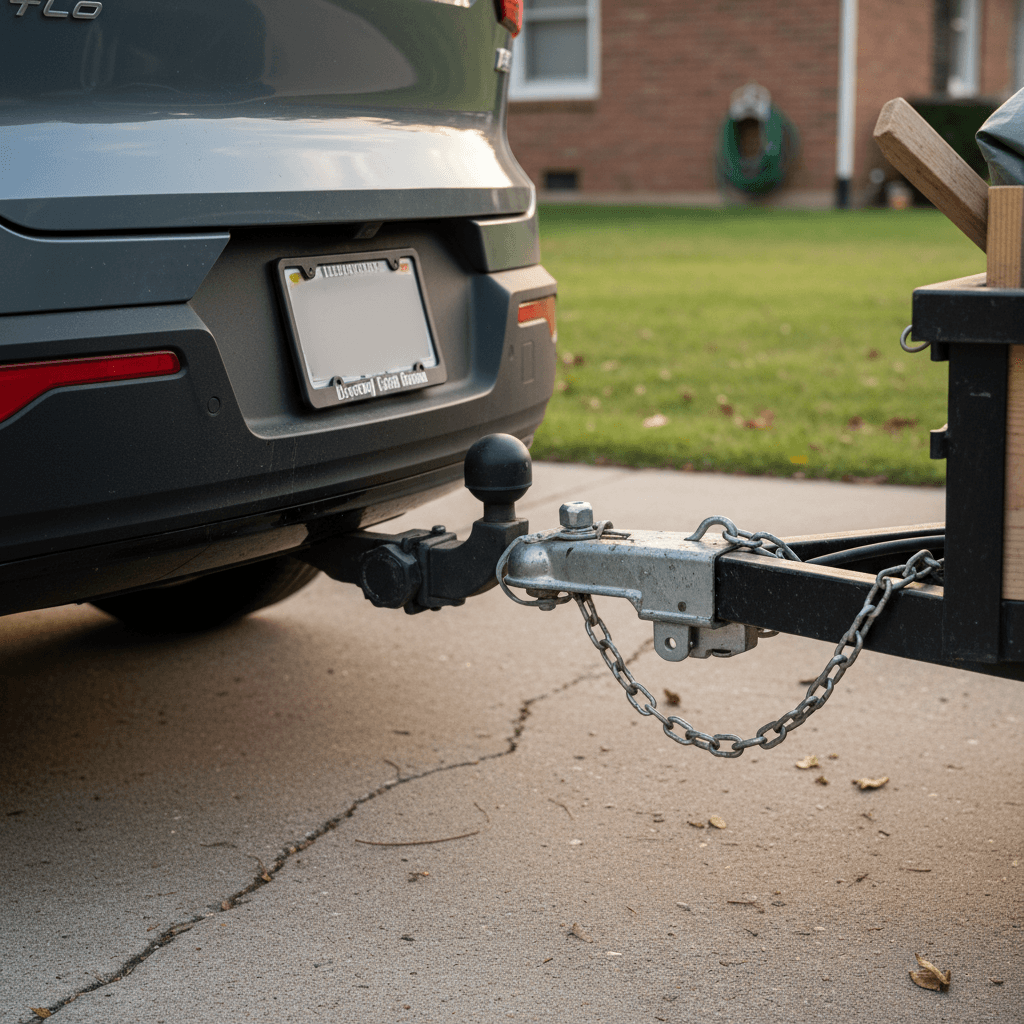
Volvo offers a neat, integrated solution in many markets: a **factory‑engineered towbar** with a hidden or flip‑down receiver, tied into the car’s stability control and trailer light diagnostics. In the U.S., the hitch is often a **dealer or port‑installed option** and may not be available on every trim.
Factory (or Volvo‑branded) towbar
- Engineered for the car’s rated towing capacity.
- Integrates with trailer stability assist and rear parking aids.
- Wired correctly for lights; often supports a trailer light self‑check.
- Usually required to keep your full warranty and legal rating.
Aftermarket receiver hitch
- Good for bike racks or cargo carriers.
- May be rated for similar hardware loads but doesn’t change the car’s legal tow rating.
- Wiring kits can be fiddly and may not integrate with Volvo’s software.
- On a non‑rated C40, you’re still at 0 lb official towing capacity, hitch or not.
Bike rack vs. towing are not the same
Safety limits: tongue weight, speed, and braking
Towing in an EV is mechanically simple, there’s no transmission to cook, but the physics haven’t changed since the covered‑wagon days. The C40’s relatively short wheelbase and hefty curb weight demand respect when you add a trailer.
Core safety rules when towing with a C40 Recharge
1. Stay under tongue‑weight limits
Most C40 Recharges sit around **75–100 kg (165–220 lb)** of allowed tongue weight. Aim for roughly **8–10% of total trailer weight** on the ball, but never exceed the listed maximum.
2. Load heavy items low and forward
Keep the center of mass low and slightly forward of the trailer axle. Avoid tail‑heavy loading, which can cause sway the C40’s stability control can’t always save.
3. Moderate your speed
Volvo and many European regulators cap **towing speeds around 80–100 km/h (50–62 mph)**. Even if your U.S. freeway says 75 mph, a lower cruising speed dramatically improves range and stability.
4. Give yourself long braking distances
Your C40’s regen is strong, but it’s not magic. A loaded trailer adds real stopping distance. Leave a larger following gap and feather the brakes early.
5. Watch tire pressures
Set the C40’s tires to the **laden/towing pressures** in the door‑jamb chart and inflate trailer tires to spec. Under‑inflated tires are sway’s best friend.
6. Practice before a long trip
Do a short shakedown run, turns, braking, backing up, before you point the combination at the interstate. Listen for clunks, check lights, and retighten the hitch after the first few miles.
Never exceed the lower of car or hitch rating
Step-by-step: how to tow a trailer with a C40 Recharge
If you’re new to EV towing, the process is virtually the same as in a gas SUV, with a few electric‑specific twists.
Practical checklist before you hit the road
1. Confirm your ratings
Check your owner’s manual and door‑jamb label for **max trailer weight and tongue weight**. Compare them to the trailer’s **GVWR** (gross vehicle weight rating).
2. Inspect and connect the hitch
Verify the ball size matches the coupler, latch fully engages, and use safety chains crossed under the tongue. Plug in the trailer wiring and confirm all lights work.
3. Set up your route and charging plan
Use your favorite EV route planner to map out **fast chargers 80–130 miles apart** and confirm they have trailer‑friendly access. Save backups in case a station is down.
4. Adjust mirrors and driving aids
Widen your mirrors if possible, and remember that **rear cross‑traffic and parking sensors** may behave differently or chime constantly with a trailer connected.
5. Start gently and feel for sway
On your first miles, accelerate and brake smoothly. If you feel the trailer wagging, stop and redistribute weight or slow down, don’t just “drive through it.”
6. Recheck everything after 10–20 miles
Pull over safely and touch the wheels and hitch area. Look for hot hubs, loose straps, or shifting cargo. A two‑minute check can save a ruined weekend.
Is the Volvo C40 Recharge a good tow vehicle?
As a tow vehicle, the C40 Recharge is a bit like a talented city musician drafted into a weekend garage band tour: **it can absolutely do the job**, as long as you don’t ask it to play stadiums.
Where the C40 shines
- Instant torque makes pulling away from lights or up short ramps easy, even with a trailer.
- The low center of gravity helps stability with sensible loads.
- Cabin refinement and driver‑assist tech make long days more relaxed.
- Perfect match for EV‑friendly, light‑duty recreational towing, kayaks, dirt bikes, garden runs.
Where it falls short
- Range loss is significant at highway speeds with anything boxy behind you.
- Factory tow ratings trail many gas crossovers, especially in North America.
- Limited DC fast‑charger locations with easy trailer access in some regions.
- High, flat‑front campers will feel like a parachute; expect frequent charging stops.
Who the C40 tow setup is perfect for
Buying a used C40 Recharge for towing
If you’re considering a **used Volvo C40 Recharge** specifically because you want to tow, the homework matters more than it would on a gas crossover. You’re juggling **battery health, towing hardware, and charging logistics** all at once.
Used C40 Recharge towing checklist
1. Confirm factory tow rating
Ask the seller for the original window sticker or build sheet and check the owner’s manual. You want a car that is **explicitly rated to tow**, not just one with a random hitch bolted on.
2. Inspect the hitch installation
Look for a clean, rust‑free install, no crushed bumper beams, and wiring that uses proper connectors instead of vampire taps. Test trailer lights with a simple plug‑in tester if possible.
3. Understand battery health
Towing eats into range, so **degradation matters**. A C40 that’s lost 10–15% of its original capacity will feel much smaller once you bolt on a trailer. Recharged’s <strong>Recharged Score Report</strong> includes a verified battery health snapshot so you know what you’re working with.
4. Ask about towing history
Light bike‑rack duty is no big deal; years of heavy trailer use might be. Ask how often the owner towed, what they towed, and on what kind of trips.
5. Plan your use case honestly
Write down what you actually plan to tow, weights, distances, and how often. If it’s more than a few light trips a year, you might be happier with a different EV or a plug‑in hybrid SUV.
How Recharged can help
FAQ: towing with the Volvo C40 Recharge
Common questions about towing with a C40 Recharge
Bottom line
The Volvo C40 Recharge can absolutely tow a trailer, provided you respect its limits. Think **nimble, stylish EV that can haul your hobbies**, not a workhorse tow rig. Stay within your specific car’s tow and tongue‑weight ratings, choose a modest trailer, and plan your charging around shorter legs, and the C40 will reward you with calm, quiet towing and zero tailpipe emissions.
If you’re shopping the used market, pay special attention to **battery health and factory towing hardware**. That’s exactly the kind of nuance Recharged was built to surface: every vehicle on our marketplace comes with a **Recharged Score battery report**, transparent pricing, and EV‑savvy support that can walk you through how a given C40 will handle your trailer and your routes. With the right expectations, this Swedish fastback can be a surprisingly capable part‑time tow partner.