Can a Mercedes EQE tow a trailer? Yes, at least some versions can, and they’re surprisingly capable when set up correctly. But towing with an electric Mercedes isn’t as simple as bolting on a hitch and dragging the family camper across the Rockies. You need to know which EQE you have, what it’s rated for, and how towing reshapes your range, charging stops, and even driving style.
Short answer
Can a Mercedes EQE Actually Tow a Trailer?
Start with this: not every Mercedes EQE is tow‑rated, and that’s non‑negotiable. In North America, the EQE SUV is the one most commonly sold with a factory tow package and a meaningful trailer rating. Many U.S.‑spec EQE sedans are sold with no official tow rating, which legally and mechanically puts them out of the towing game, even if the hardware could theoretically handle it.
- If your EQE has a factory‑installed tow package and a listed trailer weight in the manual, you can tow, within those limits.
- If your EQE does not have a tow rating, assume towing is off the table, even with an aftermarket hitch.
- Adding a hitch to a non‑rated EQE can create warranty, liability, and safety issues if you tow with it.
Legal and insurance angle
EQE Sedan vs EQE SUV: Official Towing Ratings
Mercedes builds the EQE in several versions globally, sedan and SUV, rear‑ and all‑wheel drive, varying battery sizes. That matters for towing because the chassis, cooling, and brakes determine what the vehicle can safely pull.
Typical Mercedes EQE Towing Ratings (High‑Level Overview)
Always confirm with your specific vehicle’s documentation. These are representative, not VIN‑specific, figures.
| Model | Drive | Typical Max Braked Trailer* | Tongue Weight | Notes |
|---|---|---|---|---|
| EQE Sedan (US) | RWD / AWD | Often not rated | , | Many U.S. sedans have no official tow rating even if hitches exist. |
| EQE Sedan (EU‑spec, with tow package) | RWD / AWD | Up to ~1,600 kg (≈3,500 lb) | ~160 kg (≈350 lb) | Region‑specific; check manual/door label. |
| EQE SUV 350/500 (with factory tow package) | AWD | Around 1,800–2,000 kg (≈4,000–4,400 lb) | ~180–200 kg (≈400–440 lb) | Most common tow‑capable EQE in North America. |
| AMG EQE SUV (with tow package) | AWD | Similar ballpark to non‑AMG SUV | Similar | Power isn’t the limiting factor, structure and brakes are. |
Representative towing figures for common EQE variants sold in Europe and North America. U.S. sedans are often not tow‑rated.
Where to find your real number
What Kind of Trailer Can a Mercedes EQE Tow Safely?
Assuming you have a tow‑rated EQE SUV with the factory towing package, you’re in light‑duty tow territory. Think compact loads, not three‑horse trailers and 30‑foot fifth‑wheels.
Trailer Types That Typically Suit an EQE SUV
Light loads are where an electric Mercedes feels happiest.
Small Camping Trailers
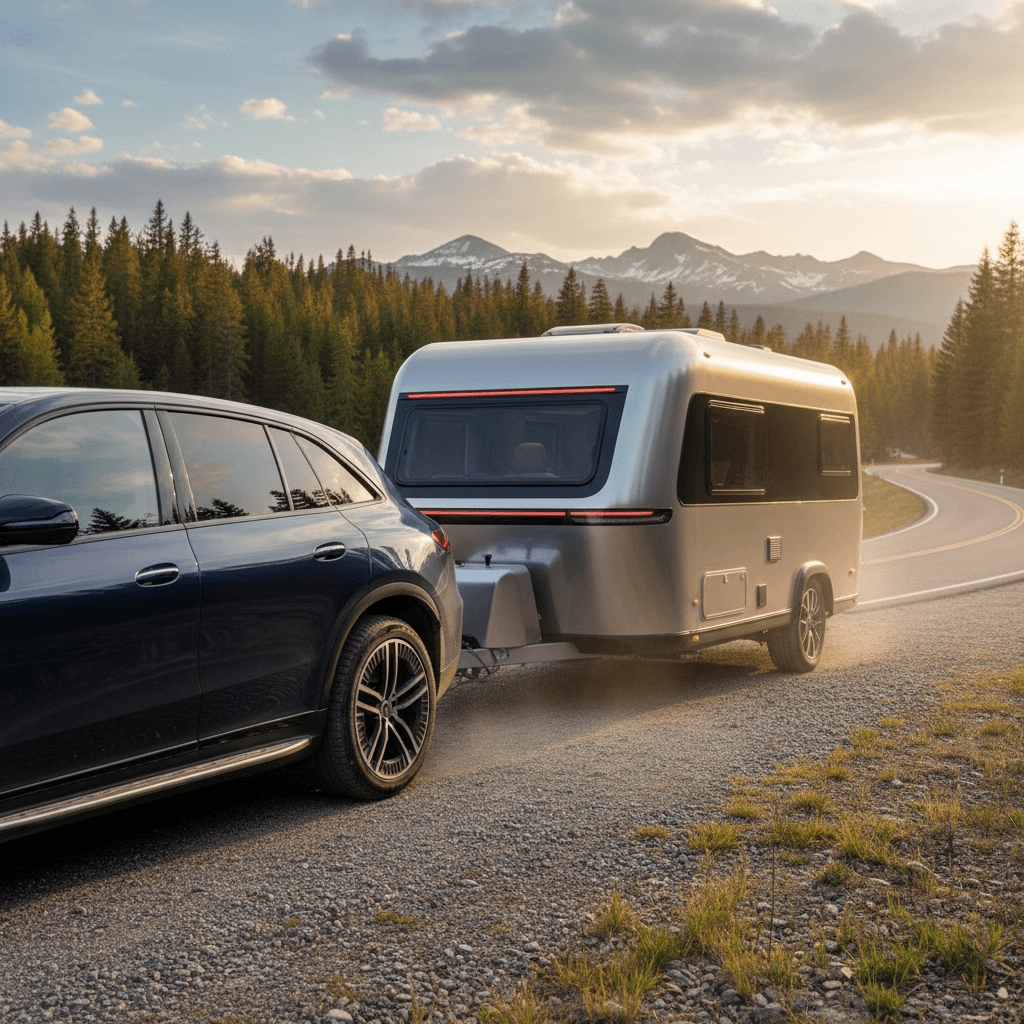
Teardrops, compact pop‑ups, and lightweight campers in the ~1,500–2,500 lb loaded range are realistic for many EQE SUVs.
Focus on aerodynamic designs with rounded fronts, the boxier the trailer, the harder it hits your range.
Utility & Cargo Trailers
Small utility trailers for runs to the home‑improvement store, lawn gear, or motorcycles are a sweet spot, especially under ~2,000 lb.
Keep weight low and secured; EVs have instant torque, which can get a poorly loaded trailer in trouble fast.
Light Boats & Toys
Fishing boats, small RIBs, jet skis, or a pair of ATVs on a trailer are doable if the total weight stays under your rated limit.
Again, check the combined weight: trailer + fuel + gear + toys.
Watch the fine print
How Much Range Does the Mercedes EQE Lose When Towing?
Here’s the part most glossy brochures whisper about: towing with any EV can cut your usable range roughly in half. The EQE is no exception. Aerodynamic drag from the trailer, extra weight, and hill climbs all pile onto the battery’s workload.
Typical Range Impact When Towing with an EV Like the EQE
If your EQE SUV normally manages, say, 230 miles of highway range solo, plan on 90–140 miles per charge with a modest camper behind you. Slow down 5–10 mph, keep the trailer low and sleek, and you’ll claw some of that back. Drive it like you’re late for a flight, and the battery will punish you accordingly.
The slow‑is‑fast rule
Tow Hitch, Wiring, and Brakes: What Your EQE Needs
Electrical torque is intoxicating, but the hardware behind the bumper matters more than the 0–60 time. To tow safely with a Mercedes EQE SUV, you need three things to be right: hitch, wiring, and brakes.
EQE Towing Hardware Checklist
1. Factory Tow Package
The gold standard is a <strong>factory‑installed tow package</strong>: reinforced structure, integrated hitch receiver, proper cooling, and a wiring harness built to talk to the EQE’s stability systems. If you’re shopping used, this is the option code you really want.
2. Proper Class of Hitch
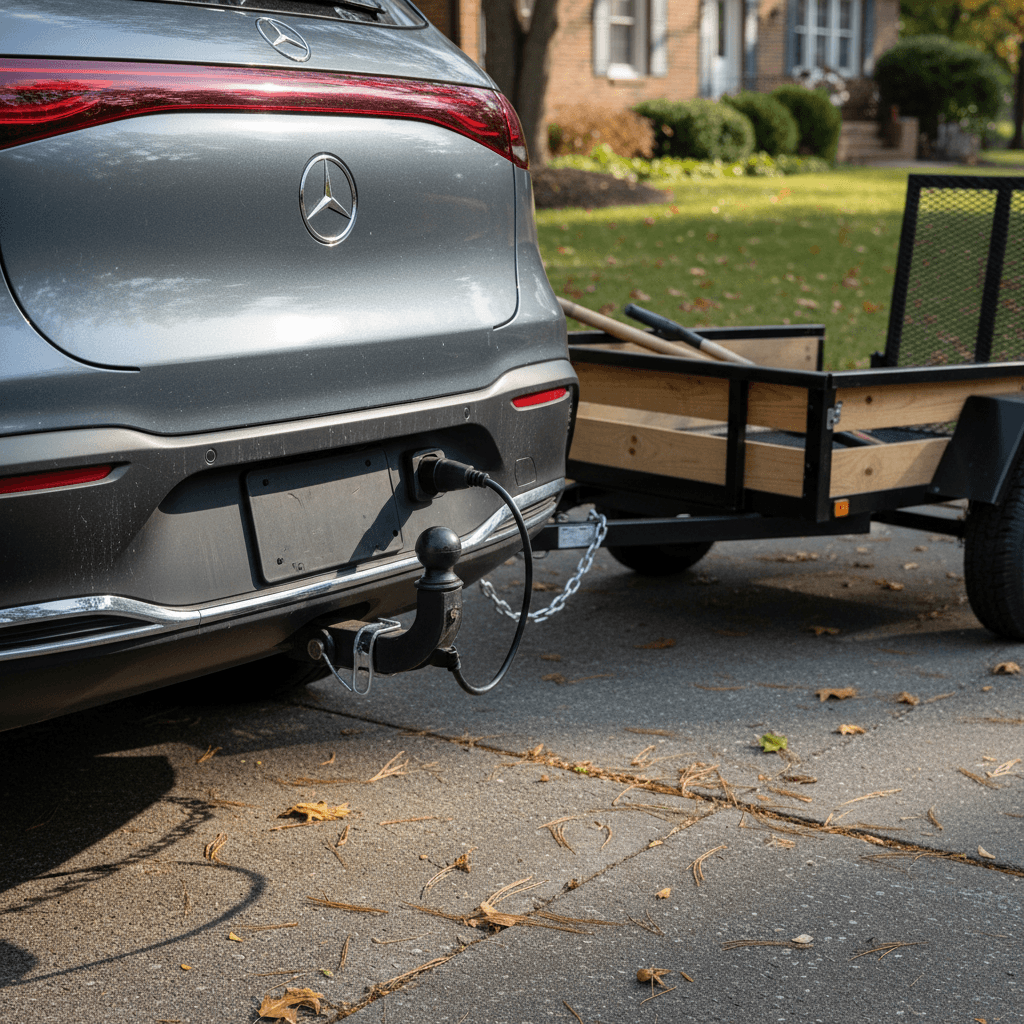
Most EQE SUVs use a <strong>Class II or Class III</strong> receiver. It must be rated at or above your vehicle’s tow rating. Don’t let anyone install a hitch with a lower rating because it was “on the shelf.”
3. 7‑Pin or 13‑Pin Wiring
For real trailers with brakes and lights, you want the <strong>full‑function connector</strong> (7‑pin in North America, 13‑pin in much of Europe). Simple 4‑pin light‑only adapters are for tiny garden trailers, not campers.
4. Trailer Brakes & Controller
Anything over about 1,000–1,500 lb should have <strong>its own brakes</strong>, and in many regions it’s legally required. Some EQEs integrate trailer brake control; others need an aftermarket controller installed professionally.
5. Load‑Rated Tires
Towing adds stress to the rear tires. Make sure your EQE is on <strong>proper load‑rated rubber</strong> at the correct pressure. Overloaded, underinflated EV tires are a blowout waiting to happen.
Avoid random aftermarket hitches
5 Rules for Staying Within Safe Real‑World Limits
Towing capacity isn’t a dare; it’s a ceiling measured in laboratories. With an electric vehicle where range and thermal management matter more, you’re wise to build in margin. These five rules will keep your EQE in the safe zone.
- Aim to stay under about 75–80% of the published tow rating for long trips. If your EQE SUV is rated for ~4,000 lb, treat ~3,000–3,200 lb loaded as your practical max.
- Include everything in your calculations: trailer, water, food, luggage, bikes, propane, batteries, weight creeps up quietly.
- Respect tongue weight limits. Too little tongue weight and the trailer sways; too much and the EQE’s rear suspension squats and steering gets vague.
- Use the EQE’s built‑in trailer stability systems if available, and don’t disable traction or stability control unless the manual explicitly tells you to.
- If the combination ever feels unstable, swaying, wandering, or hard to stop, you’re overloaded, mis‑loaded, or both. Fix that before you go another mile.
Charging and Route Planning When Towing with an EQE
The second you hitch a trailer to an EQE, your road‑trip math changes. You’re no longer driving station to station, you’re driving from one easy‑access charger to the next. That distinction matters when your rig is 40–50 feet long and can’t just dive into any parking lot.
Plan for Shorter Legs
With towing range cut so heavily, think in 60–100 mile segments rather than 150–200 mile chunks. Use EV‑friendly planning tools (like A Better Routeplanner) and tell them you’re towing or manually derate your efficiency by ~40–50%.
Build in extra buffer for headwinds, cold weather, and mountain grades. You don’t want to arrive at a charger with 2% remaining and a restless family in the back.
Think About Charger Access
Many DC fast chargers are back‑in spots meant for solo cars. With a trailer, you may need pull‑through chargers, edge stalls, or curbside chargers that let you stay hitched.
In practice, that means favoring larger highway sites, newer travel‑plaza style stations, and chargers shown in photos with lots of maneuvering room.
Pre‑scout with satellite view
Buying a Used EQE for Towing: What to Check
If you love the idea of a silent electric tow rig but hate new‑car prices, a used Mercedes EQE SUV can be a smart play, as long as you choose carefully. This is where a platform like Recharged earns its keep.
Used EQE Towing Checklist
What to look for before you trust it with a trailer.
Factory Tow Package Verified
Confirm via build sheet, window sticker, or VIN decode that the EQE left the factory with the towing package. Don’t rely on the presence of a hitch alone.
Battery Health & Range
Towing puts extra strain on the battery. A platform like Recharged provides a Recharged Score Report with verified battery health so you know whether the pack can still support long towing days.
Clean History & Repairs
Look for rear‑end accident history, hitch‑related repairs, or signs of overloaded use. Bent hitch mounts, uneven tire wear, or sagging suspension are all red flags.
How Recharged can help
Ready to find your next EV?
Browse VehiclesMercedes EQE Towing FAQ
Frequently Asked Questions About Towing with the Mercedes EQE
Bottom Line: Should You Tow with a Mercedes EQE?
If the question is simply, “Can a Mercedes EQE tow a trailer?” the answer is yes, particularly in EQE SUV form with the factory tow package. It can shoulder a small camper, boat, or utility trailer with the same relaxed torque and silence that make it a great daily driver. The fine print is where things get interesting: not every EQE is tow‑rated, range drops sharply with a trailer, and fast‑charger access matters as much as the raw towing number on the spec sheet.
If you’re realistic about weight, plan conservative legs between fast chargers, and treat the official tow rating as a ceiling instead of a goal, an EQE SUV makes a refined, emissions‑free alternative to the usual gas crossover tow rigs. And if you’re shopping used, consider doing it through Recharged, where you’ll get verified battery health data, transparent pricing, and EV‑specialist support to match the right EQE to the kind of trailer you actually own, not just the one in your daydreams.