Yes, you can charge an EV from a regular 110–120V household outlet. In fact, that’s exactly what Level 1 charging is. The more useful question is: will it keep up with your life? This guide breaks down how 110V charging works, how slow it really is, when it’s totally fine, and when you’ll want to step up to faster home charging.
Quick answer
Can you charge an EV on a 110V outlet?
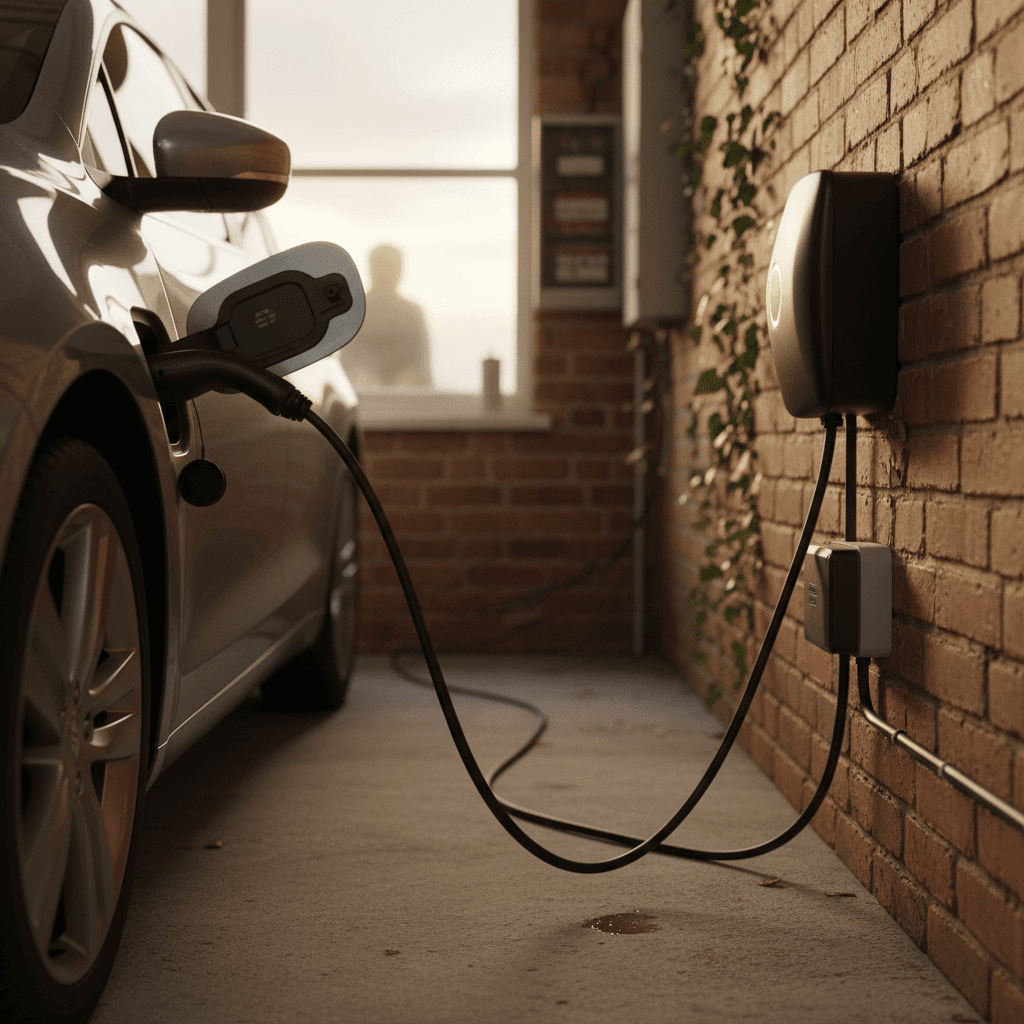
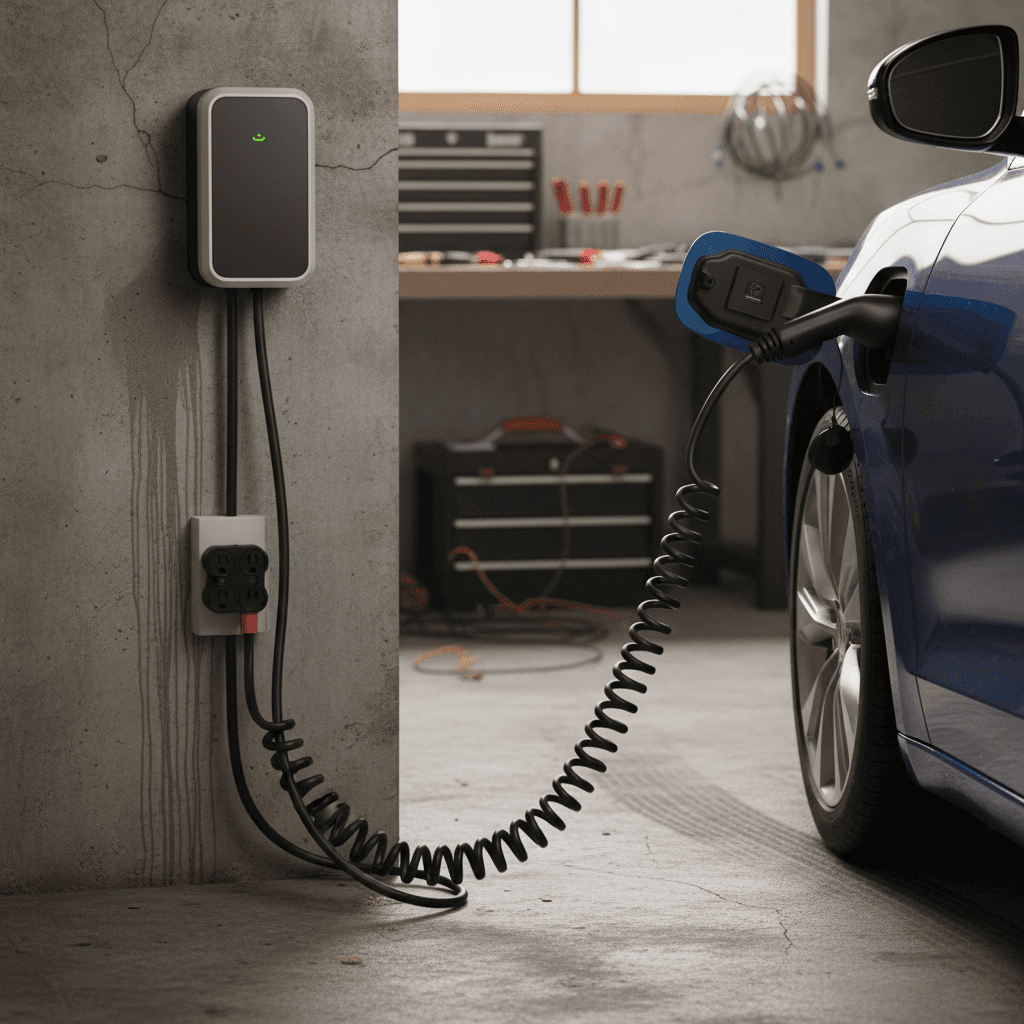
In the U.S., a “110V outlet” usually means a standard 120V, 15–20 amp household receptacle, the same thing you use for lamps and laptops. Every modern EV sold here can charge on this voltage using a portable cord (often called an EVSE) that either comes with the car or can be bought separately.
- This is called Level 1 charging.
- It uses a standard 3‑prong 120V outlet.
- No special wall box or 240V circuit is required to get started.
- The car controls the actual charging; the cord is basically a smart extension cable.
Don’t just grab the nearest outlet
How Level 1 (110–120V) charging actually works
When you plug your EV’s Level 1 cord into a 110–120V outlet, you’re pulling a small but steady stream of power, usually 1.3–1.9 kW. In plain English, that’s enough to slowly drip energy into the battery over many hours.
Level 1 charging, decoded
What your 110–120V outlet is really doing
Voltage & current
Most Level 1 setups run at 120V and draw 12–16 amps. That’s why they plug into a normal household breaker.
Charging power
That translates to about 1.3–1.9 kW of power. Compare that with 7–11 kW for a typical home Level 2 charger.
Real-world speed
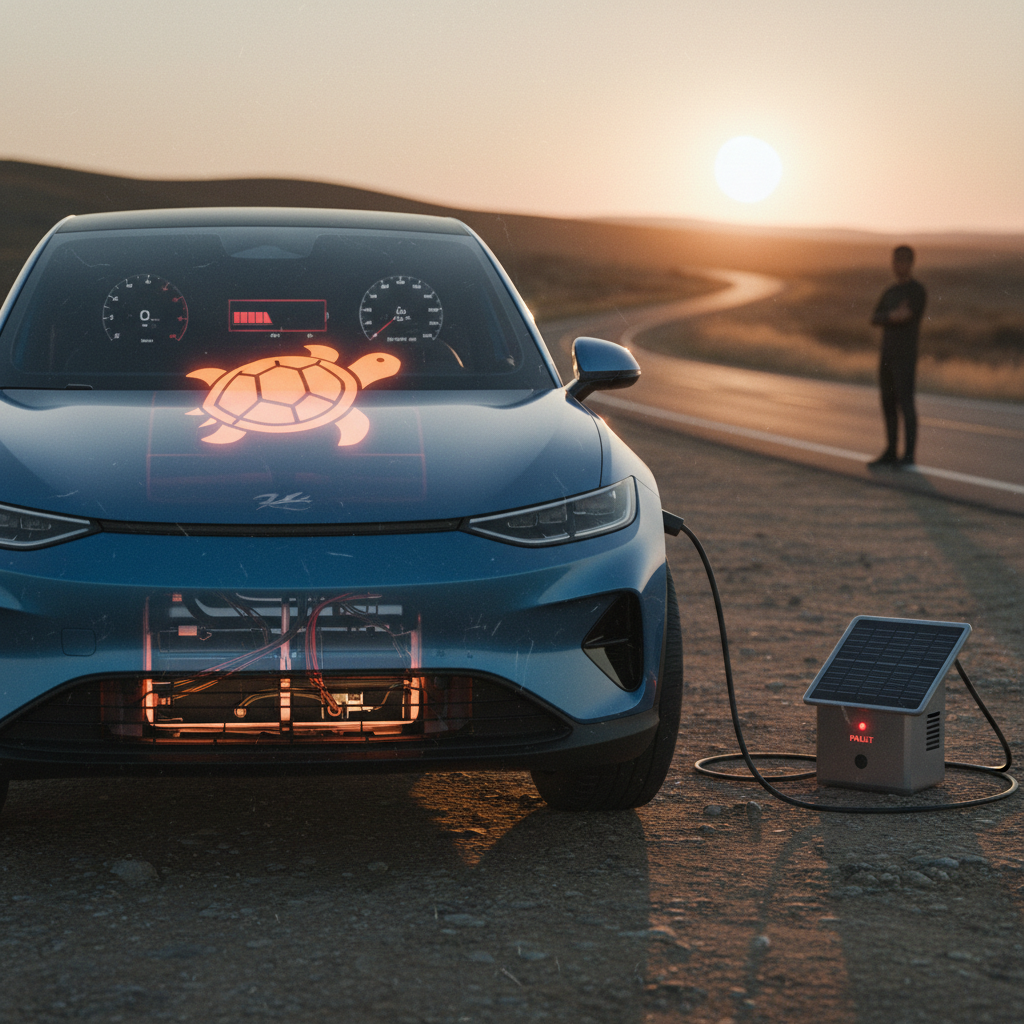
In practice, you’ll see roughly 3–5 miles of range per hour of charging on most EVs.
How long does it take to charge an EV on 110V?
Let’s put the "3–5 miles of range per hour" idea into real numbers. Charging time depends on your battery size and how empty it is, but we can sketch some typical scenarios.
Typical 110V (Level 1) charging times
Approximate times from near-empty to full on a standard 120V outlet.
| Vehicle type | Battery size | Miles added per hour (120V) | Time from ~10% to ~90% |
|---|---|---|---|
| Plug‑in hybrid (PHEV) | 10–20 kWh | 3–5 mi/hr | 4–8 hours |
| Small EV hatchback | 40 kWh | 3–5 mi/hr | 24–36 hours |
| Typical compact EV | 60 kWh | 3–5 mi/hr | 30–45 hours |
| Large SUV / truck | 90–130 kWh | 3–5 mi/hr | 40–60+ hours |
Real life is messier than charts, most people top off nightly instead of charging from 0% to 100%, which makes Level 1 more workable than these numbers suggest.
You’re rarely charging from empty
When a 110V outlet is actually all you need
The car industry loves to upsell you on hardware. But plenty of drivers live happily on nothing more than a 110–120V outlet in the garage. The trick is matching charging speed to your actual life, not your fears.
You’re a good candidate for 110V charging if…
You drive under ~40 miles most days
At 3–5 miles per hour of charge, plugging in for 10–12 hours overnight will usually replace a 30–40 mile commute.
You can plug in almost every night
Consistency is everything. A slow charger you use daily beats a fast charger you can’t access.
You own a plug‑in hybrid
PHEVs have much smaller batteries. Level 1 is often completely sufficient to fill the pack overnight.
You’re renting or unsure about upgrades
If you can’t modify the property, or you’re not ready to spend $1,000+ on wiring, Level 1 is a low‑risk way to live with an EV.
Your utility has high demand charges
Slower, lower‑power charging can be gentler on some time‑of‑use rate structures, especially if you don’t have a smart charger yet.
A great way to "test‑drive" EV ownership
When 110V charging becomes a problem
There are real limits to what a 110–120V outlet can do. At some point, physics taps you on the shoulder.
Red flags that 110V isn’t enough
These patterns usually call for a Level 2 upgrade
Long daily commute
If you’re regularly driving 50–70+ miles per day, Level 1 may not replace what you use overnight, especially in winter when range dips.
Irregular schedules
Shift work, shared cars, or short turnarounds between trips mean you don’t always have 10–12 hours to sit on the charger.
Large battery, heavy loads
Big SUVs and trucks with 90–130 kWh packs simply take a long time to refill at 3–5 miles per hour, especially if you tow or drive fast.
Harsh winters
Cold weather reduces range and slows charging. If you’re starting with a range penalty, you feel the slowness of 110V even more.
Don’t rely on 110V for road‑trip turnarounds
Is it safe to use a regular outlet for EV charging?
Used correctly, Level 1 charging is designed to be safe. Your EVSE and the car constantly talk to each other about how much power to draw. The weak link is usually your house wiring, especially in older homes.
- EV charging is a continuous load, often 8–12 hours at a time.
- Many garages still have older outlets, worn receptacles, or circuits shared with freezers, tools, or lights.
- Loose connections and overloaded circuits can cause heat buildup, nuisance breaker trips, or in worst cases, fire risk.
Safety checklist for 110V charging
- The outlet is grounded and in good physical condition.
- The circuit is on a dedicated 15–20A breaker or has very light additional loads.
- Wiring and breakers are sized correctly for continuous use.
- Outdoor outlets are in weather‑rated enclosures.
110V vs 240V (Level 1 vs Level 2): What’s the real difference?
Think of Level 1 as a garden hose and Level 2 as an open fire hydrant. Both deliver water; one just does it far faster. For EVs, the leap from 120V to 240V is what turns overnight trickle charging into genuine convenience.
110V (Level 1) vs 240V (Level 2) home charging
How a basic outlet compares with a dedicated 240V circuit.
| Feature | 110–120V Level 1 | 240V Level 2 |
|---|---|---|
| Outlet type | Standard 3‑prong household | Dedicated 240V (NEMA 14‑50 or hardwired) |
| Typical power | 1.3–1.9 kW | 3.3–11.5 kW (or more) |
| Miles of range added per hour | ~3–5 mi/hr | ~15–35 mi/hr |
| Time to refill 60 kWh pack | 30–45 hours | 6–10 hours |
| Installation cost | $0 with existing safe outlet; $200–$700 for new 120V circuit | Roughly $800–$2,500 for full Level 2 install, depending on home |
| Best for | Short commutes, PHEVs, renters | Daily driving, larger batteries, households with multiple EVs |
Exact speeds vary by vehicle, but the jump from Level 1 to Level 2 is usually a 4–8x increase in charging speed.
Why most owners end up on Level 2
What does it cost to move beyond 110V at home?
If your 110V outlet isn’t cutting it, you have two main upgrade paths: a better 120V circuit, or a full 240V Level 2 install.
Option 1: Dedicated 120V circuit
If your current garage outlet shares a circuit with other loads, an electrician can add a new dedicated 15–20A, 120V circuit just for EV charging.
- Typical cost: roughly $200–$700 for a simple run.
- No new EVSE needed if you already have a Level 1 cord.
- Makes Level 1 safer and more reliable, but not faster.
Option 2: Full Level 2 (240V) charger
A dedicated 240V circuit plus a wall‑mounted charger or 240V plug can transform your charging experience.
- Charger hardware: often $400–$1,200, depending on brand and features.
- Installation: typically $800–$2,500 including labor, wiring, permits, and a new 240V outlet or hardwire.
- Possible panel upgrade if your home is already near its amperage limit.
Don’t DIY high‑voltage work
Tips to get the most out of a 110V outlet
If you’re going to live on a 110–120V diet for a while, you can squeeze more usefulness out of every watt with a few habits.
- Plug in whenever you’re parked at home. Treat charging like your phone: lots of short top‑offs instead of heroic 0–100% sessions.
- Use scheduled charging if your EV supports it. Align charging with off‑peak electricity rates to save money and reduce grid strain.
- Reduce vampire drain. Turn off always‑on features you don’t need, such as frequent connectivity pings or constant cabin preconditioning, that nibble away at the range you just added.
- Be realistic about road trips. For longer journeys, plan to use public Level 2 or DC fast chargers rather than relying on a 110V outlet to bail you out overnight.
- Keep an eye (and a hand) on that outlet. During the first few long charging sessions, periodically check that the plug, outlet, and wall plate aren’t hot to the touch. Warm is normal; truly hot is a problem.
Bonus range from better habits
How Recharged can help you match charging to your life
Charging is where EV theory meets your real schedule, your real house, and your real patience. When you shop for a used EV through Recharged, we don’t just talk about battery size, we talk about how you’ll actually charge it.
- Every vehicle on Recharged includes a Recharged Score Report with verified battery health, so you know how much usable range you’re working with, even on Level 1.
- Our EV specialists will help you estimate whether 110V charging fits your commute or whether you’re likely to need Level 2 soon.
- If you’re upgrading vehicles, we can help with trade‑ins, financing, and nationwide delivery, so your next EV shows up ready for your driveway.
- Visiting our Richmond, VA Experience Center? You can walk through home‑charging scenarios with experts who do this every day.
Start with the right used EV
Ready to find your next EV?
Browse VehiclesFAQ: Charging an EV on a 110V outlet
Common questions about 110V EV charging
A 110V outlet is the slowest way to charge an EV, and for the right driver, it’s also the simplest, cheapest, and least dramatic. If your daily life fits inside that 3–5‑miles‑per‑hour envelope, there’s nothing wrong with living on Level 1 for years. If it doesn’t, the jump to Level 2 is less a luxury and more a time machine. Whichever camp you’re in, choosing a used EV with the right range, battery health, and charging plan is where the real satisfaction lives, and that’s exactly where Recharged focuses its energy.