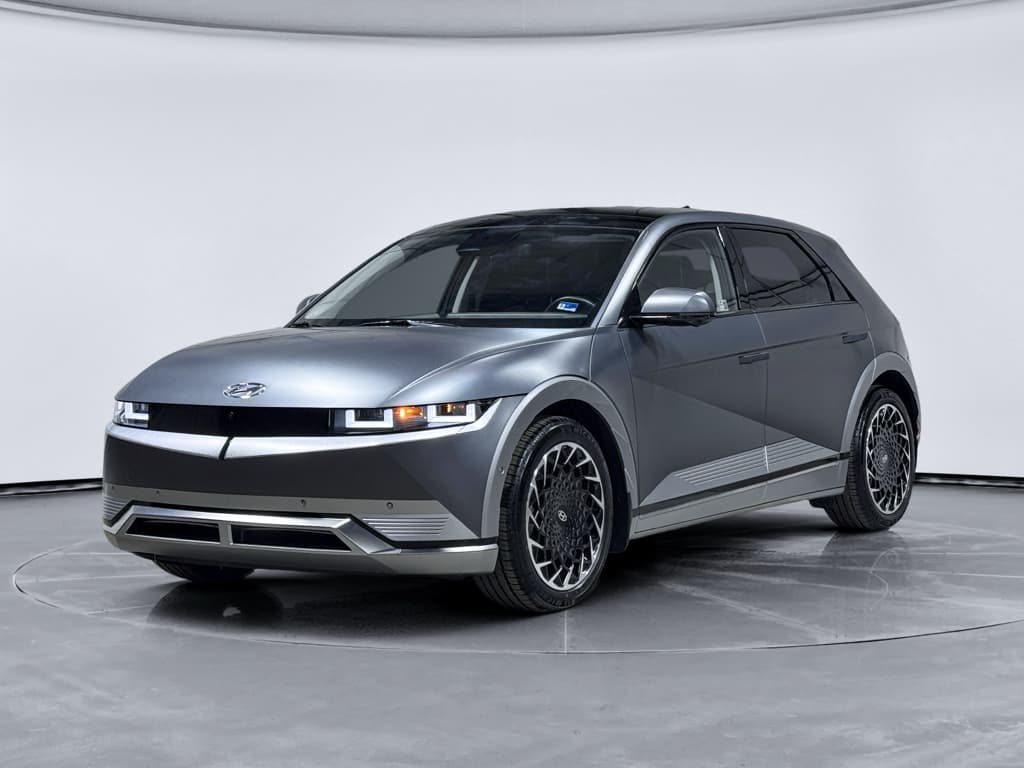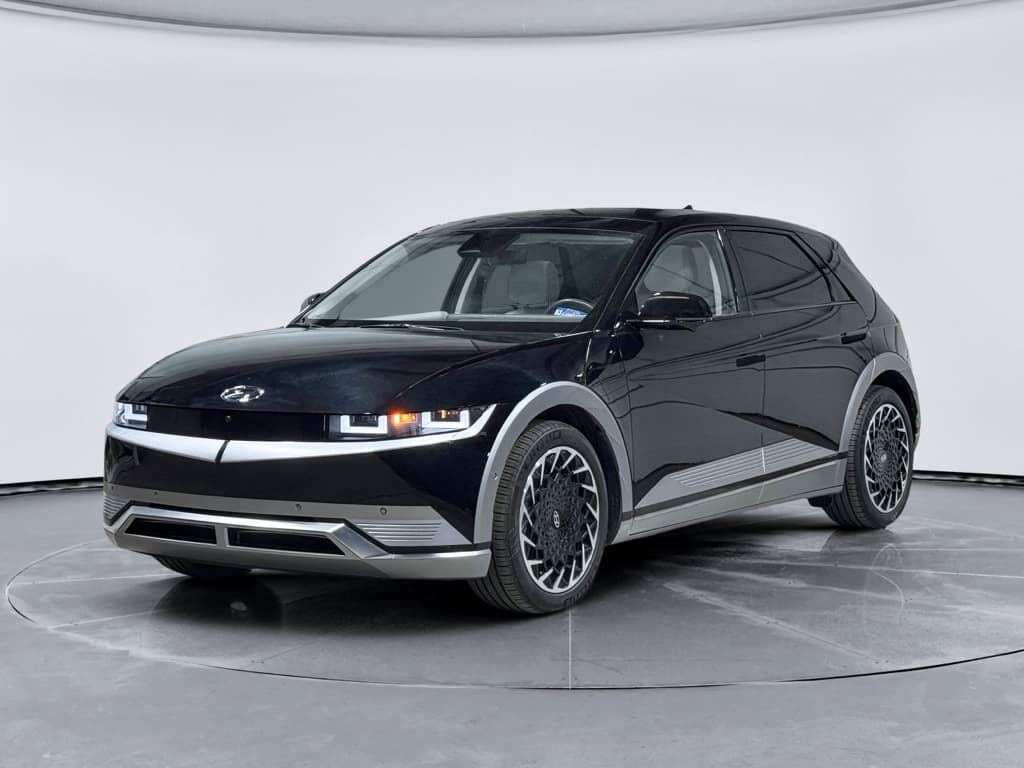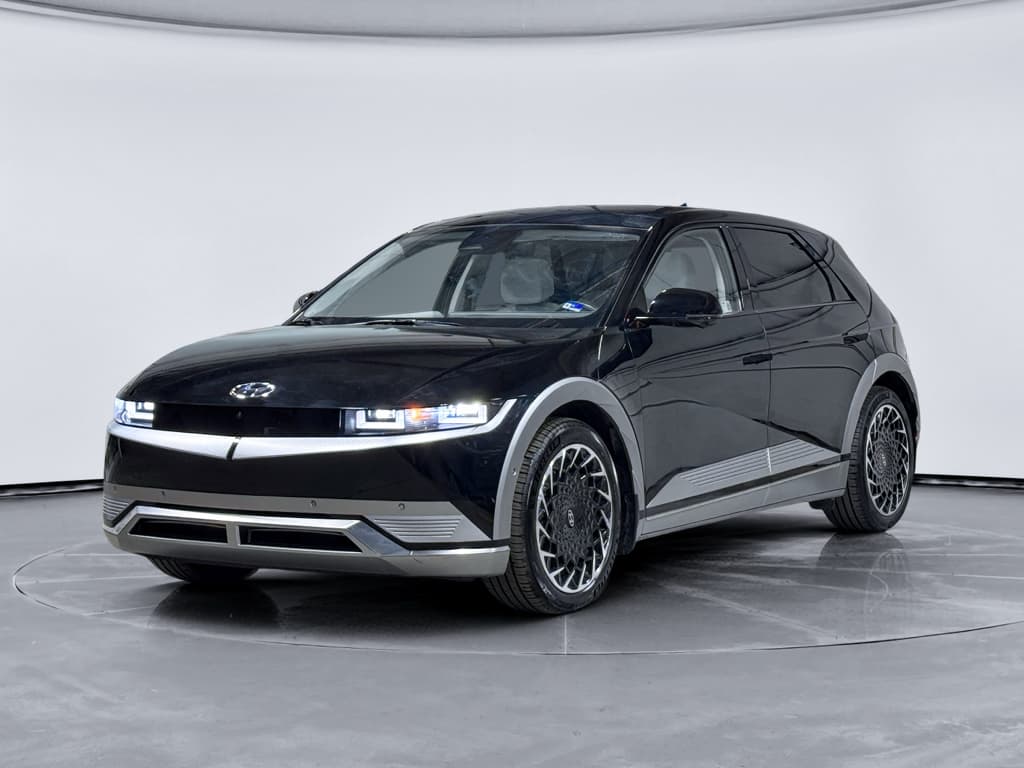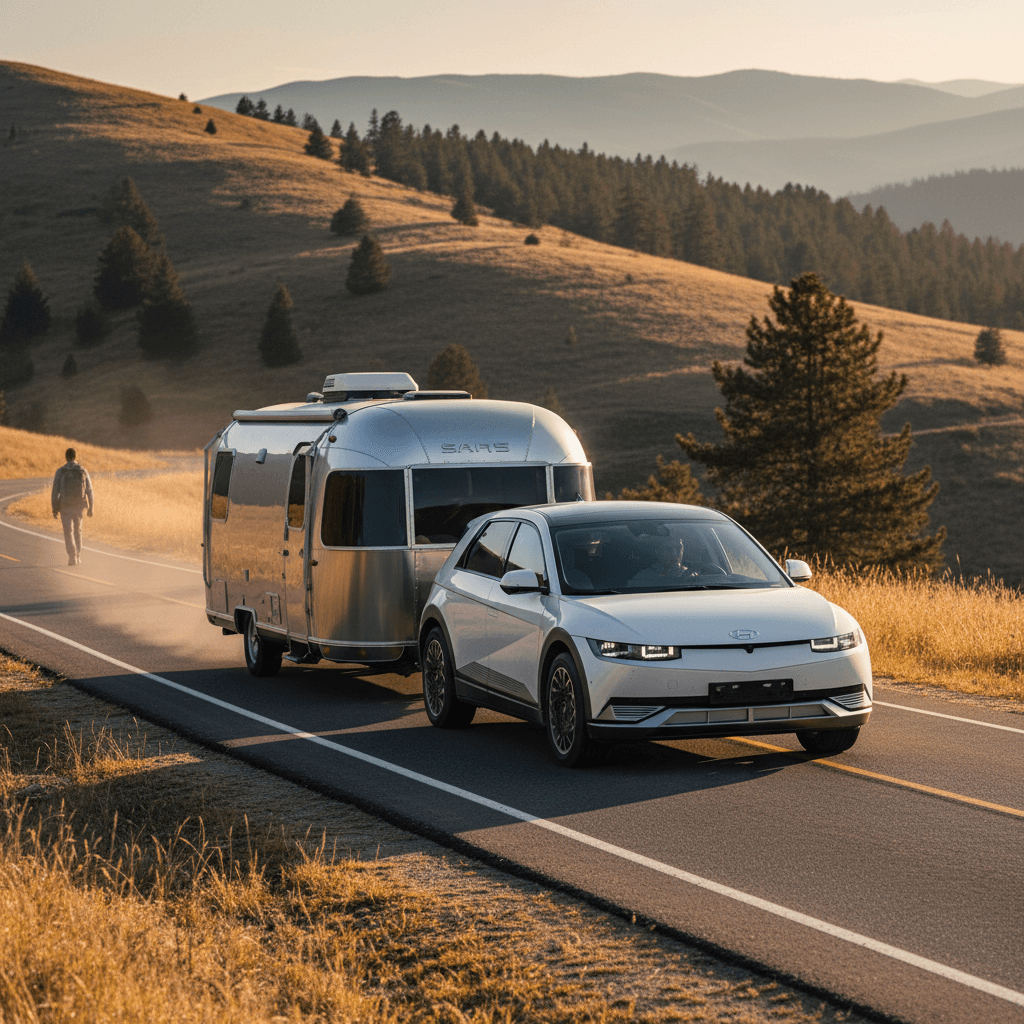
If you own or are shopping for a Hyundai IONIQ 5, it’s natural to wonder: can the Hyundai IONIQ 5 tow a trailer for weekend chores or a lightweight camper getaway? The short answer is yes, many IONIQ 5 configurations can tow, but only if you pay close attention to trims, tongue weight, and how towing slashes electric range.
Quick answer
Can the Hyundai IONIQ 5 actually tow a trailer?
Hyundai engineered the IONIQ 5 to tow, but not every version is rated the same way, and the guidance is different in North America vs. Europe. For U.S. and Canadian models from 2022 onward, Hyundai literature and spec sheets show that towing is typically reserved for Long Range models equipped with the proper hitch and wiring, while base Standard Range RWD cars are marked as “towing not recommended.”
In practice, that means if you have (or plan to buy) an IONIQ 5 with the larger battery and either RWD or AWD, you can usually tow a small utility trailer, teardrop, or lightweight pop‑up camper within the published limits. The catch: you must respect both the total trailer rating and the relatively modest tongue‑weight rating, or you’ll overload the rear of the car long before you hit the headline tow number.
Owner’s manual first
IONIQ 5 towing capacity by trim, battery, and drivetrain
Hyundai has continued to tweak IONIQ 5 specs through the 2025 model year, and different markets publish slightly different tow ratings. Here’s a simplified view of how towing generally breaks down for North American models when properly equipped. Treat these as high‑level guideposts and always cross‑check your specific VIN:
Typical Hyundai IONIQ 5 towing limits (North America, properly equipped)
Approximate tow ratings commonly published for IONIQ 5 models. Your exact rating may differ; always verify in your manual and on the certification label.
| Battery & Drivetrain | Trailer Brakes? | Typical Max Trailer Weight | Notes |
|---|---|---|---|
| Standard Range RWD | Any | Towing not recommended | Use hitch only for bike racks/cargo carriers unless your manual explicitly lists a rating. |
| Long Range RWD | With trailer brakes | ~2,000–2,300 lbs | Higher rating depends on model year and market; stay within tongue‑weight and GVWR limits. |
| Long Range RWD | Without trailer brakes | ~1,600–1,650 lbs | Unbraked trailer rating is lower for safety and legal reasons. |
| Long Range AWD (incl. some XRT trims) | With trailer brakes | ~2,300–2,700 lbs | Certain trims marketed with higher tow ratings when equipped with factory hitch. |
| Long Range AWD | Without trailer brakes | ~1,650–2,000 lbs | Again, limit varies by year and country; check your documentation. |
Towing not recommended for most Standard Range RWD models in Hyundai documentation.
Think well under the max
- If your build sheet or window sticker mentions a “trailer prep package” or factory hitch, your car is far more likely to carry the higher tow rating.
- If you’re shopping used, ask the seller for a photo of the certification label on the driver’s door jamb, and confirm max trailer weight and tongue load before assuming it can tow like the online reviews.
Tongue weight, hitch ratings, and why they matter
Towing capacity gets all the glory, but the humble tongue weight, the downward force the trailer puts on your hitch, is what makes or breaks the IONIQ 5 as a tow vehicle. Hyundai guidance and many manuals echo the classic rule: tongue load should be about 10% of the fully loaded trailer weight, and within the car’s specific tongue‑weight limit.
Key weight numbers most IONIQ 5 owners will see
That ~220‑pound tongue‑weight ceiling (again, check your label) is the real constraint. It includes the loaded trailer tongue plus the weight of the hitch itself and any rack hanging off it. A 2,000‑pound trailer with a proper 10% tongue load means about 200 pounds on the hitch, add a 40‑pound hitch and you’re already pressing into the limit.
Don’t follow the hitch rating alone
What kind of trailer can an IONIQ 5 tow safely?
Once you understand the tow and tongue‑weight ceilings, you can start matching realistic trailer types to your IONIQ 5. The sweet spot is compact, aerodynamic, and thoughtfully loaded, not tall, heavy boxes with gear stacked on the tongue.
Common trailers an IONIQ 5 can handle (when properly equipped)
Always confirm real weights on a scale, not just brochure numbers.
Small utility trailers
Great for weekend chores:
- 1,000–1,500 lbs loaded is comfortable for many Long Range cars.
- Haul mulch, furniture, or home‑improvement supplies.
- Mind tongue weight, load over the axle, not just at the front.
Teardrop & micro campers
Choose the lightest, slipperiest trailers:
- Many teardrops are 1,200–1,800 lbs dry, easy to overload with gear.
- Look for 150–200 lb tongue weight when fully loaded.
- Lower, rounded shapes hurt range less than tall box campers.
Bike racks & cargo carriers
Technically not "towing," but still hitch‑limited:
- Bike rack + bikes can approach 180–220 lbs on the hitch.
- Follow the same tongue‑weight rules as trailers.
- Consider a lighter rack if you’re close to the limit.
Trailers to avoid
How towing a trailer affects your IONIQ 5’s range
This is where EV towing gets real. Drivers who’ve towed small campers and cargo with the IONIQ 5 routinely report that highway range can drop to roughly 40–60% of the normal number, especially at 65–75 mph. A car rated around 300 miles can feel like a 120–180‑mile EV once you add a trailer and a stiff headwind.
Light, low trailer (≈1,000–1,500 lbs)
- Expect roughly 25–40% range loss at moderate highway speeds.
- Planning around 180–220 miles per charge on a long‑range battery is realistic in good weather.
- Efficiency hit is smaller around town where speeds are lower.
Taller camper (≈1,500–2,300 lbs)
- Drag is the killer: range can shrink to 100–150 miles between fast‑charge stops.
- Headwinds, hills, and cold weather amplify the penalty.
- You may stop every 70–100 miles if you want to keep the battery in a fast‑charging sweet spot.
Plan legs, not just total distance
Recharged’s own range testing on the IONIQ 5 shows how sensitive this platform is to speed, temperature, and load even without a trailer. Add 1,500 pounds and a lot of frontal area, and your comfortable fast‑charge window shrinks in a hurry. If you’re shopping a used IONIQ 5 to tow, look for Long Range trims with the biggest battery you can afford; they give you more options when a headwind and a steep grade gang up on you.
Setting up your IONIQ 5 for towing: hardware and wiring
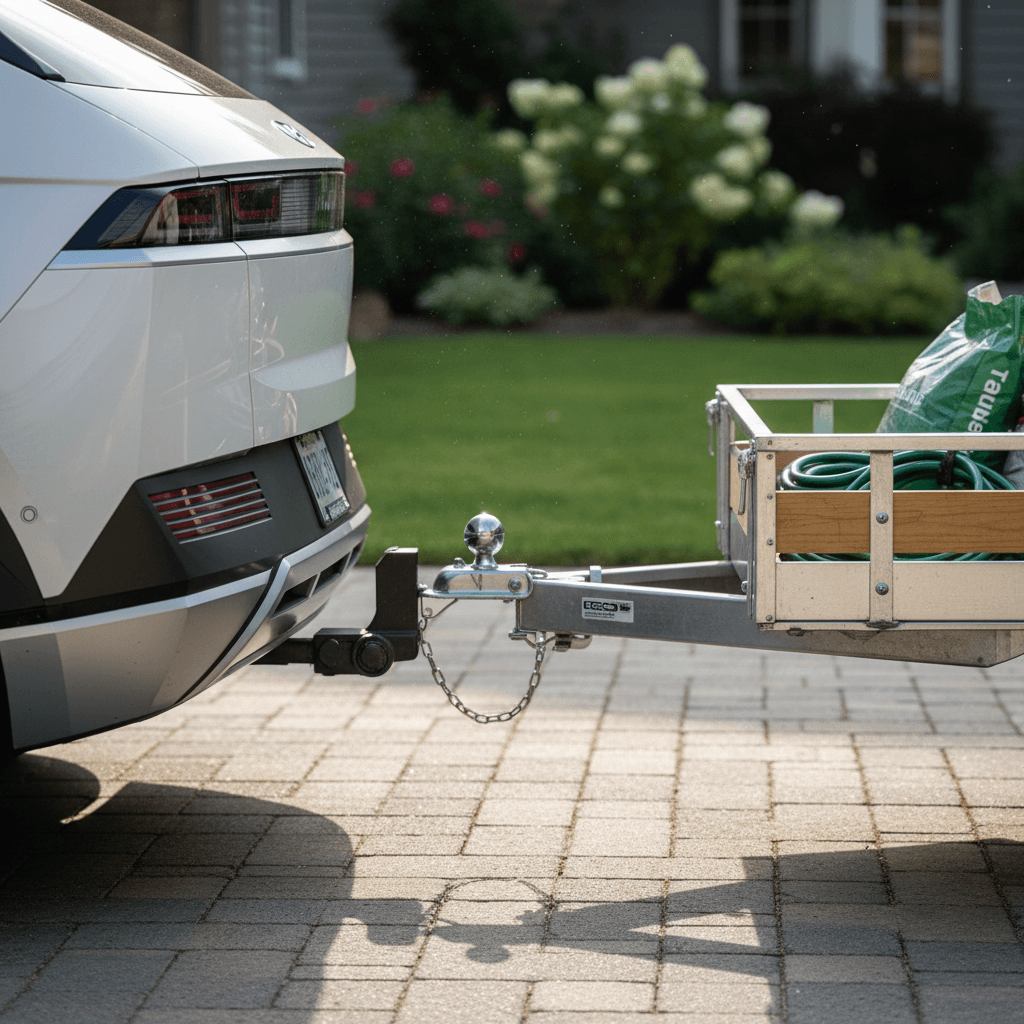
If your IONIQ 5 didn’t leave the factory with a hitch, you’ll need to add the right hardware before you tow so much as a yard of mulch. That means matching a vehicle‑specific hitch, wiring, and possibly a brake controller to your car’s published ratings.
Towing setup checklist for the Hyundai IONIQ 5
1. Confirm your car’s tow rating
Check the owner’s manual and the driver’s door jamb sticker for maximum trailer weight and vertical tongue load. If they conflict with what you’ve read online, trust the factory documentation.
2. Choose a vehicle‑specific hitch
Use a hitch designed for the IONIQ 5, often a Class II or light Class III receiver in North America. Avoid universal hitches that require questionable mounting solutions or compromise ground clearance.
3. Match the ball mount & ball size
Pick a ball mount with the right drop or rise so your trailer tows level. Use the correct ball size for your coupler (commonly 2 in in the U.S.), and ensure the <strong>ball and mount are rated</strong> above your trailer’s loaded weight.
4. Install trailer wiring
At minimum, you need a 4‑pin flat connector for lights. For heavier trailers with electric brakes, step up to a 7‑pin connector and a compatible brake controller. Many owners use plug‑and‑play harnesses built specifically for the IONIQ 5.
5. Add a brake controller if needed
In many states and provinces, trailers above about 1,500–3,000 lbs must have their own brakes. An electronic brake controller lets your IONIQ 5 safely activate them and shortens stopping distances.
6. Weigh your setup
After loading, visit a public scale and check <strong>actual trailer and tongue weights</strong>. Don’t guess. If you’re over your tongue‑weight or GVWR limits, shift cargo or reconsider what you’re towing.
Where Recharged can help
Ready to find your next EV?
Browse VehiclesDriving tips when towing with an electric vehicle
Once you’re hitched up and legal, the IONIQ 5’s low center of gravity and instant torque make it a relaxed tow vehicle, as long as you treat the extra weight and range hit with respect. These habits will make your first towing trip much less stressful.
- Start with short shakedown drives. Before a big road trip, do a few 10–20 mile loops near home to see how your IONIQ 5 accelerates, brakes, and regenerates with the trailer attached.
- Use the right drive mode. Many owners prefer Normal or Eco with towing to soften throttle response and make it easier to keep consumption in check.
- Dial back your speed. Towing at 60 mph instead of 75 can be the difference between stopping every 90 miles and every 140 miles on a long‑range battery.
- Extend following distance. Even with trailer brakes, you’re hauling more mass. Leave extra room and avoid sudden, hard pedal inputs.
- Be gentle with regen. Some IONIQ 5 setups alter or limit one‑pedal driving when trailer wiring is connected; get familiar with your car’s behavior before you’re on a steep downhill.
- Take wider turns and watch mirrors. Practice low‑speed turns in an empty lot to learn where the trailer tracks and how quickly it responds.
Cold weather compounds everything
Is towing the right move for your IONIQ 5?
If you’re picturing your IONIQ 5 as a mini‑truck, it’s time for a reality check. Properly equipped Long Range models are genuinely capable of light‑duty towing, small campers, utility trailers, cargo boxes, bike racks, especially for regional trips where you have good fast‑charging coverage. But they’re not substitutes for a half‑ton pickup or a dedicated tow‑spec SUV.
When an IONIQ 5 is a good tow partner
- You tow only a few times a year.
- Your trailer is under about 2,000 lbs loaded, with 150–200 lbs tongue weight.
- Your routes follow highways with reliable DC fast chargers.
- You’re willing to drive a bit slower and plan charging stops.
When you should think twice
- You want to tow a full‑height camper or heavy boat.
- You live far from fast‑charging corridors.
- You’re already near the IONIQ 5’s payload limit with passengers and cargo.
- You expect to tow long distances every month.
If you fall into that second column, you might be happier letting the IONIQ 5 do daily‑driver duty and keeping a conventional tow vehicle, or renting one when you need it. If you’re still in shopping mode, Recharged can help you compare used EVs with stronger tow ratings alongside IONIQ 5s, so you don’t discover your limits the night before a big trip.
Hyundai IONIQ 5 towing FAQs
Frequently asked questions about towing with the Hyundai IONIQ 5
The Hyundai IONIQ 5 can be a surprisingly capable tow partner, as long as you treat it like what it is: a compact electric crossover with modest tow and tongue‑weight ratings, not a three‑quarter‑ton truck. If you keep your trailer light and low, respect the 10% tongue‑weight rule, and plan for EV‑style charging stops, there’s no reason you can’t haul a small camper or a hardware‑store run behind an IONIQ 5. If you’re still choosing the right used EV for towing duty, Recharged’s battery‑health reports and EV‑savvy specialists can help you match the trailer dreams in your head to the capabilities of the vehicle in your driveway.