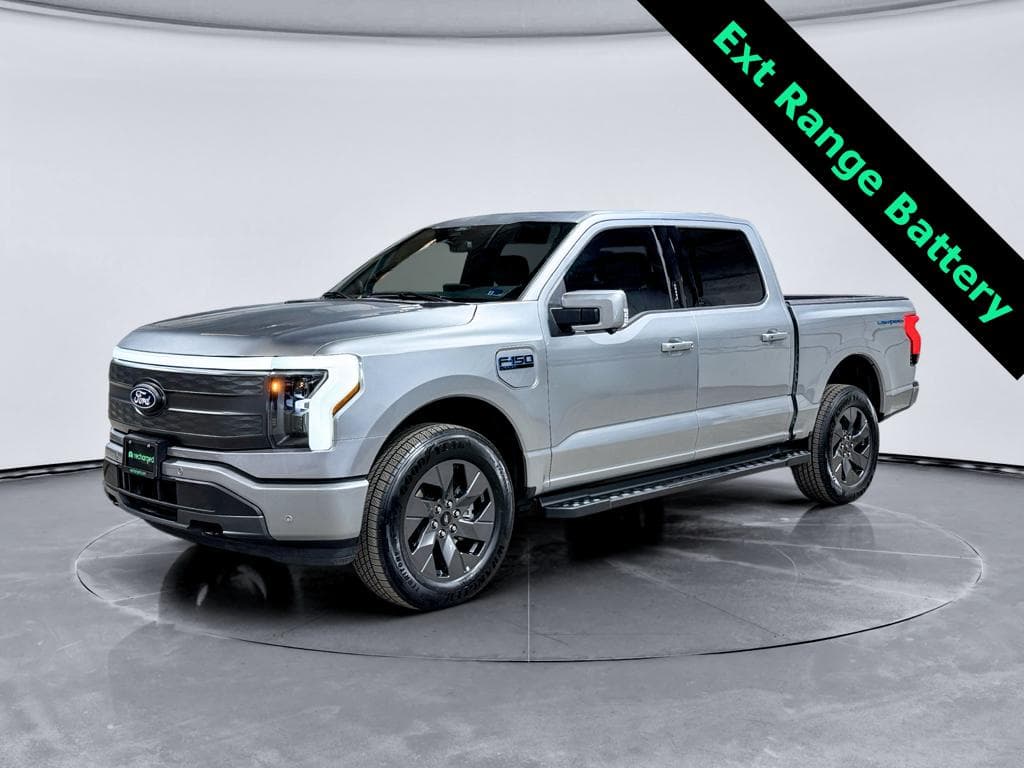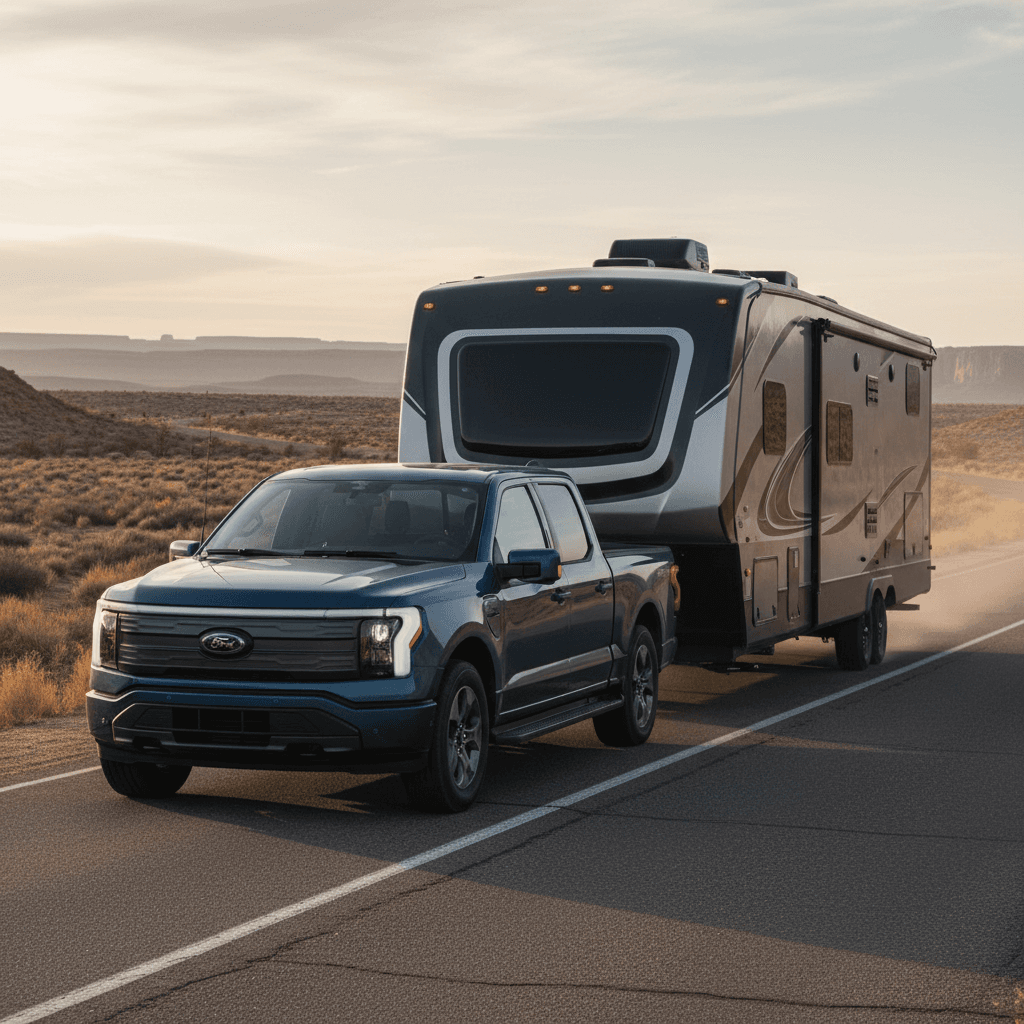
Yes, the Ford F-150 Lightning can absolutely tow a trailer, anything from a pair of jet skis to a mid-size camper, if you match the trailer to the truck and plan for the EV-specific hit to range. The trick isn’t whether it can tow; it’s understanding how far you can go, how fast, and with what kind of trailer before your day turns into a charging scavenger hunt.
Quick answer
Can the Ford F-150 Lightning Really Tow a Trailer?
On paper, the F-150 Lightning’s tow ratings look a lot like a traditional half-ton truck’s. With the right options, it’s rated to pull a 10,000‑lb conventional trailer, firmly in “real truck” territory. The instant torque from the electric motors makes it feel strong and confident getting a load moving, merging, or climbing grades.
Where things change, compared with a gas F‑150, is that your driving range shrinks dramatically when you hang a big box behind it. Air resistance, trailer weight, hills, and speed all pile on. That doesn’t mean you can’t tow; it means you have to tow like a planner, not a gambler.
Biggest mindset shift
Official F-150 Lightning Towing Capacity by Model
Tow ratings vary by battery, trim, and whether the truck has the Max Trailer Tow Package. Exact numbers can shift slightly year to year, but here’s the ballpark for recent model years:
Approximate F-150 Lightning Conventional Tow Ratings
These figures assume a properly equipped truck with factory hitches and tow packages. Always confirm exact ratings on your door jamb label and owner’s manual.
| Configuration | Battery | Max Tow Package | Approx. Max Tow Rating* |
|---|---|---|---|
| Pro / XLT | Standard range | No | 5,000–5,000 lbs |
| XLT | Standard range | Yes | 7,700 lbs |
| Flash / Lariat | Extended range | No | 7,700–8,500 lbs |
| Flash / Lariat | Extended range | Yes | 10,000 lbs |
| Platinum / Platinum Black | Extended range | Yes (standard on many trims) | 8,500–10,000 lbs |
Max trailer weight is not a target, treat it as an upper limit under ideal conditions.
About those numbers
Key F-150 Lightning Towing Numbers at a Glance
What Happens to Range When the F-150 Lightning Tows?
Here’s where the EV towing story gets real. The Lightning has plenty of muscle; its challenge is energy consumption. Two things matter most: how heavy your trailer is and how much air it has to punch through.
Weight vs. Aerodynamics: Which Hurts Range More?
Both matter, but that big flat camper wall is your worst enemy.
Weight (how heavy it is)
Every extra pound makes the motors work harder climbing hills and accelerating:
- Heavy equipment trailers and toy haulers push up energy use.
- Stop‑and‑go traffic amplifies the penalty.
- Braking recovers some energy, but not all.
Aerodynamics (how it slices air)
A tall, wide trailer acts like a parachute:
- Travel trailers and enclosed cargo trailers hurt range most.
- Boats and low open trailers punch a smaller "hole" in the air.
- Above ~60 mph, aero drag dominates the conversation.
Simple rule of thumb
- At 55–60 mph with a mid‑size camper: plan on roughly half your empty‑truck highway range.
- At 65–70 mph with that same camper: it’s not unusual to see closer to one‑third of your rated range.
- With a light, low utility trailer (1,500–3,000 lbs): the hit can be gentler, sometimes in the 25–35% loss ballpark on mild days.
Cold weather warning
What Can You Safely Tow With a Lightning?
The better question than “can Ford F‑150 Lightning tow a trailer?” is “what kind of trailer fits my routes, climate, and patience for charging stops?” Let’s break it down by common trailer types.
How Different Trailers Pair With an F-150 Lightning
Not all 5,000‑lb trailers behave the same.
Boats & open toys
- Typical weight: 2,500–6,000 lbs.
- Boat hulls and low toy trailers are relatively aero‑friendly.
- Great match for weekend trips within 100–150 miles each way.
Travel trailers
- Typical weight: 3,500–7,500 lbs loaded.
- Big flat front walls punish range.
- Best for shorter hops or carefully mapped fast‑charge routes.
Utility & work trailers
- Typical weight: 1,500–5,000 lbs.
- Open or low equipment trailers tow easier than tall enclosed ones.
- Great for contractors and DIY hauls inside a metro area.
5 Questions to Match a Trailer to Your Lightning
1. What’s the truck’s exact tow rating?
Confirm your specific truck’s <strong>GCWR, tow rating, and payload</strong> from the door jamb and owner’s manual, not just an online spec sheet.
2. How heavy is the trailer fully loaded?
Use the trailer’s <strong>GVWR</strong> (max loaded weight), not the dry weight from the brochure. Water, propane, batteries, and gear add up fast.
3. What’s the tongue weight?
Most conventional trailers want <strong>10–15% of total weight on the hitch</strong>. That tongue weight counts against your truck’s payload, along with passengers and cargo.
4. How far between realistic fast chargers?
Map the route with trailer‑friendly DC fast chargers. Aim for <strong>30–40% battery “arrival” and “departure” buffers</strong>, not running to 5% every time.
5. How fast are you willing to drive?
If you insist on 70+ mph with a tall trailer, choose shorter legs and more charging stops, or rethink the combo. The Lightning rewards <strong>60 mph patience</strong> when towing.
Great use cases for Lightning towing
Tow Tech and Driving Modes That Help
Ford didn’t just bolt a hitch to an electric truck and call it a day. The Lightning borrows the F‑150’s towing smarts and adds EV‑specific brains on top of it.
Key F-150 Lightning Towing Features
Electrons and computers working to keep your trailer in line.
Tow/Haul & Tow Drive Modes
- Tow/Haul mode adjusts throttle response, stability control, and regen to handle extra weight.
- It can help maintain speed on grades without constant pedal fiddling.
- On descents, regen can feel like downshifting in a gas truck.
Smart towing aids
- Pro Trailer Backup Assist to steer trailers with a knob.
- Trailer sway control and blind‑spot coverage for the trailer.
- Integrated trailer brake controller for electric brakes.
EV-specific towing smarts
- The truck can learn a trailer profile so it estimates range more accurately next time.
- Some trims offered On-Board Scales and Smart Hitch to help you judge payload and tongue weight.
- Energy use displays help you see how much the trailer is costing in real time.
Driving techniques that pay off
- Set cruise around 60 mph instead of running with the left‑lane heroes.
- Use one‑pedal driving or strong regen in traffic to reclaim energy.
- Keep tire pressures up to spec on both truck and trailer for stability and efficiency.
Name your trailers
Charging and Route Planning When You’re Towing
This is where owning a Lightning turns you into a bit of a logistics nerd, and that’s not a bad thing. You’ll want a charging plan that assumes your range is cut roughly in half when you’re pulling a big camper or heavy enclosed trailer.
How to Plan a Towing Day in a Lightning
1. Start with an honest range estimate
Take your normal highway range, cut it by about <strong>50%</strong> for a big box trailer, and then trim a little more if it’s cold, windy, or hilly.
2. Use DC fast chargers with easy trailer access
Look for <strong>pull‑through or end‑spot chargers</strong> so you don’t have to drop the trailer every time. Apps and satellite view are your friend here.
3. Shorten your charging legs
Instead of empty‑truck 200‑mile stretches, think in <strong>70–120 mile legs</strong>, arriving with 20–40% battery, leaving with 70–90%.
4. Protect your arrival buffer
Headwinds, traffic, or a surprise detour can chew up margin quickly. Arriving with <strong>10–15% more than you thought you needed</strong> is cheaper than a flatbed.
5. Charge at or near your destination
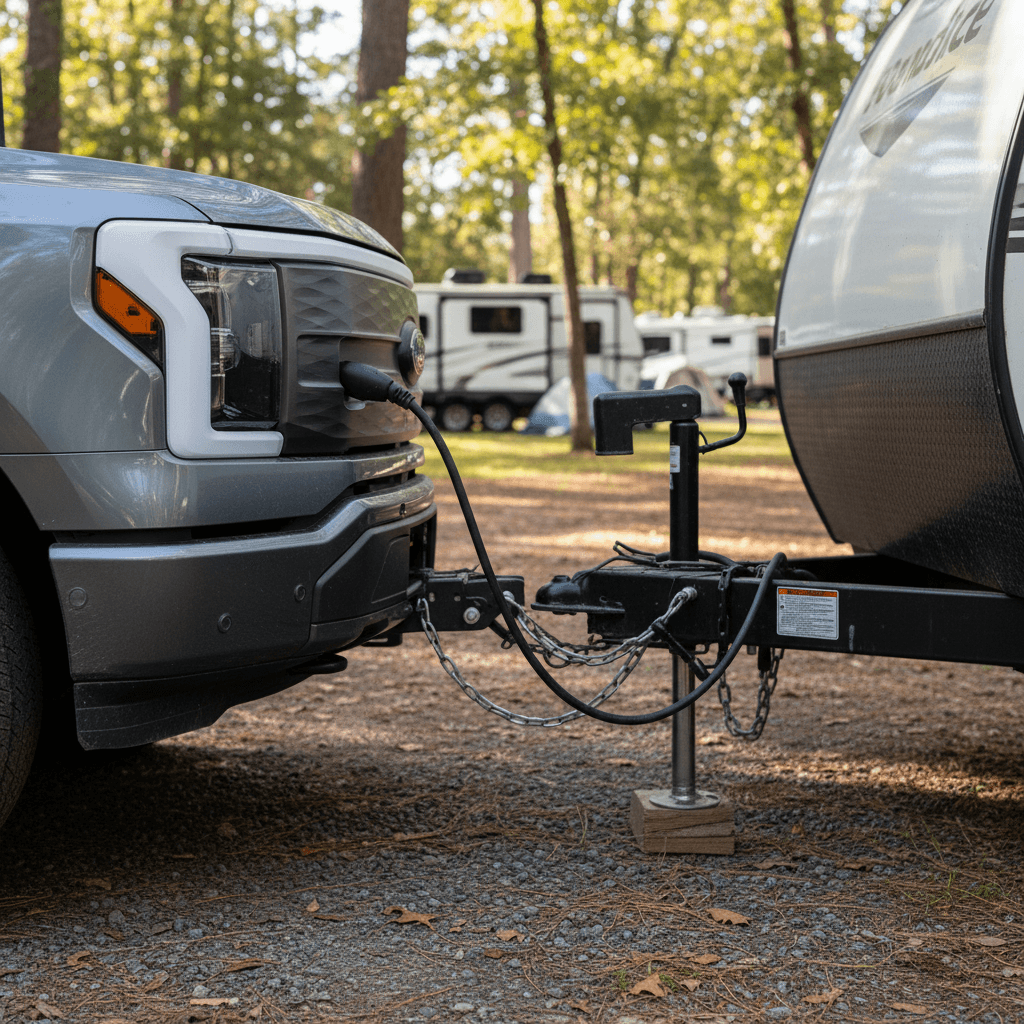
If your campground or marina has even a <strong>50‑amp RV plug</strong>, you can add a chunk of range overnight with a portable Level 2 charger.
6. Pre‑book busy corridors
On popular summer routes, consider planning stops at <strong>larger plazas with multiple fast chargers</strong> to avoid long waits with a trailer in tow.
Home base advantage
Buying a Used F-150 Lightning for Towing: Checklist
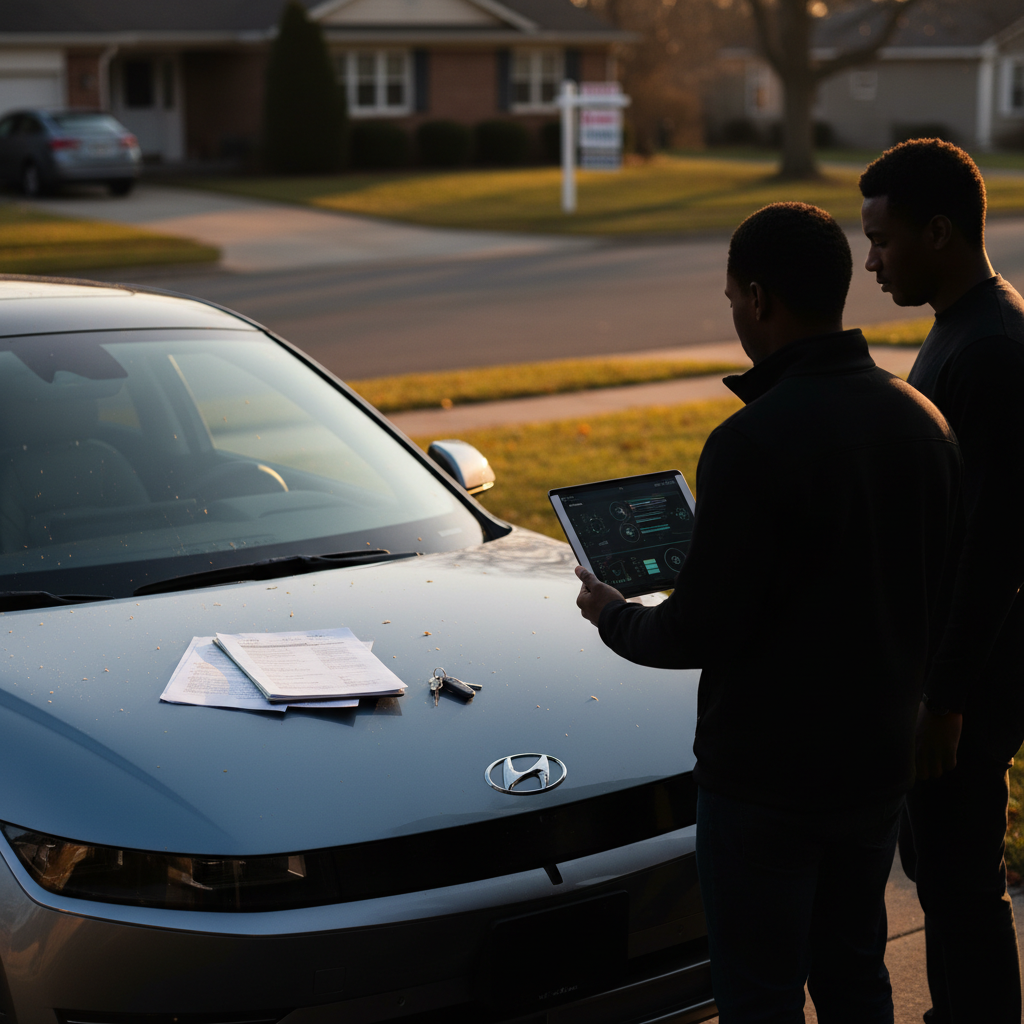
If you’re shopping used, the F‑150 Lightning can be a terrific tow rig, if you pick the right configuration and know what that truck has been doing with its life. This is where Recharged leans in.
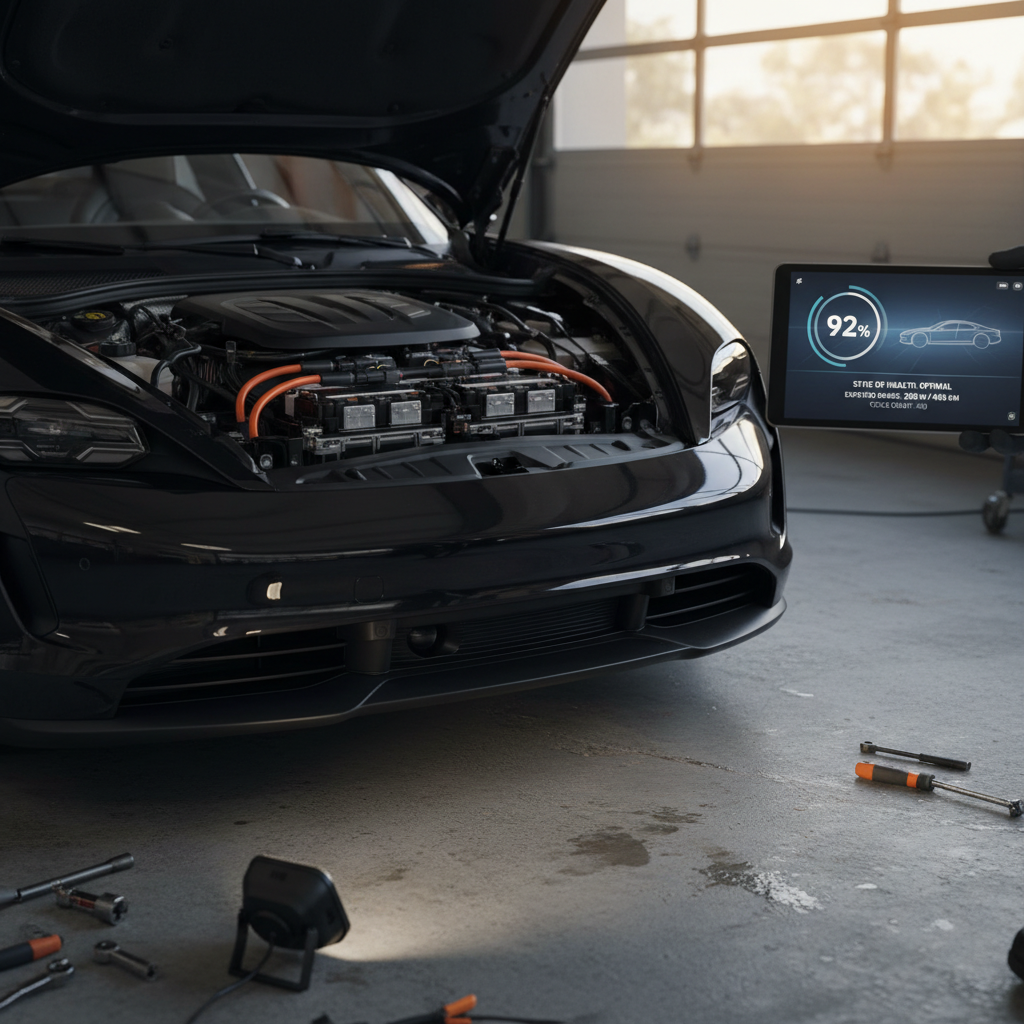
Every used EV on Recharged comes with a Recharged Score battery health report, pricing that reflects real‑world range, and specialists who speak fluent towing and trailers. Here’s what to look for specifically if you plan to tow.
Used Lightning Towing Buyer’s Checklist
Confirm battery and tow package
Extended‑range trucks with the <strong>Max Trailer Tow Package</strong> are the sweet spot for frequent towing. Verify the build sheet and factory hitch rating, not just badges.
Check actual battery health
A healthy pack means more real‑world towing range. On Recharged, the <strong>Recharged Score</strong> spells this out in plain language so you know what you’re buying.
Inspect hitch, wiring, and brakes
Look for a <strong>factory Class IV hitch</strong>, 7‑pin connector, and integrated brake controller if you tow electric‑brake trailers. Check for rust, damage, or DIY wiring fixes.
Ask how it was used
A truck that spent weekends towing a 4,000‑lb camper is different from one that dragged a max‑weight equipment trailer every day. Service records and owner history matter.
Consider your routes
If you live in flat country with dense fast‑charging, you can push trailer size more. If you’re in the mountains or deep rural areas, aim for <strong>lighter and more aerodynamic</strong> trailers.
Plan financing and trade‑in
Recharged can help you <strong>finance a used Lightning</strong>, value your trade, and arrange <strong>nationwide delivery</strong>, so you’re not limited to what’s on the closest lot.
Ford F-150 Lightning Towing FAQ
Frequently Asked Questions About Lightning Towing
Bottom Line: Is the F-150 Lightning Right for Your Trailer?
So, can the Ford F‑150 Lightning tow a trailer? Absolutely. With the right configuration, it’s rated to pull up to 10,000 pounds, and in day‑to‑day use it feels strong, quiet, and composed with a load on the hitch. The real decision isn’t about power, it’s about whether you’re comfortable with the range trade‑offs and the planning that electric towing demands.
If your life looks like weekend trips within a couple of hours of home, local work hauling, and the occasional road‑tripped camping adventure, the Lightning can be a fantastic tow partner that saves you money at the plug and calms the neighborhood at 6 a.m. departures. If you’re dragging a heavy fifth‑wheel coast‑to‑coast on tight deadlines, you may want to keep a traditional tow rig in the stable for now.
Looking at a used F‑150 Lightning and wondering how it will handle your trailer? On Recharged, you’ll see verified battery health, fair pricing, and towing‑savvy experts who can help you match a specific truck to the way you actually camp, boat, or work. That way, when you back up to the coupler for the first time, you’ll know exactly what your electric truck can, and can’t, do.