The Porsche Taycan is the rare EV that can make a jaded enthusiast feel 16 again. It’s also complex, expensive to repair, and evolving quickly. If you’re shopping new or, especially, used, you want a **Porsche Taycan buying checklist** that goes beyond “kick the tires” and actually protects your wallet.
Who this checklist is for
Why a Taycan-specific buying checklist matters
You don’t buy a Taycan the way you buy a Camry. A Taycan has an 800‑volt architecture, air suspension, sophisticated thermal management and, typically, an owner who checked half the option sheet. All of that can be magic when it’s working, and **ruinously expensive** when it isn’t.
Unique Taycan pain points to consider
These don’t make the car bad, but they do demand homework.
High-voltage battery
Complex electronics
Air suspension & chassis
Luxury EVs age differently
Step 1: Choose the right Taycan model and battery
Before you ever inspect a specific car, decide which **Taycan body style and battery** actually suit your life. Otherwise you’ll fall for the wrong car because it has the right wheels.
Quick Taycan model cheat sheet
Use this to match Taycan variants to how you’ll really drive.
| Use case | Good match | What to prioritize | What to skip if possible |
|---|---|---|---|
| Daily commuting, light road trips | Base Taycan / Taycan 4 (sedan) | Efficiency, comfort seats, driver-assistance, Performance Battery Plus | Giant wheels, ceramic brakes, track packages |
| Family hauling, outdoor gear | Taycan Cross Turismo / Sport Turismo | Rear hatch practicality, all-wheel drive, Gravel mode, roof/bike prep | Ultra-low sport suspension, very low-profile tires |
| Performance junkie, occasional track days | Taycan 4S / Turbo / Turbo S | Bigger brakes, torque vectoring, performance seats, Performance Battery Plus | Entry 2WD cars if you live in a snowy climate |
| Long-distance touring | Any Taycan with Performance Battery Plus | Largest available battery, adaptive cruise, better seats, fast DC charging | Smallest battery, flashy options instead of comfort features |
Exact specs and ranges vary by model year and options; always confirm on the specific car.
Battery spec shorthand
Pre-shopping decisions (do these before you see a car)
1. Define your daily use
Write down your actual daily and weekly mileage, typical passengers, and luggage needs. A Taycan Cross Turismo, for instance, makes a lot more sense if you regularly carry bikes, dogs, or strollers.
2. Decide your body style
Pick sedan vs. Cross Turismo/Sport Turismo up front. The wagon-like Taycans are more practical and slightly heavier; the sedans feel a bit more traditional Porsche.
3. Choose power vs. budget
Be honest: do you really need Turbo S levels of thrust, or is a Taycan 4S already beyond your talent? Insurance, tire, and brake costs climb with the badges.
4. Target the bigger battery
All else equal, prioritize cars with the larger battery option. It improves range, resale value, and charging flexibility, especially as DC fast networks get busier.
5. Set a hard budget (car + charging)
Include home charging upgrades, tires, and a cushion for the first year of EV learning. A used Taycan at a “great” price can become expensive if you immediately need wheels, tires, or a 240‑V circuit in your garage.
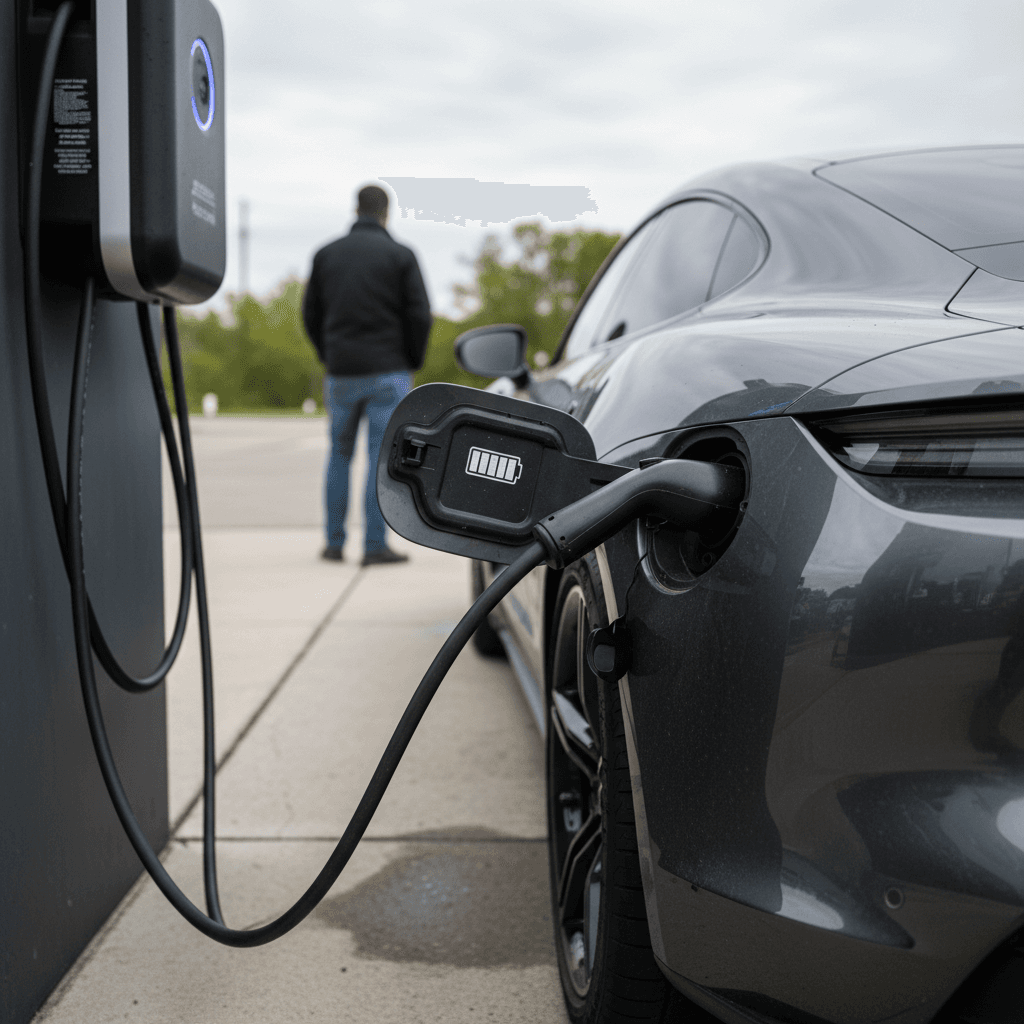
Step 2: Battery health and charging performance
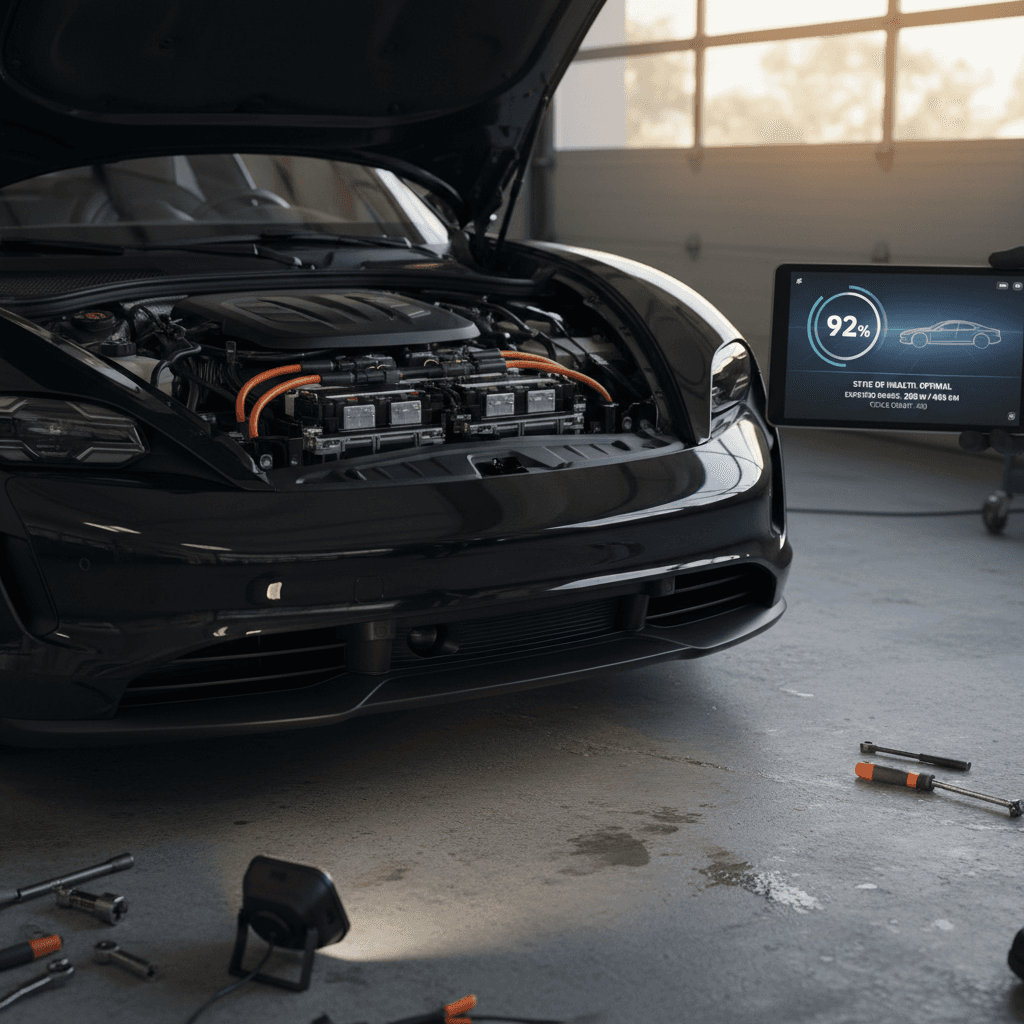
The Taycan’s battery is its beating heart and its single most expensive component. Porsche has improved pack chemistry, range, and charging speeds over time, but **how the previous owner charged and drove the car** matters just as much as the model year.
Key Taycan battery health signals to check
You don’t need lab equipment, just the car, some menus, and the right questions.
Displayed range vs. spec
DC fast-charging behavior
Battery warranty & history
Battery & charging checklist for a used Taycan
1. Get an independent battery health report
Ask for a detailed, third‑party battery diagnostic, like the <strong>Recharged Score</strong> you get on every car sold through <a href="/">Recharged</a>. It quantifies state of health instead of making you guess from the range estimate alone.
2. Review charging history & habits
Ask how the seller typically charged: mostly at home on Level 2, or DC fast-charging every day? Occasional road-trip fast charging is fine; daily 350 kW blasts are harder on the pack.
3. Inspect the charge ports & cables
Check for corrosion, bent pins, or obvious damage on the charge port door and connectors. Make sure the inlets latch cleanly and the included cables aren’t frayed or taped up.
4. Test both AC and DC charging
If possible, plug into a Level 2 AC charger and a DC fast charger. Verify the car starts charging promptly, doesn’t throw warnings, and reaches reasonable speeds for its model year.
5. Check thermal management behavior
Listen for excessive fan noise or warnings during or after charging. Taycans use active thermal management; strange noises or persistent alerts can hint at cooling system issues.
Deal-breaker warning
Step 3: Service history, warranty, and recalls
A Taycan with a spotless service record and remaining warranty is a radically different ownership proposition than a mystery car with missing paperwork. You want evidence that someone cared, and that Porsche has already addressed early bugs.
- Ask for a full, printed service history from a Porsche dealer, not just verbal assurances.
- Verify that all factory recalls and service campaigns (software and hardware) have been completed.
- Confirm remaining factory warranty coverage, including battery, basic vehicle, and any extended plans.
- Look for regular brake-fluid changes and scheduled inspections; electric doesn’t mean “maintenance-free.”
- Check that software updates were applied at a dealer or properly over-the-air, not ignored for years.
How Recharged helps here
Ready to find your next EV?
Browse VehiclesStep 4: Inspect common Porsche Taycan issues
Porsche has steadily improved the Taycan, but early cars and hard‑used examples can show recurring themes. You’re not trying to diagnose everything on the spot; you’re trying to distinguish a well‑cared‑for car from a problem child.
Common Taycan trouble spots to probe
Use these as talking points with the seller and your inspector.
Infotainment & electronics
Air suspension & ride height
12V battery gremlins
Tires, wheels, and alignment
On-site visual inspection checklist
1. Panel gaps & paint
Walk the car in good light; check for mismatched paint, overspray in wheel arches, and inconsistent gaps around doors and hatch. The Taycan’s surfacing is crisp, sloppy bodywork is a tell.
2. Glass roof & trim
Inspect the panoramic roof (if equipped) for chips and cracks, and the window trim for peeling or discoloration. Replacing glass on a Taycan is not a $200 job.
3. Interior wear vs. mileage
A 20,000‑mile Taycan shouldn’t have shiny, crushed bolsters and gouged console plastics. Excessive wear can hint at ride‑share use or just a hard life.
4. Lights and exterior sensors
Test matrix LED headlights, turn signals, DRLs, parking sensors, and cameras. ADAS hardware lives in these components; any non-functioning element can mean an expensive replacement.
5. Underside & wheel wells
If you can, look underneath for scrapes on battery shields or undertrays, and check wheel wells for cracked liners. Tall curbs and steep driveways are the Taycan’s natural predators.
Bring a second set of eyes
Step 5: Options, wheels, and suspension – choose wisely
Porsche’s option catalogs are works of art and minor tragedy. Many Taycans were spec’d like rolling jewelry: huge wheels, ceramic brakes, active chassis tricks. Great to drive, expensive to maintain. Choose the spec that matches how you’ll actually live with the car.
Wheels & tires
- Check wheel size: 21-inch wheels look spectacular but ride harsher, bend easier, and wear tires faster than smaller options.
- Inspect tire brand & rating: Matching high-quality tires with plenty of tread are a good sign; mismatched budget rubber isn’t.
- Ask about replacement costs: Price out a full set of tires before you buy, the number can be eye‑opening.
Suspension & brakes
- Adaptive air suspension: Superb for comfort and handling, but make sure there are no warning lights or odd ride heights.
- Rear-axle steering: Great for parking and stability, but adds complexity. Verify operation on a tight U‑turn.
- Big brake packages: Porsche Surface Coated or ceramic brakes resist fade but are expensive to service or replace.
The wheel trap
Step 6: Test-drive checklist – how a good Taycan should feel
The Taycan at its best feels like a well‑sorted 911 that discovered electricity: quiet, effortless, and utterly planted. Your test drive should confirm that, not make you a beta tester for someone else’s experiment.
Test-drive checklist for any Taycan
1. Start-up and instrument check
Power the car on and wait. All warning lights should come on briefly, then go out. Persistent battery, suspension, or ADAS warnings are your cue to ask tough questions, or leave.
2. Low-speed manners
At parking-lot speeds, listen for clunks over bumps, binding from the steering, or graunchy noises from the brakes. Soft shuffling is normal for big EV tires; metallic knocks are not.
3. Straight-line stability
On a straight road, briefly ease your grip on the wheel. The car should track straight, not drift. Vibration through the steering at highway speeds can point to wheel or tire issues.
4. Regeneration and pedal feel
Get a feel for how much regenerative braking the car offers and how the pedal blends regen and friction brakes. The transition should be smooth, not grabby or inconsistent.
5. Ride comfort and noise
On a rough surface, the Taycan should stay composed, not crashy or loose. Listen for rattles from the dash or rear hatch, these are clues to how carefully the car’s been treated.
6. Performance sample (when safe)
In a safe, legal stretch, roll into the throttle firmly. Power delivery should be smooth and ferocious, without hesitation, stuttering, or drivetrain noises. Any “limp mode” feeling is a serious concern.
“The Taycan is the rare EV that rewards you for driving it hard and punishes you for neglecting it.”
Step 7: Pricing, value, and when to walk away
Taycan pricing can feel like performance art: original MSRPs were sky‑high, and used values move quickly as new variants arrive with better range and charging. Your job isn’t to memorize every trim; it’s to **understand this specific car** in context, model year, specs, battery health, and history.
Biggest value drivers on a used Taycan
Pricing & negotiation checklist
1. Use real EV market data
Look beyond generic book values that don’t understand EVs. A marketplace like <strong>Recharged</strong> bakes in current EV demand, incentives, and battery health when pricing used Taycans.
2. Adjust for battery and tires
A Taycan with a strong battery and nearly new premium tires is worth more than an identical car that needs both. Use replacement quotes as leverage in negotiation.
3. Price in charging and taxes
Include the cost of a home Level 2 charger, installation, and any state or local taxes and fees. Surprises here can erase a negotiated discount.
4. Don’t pay extra for red flags
Salvage titles, incomplete records, or unresolved faults should result in a meaningful discount, or a polite goodbye. There is always another Taycan.
5. Consider financing and trade-in together
If you’re trading a car and financing the Taycan, evaluate the whole deal, not just the monthly payment. At Recharged, you can <strong>get an instant offer</strong> for your current car and compare financing options side by side.
Porsche Taycan buying checklist summary
The Taycan is one of the most compelling EVs on sale: devastatingly quick, beautifully built, and finally endowed, with later model years, with the range and charging performance it always deserved. But that same sophistication makes it a car you should buy with your eyes open and your paperwork in order.
- Pick the right model, body style, and battery for how you actually drive.
- Demand hard evidence of battery health, not just a full charge on delivery day.
- Verify service history, software updates, and recall work through official records.
- Inspect known trouble spots: infotainment, air suspension, 12V battery, wheels, and tires.
- Do a disciplined test drive that checks ride, noise, braking, and charging behavior.
- Value cars based on year, spec, battery, and condition, not just the badge on the trunk.
If you’d rather skip the detective work, buying through Recharged means every Taycan comes with a Recharged Score battery report, transparent pricing, and EV‑specialist support from first click to delivery. However you shop, keep this checklist handy, and let the right Taycan earn its spot in your garage.