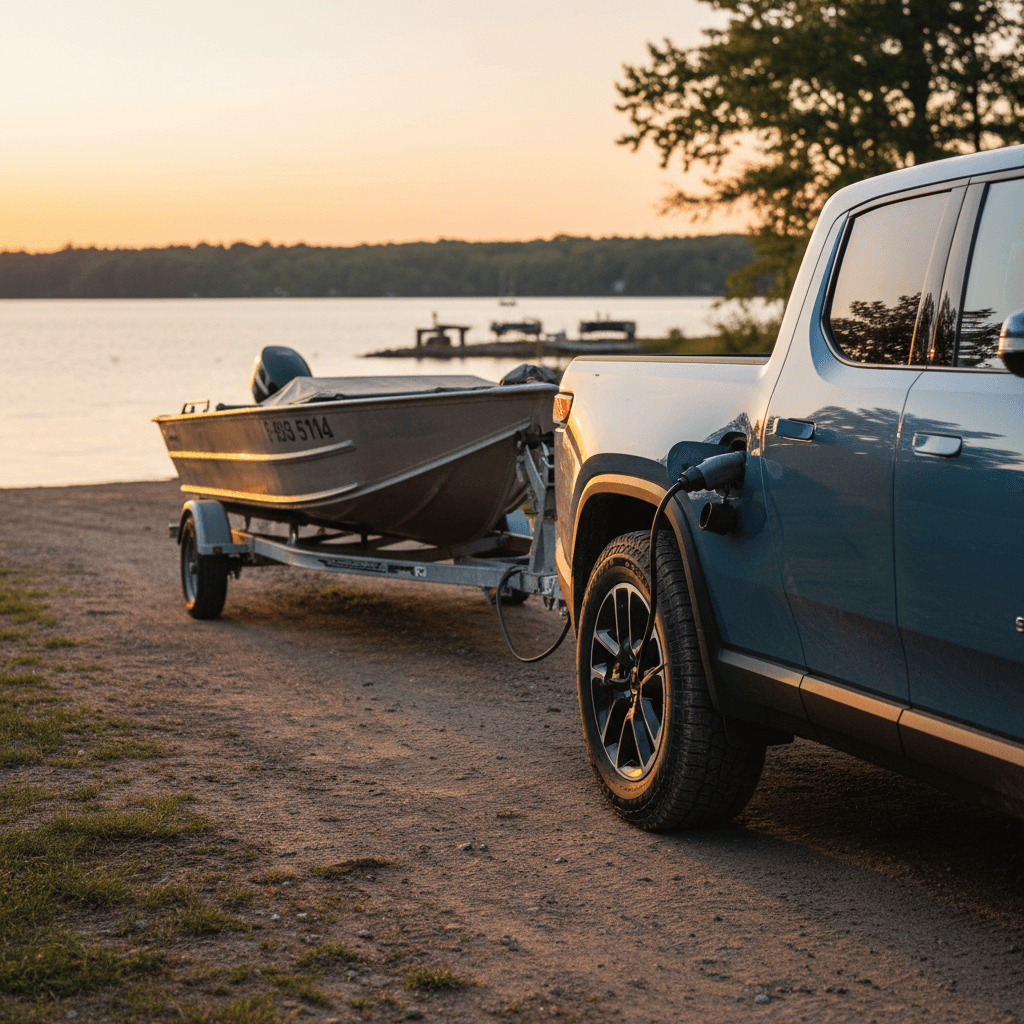
Yes, an EV can tow a boat, and some electric SUVs and trucks are rated to pull 5,000–11,000 pounds. The real question isn’t “can an EV tow a boat?” but “which boats, how far, and how safely?” This guide breaks down tow ratings, range loss, ramp behavior, and what to check if you’re considering a new or used EV as your tow vehicle.
The short answer
Can an EV really tow a boat?
Electric motors deliver instant torque, which is exactly what you want when pulling a trailer up a ramp or merging with traffic. From a power standpoint, there is nothing about electricity that prevents towing. What matters is how the vehicle is engineered: frame strength, brakes, cooling, and whether the manufacturer has actually rated the EV for towing in its owner’s manual.
- Several all‑electric trucks and SUVs are rated between 3,500 and 11,000+ pounds of towing capacity.
- Many plug‑in hybrids (PHEVs) like performance SUVs are rated around 5,000–7,700 pounds, enough for a sizeable boat.
- Some compact EVs technically could tow, but the manufacturer does not approve towing at all. Those should not be used to pull a boat.
Capacity must be in writing
EV tow ratings vs. typical boat-and-trailer weights
To decide whether an EV can tow your boat, you need two numbers: the EV’s maximum tow rating and your boat’s true package weight (boat + motor + fuel + gear + trailer). Here’s how they generally line up.
Common EV tow ratings vs. boat-and-trailer packages
Approximate examples only, always confirm exact specs for your EV and your boat.
| Boat package | Typical loaded weight* | EVs that may handle it (examples) | Notes |
|---|---|---|---|
| Aluminum fishing boat 16–17 ft | 2,000–2,500 lb | Compact PHEVs; some 3,500 lb‑rated EV SUVs | Light and aerodynamic, usually easy for rated EVs |
| Fiberglass bowrider 18–20 ft | 3,000–4,500 lb | 3,500–5,000 lb‑rated EV SUVs and trucks | Watch gear, fuel and passengers, weight adds up fast |
| Wake boat 21–23 ft | 5,000–7,000 lb | 5,000–8,500 lb‑rated electric trucks/SUVs | High drag and heavy trailers: big hit to range |
| Offshore center console 24+ ft | 7,000–10,000+ lb | High‑capacity electric pickups only | At this size, charging and range planning dominate the trip |
Match your real-world boat package to an EV that has comfortable capacity in reserve.
Don’t forget the trailer
Range: how far can an EV tow a boat?
Range is where towing a boat with an EV feels different from a gas SUV. A trailer adds weight and, more importantly, aerodynamic drag. That means your energy use per mile can nearly double compared with driving unladen.
How a boat affects EV range (rule‑of‑thumb)
Real‑world tests with electric pickups towing 8,000–11,000 pounds routinely show range dropping to roughly half of the EPA rating. Lighter, more aerodynamic boats may do better, but it’s wise to plan as if your towing range is 40–60% of normal, then be pleasantly surprised if you beat it.
Planning a towing route with an EV
Boat ramps, EVs and water: practical concerns
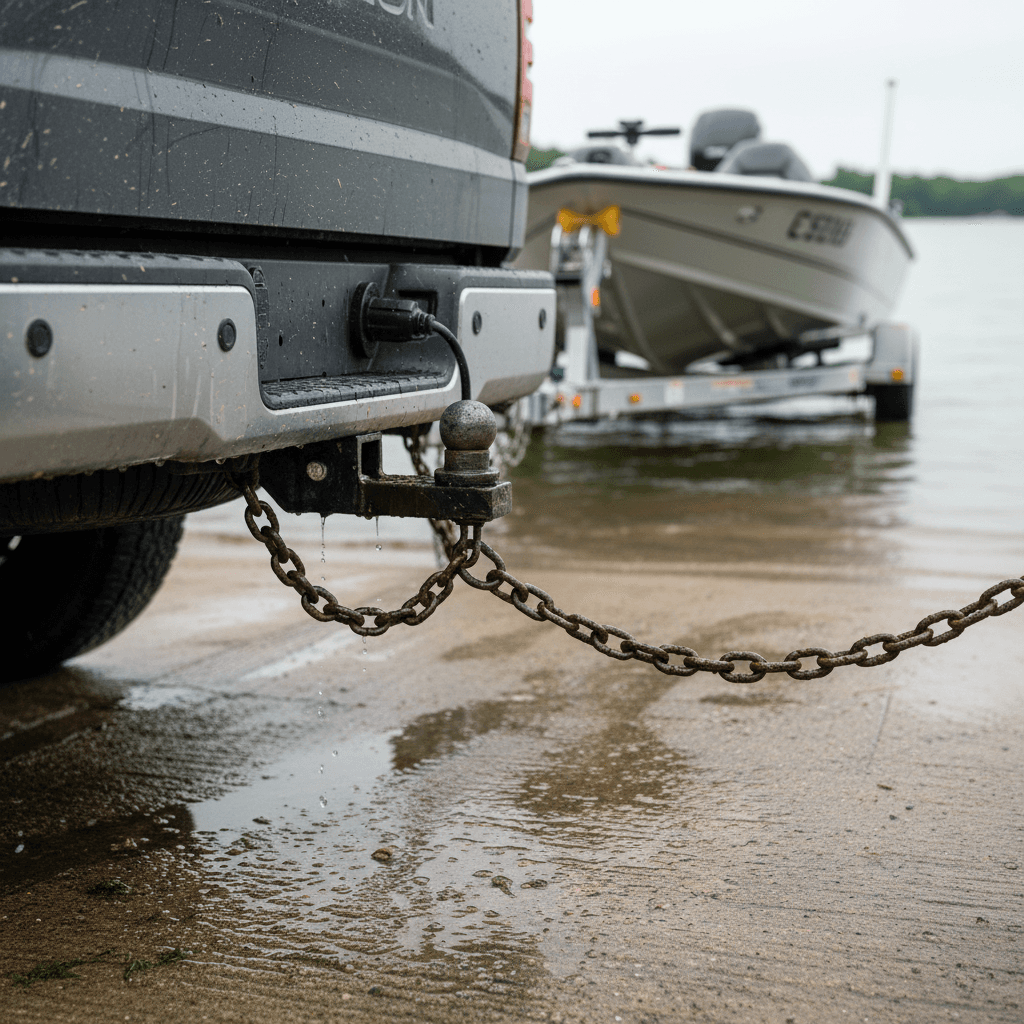
A common fear is “Won’t the battery get wet at the ramp?” In practice, EVs that are rated for road use have sealed battery packs and high‑voltage components. You’re not backing the pack itself into the lake, what matters more is traction, control and driver technique.
Where EVs shine at the ramp
- Instant torque at low speed makes it easy to ease the boat in or pull it out without revving.
- Many EVs have hill‑hold and creep functions that make backing down a ramp more controlled.
- Some electric trucks offer integrated trailer cameras and trailer light checks that simplify launching.
Where you must be careful
- EVs are heavy. Combined with a boat, that’s a lot of mass on worn or algae‑covered ramps.
- Strong regen braking can feel grabby at low speed; learn how to switch drive modes to soften it while maneuvering.
- As with any tow vehicle, avoid backing so far that the rear wheels enter deep water or lose traction.
Respect traction on slick ramps
Weight math: tow rating, payload and tongue weight
The biggest towing mistakes, EV or gas, usually come from ignoring the fine print on the doorjamb sticker. With boats, you need to think about three numbers: tow rating, payload, and tongue weight.
Three weight numbers every EV boat‑tower must know
All three show up on your door sticker or in your owner’s manual.
Tow rating
Payload
Tongue weight
Boat trailer tongue weight is different
Tongue weight directly eats into your EV’s payload. For example, a 4,500‑lb bowrider package with 8% on the hitch puts about 360 lb on the rear of the vehicle, before you add passengers, a cooler, or gear in the cargo area. Electric trucks can have lower payload than comparable gas models because of their batteries, so do this math carefully.
Quick payload sanity check for your EV
1. Find your payload number
Open the driver’s door and look for the yellow or white label that lists “Maximum combined weight of occupants and cargo.” That’s your payload.
2. Estimate tongue weight
Multiply your loaded boat‑and‑trailer weight by 0.07–0.10 for most rigs to approximate tongue weight. When in doubt, use the higher number.
3. Add people and gear
Add the weight of every passenger, dog, and bag you plan to carry in the EV. Don’t forget coolers, tools, or camping gear in the cargo area or frunk.
4. Compare to payload
Tongue weight + people + gear must be <strong>below</strong> the payload rating. If you’re close, consider moving cargo to the boat or reducing passengers.
Step-by-step checklist for towing a boat with an EV
Once you’ve confirmed your EV is rated to tow your boat, a consistent routine makes every ramp trip smoother. Use this EV‑specific checklist before your first launch of the season, and anytime you change boats or routes.
EV + boat launch checklist
1. Confirm ratings and equipment
Verify that your EV has the factory tow package (cooling, wiring, hitch), check its <strong>braked tow rating</strong>, and confirm your hitch, ball size, and receiver are rated for more than your trailer’s loaded weight.
2. Charge strategically
For long highway runs, aim to leave home or the last DC fast charger with <strong>70–100% SOC</strong>, then plan your first stop after 60–120 miles depending on boat size and terrain.
3. Use the right drive mode
Select your EV’s <strong>tow/haul mode</strong> if available. This typically adjusts throttle response, regen, suspension and cooling for safer towing.
4. Check tire pressures
Set tire pressures on both EV and trailer to the recommended towing spec. Under‑inflation increases heat and rolling resistance, reducing range and safety.
5. Test lights and brakes
Plug in the trailer harness, then test running lights, turn signals, and brake lights. If you have electric trailer brakes, verify the gain setting before rolling.
6. Practice ramp maneuvers
Before a crowded Saturday, practice backing and pulling the boat on a quiet ramp or lot. Get a feel for <strong>how regen behaves</strong> at very low speeds in reverse and drive.
Best EVs for towing boats today
If your primary goal is weekend boat trips plus daily driving, you’ll want an EV or PHEV that balances tow rating, range, and payload. Here’s how the landscape generally looks in early 2026.
Three EV categories that tow boats well
Match your boat and driving pattern to the right type of electric vehicle.
All‑electric pickups
Electric SUVs & crossovers
Plug‑in hybrid SUVs
Match your EV to your boat, not the other way around
Buying a used EV for towing: what to look for
Shopping the used market is a smart way to get into an EV with serious capability without paying first‑owner depreciation. But towing adds stress, so you’ll want extra transparency into battery health and prior use.
Must‑check items on any used EV tow rig
- Battery health: Ask for objective testing, not just a guess based on the dash readout. Consistent high‑load use can expose a weak pack faster.
- Tow package verification: Look for the factory hitch, wiring, and upgraded cooling if the model offered it. Aftermarket hitches without cooling upgrades may limit safe towing.
- Service history: Evidence of regular maintenance, software updates, and any warranty work on driveline or cooling systems.
Where Recharged can help
Every EV sold through Recharged includes a Recharged Score Report with verified battery health, pricing analysis, and EV‑specialist support. If you tell our team you plan to tow a boat, they can help you:
- Identify models and trims with the right tow and payload ratings.
- Review the vehicle’s battery diagnostics under load.
- Arrange financing, trade‑in, or consignment for your current vehicle before you switch tow rigs.
Try before you commit
Frequently asked questions: EVs and boat towing
EV boat towing FAQ
Bottom line: yes, an EV can tow your boat, if you plan for it
An EV can absolutely tow a boat, from light aluminum fishing rigs all the way up to serious wake boats and offshore hulls, provided the vehicle is rated for the job and you respect its limits. The real shifts, compared with gas trucks, are shorter practical range, tighter payload margins, and the need to route your trips around reliable charging.
If you’re exploring a used EV as your next tow vehicle, working with a specialist matters. Recharged pairs every car with a Recharged Score Report, verified battery health diagnostics, and EV‑savvy advisors who understand towing, payload, and real‑world range. That way, when you back down the ramp on a busy Saturday, you’re thinking about the fish, or the ski run, not worrying whether your EV can handle the haul.