If you’re hunting for the best EV lease deals in New York in 2026, you’ve probably noticed two things: the eye‑catching monthly payments in ads, and the fine print that makes your eyes cross. Between the end of the old federal lease “loophole,” New York’s generous Drive Clean Rebate, and aggressive offers from some brands, it’s a very different landscape than it was even a year ago. This guide cuts through the noise so you can zero in on real‑world deals that work for New York drivers.
Quick 2026 reality check
Why EV leasing in New York looks different in 2026
First, a bit of context. For several years, leasing an EV could be dramatically cheaper than buying because leasing companies could claim the federal EV tax credit and pass it to you as a lower payment. A major federal policy package phased those benefits out for new leases after September 30, 2025, and also set an end date of June 30, 2026 for the federal credit on installing home charging equipment. That doesn’t mean great EV leases disappeared, but it does change where the savings come from and which offers are truly special.
New York EV deal landscape in early 2026
In practical terms, 2026 EV lease deals in New York often lean on a mix of manufacturer cash, dealer discounts, and New York’s own EV programs. The trick is knowing which advertised offers are genuinely strong and which just look pretty on a billboard.
How EV incentives work on 2026 leases in New York
1. New York’s Drive Clean Rebate
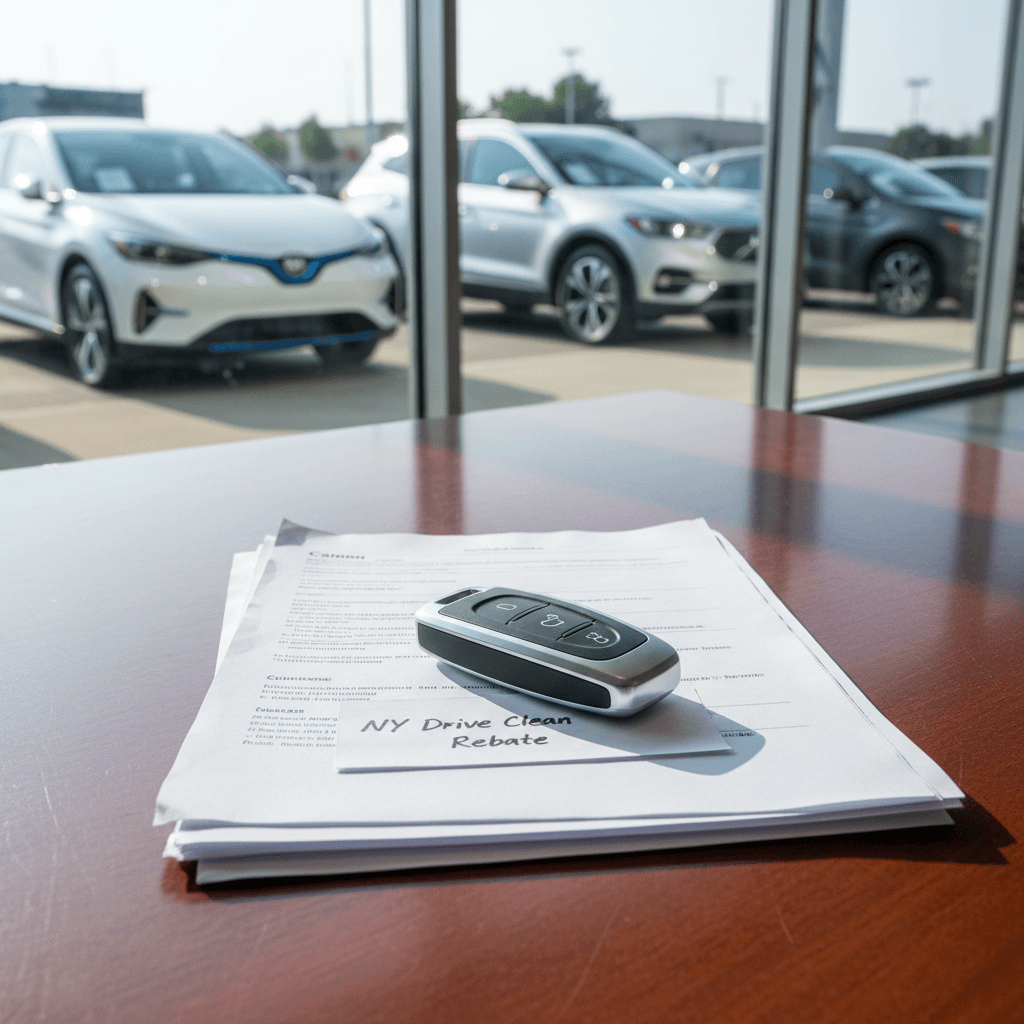
New York’s Drive Clean Rebate is still the star of the show. It offers up to $2,000 off the price of a qualifying new EV at a participating dealer. That discount can apply when you buy or lease, as long as the car and transaction meet the program’s rules and funding is available.
- The rebate is taken at the point of sale, not at tax time.
- The amount depends on the EV’s MSRP and range.
- Not every trim qualifies, often there’s a price cap.
When you’re reviewing a lease worksheet, the rebate should appear as a separate line item reducing the capitalized cost.
2. The post‑2025 federal picture
Before September 30, 2025, leasing companies could claim the federal clean vehicle credit even on models that didn’t meet all the buyer‑side rules, then convert that into lease cash. That’s what powered many “too good to be true” EV lease deals in 2024–2025.
In 2026, that lease‑side federal credit has been largely phased out. Dealers may still advertise "EV lease bonus" or "lease cash," but now those dollars usually come from the manufacturer’s marketing budget, not the IRS.
Translation: the best 2026 EV lease deals in New York are more brand‑specific, and less driven by broad federal policy.
Ask this at the dealership
If you’re installing a home charger at a New York house or condo, remember that federal tax support for EV charging equipment is scheduled to end after June 30, 2026. If you plan to lease an EV and add a Level 2 charger, timing those projects together can reduce your overall cost of ownership, even if the charger credit doesn’t change your lease payment directly.
Best EV lease deals in New York right now: 2026 snapshot
Lease programs change monthly, sometimes weekly, and they can even vary by ZIP code within New York. So instead of pretending there’s one magic payment that fits everyone, let’s talk about the types of 2026 EV lease deals that are standing out in New York, using real‑world offers as examples. Always confirm current terms with local dealers before you sign anything.
Common 2026 EV lease deal patterns in New York
These aren’t locked‑in offers, but they reflect the kinds of electric car leases New Yorkers are actually seeing advertised or discussed in early 2026. Payments assume good credit and average annual mileage; your numbers will vary.
| Deal type / segment | Typical term | What makes it attractive in NY | What to watch out for |
|---|---|---|---|
| Compact & midsize crossovers (Hyundai Ioniq 5/6, Kia EV6, VW ID.4) | 36 months | Brands chasing market share with promotional money; often the sweet spot for a low payment vs. range and space. | Higher acquisition fees, limited mileage (10,000–12,000 miles/year), and payments jumping if you roll negative equity from a previous lease. |
| Luxury EV sedans & SUVs (Tesla Model 3/Y, BMW i4, Mercedes EQE, Lucid Air) | 24–36 months | Low money factors (interest rates) instead of giant rebates; sometimes conquest cash if you’re coming from a gas luxury brand. | Big drive‑off amounts hiding in the fine print, pricey wear‑and‑tear charges, and expensive insurance in NYC and Long Island. |
| Three‑row family SUVs (Kia EV9, Volvo EX90, large luxury SUVs) | 36 months | Often include loyalty or conquest bonuses; some brands bundle free maintenance or charging credits. | MSRP can blow past eligibility caps for the best state programs; easy to get upside‑down if you drive far beyond the mileage limit. |
| Older but still new inventory (late‑build 2025 models) | 24–36 months | Dealers motivated to clear lots as 2027s arrive, especially if a model is being updated or phased out. | Limited color/trim choice and shorter factory warranty coverage remaining by the time the lease ends. |
Use this table as a pattern guide, then plug in current New York offers when you shop.
Watch the advertised fine print
Which EV lease fits your New York life?
Match the lease to your New York reality
Commutes, parking, and charging access matter just as much as the monthly payment.
City apartment dweller
If you’re in NYC or another dense area without a dedicated parking spot, focus on:
- Shorter terms (24 months) so you’re not locked in if public charging doesn’t work for your routine.
- Models with strong DC fast‑charging speeds and preconditioning.
- Leases that include free or discounted public charging credits.
Don’t overpay for big battery capacity you can’t easily charge at home.
Suburban commuter
Driving from Westchester, Long Island, the Hudson Valley or Capital Region into a city hub?
- Look for 36‑month leases with 12,000–15,000 miles/year.
- Prioritize efficiency and highway comfort over 0–60 sprints.
- Factor in the cost of installing a home Level 2 charger before the federal credit sunsets mid‑2026.
This is where mainstream crossovers like the Ioniq 5 and EV6 often shine.
Upstate & weekend adventurer
In the Adirondacks, Finger Lakes, or Southern Tier, your EV lease needs:
- Solid winter range and all‑wheel drive availability.
- Easy access to DC fast charging on your usual routes.
- Mileage allowances that match road‑trip habits.
Pay close attention to battery‑warmup features and ground clearance if you’re on snowy or unpaved roads.
Where a used EV can beat a new lease
How to stack New York EV lease savings like a pro
The best EV lease deals in New York in 2026 don’t come from one magic program, they come from stacking the right pieces. Think of it as building a sandwich: manufacturer incentives, state programs, and dealer competition all layered together.
Savings stack checklist for New York EV leases
1. Start with manufacturer programs
Check the brand’s national offers page and local New York‑area ads. Look for low money factors, bonus cash, or conquest offers if you’re switching brands. These set the baseline before state programs kick in.
2. Confirm Drive Clean eligibility
Use NYSERDA’s eligible vehicle list to confirm the exact trim you’re leasing qualifies for a <strong>Drive Clean Rebate</strong> and how much. If the MSRP is too high, consider a lower trim that still has the features you need.
3. Compare multiple dealers
In New York, two dealers 20 miles apart can treat the same lease program very differently. Ask each store for a written lease quote that shows selling price, rebates, and fees. Don’t be shy about sharing written quotes to encourage competition.
4. Decide on home charging timing
If you plan to install a Level 2 charger, talk to your tax professional about doing it before the <strong>June 30, 2026</strong> federal credit sunset. Combining a new lease and charger upgrade in the same tax year can simplify planning and cash flow.
5. Negotiate beyond the payment
Instead of saying “I need to be at $399/month,” talk about <strong>selling price, fees, and mileage allowance</strong>. A dealer can hit your target payment by stretching the term or shrinking mileage, both of which can cost you more in the long run.
6. Run the total‑cost math
Add up total payments, drive‑off, expected charging costs, insurance, and parking. Compare that 3‑year total to buying, or to a lightly used EV from a trusted marketplace like Recharged. Sometimes the “best deal” isn’t the one with the lowest headline payment.
Lease vs buy vs used EV in New York in 2026
When a 2026 EV lease makes sense
- You want the latest tech and safety features and don’t mind swapping cars every 2–3 years.
- You’re unsure how an EV fits your life and prefer to test the waters.
- You can stay under 10,000–12,000 miles a year.
- You value a predictable payment and don’t want to worry about future resale value.
Leasing can also be a smart move if you expect EV technology, charging networks, or your own housing situation to change quickly in the next few years.
When buying or going used beats leasing
- You drive a lot or plan to keep the car 5–8 years.
- You can fully use New York’s Drive Clean Rebate and any remaining federal support for purchases.
- You want to build equity instead of returning the car at term‑end.
- You’re comfortable buying a used EV with a verified battery health report.
This is where Recharged can help. Every used EV on Recharged comes with a Recharged Score Report that shows real battery health, fair market pricing, and expert guidance, so you’re not guessing what the car will be like once the honeymoon phase ends.
Don’t ignore battery health on used EVs
Avoiding common EV lease mistakes in New York
- Chasing the lowest monthly payment without checking drive‑off costs, mileage, and total paid over the term.
- Assuming every EV qualifies for New York’s full Drive Clean Rebate, price caps and range requirements matter.
- Underestimating insurance costs, especially for luxury EVs garaged in NYC boroughs.
- Leasing an EV that’s hard to charge from your home, office, or usual routes, then paying a fortune in time and fast‑charging fees.
- Ignoring lease‑end conditions, excess wear, over‑miles charges, and purchase options, until the last month.
Bring your own homework
Step-by-step checklist for signing an EV lease in New York
Before you sign: New York EV lease checklist
1. Decide how you’ll charge
Confirm where you’ll charge most often, home, workplace, or public networks, and what that will cost. If you can’t realistically install home charging, focus on EVs with strong fast‑charge performance and plan your routes around reliable stations.
2. Verify state and local incentives
Check that your chosen EV and lease structure qualify for New York’s Drive Clean Rebate and any local utility programs. Print or save program details on your phone so you can reference them at the dealer.
3. Get at least three real quotes
Ask three New York‑area dealers for itemized quotes on the same vehicle and term. Compare selling price, fees, incentives, money factor, and residual value, not just the monthly payment.
4. Read the mileage and wear terms twice
Make sure the mileage allowance matches your actual driving. If you know you’ll exceed it, ask about buying miles up front, it’s usually cheaper than paying penalties at the end.
5. Ask about lease‑end options
Clarify how EV lease returns work at that brand: fees, purchase options, and any loyalty incentives. Some manufacturers have been known to offer attractive buyout rebates or loyalty credits to keep you in the family.
6. Compare against a used EV scenario
Before you sign, price out a comparable used EV, ideally one with a verified <strong>Recharged Score Report</strong>, and estimate payments, charging, and insurance. If the total three‑year cost is similar or lower, owning may be the better play.
Best EV lease deals New York 2026: FAQ
Frequently asked questions about 2026 EV leases in New York
The bottom line on 2026 EV leases in New York
In 2026, the best EV lease deals in New York aren’t the screaming headlines from a few years ago, but there are still excellent plays if you know where to look. Automakers are pushing key models with lease cash, New York’s Drive Clean Rebate still softens the blow on the right vehicles, and dealers are hungry to move EV inventory as adoption grows.
Your job is to match the deal to your life: city apartment or suburban driveway, 8,000 miles a year or 20,000, early‑adopter or long‑term keeper. Run the total‑cost math, stack the incentives, and always compare a new lease against a well‑vetted used EV. If you decide that owning a pre‑loved electric car is the better path, Recharged is built to make that journey simple, with verified battery health, fair pricing, financing, trade‑in options, and expert EV support from your first click to the day the car shows up in your driveway.