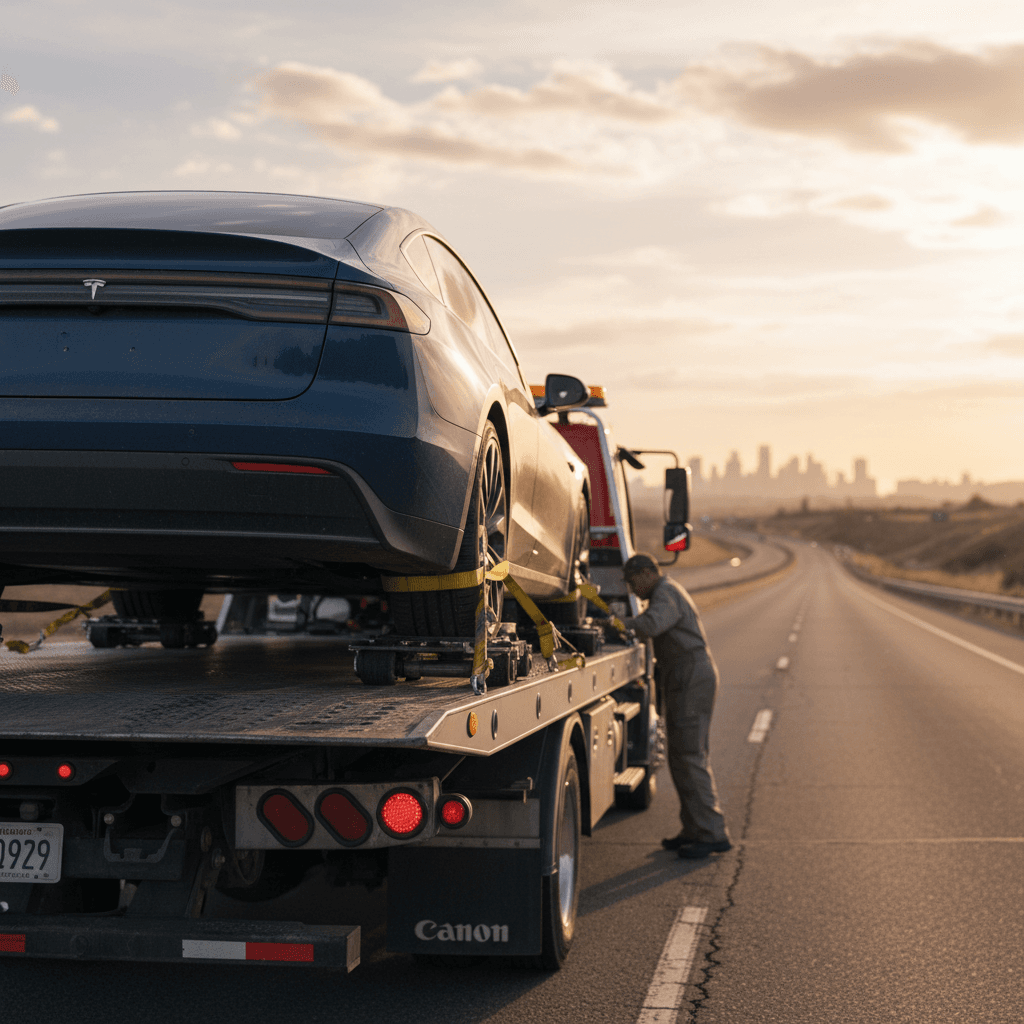
If you break down in an electric vehicle, one of the first questions you’ll ask is, “Can my EV be towed by a regular tow truck without ruining the battery or motor?” The short answer: yes, an EV can be towed by a regular tow company, but not with every truck or every method. The wrong kind of tow can quietly turn a minor roadside issue into a four‑figure repair bill.
Bottom line up front
Can an EV Be Towed by a Regular Tow Truck?
“Regular tow truck” usually means the same local outfits that tow gasoline cars all day, flatbeds, wheel‑lift trucks, and sometimes older hook‑and‑chain rigs. Your EV can absolutely ride on those trucks as long as the method keeps the drivetrain protected.
- Safe in most cases: a modern flatbed tow truck, operated correctly, with all four wheels off the ground.
- Sometimes safe: a wheel‑lift truck using quality dollies to lift the remaining wheels, for short distances and only on models that allow it.
- Not safe for most EVs: flat towing with all four wheels on the ground, or basic two‑wheel towing with the drive axle rolling.
NHTSA notes that EVs require extra care when being towed because their drive axles are tied directly to electric motors. Many manufacturer manuals say “flatbed only” for exactly that reason. The rule of thumb is simple: if the tow truck keeps every wheel off the road, it’s generally safe for your EV.
Why Towing an EV Is Different from a Gas Car
On a gasoline car with a traditional automatic transmission, you can often put the car in neutral and tow it a short distance without major drama. EVs don’t play by those rules. Their wheels are mechanically connected to one or more electric motors, and many don’t have a true mechanical neutral.
Gas Car vs. EV: What Happens When You Tow
Same tow truck, very different physics under the skin.
Gas vehicle
- Transmission can often be put in neutral to disconnect engine from wheels.
- Flat towing is allowed on some models within distance and speed limits.
- Drivetrain damage is possible, but usually only if rules are ignored.
Electric vehicle
- Wheels stay connected to the electric motor and regenerative braking systems.
- Spinning the wheels can generate electricity and overheat power electronics.
- Most manuals warn against flat towing entirely; flatbed is the default recommendation.
Why the wheels matter
Tow Truck Types: Which Ones Are Safe for EVs?
Not every “regular” tow truck works the same way. Understanding the differences helps you give clear instructions when you call roadside assistance.
Common Tow Truck Types and EV Compatibility
Use this as a quick reference when you’re on the phone with a dispatcher.
| Tow truck type | How it works | EV‑safe? | Notes for EV owners |
|---|---|---|---|
| Flatbed / rollback | Vehicle is winched or driven onto a tilting bed; all four wheels off the ground. | Yes – recommended | Best option for almost every EV. Ask for a flatbed first. |
| Wheel‑lift (no dollies) | Hydraulic yoke lifts one axle; the other axle rolls on the road. | Usually no | Unsafe for most EVs because drive wheels often stay on the ground. |
| Wheel‑lift + dollies | Lifted axle on the yoke, other axle on small dollies that raise wheels off pavement. | Sometimes | Can work for some FWD or RWD EVs for short distances if the manual allows it. |
| Hook‑and‑chain | Older style that hooks to the frame and can drag wheels or suspension. | Rarely | Generally a bad idea for modern EVs due to low ground clearance and battery pack location. |
| Car-hauler trailer | Vehicle is winched or driven onto a separate trailer. | Yes – if properly secured | Mechanically similar to a flatbed; safe when tie‑downs use the right points. |
Always confirm your specific EV’s requirements in the owner’s manual before authorizing a tow.
What to ask the dispatcher
Towing Methods That Can Damage an EV
Tow operators who don’t handle EVs every day may try to treat them like any other car, and that’s where expensive mistakes happen. Here are the high‑risk methods you should politely but firmly decline.
- Flat towing (all four wheels on the ground): Common behind RVs for some gas cars, but generally prohibited for EVs because it continually spins the motors and can overheat power electronics.
- Two‑wheel towing on the drive axle: Using a wheel‑lift to raise the non‑driven axle while letting the driven wheels roll can cause severe drivetrain and motor damage.
- Dolly towing for AWD EVs: Many electric crossovers and trucks drive all four wheels. Putting just one axle on dollies still leaves another motor mechanically connected to the road.
- Improvised tie‑downs under the battery: Hooking chains or straps to random points under the car can crush or puncture the battery pack housing or cooling lines.
Warranty and insurance risk
Are There Any Safe Short‑Distance Exceptions?
You’ll sometimes hear that a shop or tow operator moved an EV “just a few blocks” with a wheel‑lift truck and everything was fine. That does happen, but it doesn’t mean it’s a good idea, especially if you don’t know how your specific model is built.
When a short move might be acceptable
- Some front‑wheel‑drive EVs can be lifted from the front with the rear wheels on dollies for very short distances, if the manufacturer allows it.
- A shop might tow a few hundred feet within a parking lot at walking pace, with power off and parking brake released.
- Certain plug‑in hybrids have unique procedures that differ from full battery‑electric vehicles.
But the safe default never changes
- If you’re stranded on the roadside, your safest assumption is flatbed only.
- Most EVs don’t have a true neutral, so you can’t rely on “it rolls fine” as proof it’s safe to drag.
- For used‑EV buyers, assume past owners may not have known this, another reason to look for solid service history and diagnostics like the Recharged Score.
Don’t negotiate the physics
Exactly What to Tell Roadside Assistance for an EV
When you’re stuck on the shoulder, you don’t have time to teach the entire towing business how EVs work. What you do have is the ability to be crystal clear on a few non‑negotiables.
A Simple Script You Can Use on the Phone
1. Start with the fact it’s electric
Lead with, “I’m in an <strong>electric vehicle</strong> and I need it towed.” That flags your call for an EV‑aware driver or at least someone who will check the manual.
2. Ask specifically for a flatbed
Say, “Please send a <strong>flatbed truck</strong> or a car‑hauler trailer, not a standard two‑wheel tow.” Repeat this if the dispatcher seems unsure.
3. Mention drive type if you know it
If your EV is AWD (common for crossovers and trucks), add, “This is <strong>all‑wheel drive</strong>; please don’t tow it with any wheels on the ground.”
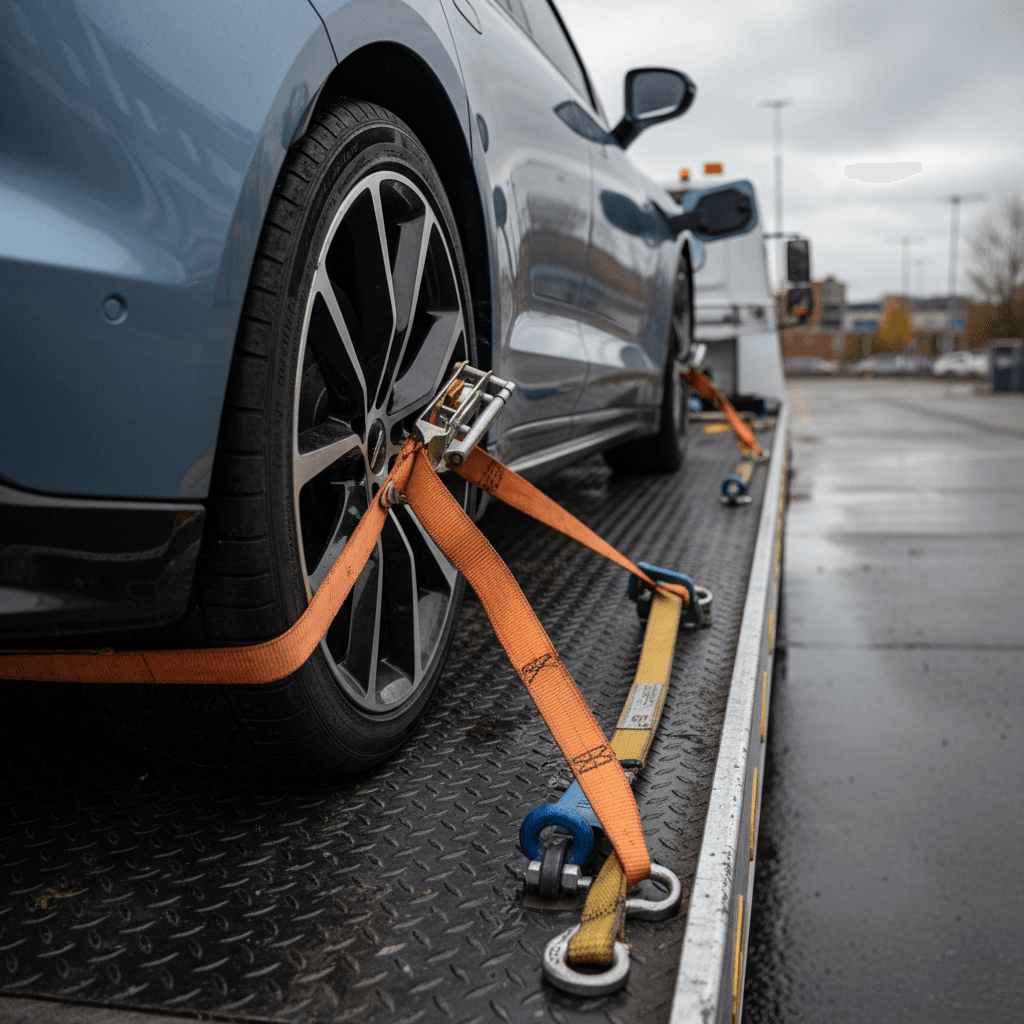
4. Request wheel straps and proper tie‑down points
Ask the driver to secure the car by the wheels or factory tie‑down points, not by the suspension arms, battery tray, or underbody panels.
5. Ask if they’ve towed EVs before
A quick, “Do you tow electric vehicles often?” can tell you a lot. If the driver hesitates, be ready to insist on the flatbed or call your roadside plan for another provider.
6. Confirm destination that understands EVs
If you’re not going home, consider a dealer, EV‑certified independent shop, or a seller like <strong>Recharged</strong> that understands high‑voltage systems and battery diagnostics.
How Improper Towing Can Hurt the Battery and Drivetrain
The risk with bad towing isn’t just cosmetic. It’s what you can’t see, inside the motors, gearbox, and battery pack, that gets expensive. Knowing what’s at stake makes it easier to stand your ground with a rushed driver.
What Can Go Wrong if an EV Is Towed Incorrectly?
These failure modes are why manuals are so strict about towing methods.
Overheated motors & inverter
Battery stress or fault codes
Mechanical damage & misalignment
Why this matters when buying used
Towing Checklist for Current and Future Used‑EV Owners
Whether you already own an EV or you’re shopping for a used one, having a towing plan is part of responsible ownership, just like knowing where you’ll charge.
Essential EV Towing Prep Checklist
Verify the towing section of your manual
Look up the exact wording your manufacturer uses. Many say “flatbed only,” some spell out limited dollies use, and a few include special Transport or Tow modes.
Save a script in your phone
Drop a short note in your phone with the key phrases: “EV, flatbed only, no wheels on the ground, use wheel straps.” It’s easy to read it to a dispatcher when you’re stressed.
Know your drivetrain layout
Is your EV FWD, RWD, or AWD? That decides which axle is the “drive axle” and whether dollies are ever acceptable. Your window sticker or online spec sheet will tell you.
Add EV‑competent tow providers to contacts
If you’ve used a tow company that clearly knows EVs, save their number. Some areas now market dedicated EV towing services.
Ask about past towing on a used EV
When you’re buying used, whether privately or through a marketplace, ask if the car has ever been towed and how. It’s a small question that can reveal a lot about how the car was treated.
Use diagnostics when buying used
Tools like the <strong>Recharged Score</strong> look beyond the odometer, checking battery health and system faults so you’re less likely to inherit someone else’s towing mistake.
EV Towing FAQ
Frequently Asked Questions About Towing an EV
Key Takeaways for EV Owners
If you remember nothing else, remember this: the safest way to tow an EV is on a flatbed with all four wheels off the ground. Many “regular” tow companies can do that, but you may need to be explicit with the dispatcher and the driver about what’s acceptable.
For day‑to‑day peace of mind, take a few minutes now to read the towing section of your owner’s manual, save a short script in your phone, and add one or two EV‑savvy towing providers to your contacts. And if you’re shopping for a used EV, consider buying from a source that understands these details. Every vehicle sold through Recharged includes a Recharged Score Report with verified battery health and expert‑guided support, so if something ever does go wrong roadside, you’re starting from a car that’s been evaluated the right way.