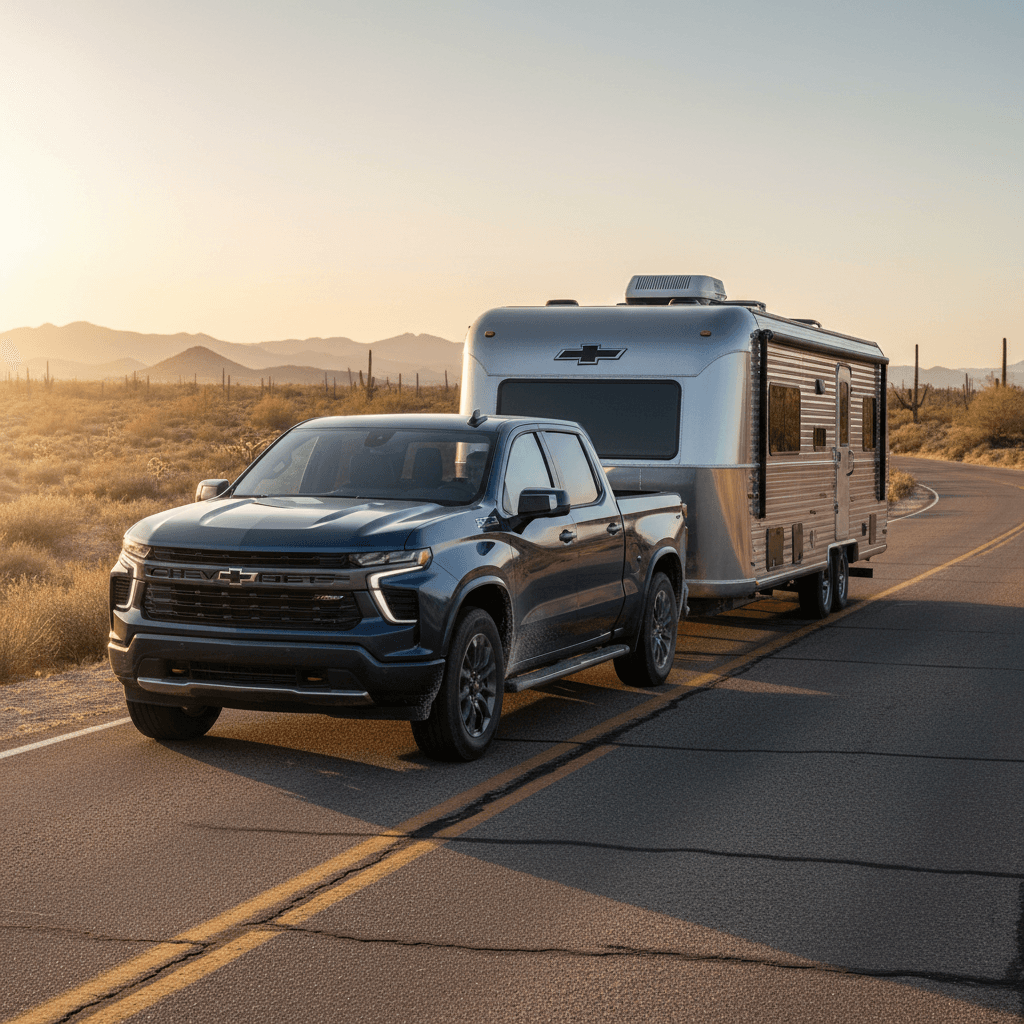
Yes, the Chevrolet Silverado EV can absolutely tow a trailer, and in the right configuration, it can tow a lot. But the experience is different from a gas or diesel truck, especially when it comes to driving range and trip planning. If you’re wondering whether a Silverado EV can handle your camper, boat, or utility trailer, this guide walks you through what it can tow, how far it can go, and what to think about before you buy.
Quick answer
Can the Chevrolet Silverado EV really tow a trailer?
If you’re coming from a gas or diesel half-ton, you’re used to spec sheets that brag about huge tow numbers. The Silverado EV is built on GM’s Ultium platform and designed from day one with towing in mind, not as an afterthought. With instant torque, a long wheelbase, and available four-wheel steering, it feels impressively composed with a trailer, especially at low speeds where electric trucks often feel smoother and more controllable than their gas counterparts.
Where things change is not so much whether the truck can pull the weight, but how far it can go on a charge while doing it, how fast you can recharge, and whether your trailer setup plays nicely with public charging stations. So the question isn’t just “can the Silverado EV tow a trailer?” It’s “can it tow your trailer, on your trips, without making you miserable?” Let’s break down the numbers.
Key Chevrolet Silverado EV towing stats
Chevrolet Silverado EV towing capacity by trim
Tow ratings vary by trim, battery, and package, so you always want to check your specific truck’s door jamb label and owner’s manual. But here’s a simplified view of where Silverado EV tow numbers land today:
Approximate Silverado EV tow ratings by configuration
Always confirm your specific vehicle’s ratings on the door label and in the owner’s manual before hitching a trailer.
| Trim / Configuration | Approx. Max Tow Rating | Approx. Payload | Notes |
|---|---|---|---|
| Work Truck (WT) – early fleet models | 10,000 lb | ~1,400–1,500 lb | Max tow offered on many fleet-focused WTs; aimed at commercial users. |
| WT / 3WT / 4WT with Max Tow-style package | Up to 10,000 lb | Varies by spec | Some work-focused trims prioritize range and towing over luxury. |
| LT / consumer-focused mid trims | Up to ~12,500 lb | Up to ~1,800 lb | Best bet if you want both strong tow rating and higher payload. |
| RST | Around 10,000 lb | ~1,400 lb | Sportier trim with strong towing, but not always the max rating champ. |
| Future Max Tow variants | Potentially higher | TBD | GM has discussed higher tow packages; check current-year specs. |
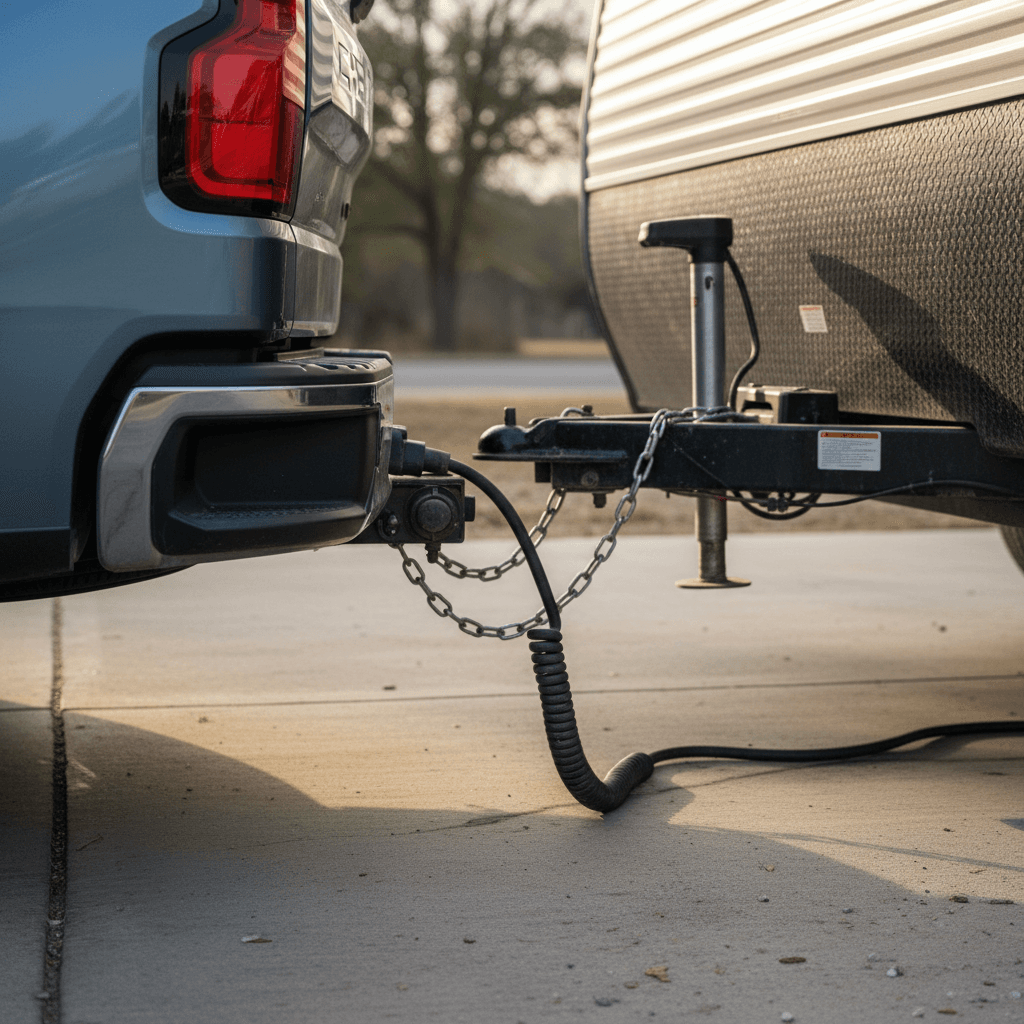
Conventional bumper-pull towing for current Silverado EV trims.
Don’t tow off the brochure alone
In broad strokes, if your trailer is in the 4,000–8,000 pound range loaded, the Silverado EV is comfortably within its wheelhouse. Heavier than that is still doable if the specific truck’s rating supports it, but you’ll need to be much more careful about payload, tongue weight, and range.
What kind of trailer can a Silverado EV safely tow?
Tow rating is only part of the story. The Silverado EV’s flat, instant torque makes it feel relaxed with a trailer, and the robust frame and long wheelbase give it a planted feel. The bigger question is what you’re towing and how aerodynamic it is. A 7,000‑pound flatbed full of lumber is a very different proposition from a 7,000‑pound, 30‑foot travel trailer that punches a huge hole in the air.
Common trailer types the Silverado EV can tow
Assuming you stay within your specific truck’s tow and payload ratings.
Travel trailers & campers
Many 20–28 foot travel trailers loaded in the 4,500–7,500 lb range are a realistic match.
- Great for regional camping trips
- Expect roughly 40–50% range loss at highway speeds
- Plan charging stops at RV‑friendly stations
Boat & toy haulers
Boats on trailers and enclosed toy haulers often have better aerodynamics than boxy campers.
- Weight is still critical, but aero is usually kinder
- Ideal for wake boats, fishing rigs, side‑by‑sides
- Range hit often less severe than with tall RVs
Utility & work trailers
Equipment, landscaping, or dump trailers often run 5,000–10,000 lb depending on cargo.
- EV torque is excellent for job‑site maneuvering
- Range hit depends on weight and frontal area
- Great fit for fleets with predictable routes
Think in terms of loaded weight
How towing affects Silverado EV range
The Silverado EV can tow; the rub is how far it can tow on a charge. GM and independent testers have seen roughly a 50% range reduction when towing a mid‑weight trailer around 5,000–6,500 pounds at highway speeds. That’s not unique to Chevy, every EV truck takes a big range hit when you bolt a barn door to the back and push it through the air at 65–70 mph.
What to expect with a mid‑size camper
- With a large battery pack that might offer ~400–450 miles of EPA range unloaded, plan on 180–230 miles between charges when towing a typical 20–25 ft travel trailer.
- Heavier or taller trailers, steep grades, and high speeds can pull that lower.
- Driving 60 mph instead of 70 can make a surprisingly big difference.
Why aero matters more than weight
- A low, streamlined load (boat, car hauler) often hurts range less than a big boxy RV of the same weight.
- Headwinds can mimic climbing a constant hill; tailwinds feel like free range.
- Roof racks, kayaks, and bikes on the roof all add drag on top of the trailer.
EVs aren’t alone in losing range when towing
Charging and route planning with a trailer
Towing with an electric truck is less about whether it can pull the load and more about how you manage charging. The Silverado EV supports very fast DC charging on the CCS standard (and will move toward NACS in future model years), which helps offset the range hit. But you still have to think about station layout, where you’ll park with a trailer attached, and how far apart your stops will be.
- Use EV‑specific route planners that support towing assumptions or manually cut the truck’s displayed range in half when planning legs.
- Favor highway chargers with pull‑through spots or chargers located along the edge of a lot so you can nose in and stay hitched.
- If you must unhook to charge, budget the time and hassle into your trip, especially with larger campers.
- Aim to arrive at fast chargers with 10–20% battery and charge to 60–80% for the best balance of speed and range.
- Look for campgrounds that explicitly allow EV charging from 50‑amp sites if you want to top up overnight. Always follow park rules.
Plan like a pilot, not a commuter
Towing tech that makes the Silverado EV easier to live with
One upside of the Silverado EV being a clean‑sheet electric truck is the baked‑in towing tech. Many of the features you might have seen advertised on modern gas Silverados carry over, and some are even more useful when you’re dealing with a heavy trailer and a big battery pack.
Helpful Silverado EV towing features
Exact availability varies by trim and model year, always check the build sheet.
Camera views for hitching & backing
Multiple camera angles (rear, hitch, bed, and surroundings) make lining up the ball and maneuvering in tight campgrounds much easier.
Trailer assist & stability tech
Features like trailer sway control, integrated trailer brake controller, and blind‑zone alerts tailored to your trailer length help keep things calm at speed.
Tow/Haul mode & range estimates
Selecting Tow/Haul mode adjusts throttle mapping, braking behavior, and updates your range estimate to reflect the load so you aren’t flying blind.
EV torque is your friend
Silverado EV vs other electric trucks for towing
If you’re shopping an electric truck primarily to tow a trailer, you’re probably looking at the Ford F‑150 Lightning, Rivian R1T, Tesla Cybertruck, and the Silverado EV (plus its GMC siblings). On paper, their tow ratings tend to cluster between about 10,000 and 11,000 pounds, with the Silverado EV offering trims that reach a bit higher on the spec sheet.
How the Silverado EV stacks up against other EV trucks
Approximate maximum tow ratings and high-level towing character, always check current specs and your specific build.
| Model | Max Tow Rating (approx.) | Towing Character | Best Use Case |
|---|---|---|---|
| Chevrolet Silverado EV | 10,000–12,500 lb | Strong tow ratings, long wheelbase, work‑friendly | Great all‑rounder for work + camping if you plan routes |
| Ford F‑150 Lightning | Up to 10,000 lb | Smooth, familiar F‑150 feel, smaller battery than some Silverados | Shorter regional trips, occasional RV or boat towing |
| Rivian R1T | Up to 11,000 lb | Sporty, very capable, smaller bed | Adventure toy hauler more than big family camper rig |
| Tesla Cybertruck | Around 11,000 lb | Very aero‑efficient design helps with range at speed | Long‑distance highway towing when infrastructure matches your routes |
All ratings are for properly equipped trucks under ideal conditions.
Tow rating vs. towing reality
Practical tips for towing with a Silverado EV
Towing with an EV isn’t inherently harder than towing with gas, it’s just different. Once you understand the patterns, you can set the truck and the trip up for success. Here are some practical strategies that Silverado EV owners and testers have found helpful:
- Aim to keep your loaded trailer weight at or below 70–80% of your truck’s rated max tow. This gives you a cushion for steep grades, crosswinds, and real‑world surprises.
- Target towing speeds of 60–65 mph instead of 70–75 mph. The aero drag penalty above 65 is brutal on any EV truck.
- If you’re new to EV towing, start with shorter regional trips, weekend campouts within 100–150 miles of home, before attempting multi‑day cross‑country hauls.
- Use Tow/Haul mode and make a few test runs with your typical trailer load locally so you understand how the truck behaves before you’re far from home.
- Pay close attention to tongue weight and payload. It’s easy to forget that bikes, coolers, people, and firewood all count against the truck’s limits.
Watch your payload, not just tow rating
Pre-trip checklist: Silverado EV + trailer
Essential checks before you tow with a Silverado EV
1. Verify ratings for your exact truck
Match your trailer’s <strong>loaded weight</strong> and tongue weight against the numbers on your Silverado EV’s door sticker and owner’s manual. Don’t assume all trims or model years share the same tow or payload rating.
2. Confirm trailer brakes & brake controller
Anything above light utility weight should have working electric brakes. Make sure the integrated brake controller is set correctly for your trailer and perform a slow‑speed brake test before hitting the highway.
3. Check tires, pressures, and load ratings
Inspect both truck and trailer tires for damage and set pressures to the recommended values for towing. Under‑inflated tires hurt range and stability; overloading them is a safety risk.
4. Set Tow/Haul mode and range expectations
Enable Tow/Haul mode so the Silverado EV adjusts throttle, braking, and range estimates for the added load. For long highway legs, mentally cut the displayed range by 40–50% until you know your combination well.
5. Plan your charging stops
Use an app or planner to map DC fast chargers that are <strong>trailer‑friendly</strong>, and have a backup option. Look at satellite view to see whether you can pull through or need to unhook.
6. Practice maneuvering before a big trip
Spend time in a large parking lot practicing backing, tight turns, and emergency stops. The Silverado EV’s smooth torque will help, but only seat time teaches you how your truck–trailer combo behaves.
Frequently asked questions about Silverado EV towing
Silverado EV towing FAQ
Bottom line: Will a Silverado EV work for your trailer?
If you’re asking whether a Chevrolet Silverado EV can tow a trailer, the answer is an unqualified yes. Properly equipped, it will pull a serious load, often as much or more than a traditional half‑ton, and the smooth, instant torque actually makes low‑speed towing easier than in many gas trucks.
The real dividing line isn’t capability, it’s use case. If your life looks like regional camping trips, boat launches, toy‑hauler weekends, or work trailers on predictable routes, the Silverado EV can be a terrific solution as long as you plan around reduced range and charging stops. If you’re dragging a tall, heavy RV across multiple states at interstate speeds week after week, a conventional HD truck still makes that kind of use simpler, for now.
When you’re ready to put numbers to your own situation, it helps to look at real trucks, real tow ratings, and real battery health instead of just brochures. That’s where a used Silverado EV on Recharged can shine: every vehicle comes with a Recharged Score battery report, transparent pricing, and EV‑savvy specialists who can help you decide whether an electric Silverado will truly handle your trailer, your routes, and your budget.