Buying a used EV sight unseen online is no longer a fringe move. Between nationwide inventory, at‑home delivery, and slick digital checkout, it’s tempting to do the whole thing from your couch, no test drive, no showroom, no handshake. But you’re still betting five figures on a vehicle you haven’t touched, and with EVs, battery health raises the stakes even higher.
Online is growing, but most buyers are still cautious
Why people buy used EVs sight unseen in 2026
If you’re even considering buying a used EV sight unseen online, you’re probably running into one of three realities: thin local inventory, tight time, or a specific must‑have configuration that just doesn’t exist near you.
The real reasons shoppers skip the test drive
Most sight‑unseen EV purchases aren’t impulsive, they’re constrained
Limited local EV inventory
Time and hassle savings
Chasing specific specs
The upshot: buying online isn’t the problem. Buying blind is. Your goal is to keep the digital convenience while stripping out as much uncertainty as possible.
What makes sight-unseen used EV purchases risky
- You can’t feel how the car drives, no chance to listen for suspension noises, wind leaks, or drivetrain quirks.
- Photos tend to flatter: cosmetic damage, worn interiors, and mismatched body panels often look better online than in real life.
- With EVs, range and battery health are hard to judge from a few screenshots or a generic “passed inspection” note.
- Some online sellers quietly bury critical details, salvage titles, fleet history, or missing fast‑charging capability, in fine print or not at all.
- Scam listings still exist: cloned dealer websites, stolen photos, or vehicles that don’t actually exist.
Used EVs are not like used gas cars
When buying a used EV sight unseen can make sense
There are scenarios where a sight‑unseen EV purchase is defensible, sometimes even smart, if the safeguards are strong enough.
You have strong data, not just glossy photos
- Recent, independent battery health diagnostics with clear scores and methodology.
- Full vehicle history from reputable providers, title status, accidents, mileage, and prior use.
- High‑resolution photo set and video walk‑around, including underbody shots where possible.
The deal structure protects you
- Transparent pricing with itemized taxes, fees, and delivery.
- Return window or exchange policy after delivery (ideally with a mileage cap, not just 24 hours).
- Meaningful warranty coverage still in force, factory, CPO, or marketplace‑backed.
Where Recharged fits
Non-negotiables before you click “Buy now”
Before you commit to a used EV you’ve never seen, treat these items as hard requirements, not nice‑to‑haves.
7 non‑negotiables for a sight‑unseen used EV purchase
1. Verified vehicle identity and history
Run the VIN through at least one recognized history service to confirm title status, prior accidents, odometer consistency, and whether the car came from a rental or rideshare fleet. Cross‑check that VIN with the purchase agreement and all online photos.
2. Independent or highly transparent inspection
Insist on a <strong>documented multipoint inspection</strong> that covers brakes, tires, suspension, body, interior electronics, and charging hardware. Ideally, this comes from either an OEM dealer, a third‑party inspection company, or an EV‑specialized retailer like Recharged.
3. Real battery-health data
Ask for explicit battery metrics, not just “good” or “OK.” That could be a dealership printout, a third‑party diagnostic, or a marketplace‑specific report like the Recharged Score that quantifies usable capacity and degradation.
4. Full disclosure of range expectations
Have the seller document expected range at 100% charge under normal conditions, and clarify whether that’s EPA rated range or a current reading from the car. Remember: a 240‑mile EPA rating doesn’t mean you’ll see 240 in winter at highway speeds.
5. Clear photos and video walk‑around
You should see detailed photos of every panel, wheel, and major interior surface, plus close‑ups of any disclosed damage. A live video walk‑around (FaceTime, Zoom, etc.) helps confirm the car and seller are real.
6. Readable, signed purchase documents
Online or not, you should receive a full buyer’s order, financing terms, warranty details, and any arbitration or as‑is language ahead of time. If anything looks off, pause. Don’t let a seller rush you through e‑signing.
7. Some kind of return or exchange safety net
Even a 3–7‑day satisfaction window gives you time to drive the car in your real‑world routine. If the seller refuses any flexibility, even for obvious misrepresentation, that’s a sign to walk away.
Use digital to your advantage
Battery health: the make-or-break factor for online used EV buys
On a used EV, battery health is roughly equivalent to engine and transmission health on a gas car, only more expensive to ignore. When you’re buying sight unseen, this is where you absolutely cannot wing it.
Why battery health matters more than cosmetics
That doesn’t mean a car with some degradation is a bad buy. It does mean you need to know how much range you’re really getting and whether that aligns with your daily use, climate, and charging options.
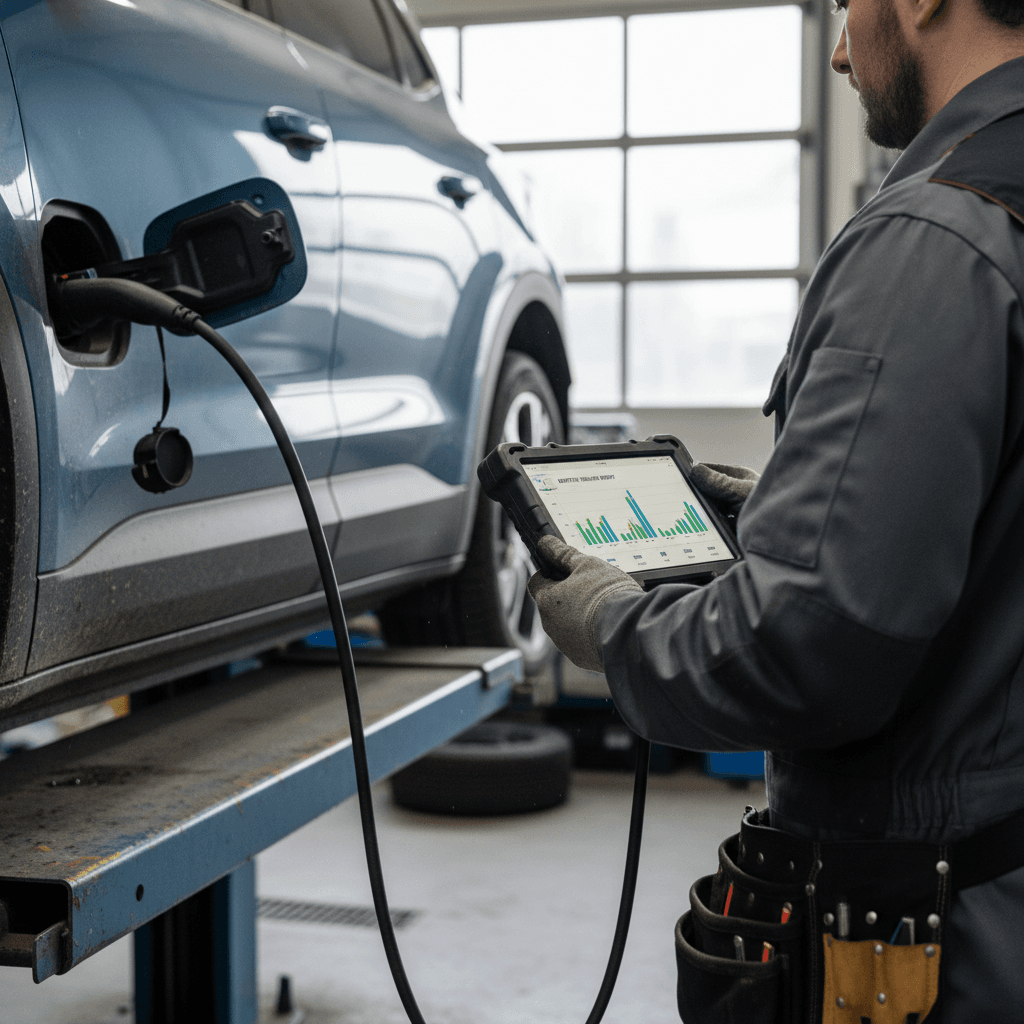
- Ask the seller how they obtained any battery report (dealer scan tool, third‑party diagnostic, or marketplace scoring system).
- Look for objective numbers, usable capacity, state of health (SoH), and any remaining battery warranty, not just a “pass/fail” note.
- Be cautious if the seller refuses to provide battery information but claims the EV is “like new” or “all highway miles.”
- Understand that cold climates and frequent DC fast charging can accelerate wear; ask specifically about past charging behavior.
Step-by-step: how to buy a used EV sight unseen (with safeguards)
If you’ve weighed the pros and cons and still want to move forward, here’s a practical playbook to follow.
From first click to delivery: a safer online EV purchase
1. Define your must‑haves and deal‑breakers
List your non‑negotiables: usable range, DC fast‑charging capability, cargo needs, driver‑assist features, and maximum budget (including taxes, fees, and delivery). This helps you walk away from borderline cars instead of rationalizing them.
2. Shortlist platforms and sellers
Prioritize reputable marketplaces and dealers that specialize in EVs or at least offer strong inspection and return policies. Look for real customer reviews and clear contact details, not just a generic web form.
3. Request documentation up front
Ask for the full inspection report, battery health data, vehicle history report, and copies of any remaining factory or extended warranties. A seller that hesitates here is waving a yellow flag.
4. Do a live virtual walk‑around
Schedule a video call where the seller walks around the vehicle, starts it up, cycles the infotainment and climate controls, and shows the charge port, charging cable, and tires. Have them show the VIN and current odometer on camera.
5. Lock in financing and trade‑in (if needed)
Get pre‑qualified with your bank, credit union, or an EV‑focused marketplace like Recharged before you emotionally commit to a specific car. Many online platforms let you <strong>lock financing and trade‑in value</strong> digitally, so there are no surprises on delivery day.
6. Scrutinize the contract and fine print
Review every line of the buyer’s order, including any “as‑is” language, arbitration clauses, doc fees, and delivery charges. Confirm the VIN, mileage, price, and any promises about reconditioning are written in, verbal assurances don’t count.
7. Arrange delivery on your terms
Clarify how and when the vehicle will arrive, who is responsible for damage in transit, and when your return window starts. Take delivery during daylight, with enough time to do a thorough inspection and short shakedown drive.
8. Inspect immediately after delivery
On arrival, walk the car just like you would at a lot: body gaps, paint, glass, wheels, tires, interior, lights, charging hardware, and a quick drive at neighborhood and highway speeds. Note any discrepancies compared with photos or documentation.
Never skip this if the deal feels “too good”
Red flags and scams to watch for online
Most online used‑EV horror stories boil down to the same patterns: unrealistic pricing, pressure, missing paperwork, and vague answers. Here’s what to watch for.
Common red flags in sight‑unseen EV listings
Use this to quickly separate legitimate offers from trouble.
| Red flag | What it looks like | Why it’s dangerous |
|---|---|---|
| Price far below market | Long‑range EV priced thousands under similar listings, with no clear explanation | Classic bait used in scam listings or problem vehicles with hidden histories. |
| No physical address or real phone | Only a web form or text‑only number, no dealership name you can verify | Harder to hold anyone accountable if the vehicle never arrives or arrives misrepresented. |
| Reluctance to share VIN or docs | Seller dodges when you ask for a VIN, inspection, or title status | Without a VIN you can’t verify history, recalls, liens, or ownership. |
| Pressure to “pay a deposit today” | “We have three other buyers, send funds to hold it” with no refundable‑deposit policy | You’re being rushed past due diligence. Scammers rely on urgency. |
| Inconsistent photos or details | Different backgrounds, mismatched colors, wrong options compared with window sticker | Photos may be pulled from other listings, or the car has been poorly repaired. |
| No clear return or issue‑resolution policy | Seller won’t commit to what happens if the car is not as described | Leaves you holding the bag if major problems appear after delivery. |
One or two of these might be explainable. Several together? Walk away.
Check the seller’s digital footprint
How Recharged reduces the risk of sight-unseen EV buys
Recharged was built around the exact friction points that make shoppers nervous about buying a used EV online, especially sight unseen. It combines EV‑specific diagnostics, transparent pricing, and end‑to‑end digital tools so you don’t have to choose between convenience and confidence.
What changes when you buy a used EV through Recharged
Less guesswork, more verified data.
Recharged Score battery report
Fair market pricing baked in
Fully digital, human‑backed
Nationwide delivery options
Trade‑in and selling support
Richmond, VA Experience Center
Ready to find your next EV?
Browse VehiclesYou don’t have to do it alone
FAQ: buying a used EV sight unseen online
Frequently asked questions
Bottom line: should you do it?
Buying a used EV sight unseen online will never be entirely risk‑free, and it isn’t for everyone. If you’re already anxious about range, technology, and resale values, flying out for a test drive might buy you more peace of mind than any checklist. But for shoppers juggling limited local inventory and tight schedules, a data‑rich, transparent online process can be a smart way to access the right EV at the right price, especially if you have real battery diagnostics and a genuine return window on your side.
The key is to treat the purchase like the serious financial decision it is: demand documentation, question anything that doesn’t line up, and be willing to walk away if a seller won’t meet basic standards. Platforms built for EV ownership, like Recharged, exist precisely so you don’t have to choose between convenience and confidence when your next car shows up on a trailer instead of a showroom floor.