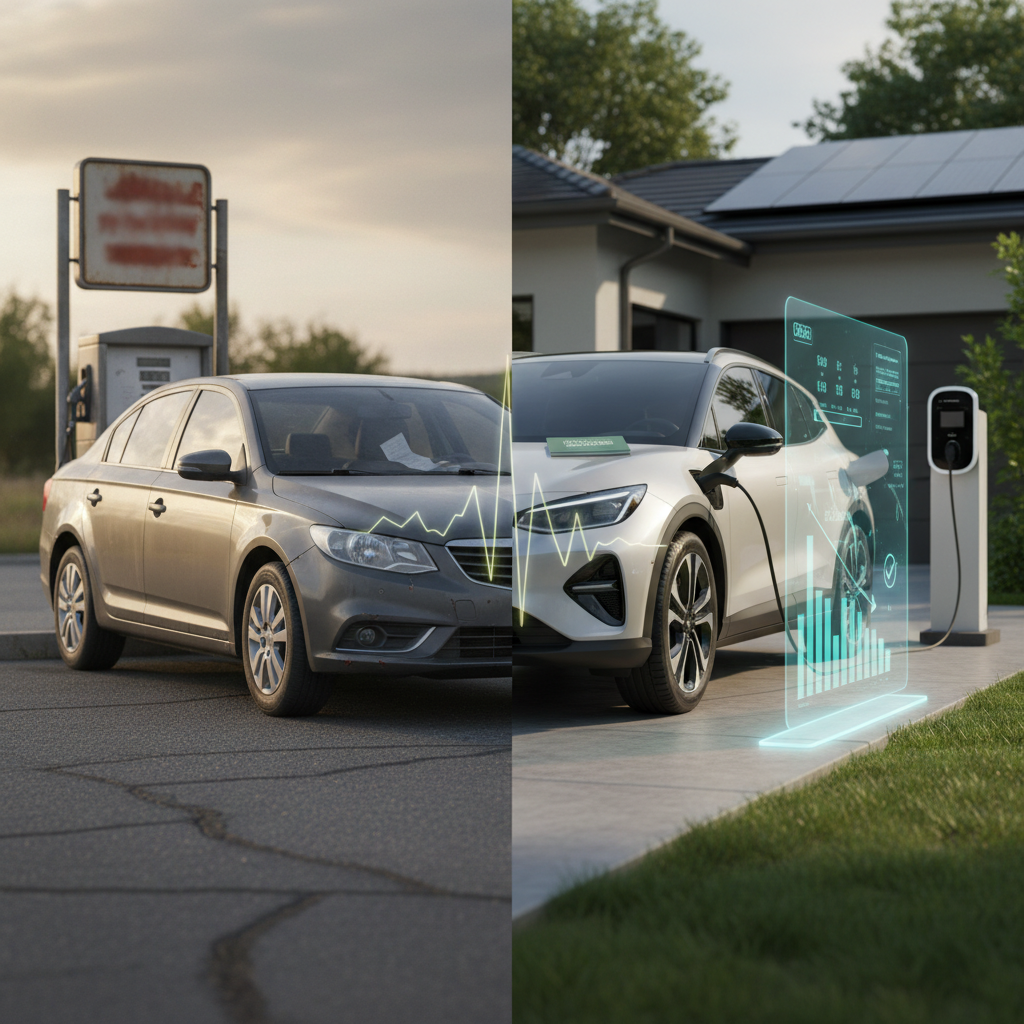
Buying a used EV from a private seller can feel like a treasure hunt and a trust fall rolled into one. Prices often look tempting compared with dealers, but you’re giving up the safety nets: no reconditioning standards, no easy return policy, no built‑in battery report. With EVs, that gamble can be thousands of dollars in either direction.
Private sale EVs: high reward, higher risk
Why buying a used EV from a private seller is different
What’s similar to any used car
- You still need a clean title and proper paperwork.
- Accident history, flood damage, and odometer rollbacks are still a concern.
- You want maintenance records and a thorough test drive.
What’s very different with EVs
- Battery health and software history matter more than oil changes.
- Charging compatibility and local infrastructure can make or break ownership.
- Some warranties and tax credits only apply if you buy from a dealer, not a private seller.
Big change for 2026 buyers
Step 1: Decide if private party is really worth it
Before you fall in love with a driveway listing, pause and ask what you’re really chasing. Private sellers usually advertise lower prices, but that discount comes with more homework, more risk, and more legwork from you. For some buyers, a vetted used EV from a marketplace like Recharged, with a verified battery report and streamlined paperwork, is ultimately the better value even if the sticker price is a bit higher.
Private seller vs marketplace or dealer
Understand what you’re trading for that lower price tag
Price & fees
- Private seller: Lower asking price, fewer fees, but no baked‑in reconditioning.
- Marketplace/dealer: Higher price but includes inspections, prep work, and easier financing.
Protection & recourse
- Private seller: Usually “as‑is” with minimal legal recourse if something goes wrong.
- Recharged: Every car includes a Recharged Score Report with verified battery health and pricing transparency.
Paperwork & process
- Private seller: You manage title transfer, payoff, and taxes.
- Recharged: Digital, state‑compliant paperwork plus help with trade‑ins and financing.
When private sale makes sense
Step 2: Pre‑screen the car and the seller online
Long before you meet in person, use the listing and a short phone call to smoke‑test both the car and the owner. You’re looking for clarity, consistency, and a seller who seems to know their EV, or at least is honest about what they don’t know.
Quick pre‑screen checklist for private EV listings
1. Ask for the VIN and clear photos
You want the full VIN, odometer photo, and close‑ups of wheels, interior, and charge port. These will help you pull a vehicle history report and spot obvious wear or accident repairs.
2. Ask specifically about battery health
Request any <strong>battery health report</strong>, dealer printout, or service‑mode screenshot that shows State of Health or current max range. Vague answers like “range is fine” are not enough.
3. Confirm charging habits
Ask how often the car was <strong>DC fast‑charged</strong>, whether it was routinely charged to 100%, and if it sat fully charged or empty for long periods, habits that can accelerate battery wear.
4. Clarify reason for selling
“We upgraded to a bigger EV” or “We don’t need two cars anymore” are normal. Dodgy or inconsistent stories can be a sign to move on.
5. Check title status and loans
Is the title clean and in the seller’s name? Is there a lender holding the title? You’ll need a clear payoff plan before money changes hands.
Red flags in the listing
Step 3: Battery health is non‑negotiable
On a used EV, the battery is the story. It’s the single most expensive component on the car, and unlike a set of tires or brakes, you can’t casually replace it if you guessed wrong. You want real data, not optimism.
Battery basics every private‑party buyer should know
- Ask the seller for a State of Health (SoH) or battery health report from a dealer or EV specialist.
- Compare the car’s current real‑world range on a full charge with the original EPA range, this gives you a rough idea of degradation.
- On some models (like many Teslas and Leafs), you can see battery data or range estimates directly on the screen, photograph these.
- If the seller claims the battery was replaced, insist on paperwork with VIN and mileage for that replacement. It can be a huge plus if verified.
No battery data? Treat that as a cost.
Step 4: Range, charging, and fit for your life
A used EV that looks like a great deal on paper can still be the wrong car for your daily life. Before you ever schedule a test drive, make sure its range, charging speed, and connector type actually work for you.
3 questions to test EV “fit” before you buy
If you can’t answer “yes” to these, reconsider the car or the seller
Does the range cover your routine?
Can you charge easily at home or work?
Is the connector and charging standard practical?
Do a quick charging map check
Step 5: What to inspect in person on a used EV
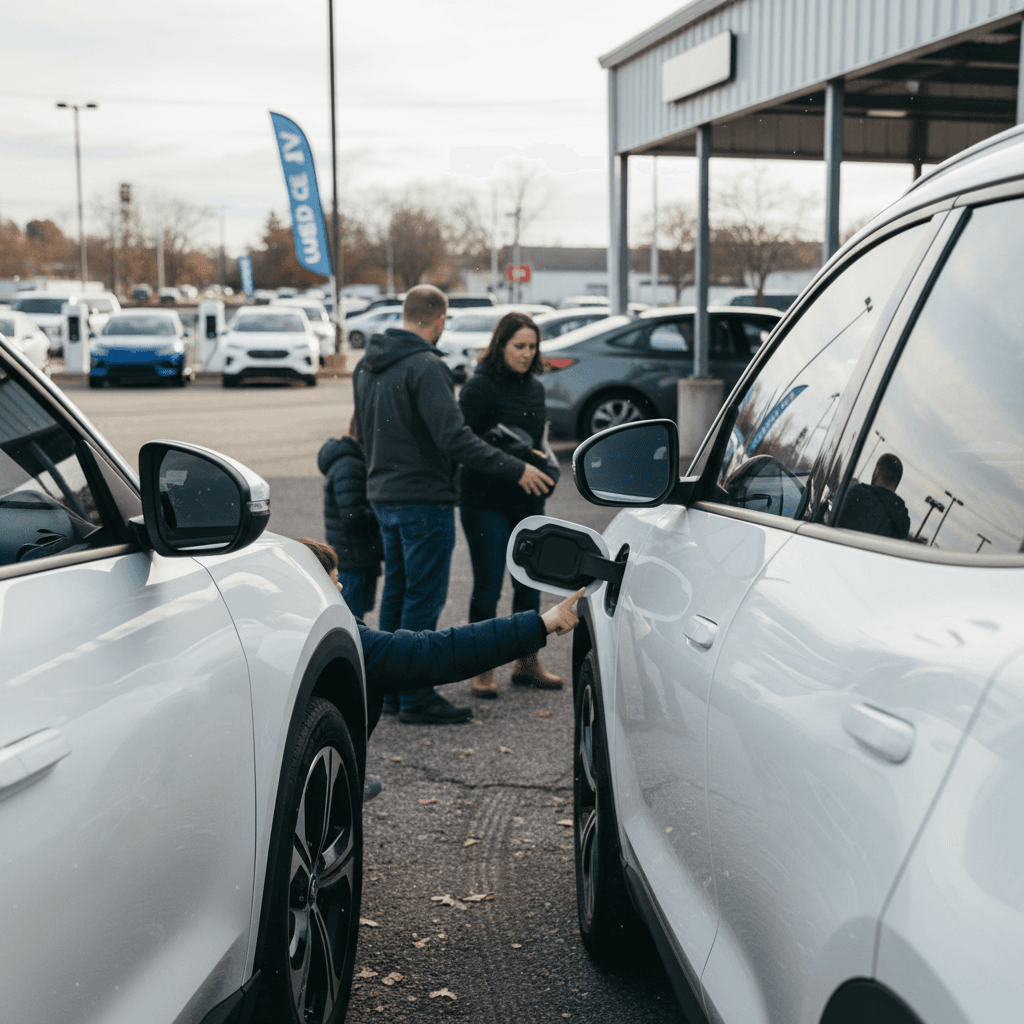
When you meet the seller, you’re confirming two things: that the car matches the story you’ve been told, and that nothing about the situation feels off. The mechanical checklist is a bit different for EVs, but many basics are familiar.
Physical inspection checklist for a private‑party used EV
Bring this to your meetup, or save it on your phone, and walk the car together.
| Area | What to check | Why it matters |
|---|---|---|
| Exterior & glass | Panel gaps, paint mismatches, cracked glass, uneven tire wear | Can indicate prior body damage or poor repairs, which may have affected the battery pack under the floor. |
| Undercarriage | Look under the rocker panels and battery tray for scrapes, dents, corrosion | A hard hit or rust near the pack can be expensive, sometimes unfixable at a reasonable cost. |
| Tires & brakes | Tread depth, even wear, brake feel at low speeds | EVs are heavy; worn tires and suspension are common, and especially pricey on big‑wheel models. |
| Interior & electronics | All windows, locks, seats, lights, screens, cameras, and driver‑assist features | You want to know if the software‑heavy part of the car behaves itself before you own it. |
| Charging gear | Portable cord, adapters, home wallbox if included | Replacing missing chargers and adapters can cost hundreds to over a thousand dollars. |
You don’t need to be a mechanic to spot many of these issues; take your time and don’t let anyone rush you.
Avoid branded titles on used EVs
Step 6: Test‑drive like an EV owner, not a gas driver
Your test drive is more than a quick loop around the block. You’re checking how the battery, powertrain, and electronics behave in the real world, and whether this EV feels like something you’ll enjoy living with every day.
What to do on a used‑EV test drive
1. Start with a cold boot
Power up the car from “off.” Watch for warning lights, error messages, or laggy screens. An EV that boots slowly or throws random errors may need software or hardware work.
2. Verify charge level and estimated range
Note the <strong>state of charge and displayed range</strong> before you leave, and again when you return. Roughly similar miles‑driven versus miles‑lost is a good sign in mild weather.
3. Test acceleration and regen
Try modest full‑throttle bursts and then lift to feel regenerative braking. Listen for whining, grinding, or clunks from the motor area or suspension.
4. Drive at highway speeds
Take it on a freeway if possible. Check for steering vibration, wind noise from prior body damage, and how fast the range estimate drops at speed.
5. Use all the tech
Test AC/heat, seat heaters, infotainment, navigation, cameras, and driver‑assist. Updating or repairing these systems can be expensive.
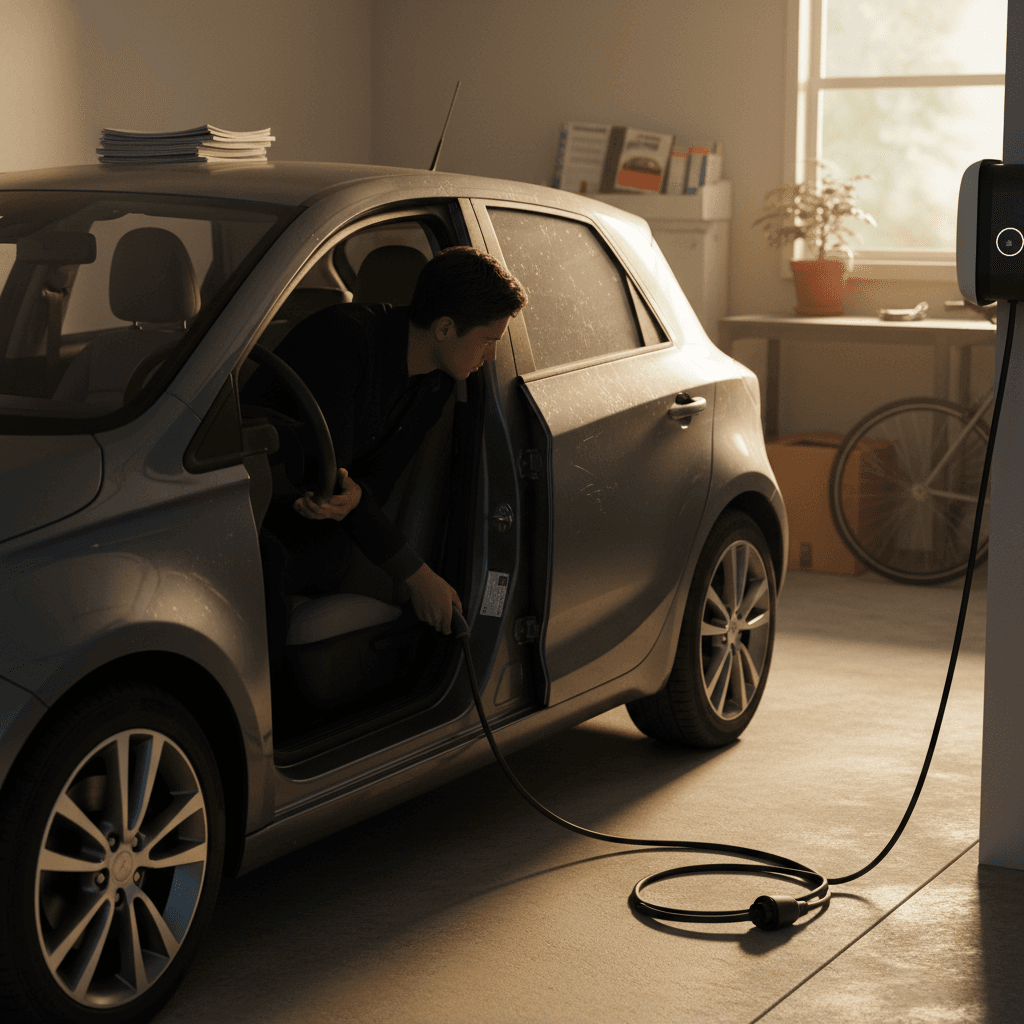
6. If possible, plug it in
Even a short plug‑in at a public or home charger confirms that charging starts correctly and the connector or port isn’t damaged.
Step 7: Paperwork, title, and warranty traps
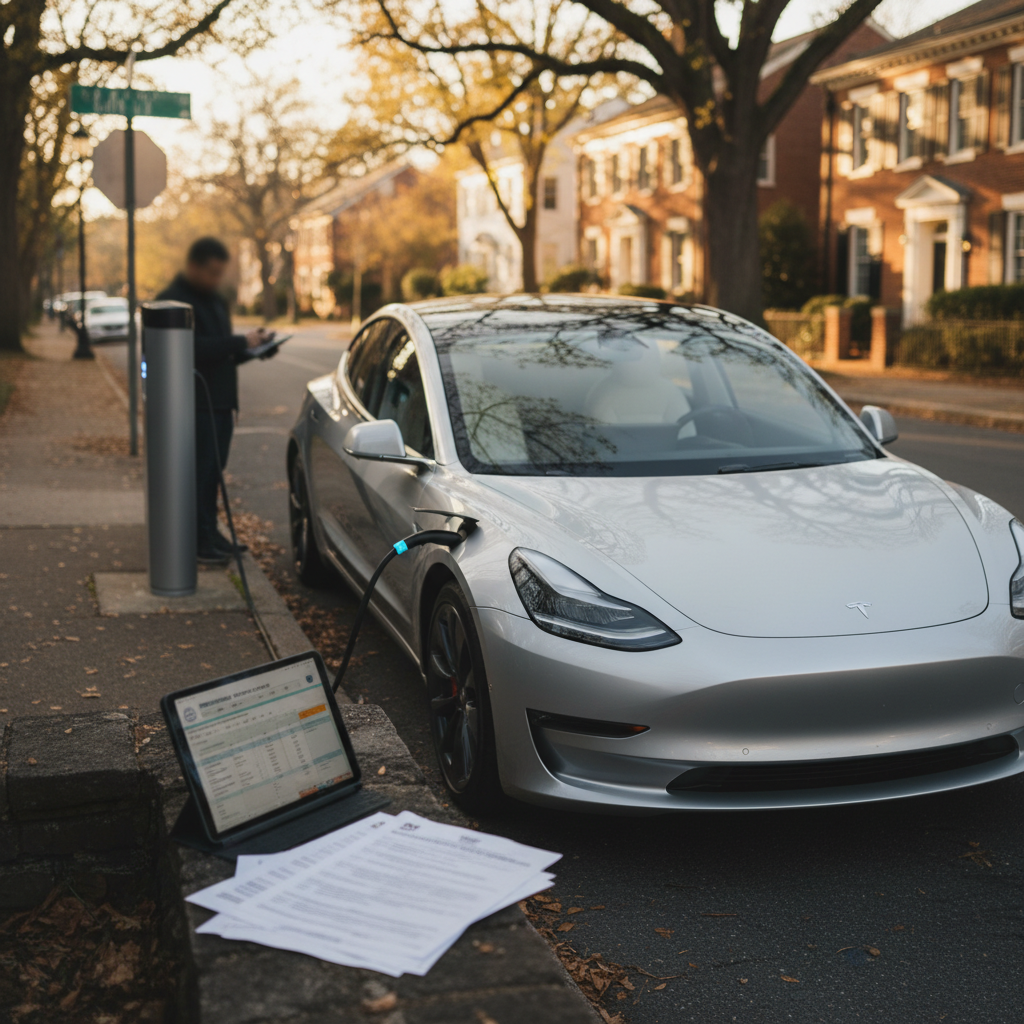
With a private seller, you’re the title clerk, finance office, and legal department. Getting the paperwork right matters just as much as picking the right car.
- Verify the name on the title matches the seller and that there are no liens except any disclosed auto loan.
- If a lender still holds the title, arrange to meet at the bank or use an escrow‑style service that handles payoff and title transfer.
- Pull a vehicle history report to check for accidents, branded titles, or odometer discrepancies.
- Call the manufacturer or local dealer with the VIN to verify battery and powertrain warranty status and whether it’s transferable.
- Keep a copy of the signed bill of sale, title, and any maintenance or battery documentation, scan them somewhere safe the same day.
Mind the incentive fine print
Step 8: Safe payment and avoiding scams
EV prices are high enough that a private‑party sale can attract all the usual online‑marketplace scams, and then some. Treat large transfers of money with the same caution you’d use for wiring a house down payment.
Safer ways to pay a private EV seller
Protect both your money and your new car
Use secure, traceable payment methods
Meet in safe, official locations
Common private‑party scams to avoid
Step 9: Negotiating price on a used EV
Negotiating on a used EV is different from haggling over an old pickup. You’re not debating oil changes, you’re pricing battery health, charging convenience, and remaining warranty. Come armed with data, not just attitude.
Use EV‑specific facts
- Compare the car’s current range with original EPA range, and adjust your offer if degradation is higher than average.
- Factor in missing charging equipment, worn EV‑rated tires, or an out‑of‑date software state when you talk numbers.
- Show recent listings for the same trim, year, and mileage, and adjust for battery health and options.
Turn risks into dollars
- If there’s no battery report, no service history, or no transferable warranty, that’s a reason to offer less, or walk.
- Estimate what it would cost to replace the missing wall charger, complete a dealer inspection, or update tires and brakes.
- Stay calm and be ready to leave. There will always be another EV; there may not be another five‑figure mistake you can easily afford.
How Recharged handles pricing
Step 10: When to walk away, and when to get help
The hardest part of buying from a private seller is walking away after you’ve invested time and emotion. But with EVs, walking is often cheaper than driving home in the wrong car.
Clear signs you should walk away from a private‑party EV
Seller can’t document battery health at all
No report, no screenshots, no believable range description? That’s a gamble on a five‑figure component.
Story and paperwork don’t match
Names on the title don’t match the ID, or there are unexplained gaps in history. Don’t try to “sort it out later.”
Branded or sketchy title history
Salvage, flood, or rebuilt titles are bad enough from a dealer; from a random driveway, they’re a hard no for most buyers.
Your daily life doesn’t fit the range
If you’re already rationalizing how you’ll “make it work” with a too‑short range, you probably won’t love owning this car.
Where to get EV‑specific help
Private sale vs buying through Recharged
Not everyone wants to spend nights deciphering battery screenshots and reading DMV fine print. If you like the idea of used‑EV pricing but want more structure and support than a pure private sale, Recharged sits in that middle lane.
How Recharged changes the equation
Private‑sale pricing, with professional guardrails
Verified battery health
Digital, guided process
Nationwide delivery & local support
Think of buying a used EV from a private seller as a high‑stakes home inspection, not an impulse buy. Ask pointed questions, insist on real battery data, slow down the paperwork, and be ready to walk. If at any point the risk stops feeling worth the reward, remember that a curated, transparently priced EV from a retailer like Recharged exists precisely so you don’t have to navigate this alone.