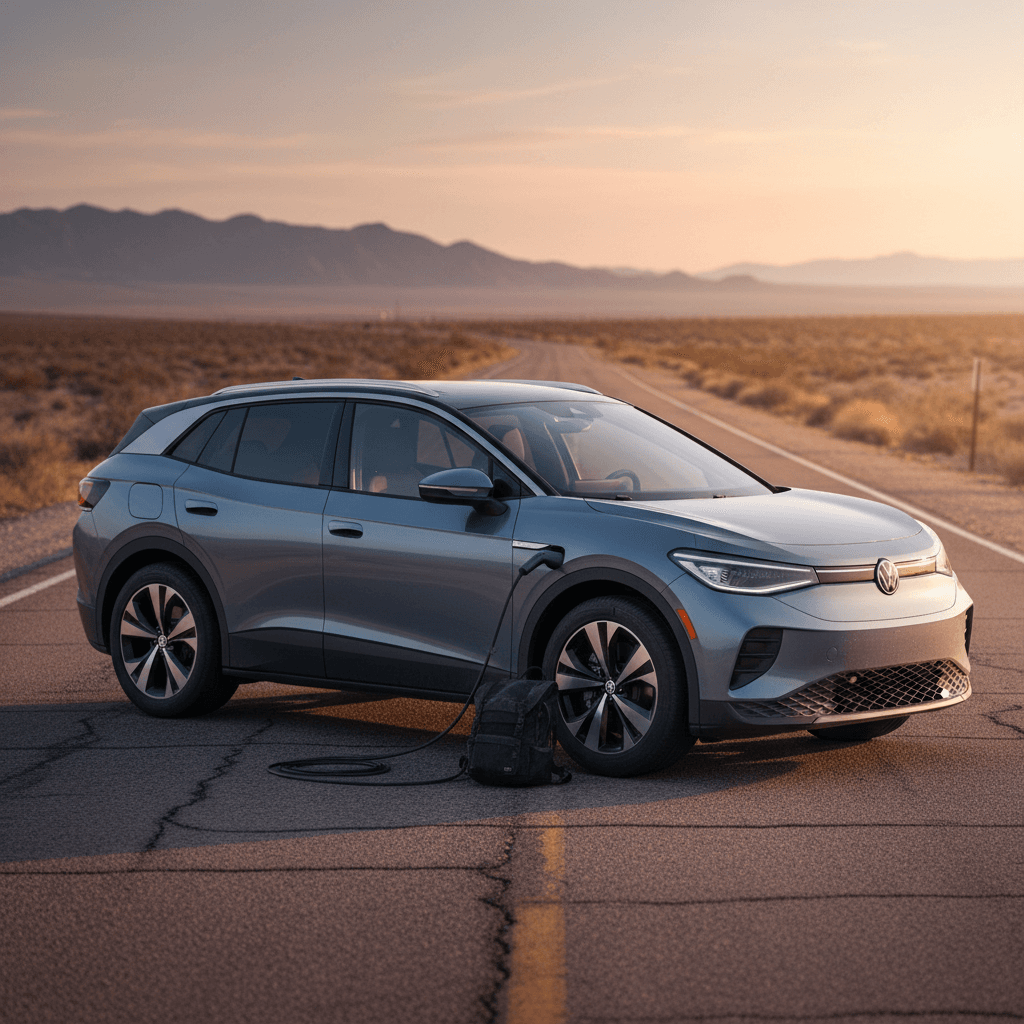
If you’re considering a **2021 VW ID.4**, you’ve probably seen the 240–260 mile EPA figures and wondered what that really looks like on the road. A proper **2021 VW ID.4 range test** needs to separate glossy marketing numbers from what you can expect at 70+ mph on the highway, in cold weather, and years into ownership, especially if you’re shopping used.
Key takeaway up front
2021 VW ID.4 range at a glance
2021 VW ID.4 range snapshot
Those headline numbers don’t tell the whole story. The 2021 ID.4 is a **family-sized compact crossover** with a relatively big, 77 kWh usable battery and moderate efficiency. That means it isn’t chasing the longest possible range number; instead it delivers **comfortable daily driving and predictable road-trip performance** when you understand how it behaves in the real world.
Battery size, trims, and official EPA range
Before you can interpret any range test, you need to know which 2021 ID.4 you’re looking at. All U.S. 2021 rear‑wheel‑drive (RWD) models share the **same battery and motor**, but not the same EPA rating.
2021 VW ID.4 trims and EPA range (U.S.)
How the main 2021 ID.4 RWD trims compare on paper.
| Trim (2021 MY, U.S.) | Drivetrain | Usable battery | EPA combined range | EPA city range | EPA highway range |
|---|---|---|---|---|---|
| Pro (RWD) | RWD, 201 hp | ~77 kWh | 260 mi | ~107 MPGe city | ~91 MPGe hwy |
| Pro S (RWD) | RWD, 201 hp | ~77 kWh | 250 mi | ~104 MPGe city | ~89 MPGe hwy |
| 1st Edition (RWD) | RWD, 201 hp | ~77 kWh | 250 mi | ~104 MPGe city | ~89 MPGe hwy |
Figures are EPA estimates when new; real‑world results vary with conditions and driving style.
Why Pro gets a higher EPA number
Technically, the pack is an **82 kWh gross lithium‑ion battery**, with about **77 kWh available for driving**. That buffer helps preserve long‑term battery health. When you see real‑world tests quoting miles of range, it’s almost always based on that usable 77 kWh figure, not the total pack capacity.
Real‑world 70–75 mph highway range tests
Highway testing is where the 2021 ID.4’s story gets interesting. At a steady 70–75 mph, you’re asking the blunt, SUV‑shaped body to push a lot of air, and real‑world range can end up notably lower than the EPA combined number.
Independent 75 mph test
In a well‑known 75 mph highway range test, a **2021 ID.4 1st Edition** (RWD, 77 kWh usable) delivered about 190 miles from a full charge down to very low state of charge. That works out to roughly 2.5–2.6 mi/kWh at sustained interstate speeds.
For context, the same publication saw about 220 miles from a Tesla Model Y Long Range under the same protocol, so the VW trails the best in class but lands in a realistic, usable window for most drivers.
Owner reports at highway speeds
Many owners report seeing 180–210 miles on a highway‑heavy road trip from 100% to near empty, depending on temperature, elevation, and wind. Drivers who cruise closer to 65 mph can often stretch that into the low‑200‑mile range on a mild day.
The important pattern: at real‑world U.S. highway speeds, expect something like 75–85% of the EPA rating, which is typical for upright crossovers.
Fast highway, cold weather, heavy loads
If you convert that 190‑mile test back into energy use, you’re near **30–32 kWh per 100 miles** at 75 mph, right in line with EPA data that rates the 2021 ID.4 1st Edition at about **35 kWh/100 miles combined** and around **89–91 MPGe on the highway**. In other words, the numbers are internally consistent: the car is doing what the physics say it will.
City and mixed‑driving range expectations
Range tests that live only on the interstate don’t reflect how most people use an ID.4. Where this Volkswagen shines is in **suburban and city driving**, where regenerative braking and lower speeds work in your favor.
Typical 2021 ID.4 range in everyday use
Realistic expectations when you’re not doing a full‑throttle road trip
City‑heavy driving
Stop‑and‑go traffic, speeds under 45 mph, gentle acceleration:
- 3.3–3.7 mi/kWh is typical in mild weather.
- From 77 kWh usable, that’s 250–280 miles on a full charge.
Mixed commuting
Blend of surface streets and 55–70 mph highway:
- Many drivers report 3.0–3.4 mi/kWh in spring/fall.
- That translates to roughly 230–260 miles from 100%.
Winter conditions
Cold temps, cabin heat, and possibly snow tires:
- Efficiency can drop to 2.0–2.5 mi/kWh in harsh cold.
- Practical mixed‑driving range may be closer to 160–200 miles.
Precondition to protect winter range
In short, if your daily pattern looks like a 30‑mile round‑trip commute plus errands, you’ll likely see the ID.4 behave quite close to its **EPA 240–260 mile promise** in mild conditions. That’s why many owners simply plug in at home a few nights a week and stop thinking about range altogether.
How weather, speed, and cargo change your range
Every EV punishes waste, whether it’s aerodynamic drag from speed, running the heater in January, or a roof box on the interstate. The 2021 ID.4 is no exception, and its bluff crossover shape makes **speed and wind** especially important.
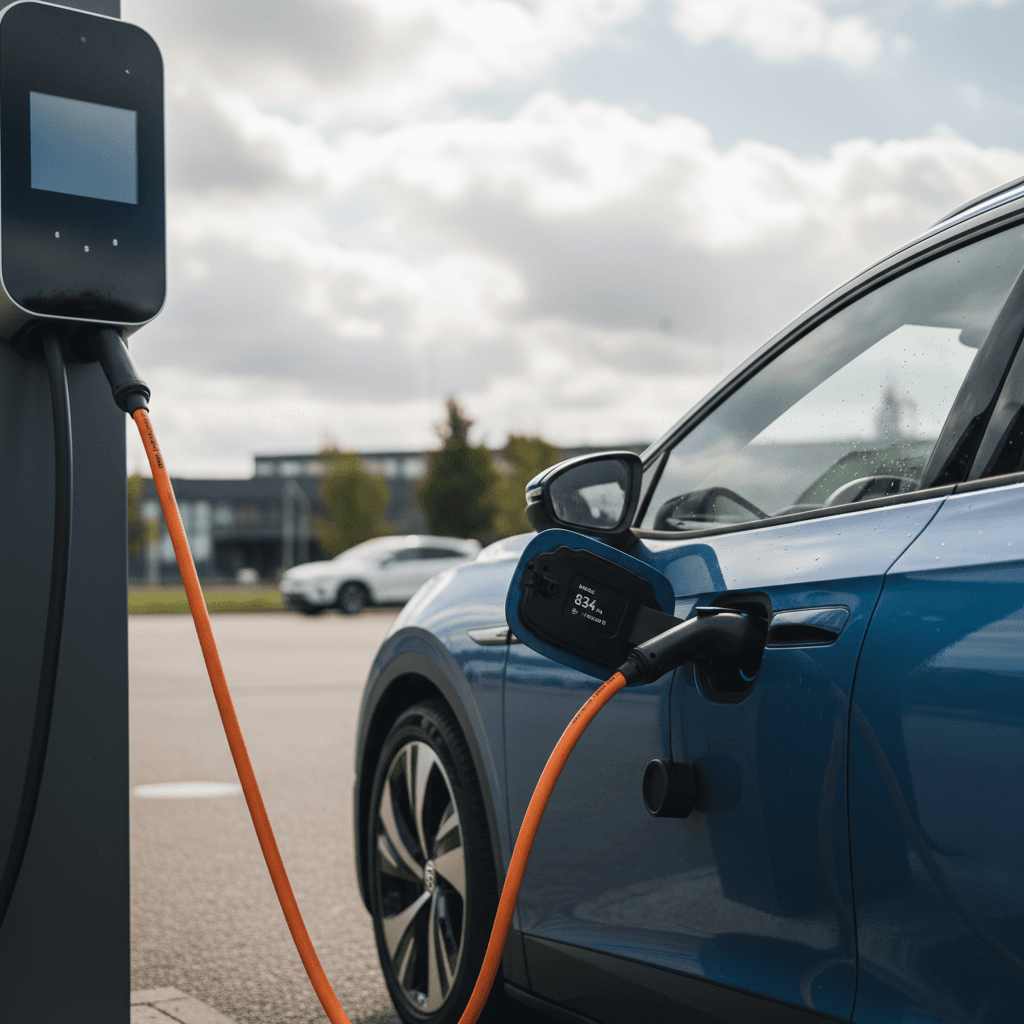
- **Speed:** Going from 65 mph to 75 mph can easily cost you **10–15% of your range** in an ID.4. Above 75 mph, the penalty gets even steeper.
- **Temperature:** Lithium‑ion batteries are least efficient when they’re cold. Expect the biggest hit below freezing, especially on short trips where the pack never warms up.
- **HVAC use:** The electric heater draws significant power. Short, cold drives with the cabin heat blasting can cut indicated range by **20–30%** compared with mild‑weather cruising.
- **Tires and accessories:** Larger wheels, aggressive all‑season or winter tires, bike racks, and roof boxes all hurt efficiency, and therefore range.
- **Driving style:** Smooth, anticipatory driving that maximizes regen will consistently deliver better miles per kWh than full‑throttle launches and late braking.
Don’t judge range from a single cold‑start errand
Charging, road trips, and planning around range
Range tests only matter if they help you plan where to stop. With the 2021 ID.4, the combination of a **77 kWh usable pack** and **125 kW peak DC fast‑charge rate** makes for relaxed but not record‑setting road trips.
Sample 2021 ID.4 highway trip scenarios
Approximate planning numbers for typical interstate driving in mild weather.
| Scenario | Start / Stop SOC | Average speed | Approx. distance between fast charges | Typical stop length (5–80%) |
|---|---|---|---|---|
| Efficiency‑minded driver | 10–80% | 65 mph | ~210–220 miles | 35–40 minutes |
| Typical U.S. interstate cruising | 10–80% | 70–75 mph | ~180–200 miles | 35–40 minutes |
| Winter, 70+ mph, fully loaded | 10–80% | 70–75 mph | ~150–170 miles | 40–45 minutes (battery may charge slower) |
These are planning estimates, not guarantees. Always leave extra margin in bad weather or unfamiliar territory.
Electrify America access for ID.4 owners
Ready to find your next EV?
Browse VehiclesOn trips, it’s usually smartest to **charge from about 10–15% up to 60–80%**, where the ID.4 charges fastest, instead of waiting for a 100% charge. Multiple shorter hops often get you there quicker than one huge leg where you arrive nearly empty and wait through the slow final 20% of the charge curve.
What to expect from a used 2021 ID.4
By early 2026, every 2021 ID.4 is **four to five years old**. Naturally, shoppers want to know how much range they’ve lost. VW built a generous buffer into this pack, and real‑world owner data suggests that with normal use, a 2021 ID.4 typically retains a large majority of its original capacity.
Battery degradation realities
- Gross battery: 82 kWh, with ~77 kWh usable when new.
- Many owners scanning their cars a few years in report max usable energy in the mid‑ to high‑60 kWh range, which typically still supports well over 200 miles of mixed‑driving range.
- High‑mileage or abuse (lots of DC fast charging, extreme climates) can lower that further, but it’s rare to see a healthy car suddenly fall off a cliff.
Volkswagen backs the pack with an 8‑year / 100,000‑mile battery warranty (or similar, depending on market) against excessive capacity loss, adding a safety net for used buyers.
Why independent health data matters
Odometer alone doesn’t tell you how an EV was treated. Two 2021 ID.4s with 40,000 miles can have very different remaining range depending on fast‑charging habits, storage temperatures, and driving style.
That’s where tools like a Recharged Score come in. When you buy a used ID.4 through Recharged, you get a battery‑health‑focused report, range projections, and expert help interpreting what that means for your daily driving and road trips.
Shopping for a used 2021 ID.4: range‑focused checklist
1. Confirm trim and original EPA range
Make sure you know if you’re looking at a Pro, Pro S, or 1st Edition, and whether it’s RWD. That tells you whether the original rating was about 260 miles or 250 miles.
2. Review the car’s charging history
Frequent DC fast charging isn’t automatically bad, but a balanced diet of home Level 2 and occasional fast charging is best for long‑term range.
3. Check for software and recall updates
Early ID.4s received important software and battery‑related updates. Verify that recall work has been completed; it can impact efficiency, charging behavior, and displayed range.
4. Look at real‑world consumption
Many cars retain lifetime or recent‑trip energy data in kWh/100 miles or mi/kWh. Values in the **27–32 kWh/100 mi** range for mixed driving are typical; dramatically higher numbers may warrant a closer look at tires, driving pattern, or health.
5. Get an independent battery health view
If possible, use a third‑party report, like the Recharged Score, to estimate usable capacity and projected range today, not just when the car was new.
How the 2021 ID.4 compares to rivals
The 2021 ID.4 landed in a fast‑moving segment. On pure range, it doesn’t top the charts, but it offers a **balanced combination of usable distance, value, and comfort** that still makes sense on the used market.
2021 compact EV crossovers: EPA range comparison
Where the 2021 ID.4 sits relative to key rivals when new.
| Model / trim (2021) | Drivetrain | Approx. base price when new | EPA range (combined) | Notes |
|---|---|---|---|---|
| VW ID.4 Pro (RWD) | RWD | ~$40,000 | 260 mi | Value‑focused; one battery size, three main RWD trims. |
| VW ID.4 Pro S / 1st Ed. (RWD) | RWD | Low–mid $40Ks | 250 mi | More features and style; slightly lower range. |
| Ford Mustang Mach‑E Standard Range (RWD) | RWD | Low–mid $40Ks | 230 mi | Less range than ID.4 SR, higher price; extended‑range version reaches ~300 mi at much higher cost. |
| Kia Niro EV | FWD | High $30Ks | ~239 mi | Compact footprint; efficient but smaller inside than ID.4. |
| Tesla Model Y Long Range (AWD) | AWD | Low–mid $50Ks | ~320+ mi | Class‑leading range but at a noticeably higher purchase price when new. |
Numbers shown are representative EPA combined ratings for comparable trims; individual configurations vary.
Range is only one part of value
How to run your own 2021 ID.4 range test
If you already own a 2021 ID.4, or you’re test‑driving one and want to understand its capabilities, the best way to build confidence is to perform **your own controlled range test**. You don’t need lab equipment, just discipline and a bit of time.
DIY 2021 ID.4 range test in 7 steps
1. Pick your route and goal
Decide whether you’re testing city, mixed, or highway range. A simple out‑and‑back route on a nearby freeway works best for a highway test so you minimize elevation changes.
2. Start with a calibrated battery
Charge to 100%, then let the car sit for at least 30–60 minutes. This allows the battery management system to settle on a consistent state of charge reading.
3. Set a realistic cruising speed
For highway testing, choose a steady **65 or 70 mph** and stick to it, using cruise control where safe. The difference between 65 and 75 mph is huge for range, so know what you’re testing.
4. Log your numbers
Reset your trip computer, then note **miles driven** and **average consumption** (mi/kWh or kWh/100 mi) every 25–50 miles. Don’t wait until the end to see how you’re doing.
5. Don’t run the battery to zero
For safety, plan to stop the test when you’re down to **10–15%** state of charge. Extrapolate your total range from the energy used and distance driven instead of braving the tow truck.
6. Repeat in different conditions
If you’re curious about winter or summer impacts, repeat the same route in different seasons. Record temperature, wind, and whether you used heat or A/C.
7. Compare against expectations
Take your observed mi/kWh and multiply by 77 kWh usable to get an approximate full‑pack range. If your numbers are drastically low, consider tire type, cargo, and speed before assuming a battery issue.
Frequently asked questions about 2021 ID.4 range
2021 VW ID.4 range: common questions answered
Bottom line: Is the 2021 ID.4’s range enough?
If you strip away the marketing, a **2021 VW ID.4** with a healthy battery is realistically a **180–210 mile highway cruiser** and a **220–260 mile everyday runabout** in mild weather. That’s plenty of headroom for most American commutes and weekend trips, especially if you can charge at home and tap public DC fast charging on longer journeys.
Where the 2021 ID.4 really earns its keep is as a **used EV value play**. You’re getting a big, comfortable battery pack, mature software, and competitive range at a price that undercuts many newer rivals. Pair that with transparent battery‑health data, like the Recharged Score you get when you shop through Recharged, and you can buy with a clear, data‑backed picture of how far your ID.4 will go on day one and for years to come.