You’re thinking about buying your first electric car and going all in, no backup gas car in the driveway, no “just in case” SUV at your parents’ house. Buying your first EV as your only car is a big swing, and it can be brilliant… or maddening, depending on how you do it.
The short, honest answer
Should your first EV be your only car?
What today’s EVs can realistically do
Modern EVs are objectively capable: ranges are up, batteries are tougher, and public chargers, while far from perfect, are more reliable than they were even two years ago. The real question is not “Can an EV do it?” but “Can an EV do your life?” School runs, late‑night airport pickups, winter weekends at the cabin, chaotic travel‑sports calendars, if your only car fails any of those tests, it doesn’t matter what the brochure says.
Where people still get burned
Step 1: Map your real-life driving
Before you obsess over kilowatts and connector types, figure out what you actually do with a car. Not what you did once on a cross‑country road trip in 2014, what you do this month, most weeks of the year.
- Daily commute: How many miles round‑trip, and how many days a week?
- Errands and kid duty: How many extra miles on a typical weekday?
- Weekend pattern: Mostly local, or frequent 150–300 mile drives?
- Climate: Do you see freezing winters or 110°F summers that hit range?
- Parking: Do you have a private driveway/garage, assigned spot, or street parking?
- Road trips: How many trips over 250 miles do you realistically take per year?
Use your phone as a spy
Profile A: Suburban commuter
30–40 miles a day, mostly school, office, Costco. A 200–250 mile EV with home charging feels almost invisible, you plug in, you forget. This is where an EV shines as an only car.
Profile B: Apartment‑dwelling weekender
Short weekday miles but frequent 200–300 mile weekend trips, no guaranteed home charging. You can still go all‑electric, but you’ll need a longer‑range EV and a very deliberate charging strategy.
Step 2: Choose the right EV for only‑car duty
Once you understand your real mileage, you can pick the kind of EV that won’t make you constantly check the range gauge like a nervous flier watching the wing.
Which EV types work best as an only car?
Match the car to the life, not the other way around.
Compact hatch & sedan
Best for: Solo drivers, couples, city living.
- Easier to park, cheaper to buy used.
- Range: often 200–250 miles on newer models.
- Watch rear legroom and cargo if you have kids.
Crossover & small SUV
Best for: Families, car seats, strollers.
- Higher seating, more space for gear.
- Frequently 230–300+ miles of range.
- Often the sweet spot for only‑car versatility.
Electric trucks & big SUVs
Best for: Towing, construction, serious gear.
- Huge batteries, but towing nukes range.
- Charging can be slower due to massive packs.
- Only buy if you’ll use the capability weekly.
The range number that actually matters
- If you mostly drive locally with occasional trips, 200–230 miles usable range can be enough.
- If you road‑trip several times a year, aim for 250–280 miles usable range.
- If you tow or drive long stretches of sparse highway, more range or plug‑in hybrid flexibility may make sense.
Climate penalty is real
Step 3: Make a charging plan that actually works
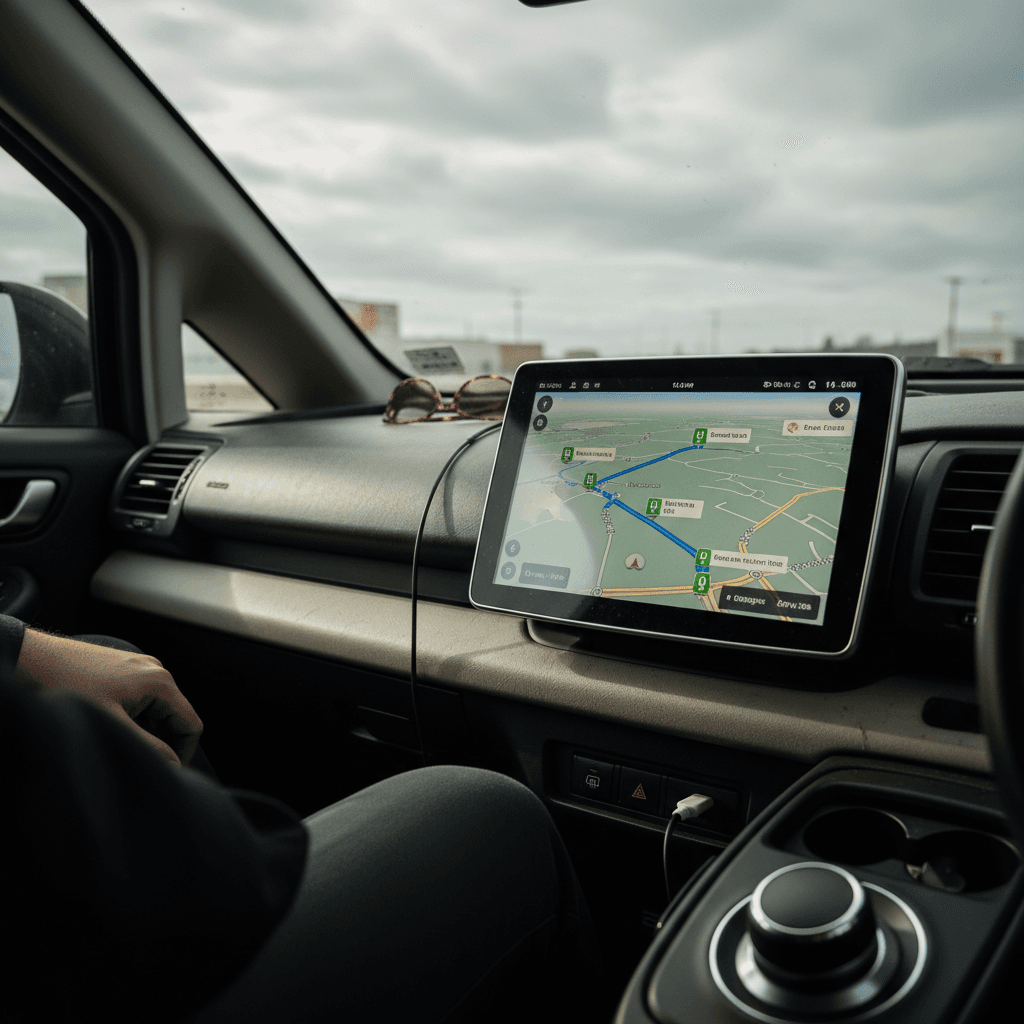
Charging is where the fantasy of EV ownership crashes into the sidewalk, or doesn’t. If your first EV is your only car, you need a boringly reliable way to put electrons in the pack.
Three basic charging setups for an only car
Pick the column that looks most like your life.
Home Level 2 hero
You have a driveway or garage and can add a 240V outlet or wallbox.
- Car charges overnight, always ready by morning.
- Public fast charging is just for trips.
- This is the least stressful way to own an EV.
Apartment with decent options
You park in a lot or garage with some Level 2 or DC fast chargers nearby.
- Think of charging like grocery shopping: 1–3 sessions a week.
- Use apps to avoid broken or busy stations.
- Works best with a longer‑range EV.
Public‑network dependent
No home charging, street parking, limited reliable chargers.
- Life is possible but you’ll work for it.
- Plan redundant charging stops.
- For many people, this is where a plug‑in hybrid still makes more sense in 2026.
Think in nights, not minutes
Quick checklist for home charging readiness
1. Do you control your parking?
If you rent, check your lease and talk to your landlord early. Some are EV‑friendly, some… less so.
2. Know your electrical panel
A licensed electrician can tell you quickly if you can add a 240V circuit, how much it’ll cost, and whether you need an upgrade.
3. Decide on outlet vs wallbox
Many EVs can use a 240V NEMA 14‑50 or 6‑20 outlet with the right mobile charger. Dedicated wallboxes add smart features and cleaner cable management.
4. Ask your utility about EV rates
Time‑of‑use rates or EV‑specific plans can make your “fuel” dramatically cheaper if you charge at night.
Don’t DIY 240 volts
Step 4: Range anxiety vs. reality
Range anxiety is usually less about the car’s capability and more about uncertainty, will the charger work, will it be blocked, will the app freak out? The good news: public‑charging reliability in the U.S. has improved noticeably since 2024. The bad news: it’s still not gas‑station‑simple everywhere.
How far does your range really take you?
A rough translation from EPA window‑sticker range to practical “owning an EV as your only car” range.
| EPA rated range | Comfortable daily buffer | Realistic highway range | Good fit as only car? |
|---|---|---|---|
| 180 miles | Keep 30–40 miles in reserve | ~120–130 miles | Only if you rarely road‑trip and have easy home charging. |
| 220 miles | Keep 40–50 miles in reserve | ~150–160 miles | Workable for suburban life; marginal for frequent trips. |
| 260 miles | Keep 50–60 miles in reserve | ~180–190 miles | Strong all‑rounder for many households. |
| 300+ miles | Keep 60–70 miles in reserve | ~210–230+ miles | Excellent for road‑trippers and colder climates. |
Conservative assumptions for highway driving, some weather variation, and battery aging.
What happens after a month
Step 5: Used EV vs. new when it’s your only car
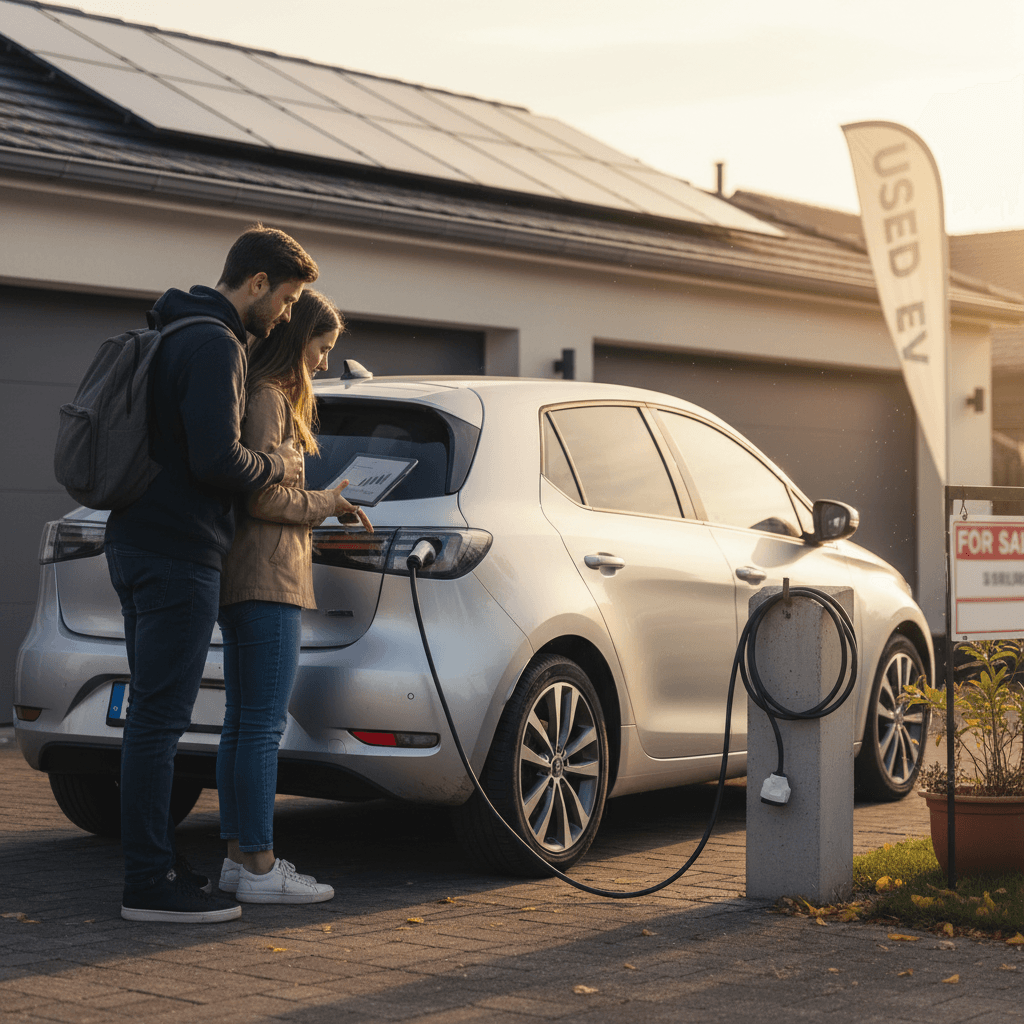
A used EV can be a fantastic first electric car and still serve as your only vehicle, if you buy it with the same suspicion you’d reserve for a celebrity memoir. Batteries do age; early‑generation EVs especially can have much shorter effective range than their original window sticker.
Why a used EV makes sense
- Lower purchase price: Depreciation hits EVs harder than comparable gas cars, so you can often get a lot of car for the money.
- Known quirks: Real‑world issues are well‑documented by the time a model hits the used market.
- Battery tech has matured: Many 2020+ EVs manage degradation far better than first‑generation models.
Where buyers get into trouble
- Choosing an early, short‑range EV as an only car, and discovering winter turns 80 miles into 50.
- Ignoring battery health entirely and shopping just on mileage and price.
- Underestimating the impact of previous fast‑charging habits on range.
How Recharged handles used EV batteries
Step 6: Money math: total cost when your EV is your only car
The financial story of an EV‑as‑only‑car is weirdly split‑screen. On one side: higher purchase price, maybe paying for home charging installation. On the other: cheap “fuel,” lower maintenance, and no oil changes ever again. What matters is how those numbers stack up for the way you drive.
Where you save, and where you don’t
Think in years, not months.
Fuel costs
Home charging: Often equivalent to paying $1–$1.50 per gallon for electricity on off‑peak rates.
DC fast charging: Can approach or sometimes exceed local gas prices, fine for trips, painful if it’s your every‑week routine.
Maintenance & repairs
EVs skip oil, spark plugs, exhaust systems, and transmission service.
You still buy tires, brake fluid, cabin filters, and you still hit potholes.
Upfront & financing
Used EV prices have cooled compared to 2021–2022. Financing through a specialist like Recharged can help keep payments predictable, especially if you’re also trading in your old car.
Include the charging install in your math
Step 7: Road trips, kids, and edge‑case scenarios
If your first EV is going to be your only car, you can’t wave away the ugly days. You have to design around them. How does the car, and your charging plan, hold up when everything goes slightly wrong?
- Road trips: Are you okay planning stops instead of winging it? Apps built into modern EVs will suggest chargers along your route, but you still want a backup station in mind.
- Kids & schedules: Build margin into your plans. A 20‑minute top‑up stop is fine until a youth‑soccer sudden‑death overtime collides with a 10% battery warning.
- Towing & cargo: Roof boxes, hitch racks, and trailers all eat range. If that’s regular life for you, buy extra range on day one.
- Emergencies: Think less about zombie apocalypses and more about ice storms and power outages. A longer‑range EV plus occasional workplace or public charging can carry you through multi‑day grid weirdness.
Put your worst‑case trip on paper
Recharged: How we de‑risk buying a used EV as your only car
When your first EV is also your only car, you’re not just buying a vehicle, you’re buying the right not to worry every time a cold front rolls in. That’s why Recharged is built around making EV ownership less mysterious and more transparent, especially in the used market.
How Recharged helps only‑car EV buyers
Less guesswork, more data, and support from people who actually drive these things.
Recharged Score battery diagnostics
Every car comes with a Recharged Score Report that gives you verified battery health and projected useful range, not just a generic “good for the age” note.
Financing & trade‑in in one place
Roll your old gas car into your first EV with flexible financing, instant offers or consignment, and clear, fair pricing.
Nationwide delivery & real humans
Choose your EV online, get expert EV‑specialist support, and have it delivered nationwide or visit the Recharged Experience Center in Richmond, VA if you prefer to kick the tires in person.
Ready to find your next EV?
Browse VehiclesWhy this matters for an only car
Checklist: Can my first EV really be my only car?
Answer these before you commit
1. I know my real mileage
You’ve tracked or estimated your typical daily and weekly miles and know how often you truly road‑trip.
2. I have a charging plan
You either have (or can realistically get) reliable home or workplace charging, or you’ve mapped public chargers you’d actually use.
3. The EV has enough real range
You’re aiming for at least ~200 miles of usable highway range for local life, more if you road‑trip or live in harsh climates.
4. I understand public charging isn’t gas
You’re okay with apps, planning, and the occasional broken charger, and you have backup options on key routes.
5. I’ve budgeted for installation & gear
If you need a Level 2 setup, you’ve priced it and factored it into your 3–5‑year cost of ownership.
6. I’ve pressure‑tested my worst day
You’ve imagined your ugliest winter/nighttime/emergency scenario and the EV still looks workable, not terrifying.
FAQ: Buying your first EV as your only car
Frequently asked questions
Bottom line: Who should (and shouldn’t) go all‑electric yet
Great candidates for an EV‑only garage
- You have a driveway or garage and can install Level 2 charging.
- Your daily driving is under ~80 miles most days.
- You take a few long trips a year and you’re okay planning your stops.
- You’re already comfortable with apps and navigation for finding chargers.
People who should pause or choose a PHEV first
- No home or workplace charging and unreliable public options nearby.
- Regular 200–300+ mile drives through rural areas with sparse chargers.
- Frequent extreme‑weather driving where range margins are thin.
- You hate planning and just want to drive until the light comes on and then refuel anywhere.
Buying your first EV as your only car isn’t about being a pioneer anymore; it’s about being honest with how you live and picking the right tool for that life. If you match the car’s range and size to your real driving, line up a charging plan that doesn’t depend on heroics, and insist on transparent battery health when you shop, especially in the used market, an EV can be the most relaxing daily driver you’ve ever owned. And when you’re ready to make that jump, Recharged is built to make sure your first all‑electric leap doesn’t feel like a leap of faith at all.