When people first drive an electric car, they usually notice two things: the instant torque when you press the accelerator, and the strong "drag" when you lift off. That second feeling comes from regenerative brakes, a system that turns your car’s momentum back into usable energy instead of wasting it as heat. Understanding how brakes and regenerative systems work together will make you a smoother driver, a safer driver, and a smarter EV shopper, especially if you’re considering a used electric car.
Quick definition
What are regenerative brakes?
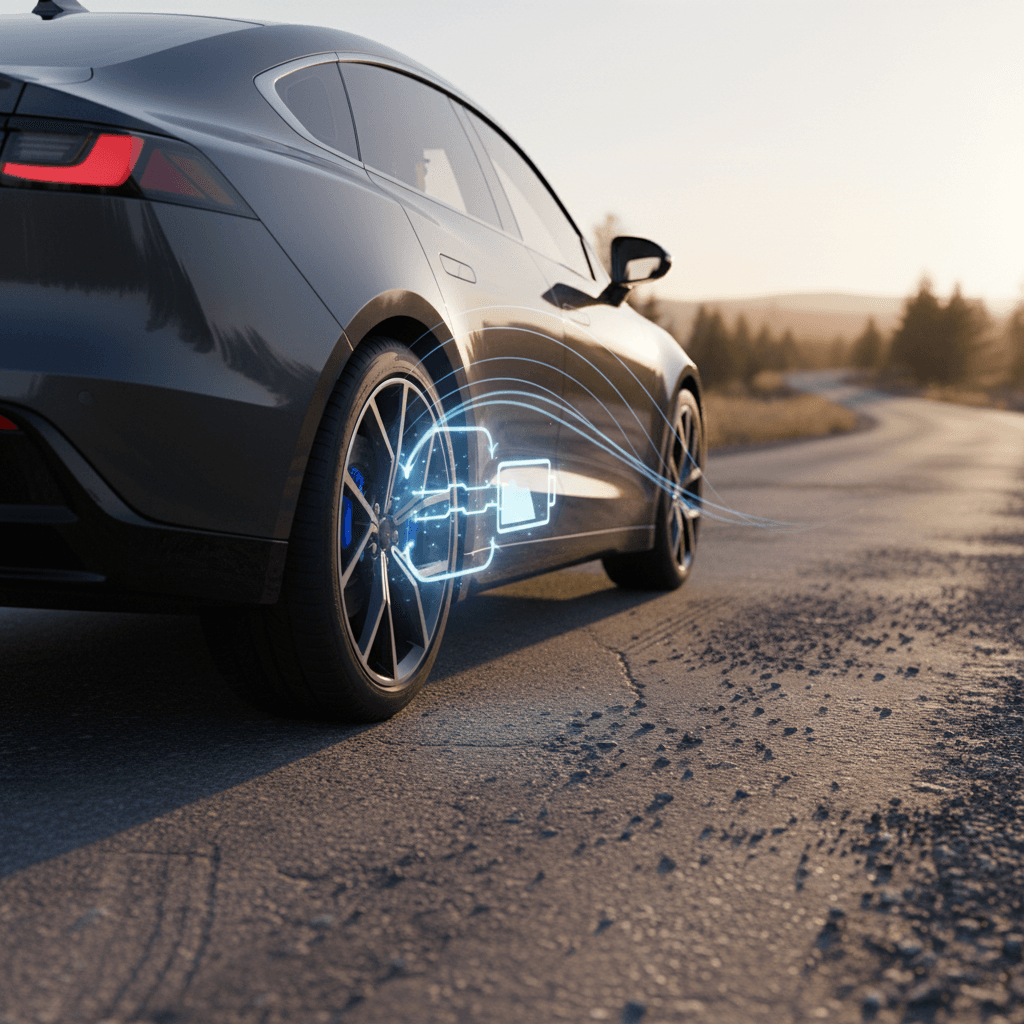
On a gasoline car, hitting the brakes turns your car’s kinetic energy into heat in the brake pads and rotors. It’s effective but wasteful, 100% of that energy is lost. In an EV or hybrid, regenerative brakes capture a significant share of that energy and feed it back into the battery. The result is better efficiency, less brake wear, and a distinctly different driving feel.
- Regenerative braking is possible because EVs already have a powerful electric motor connected to the wheels.
- During deceleration, the motor is controlled so it resists rotation and generates electricity instead of consuming it.
- Most modern EVs blend regenerative braking with traditional hydraulic brakes for smooth, predictable stopping.
Regenerative braking by the numbers
How regenerative braking works step by step
The basic idea is simple: the same electric motor that pushes your car forward can be used as a generator to slow it down. The way your EV manages that, though, is an elegant bit of software and power electronics.
- You lift off the accelerator or press the brake pedal.
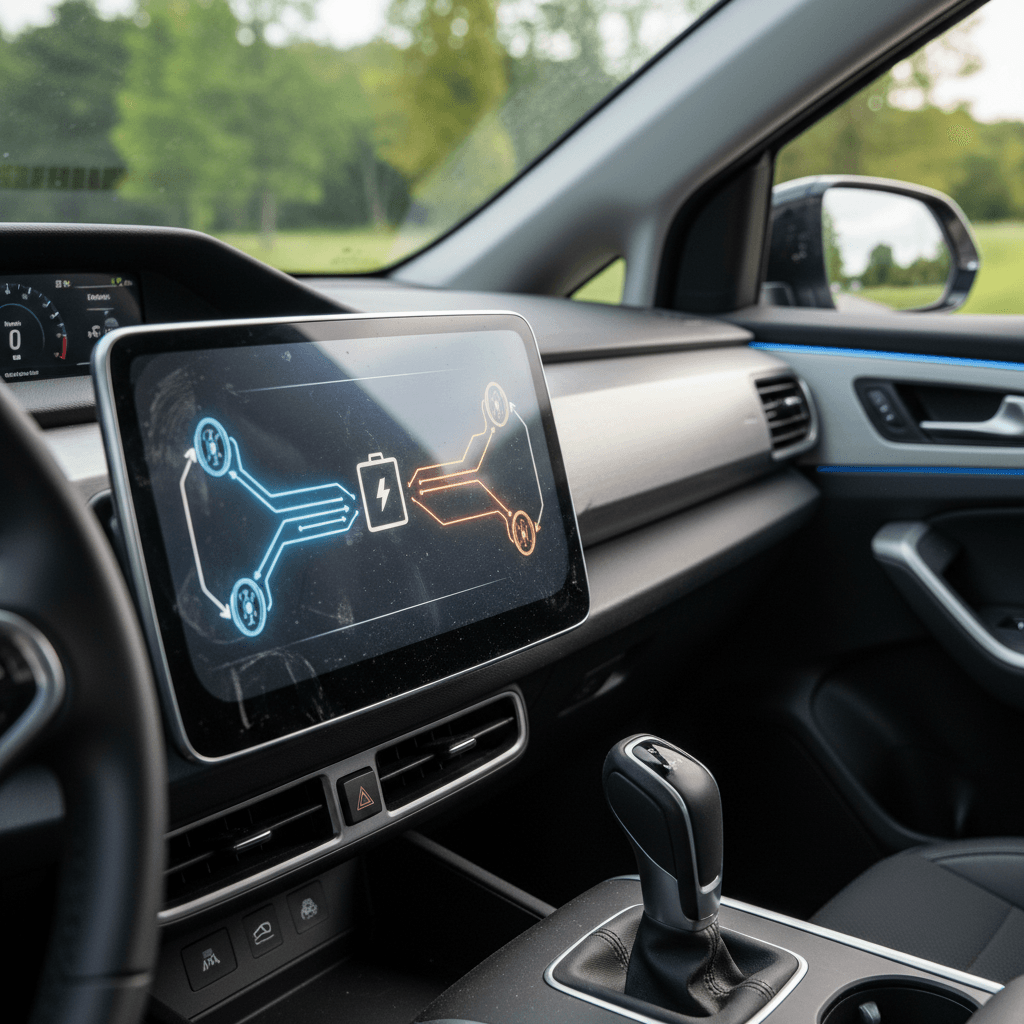
- The car’s control unit tells the drive motor to switch from "drive" mode to "generator" mode.
- As the wheels turn the motor, it resists rotation, which slows the car, just like engine braking in a manual‑transmission gas car, but stronger and more controlled.
- Electricity flows from the motor back through the inverter into the high‑voltage battery.
- If you need more deceleration than the motor can provide, the car smoothly blends in the conventional friction brakes. You still just feel one continuous, normal braking action.
You still have brake lights
Regenerative brakes vs regular friction brakes
Every modern EV still has a full set of conventional hydraulic disc brakes. Regenerative braking doesn’t replace them; it works with them. The systems are designed so that you always get the stopping power you ask for at the pedal, but the car uses regen whenever it’s available and safe to do so.
Regenerative braking
- Uses the electric motor to slow the car and generate electricity.
- Most effective at moderate speeds (roughly 15–50 mph) and with smooth deceleration.
- Limited by battery temperature, state of charge, and traction.
- Reduces brake pad wear and brake dust.
- Feels like strong engine braking or one‑pedal driving in high‑regen modes.
Friction (hydraulic) braking
- Uses pads and rotors to convert motion into heat.
- Provides maximum stopping force in emergencies and at very low speeds.
- Always available, regardless of battery state.
- Still needed for panic stops and when the battery can’t accept more charge.
- Feels like traditional braking in any gas car.
Don’t treat regen as a safety system
How much energy and range can regenerative brakes recover?
Real‑world drivers often want one number: "How much range do regenerative brakes give me?" The honest answer is that it depends heavily on where and how you drive, but the potential is meaningful enough that you’ll notice it over a week of commuting.
Typical regenerative braking benefits by driving pattern
These are broad, illustrative ranges; your exact results will depend on your EV, terrain, temperature, and driving style.
| Driving scenario | How often you brake | Approx. braking energy recaptured | Impact on usable range |
|---|---|---|---|
| Freeway cruise at steady speed | Rare | Low (single‑digit %) | Minimal, maybe a few extra miles over a long trip |
| Suburban mix, some lights | Moderate | Moderate (teens–20% of energy) | Noticeable, range often feels close to EPA estimates |
| Dense city stop‑and‑go | Frequent | Higher (20–30% or more) | You may gain back a significant share of energy used to get up to speed |
| Long mountain descent | Continuous | Very high for a short time | State of charge can climb dramatically over one long downhill |
Regen is least useful on steady‑state freeway drives and most useful in hilly or stop‑and‑go conditions.
Why numbers vary so much
Driving modes, regen levels, and one‑pedal driving
Most newer EVs let you choose how strong you want regenerative braking to feel. Automakers label these modes in different ways, "Low/Standard/High," "D/B," or a full one‑pedal mode where simply lifting off the accelerator can bring the car almost to a stop.
Common regenerative braking modes
Names differ by brand, but the behavior is similar across most EVs.
Low or "coast" mode
- Car coasts more like a traditional automatic.
- Best if you prefer familiar feel or want to hyper‑mile on the highway.
- Less energy recaptured under normal driving.
Normal/Standard mode
- Moderate regen when you lift off.
- Good balance of comfort, efficiency, and predictability.
- Often the default from the factory.
High / One‑pedal mode
- Strong deceleration as soon as you ease off the accelerator.
- In many EVs, you can drive almost entirely with one pedal.
- Maximizes regenerative energy capture in daily driving.
Take time to adapt
Do regenerative brakes wear out? Maintenance and safety
One of the quieter benefits of regenerative braking is how gently it treats your physical brakes. Because the motor does so much of the slowing, the pads and rotors see far less abuse than in a comparable gas car, especially if you use higher regen settings.
- Many EV owners report that pads and rotors last significantly longer than on their previous gas cars, sometimes well past 60,000–80,000 miles before replacement.
- Less friction braking means less brake dust on your wheels and in the air, which is a small but real environmental benefit.
- Even though wear is reduced, brake fluid still ages, and the friction system still needs periodic inspection and occasional service.
Watch for unused, rusty brakes
How to drive to maximize regenerative braking
If you treat your EV like a light switch, full throttle, then hard braking, you’ll still benefit from regen, but you’ll leave a lot of potential range on the table. A few simple habits can help you get the most from your brakes and regenerative system without turning every trip into a science experiment.
Practical tips to get more from regen
1. Look farther ahead than you’re used to
Start easing off the accelerator early when you see red lights, stop signs, or slower traffic ahead. Smooth deceleration gives the system more time to harvest energy without calling in the friction brakes.
2. Use higher regen settings in town
In city or suburban driving, running the car in its "standard" or "high" regen mode will usually capture more energy than low‑regen or coast modes.
3. Be gentle rather than abrupt
Regenerative braking is typically most efficient at moderate deceleration. Slamming on the pedal forces the car to rely more on friction brakes, which wastes energy as heat.
4. Take advantage of hills, but stay safe
On long downhills, let regen do its work instead of riding the friction brakes. Just remember that if the battery is near full, the car may limit regen and you’ll need to rely more on conventional braking.
5. Learn your car’s regen limits
Cold batteries, a very high state of charge, or certain drive modes can all reduce available regen. If your car feels more "slippery" and doesn’t slow as much off‑throttle, assume regen is limited and leave extra following distance.
The side benefit: smoother, calmer driving
Regenerative brakes & used EVs: what to look for
If you’re shopping for a used EV, the state of its battery usually dominates the conversation. But brakes and regenerative systems deserve attention too. You want to know that regen works as designed, that friction brakes are healthy, and that the car’s driving feel matches your preferences.
Used EV checklist: brakes and regen
Questions to ask and things to test‑drive before you buy.
1. Does regen feel consistent?
2. Any noises or vibrations when braking?
3. Are there warning lights or limited regen messages?
4. Has brake service been done recently?
How Recharged helps here
FAQ about regenerative brakes in EVs
Frequently asked questions
Key takeaways for EV owners and shoppers
Regenerative braking is one of the quiet superpowers of electric vehicles. It turns otherwise wasted energy into extra miles, keeps your pads and rotors healthier for longer, and, once you get used to it, makes traffic driving less tiring. At the same time, it’s not magic: you still rely on conventional brakes for hard stops, and you still need regular inspections and occasional service.
If you already own an EV, using stronger regen modes, looking further down the road, and braking smoothly will help you get the most from your brakes and regenerative system. If you’re shopping for a used EV, pay attention to how regen feels, how the friction brakes behave, and what the service history shows. Partnering with a specialist marketplace like Recharged, where every car comes with a detailed Recharged Score and EV‑savvy support, can take much of the guesswork out of that process, so you can focus on enjoying the drive rather than worrying about what’s happening when you lift off the pedal.