
If you’re trying to decode the Bolt EUV maintenance schedule, you’ll notice something unusual right away: there isn’t much on it. Compared with a gas SUV, Chevy’s electric crossover asks for relatively little, especially in the first 100,000 miles. That’s good news whether you already own one or you’re shopping for a used Bolt EUV and want to budget realistically for upkeep.
Quick reality check
Why the Bolt EUV Maintenance Schedule Looks So Light
Chevrolet’s own EV maintenance guidance highlights just a handful of recurring needs: tire rotations every 7,500 miles, basic brake inspections, cabin air filter changes, and a brake-fluid service roughly every five years. High-voltage battery work is reserved for EV-trained technicians and generally only happens under warranty or in rare repair cases, not as routine maintenance.
- No engine oil changes or spark plugs
- No timing belt or exhaust system to service
- Far fewer moving parts than a gas powertrain
- Regenerative braking reduces wear on pads and rotors
What this means for you
Core Bolt EUV Maintenance Intervals at a Glance
Bolt EUV Maintenance, Simplified
Typical Bolt EUV Maintenance Intervals
These are commonly cited intervals from Chevy EV guidance and Bolt/Bolt EUV owner manuals. Always confirm specifics for your model year in your glovebox manual.
| Item | Approx. Interval | Notes |
|---|---|---|
| Tire rotation | Every 7,500 miles | Rotate to even out wear; inspect tread and brakes |
| Cabin air filter | ~22,500 miles or ~2 years | Keeps HVAC and defrost working efficiently |
| Brake fluid | Every ~5 years | Moisture control and consistent brake feel |
| High-voltage coolant | 5 years or 150,000 miles | Covers battery and drive-unit cooling circuits |
| Drive unit fluid (where specified) | Around 100,000 miles | Check your manual; some later years list this |
| A/C desiccant | Around 7 years | Long-term moisture control in A/C system |
| Wiper blades | Annually or as needed | More often in harsh climates |
| 12V battery check | Around 4–5 years | Standard low-voltage battery health check |
Intervals are time-or-mileage based, whichever comes first.
Always double-check your manual
Short-Term Care: 0–30,000 Miles
For the first few years or roughly the first 30,000 miles, the Bolt EUV is largely in “set it and forget it” territory. You’re not dealing with oil changes or timing belts. You’re keeping an eye on tires, brakes, and cabin comfort.
Early Ownership Maintenance (Years 1–3)
What your Bolt EUV actually needs in the short term
Tire rotations
Plan on rotating tires every 7,500 miles. The Bolt EUV’s instant torque and relatively heavy curb weight can wear front tires faster if you skip rotations.
Cabin air filter
Around 22,500 miles or about every two years, replace the cabin filter so your heat, A/C, and defroster keep working efficiently, especially in pollen-heavy or dusty regions.
Multi-point inspection
Once a year, it’s smart to have a basic inspection: brakes, suspension, steering, coolant reservoirs, and the charge port. Many dealers include this with a tire rotation visit.
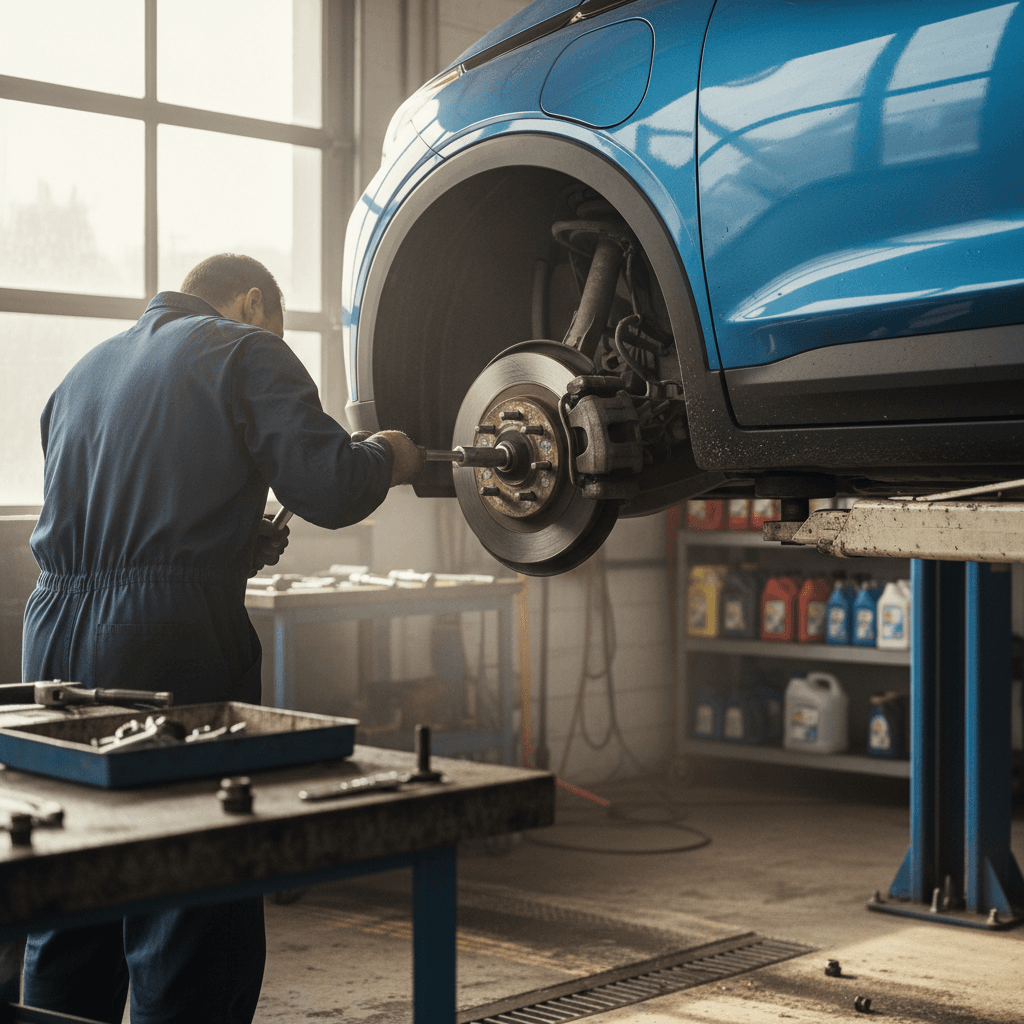
Tire choice matters
Midlife Maintenance: 30,000–100,000 Miles
Between about 30,000 and 100,000 miles, patterns start to show. You may be on your second set of tires. Brakes might need attention if you drive aggressively or live in a hilly area, but many Bolt owners report original pads lasting well beyond 80,000 miles thanks to strong regenerative braking.
What usually shows up first
- Tires: Many drivers see replacement somewhere between 30,000 and 50,000 miles, depending on driving style and climate.
- Brakes: In salt-belt states, calipers and hardware may need cleaning or lubrication even if pads still have life left.
- Cabin air filter: Expect at least one or two replacements in this window.
Scheduled fluid services
- Brake fluid: Around the five-year mark, a fluid exchange is often recommended to remove moisture.
- Coolant inspections: Service centers will inspect battery and drive-unit coolant levels and condition during multi-point checks.
- Drive-unit fluid: Some Bolt and Bolt EUV documentation adds a drive-unit fluid change just before 100,000 miles, check your model year.
High mileage, low drama
Long-Term Maintenance: 100,000–150,000 Miles and Beyond
Crossing into six-figure mileage is where the Bolt EUV maintenance schedule finally starts to look more like a traditional service plan. You’re still skipping engine work, but a few long-interval items come due to protect the battery and cooling systems long term.
Key Services Around 100,000–150,000 Miles
1. Battery and drive-unit coolant service
GM documentation typically calls for coolant replacement around <strong>5 years or 150,000 miles</strong>, whichever comes first. This helps maintain proper thermal management for the high-voltage pack and power electronics.
2. Brake system service
By this point, a <strong>brake-fluid change</strong> and a thorough inspection of pads, rotors, and calipers are smart, even if regen has kept wear low.
3. Drive-unit fluid (if specified)
Later Bolt and Bolt EUV guidance adds a <strong>drive-unit fluid change</strong> just before 100,000 miles. If your manual lists it, treat it as cheap insurance for the electric motor and gears.
4. Suspension and alignment check
After 100,000 miles on real-world roads, bushings, shocks, and alignment angles deserve a careful look, especially if you notice uneven tire wear or wandering on the highway.
High‑voltage work is not DIY territory
Don’t Get Upsold: Common Bolt EUV Dealer Add-ons
Because the official Chevy EV maintenance list is short, some service departments try to fill the gap with generic “recommended” services. Not all of them are bad, but some are unnecessary at low mileage or duplicate items already covered by the factory schedule.
Typical Add-ons You’ll See on Service Menus
How to tell what’s worth considering, and what to question
Transmission flushes
The Bolt EUV uses an electric drive unit, not a conventional automatic transmission. If your owner’s manual doesn’t call for a fluid change at your current mileage, be skeptical of generic “transmission service” upsells.
Frequent injector or fuel cleanings
An EV has no fuel injectors or fuel system. If you see these on a canned service menu, they simply don’t apply to your Bolt EUV.
Early coolant or brake services
Coolant and brake fluid replacement are legitimate, but they’re usually long-interval services. If your car is only two or three years old with modest mileage, compare any recommendations to the schedule in your manual before you sign.
Use the manual as your truth source
Maintenance and Battery Health: How It Affects Resale Value
A well-documented Bolt EUV maintenance schedule isn’t just about peace of mind, it also supports resale value. Used-EV buyers increasingly ask two questions: how healthy is the battery, and did the previous owner take care of the car?
Why simple maintenance still matters
- Coolant services help keep the pack within its ideal temperature range under load.
- Regular tire rotations prevent cupping and vibrations that can mask suspension issues.
- Brake inspections catch sticky calipers early, which can hurt efficiency and safety.
How Recharged approaches used Bolts
Every used EV listed on Recharged comes with a Recharged Score Report that includes verified battery health and a review of key wear items. That makes it much easier to see how a Bolt EUV was treated before you buy, and to compare it against similar vehicles on the market.
DIY vs. Dealer: What You Can Handle Yourself
One of the advantages of a Bolt EUV is how much of the day-to-day care is DIY-friendly. You don’t need a lift or an oscilloscope to handle the basics, just some patience, a jack and stands (used safely), and a bit of YouTube research. High-voltage work, however, is a different story and should stay in professional hands.
Bolt EUV Tasks: DIY or Dealer?
Rotate tires
Comfortable with jacks and torque wrenches? You can rotate tires at home. Otherwise, this is a quick, inexpensive job at any shop.
Replace cabin air filter
Takes just a few minutes and a screwdriver on most Bolts. Filters are inexpensive online or at parts stores.
Replace wiper blades
Easy DIY win. Just match beam-style blades to your Bolt EUV’s size and follow the instructions on the package.
Brake fluid and coolant
Technically DIY-able if you have the tools and experience, but for most owners, these are best left to shops familiar with EVs.
High-voltage battery or drive-unit work
Always a dealer or EV specialist job. The safety stakes and specialized tools make this firmly non‑DIY.
Used Bolt EUV Checklist Before You Buy
If you’re shopping used, the official Bolt EUV maintenance schedule becomes a checklist. You want to confirm the basics were done, and see what’s coming up next so you’re not surprised six months after you sign the paperwork.
Smart Questions to Ask About a Used Bolt EUV
1. Tire and brake history
Ask when the tires were last replaced and whether any brake work has been done. Uneven wear can hint at alignment or suspension issues.
2. Cabin filter and brake fluid
For a car more than three to five years old, look for receipts or a digital record showing at least a cabin filter and possibly brake fluid replacement.
3. Coolant service timing
On higher-mileage examples, ask if the <strong>5-year/150,000-mile coolant service</strong> has been completed. If not, budget for it.
4. Recalls and software updates
Bolt EV and EUV models have seen software campaigns and, for earlier vehicles, battery-related recalls. Confirm these have been performed.
5. Independent battery health check
A health report, like the <strong>Recharged Score</strong> you get on vehicles sold through Recharged, gives you a third-party view of usable capacity and pack condition.
Bolt EUV Maintenance FAQ
Frequently Asked Questions About Bolt EUV Maintenance
Key Takeaways on the Bolt EUV Maintenance Schedule
The Bolt EUV maintenance schedule is one of the car’s hidden strengths. For most owners, the early years boil down to tires, cabin air filters, and basic inspections. Long-term, there are a few critical fluid services that protect the battery and drive unit, but they arrive on five‑year or 100k+ mile timelines, not every few months like a gas vehicle.
If you already own a Bolt EUV, use your manual as the playbook and be wary of generic upsell menus that don’t match Chevy’s EV guidance. If you’re shopping for a used one, focus on tire and brake condition, evidence of age‑based fluid services, and an honest view of battery health. That’s exactly what Recharged bakes into every Recharged Score Report, so you can see, not guess, how a particular Bolt EUV has been treated and what maintenance lies ahead.