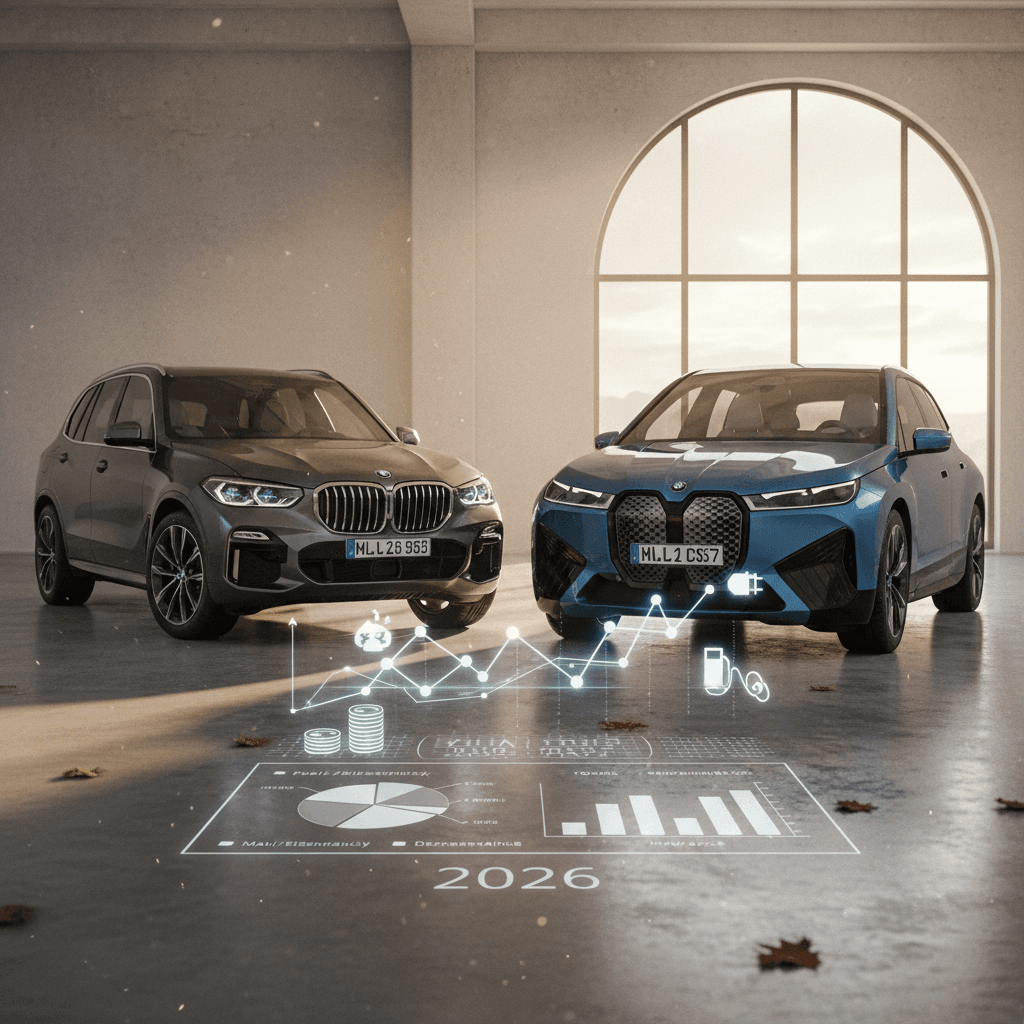
You don’t cross-shop a BMW X5 and a BMW iX because they look alike. You do it because you’re asking a 2026 question: **stick with a great gas SUV, or jump to the electric future**, and what does that actually cost over time? This guide breaks down the total cost of ownership for BMW X5 vs BMW iX so you can see where the money really goes over five years.
What this article covers
Why compare BMW X5 vs BMW iX on cost of ownership?
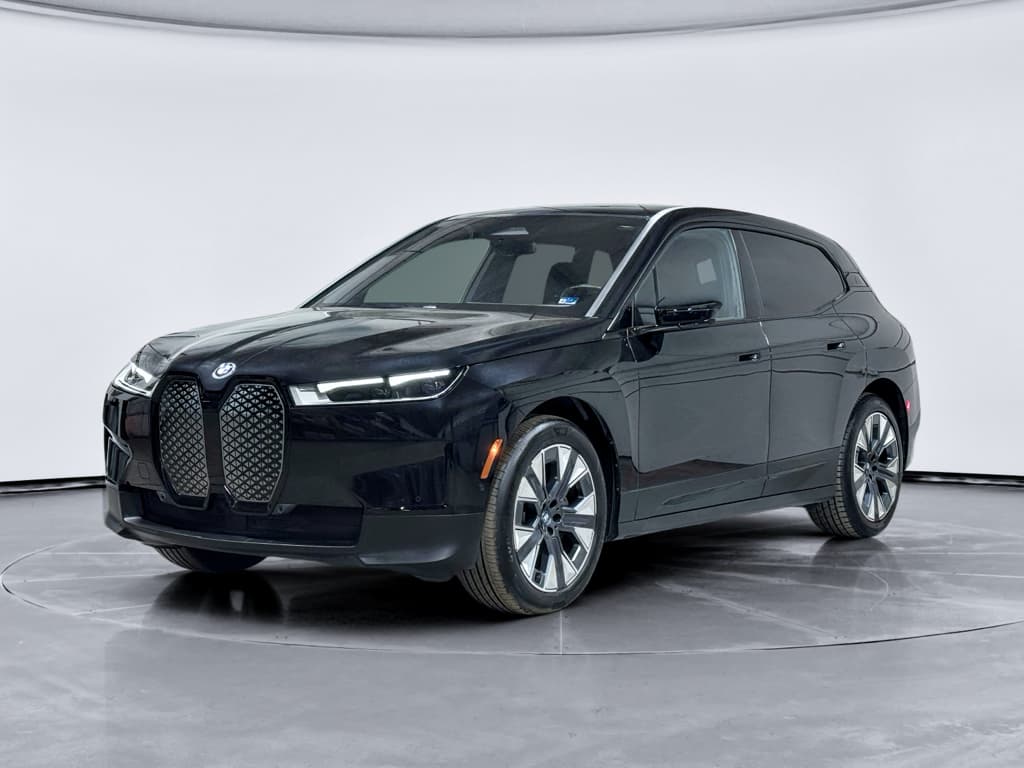
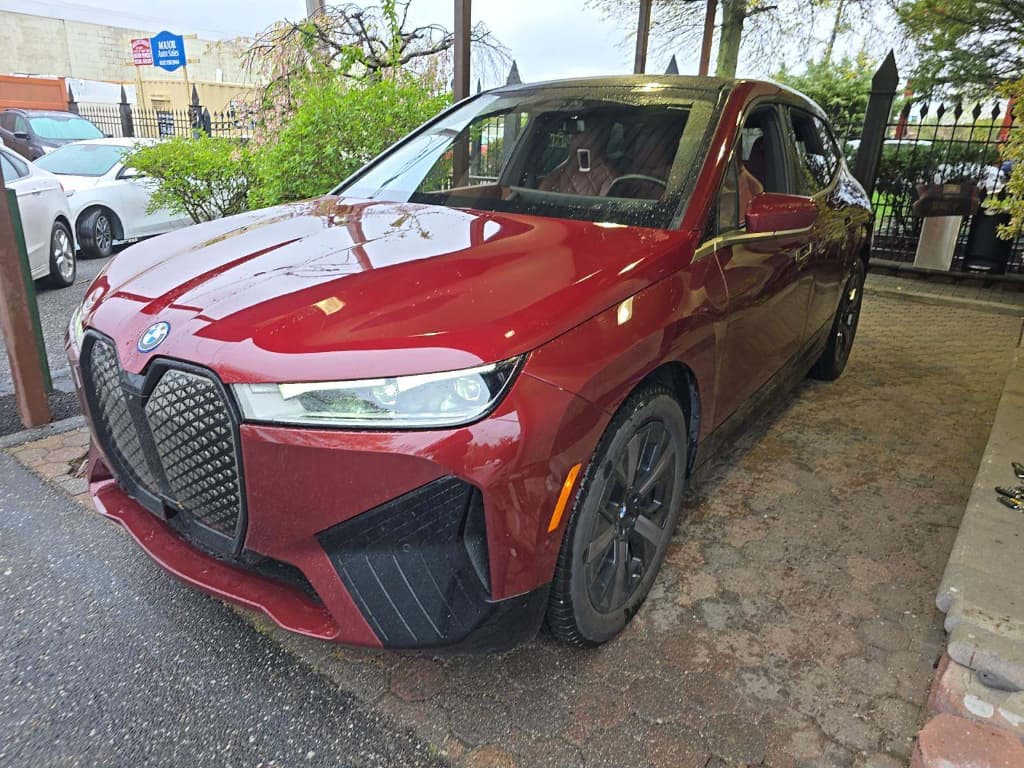
In BMW’s lineup, the **X5** is the classic luxury family SUV: refined, familiar, widely available new and used. The **iX** is the spaceship, the all‑electric, tech‑heavy SUV that rethinks how a BMW feels and sounds (or rather, doesn’t sound) on the highway. On the showroom floor, the prices can look uncomfortably close. Where things diverge is what happens **after** you drive off: fuel vs electricity, service bills, and how quickly each one loses value.
If you’re looking at **used** examples, say a 2022–2024 X5 xDrive40i versus a 2022–2024 iX xDrive50, total cost of ownership (TCO) matters even more. Depreciation has already taken a bite, and the gap between gas and electric running costs becomes surprisingly stark. That’s exactly the kind of decision Recharged was built to help with: used EVs, transparent battery health, and clear cost-of-ownership math.
Quick 5‑year cost signals (typical U.S. driver)
Assumptions and how total cost of ownership works
Total cost of ownership rolls many line items into one long, slightly intimidating number: **purchase price (minus incentives) + interest + fuel or electricity + maintenance and repairs + insurance + taxes/fees − resale value**. To keep things apples‑to‑apples, we’ll use simple, conservative assumptions a typical U.S. shopper might face in 2026.
- Driver: 12,000 miles per year, mixed city/highway.
- Time horizon: 5 years, then you sell or trade the vehicle.
- Fuel: average U.S. gasoline price of **$3.75/gal** over the period (higher in some states, lower in others).
- Electricity: average residential rate of **$0.19/kWh** based on recent national data, mostly home charging.
- Vehicles: mid‑spec BMW X5 xDrive40i vs BMW iX xDrive50, both purchased new for baseline comparisons, then we’ll talk used.
- Financing: 6‑year loan at around 5.5% APR with 10% down, roughly where many credit‑worthy buyers land in 2026.
Your numbers will differ
Purchase price, incentives, and financing
MSRP is where most shoppers stop doing math. Unfortunately, MSRP is the **least interesting** number in this story. Still, we need a baseline.
Typical new pricing: BMW X5 vs BMW iX (2026-style ballpark)
Representative pricing for well‑equipped trims, excluding sales tax and local fees.
| Model | Trim example | Approx. MSRP new | Typical transaction comments |
|---|---|---|---|
| BMW X5 | xDrive40i, well equipped | $75,000 | Popular configuration with convenience and driver assistance packages. |
| BMW iX | xDrive50, similarly equipped | $88,000 | Higher sticker but often stronger discounts and EV‑focused deals. |
Exact pricing will vary by options, region, and incentives, but this gives you the right order of magnitude.
On paper, the iX looks about **$13,000 more expensive**. In practice, that gap can shrink:
How incentives and financing change the price picture
Why the iX’s higher sticker doesn’t always mean higher ownership cost.
Federal & state incentives
Depending on build location and your tax situation, the iX may qualify for federal or state EV incentives, or you may benefit from dealer pass‑through tax credits on leases. The gas X5 generally doesn’t get these perks.
Financing programs
BMW and lenders sometimes run subvented APR or lease deals on EVs to move them. That can narrow or even erase the monthly payment gap vs an X5 financed at a higher rate.
Used-market discounts
In the used market, early iX models have depreciated faster than comparable X5s. That means a used iX can often be bought for similar or less money than a same‑year X5, despite a higher original MSRP.
Tip: Don’t shop payment only
Fuel vs electricity: what you’ll actually spend to drive
Here’s where the physics starts to speak louder than the pricing sheet. The X5 turns gasoline into motion with all the losses and heat that implies; the iX turns electricity into motion with much higher efficiency. Over 60,000 miles, that difference is enormous.
X5 fuel usage
- Real-world economy: Many owners report around 22–24 mpg combined for the X5 xDrive40i when driven like a BMW, not a Prius.
- Assumption: We’ll use 23 mpg combined.
- Fuel price: $3.75/gal average over 5 years.
At 12,000 miles/year, that’s about 521 gallons/year, or ~$1,950 annually in fuel.
iX electricity usage
- Consumption: BMW iX xDrive50 owners typically see around 2.7–3.0 mi/kWh in mixed driving.
- Assumption: We’ll use 2.8 mi/kWh for conservative math.
- Electricity price: $0.19/kWh average, mostly home charging.
At 12,000 miles, you’ll use about 4,285 kWh/year, or ~$815 annually in electricity.
Estimated energy costs: BMW X5 vs BMW iX (5 years, 60,000 miles)
Uses national average fuel and electricity prices with realistic efficiency assumptions.
| Item | BMW X5 xDrive40i | BMW iX xDrive50 |
|---|---|---|
| Annual miles | 12,000 | 12,000 |
| Efficiency assumption | 23 mpg | 2.8 mi/kWh |
| Energy price | $3.75/gal | $0.19/kWh |
| Annual energy cost | ≈ $1,950 | ≈ $815 |
| 5‑year energy cost | ≈ $9,750–$11,000* | ≈ $4,075 |
| 5‑year savings vs X5 | , | ≈ $5,500–$6,500 |
If fuel prices spike or you pay more than $0.19/kWh, the gap changes, but usually still favors the iX over 5 years.
Why the X5 number is a range
Maintenance and repairs: where EVs quietly win
The X5 is a sophisticated, turbocharged luxury SUV. It’s also a complex internal‑combustion machine full of fluids, belts, filters, and emissions hardware. The iX trims that mechanical zoo down to a couple of electric motors, a big battery pack, and far fewer wear items.
Key maintenance differences: BMW X5 vs BMW iX
What your service advisor will (and won’t) be calling you about.
Oil & engine service
X5: Regular oil changes, spark plugs, engine air filters, belts, and cooling system checks over five years.
iX: No engine, no oil, far fewer under‑hood consumables.
Transmission & driveline
X5: ZF automatic transmission and more complex AWD hardware; long‑term, these can be expensive if issues arise out of warranty.
iX: Single‑speed reduction gearboxes on the motors; much simpler, fewer failure modes.
Routine service & wear items
Both need tires, cabin filters, wiper blades, brake fluid, and eventual brakes. But the iX’s regenerative braking usually extends pad and rotor life significantly vs an X5 in similar use.
If you look at mainstream cost‑to‑own calculators and owner reports for similar luxury SUVs, a reasonable rule of thumb is:
- BMW X5: plan on **$1,200–$1,500 per year** in maintenance and wear, more if you’re out of warranty and unlucky.
- BMW iX: plan on **$700–$1,000 per year** in service and wear, with low routine maintenance but expensive tires and big brake jobs when they eventually come.
Estimated 5‑year maintenance & repair costs
Assumes mostly dealer service during and just after factory warranty.
| Item | BMW X5 | BMW iX |
|---|---|---|
| Routine maintenance (oil, inspections, fluids) | $4,000–$4,500 | $1,500–$2,000 |
| Wear items (tires, brakes, misc.) | $2,000–$2,500 | $2,000–$2,500 |
| Out‑of‑warranty surprises | $1,000–$2,000 | $500–$1,500 |
| Estimated 5‑year total | ≈ $7,000–$9,000 | ≈ $4,000–$6,000 |
Extended warranties, third‑party shops, and DIY will change these numbers, but the gap usually remains in the EV’s favor.
Battery fear vs reality
Insurance, taxes, and fees
Insurance and registration don’t usually swing the decision by themselves, but they’re not trivial either, especially in high‑cost states.
Insurance
On average, insurers still tend to rate EVs like the iX slightly higher than comparable ICE models, thanks to higher repair and parts costs. At the same time, advanced driver‑assistance systems can reduce accident severity. In the real world:
- Expect the iX to be similar or up to ~10–15% higher in annual premiums vs an X5 with similar driver profile and coverage.
- This often translates to $150–$300 more per year for the iX.
Taxes and registration
Here the picture gets messy and state‑specific.
- Many states use vehicle price as a basis for registration, so a higher‑MSRP iX can cost a bit more initially.
- Some states have EV registration surcharges to replace lost gas‑tax revenue, anywhere from $50 to a few hundred dollars a year.
- Other states offset this with EV rebates or HOV perks that have their own financial value.
Net effect on 5‑year TCO
Depreciation and resale value for X5 vs iX
Depreciation is where luxury SUVs and luxury EVs both bleed, but they bleed differently. The X5 benefits from decades of market familiarity and broader shopper demand. The iX is newer, more polarizing, and more exposed to the mood swings of the EV market and incentives.
How each SUV loses (and keeps) value
The most expensive cost you never see on a receipt.
BMW X5 depreciation pattern
Historically, a well‑kept X5 might lose 50–55% of its value in 5 years, depending on mileage and condition. It’s a known quantity in the used market, and there’s always demand for a comfortable, tow‑capable luxury SUV.
BMW iX depreciation pattern
Early iX models have seen faster initial depreciation, as with many EVs. Incentive programs on new EVs also pressure used values. The upside for you: on the used market today, you can often buy a low‑mile iX for far less than its original MSRP.
5‑year resale estimates
For a new‑to‑you 2026 purchase held 5 years:
- X5: might retain ~45–50% of its purchase value.
- iX: might retain ~35–45%, with more variance based on battery health and EV sentiment.
Why used EVs flip the script
5‑year BMW X5 vs BMW iX cost comparison
Let’s put the pieces together. These are **illustrative five‑year TCO estimates** for a buyer in 2026 choosing between a new X5 xDrive40i and a new iX xDrive50, each driven 60,000 miles over five years. We’ll keep the math simple and conservative.
Illustrative 5‑year total cost of ownership (new purchase, 60,000 miles)
Rounded estimates combining purchase, energy, maintenance, insurance, and resale. Your real‑world numbers will vary by state, deal, and driving style.
| Category | BMW X5 xDrive40i | BMW iX xDrive50 | Who has the edge? |
|---|---|---|---|
| Purchase price + interest | ≈ $82,000 | ≈ $96,000 | X5 (lower sticker, similar financing) |
| Incentives (net) | ≈ $0 | −$2,000 to −$7,500 | iX (where available) |
| Fuel / electricity (5 yrs) | ≈ $10,000–$11,000 | ≈ $4,000–$4,500 | iX by ~$6,000 |
| Maintenance & repairs (5 yrs) | ≈ $7,000–$9,000 | ≈ $4,000–$6,000 | iX by ~$2,000–$3,000 |
| Insurance (5 yrs) | ≈ $12,000 | ≈ $13,000 | X5 by ~$1,000 |
| Taxes & fees (5 yrs) | ≈ $5,000 | ≈ $5,500 | X5 slightly |
| Estimated resale value after 5 yrs | ≈ −$38,000 (you get this back) | ≈ −$38,000 (similar) | Roughly a wash |
| Approx. 5‑year TCO (out of pocket) | ≈ $78,000–$82,000 | ≈ $74,000–$80,000 | iX usually wins |
Even with a higher purchase price and somewhat higher insurance, the iX often undercuts the X5 in 5‑year cost, especially when bought used.
Plain‑English takeaway
Which one fits your life and wallet better?
Choose the X5 if…
You road‑trip where fast chargers are scarce, you tow frequently, or you value combustion‑era familiarity over experimentation. You’re okay trading higher fuel and maintenance costs for traditional SUV strengths and easier refueling.
Choose the iX if…
You can charge at home, your daily driving is under 150 miles, and you’d rather send money to your utility than your gas station. You’re comfortable with new tech and want a quieter, more futuristic daily experience.
Lean harder into used iX if…
You’re open to a 2–3‑year‑old luxury EV. A used iX with strong battery health and a good price can offer **dramatically lower five‑year TCO** than a similar‑age X5, and that’s exactly the niche Recharged serves.
When a used BMW iX makes even more sense
On the used market, the story shifts decisively. Early‑run iX models have taken a typical EV hit in depreciation, which is painful for the first owner and **a gift for you**. A well‑specced 2022–2023 iX can list for similar money to a same‑year X5, even though it started life with a much higher MSRP.
Watch battery health like a hawk
Used iX advantages
- Lower purchase price vs original MSRP, often similar to a used X5.
- 5–10 years of battery warranty usually remaining.
- Massively lower fuel/electricity and routine maintenance costs going forward.
Used iX trade‑offs
- More sensitive to charging access, home charging is close to mandatory.
- Greater exposure to changes in public charging pricing and availability.
- Resale value still less predictable than the well‑known X5.
If you’re the kind of buyer who keeps a vehicle 4–6 years and drives average miles, a **used iX bought at today’s market prices** is often the lowest‑TCO way into a flagship BMW SUV experience, provided you have charging sorted and you buy with eyes open on battery health.
How Recharged helps you compare real-world costs
Luxury SUVs are emotional purchases. But the monthly spreadsheet still matters, especially when you’re weighing a BMW X5 against an all‑electric BMW iX. Recharged exists to make the EV side of that equation as transparent and low‑drama as possible.
Shopping a used BMW iX? Here’s what Recharged brings to the table
We focus on the parts of EV ownership that traditional listings gloss over.
Recharged Score battery diagnostics
Every EV on Recharged, including the BMW iX, comes with a Recharged Score that measures and explains battery health. You’re not guessing how much range you’ll have in three winters; you can see data from day one.
Fair pricing & instant offers
We benchmark each EV against the market with fair, transparent pricing. Have an X5 to trade or sell? You can get an instant offer or consign it with us while stepping into an iX.
Financing & nationwide delivery
Recharged offers EV‑friendly financing options, trade‑ins, and nationwide delivery from our fully digital marketplace and our Experience Center in Richmond, VA.
Ready to find your next EV?
Browse VehiclesIf you’re deciding between an X5 and an iX, don’t stop at the sticker. Over five years, especially in the used market, the **BMW iX often costs less to own** while delivering a quieter, more modern drive. The X5 still makes sense for heavy towing, long‑distance rural travel, or buyers who simply aren’t ready to rearrange their lives around charging. But if your home and habits can support an EV, the smart money increasingly flows toward the iX, and Recharged is here to help you make that leap with clear data instead of guesswork.