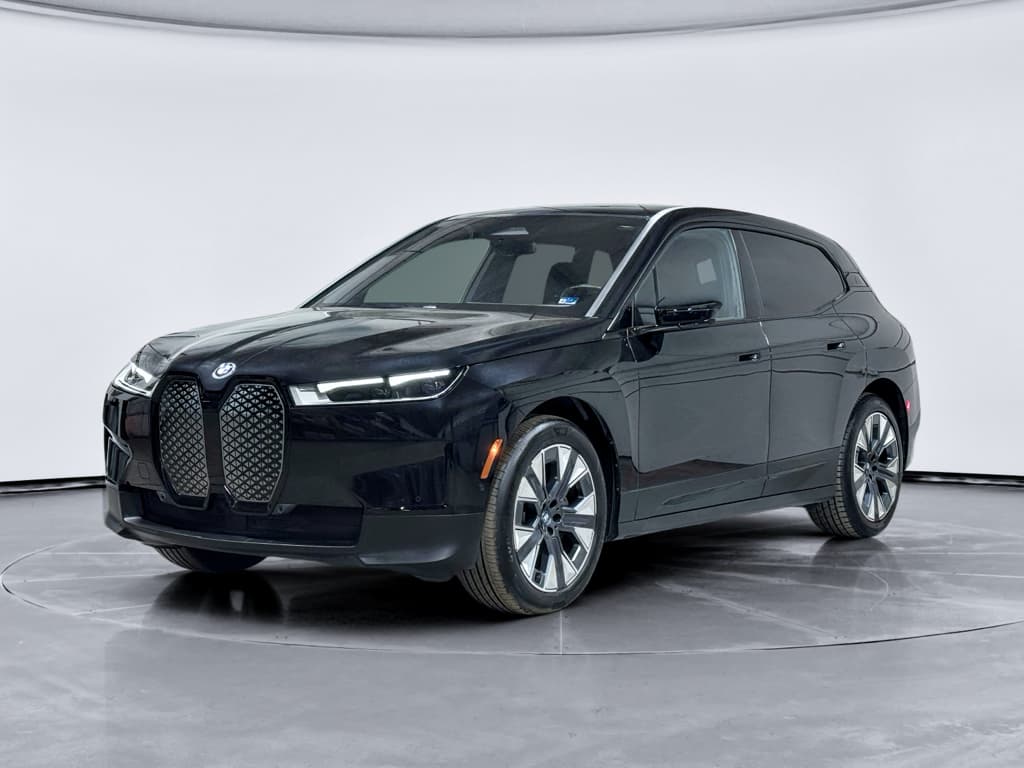
If you’ve decided on a BMW iX, you’re already in rarefied company. The question now is **which one**: xDrive40, xDrive50, or M60? On paper, the differences look like alphabet soup, more power here, a bigger battery there, but in the real world they translate into very different ownership experiences, especially if you’re shopping the used market.
A note on model years
BMW iX xDrive40 vs xDrive50 vs M60: quick overview
Trim snapshot: how the BMW iX lineup stacks up
Three power levels, two battery sizes, one very plush electric SUV
iX xDrive40
Role: Entry iX, best value.
- ~326 hp dual-motor AWD
- ~76–77 kWh battery
- WLTP range around 230–260 miles
- Good for commuters and suburban families
iX xDrive50
Role: Sweet spot for most buyers.
- 516 hp dual-motor AWD
- 111.5 kWh battery
- EPA range up to ~324 miles (20" wheels)
- Stronger performance and longer legs
iX M60
Role: High-performance flagship.
- ~610 hp, up to 811 lb-ft in Launch mode
- Same 111.5 kWh battery as xDrive50
- EPA range just under 300 miles
- Upgraded suspension and M styling cues
Trim choice in one sentence
Power and performance: how much speed do you really need?
BMW iX performance numbers at a glance
Every BMW iX uses dual-motor all-wheel drive, but output climbs dramatically as you move up the line. The xDrive40 delivers around 326 hp and 630 Nm of torque, good for roughly 6 seconds to 60 mph. That’s comparable to a quick gasoline BMW X5, and more than enough for everyday use.
Step up to the xDrive50 and things get serious. With 516 hp and about 564 lb-ft of torque from a much larger battery and beefier motors, the xDrive50 sprints to 60 mph in the low 4‑second range. It feels effortless merging, passing, or hauling a full crew and luggage, and it does it all in near silence.
The M60 is a different animal. Power jumps to roughly 610 hp, with up to 811 lb-ft of torque in Launch mode. Stiffer anti-roll bars, unique tuning, and M‑specific visuals transform the iX from quick to genuinely shocking. In independent tests it’s brushed shoulders with high-performance EVs from Tesla and Rivian while still feeling like a luxury SUV inside.
xDrive40: smooth, quiet, and sufficient
- Best suited for drivers coming from a six‑cylinder luxury SUV.
- Still feels instantly responsive thanks to EV torque.
- You won’t miss the extra power unless you drive aggressively.
xDrive50 & M60: performance padding
- xDrive50 offers the ideal balance of thrust and comfort.
- M60 adds drama, firmer tuning, and a bit more road feel.
- Both trims can be overkill if you never floor it.
Performance vs. comfort
Battery size and range: which iX goes farthest?
BMW iX 40 vs 50 vs M60: battery and range
Approximate manufacturer and EPA-style figures; exact range varies with wheels, options, climate, and driving style.
| Trim | Usable battery (approx.) | Official range (best-case) | Typical real-world highway range |
|---|---|---|---|
| xDrive40 | ~71–74 kWh | Approx. 230–260 mi (WLTP-based) | 180–210 mi |
| xDrive50 | ~105 kWh usable (111.5 gross) | Up to 324 mi EPA on 20" wheels | 260–290 mi |
| M60 | Same pack as xDrive50 | High 280s to ~296 mi EPA | 240–270 mi |
Use these numbers as a starting point, not a promise, your real-world range will depend heavily on how and where you drive.
Range is where the xDrive50 quietly justifies its higher price. Its big 111.5 kWh battery gives it substantially more usable energy than the xDrive40, and in U.S. testing it’s been rated as high as 324 miles on a charge with the smallest, most efficient wheels. Even when you spend a lot of time on the interstate, many owners see real‑world numbers in the high 200‑mile range.
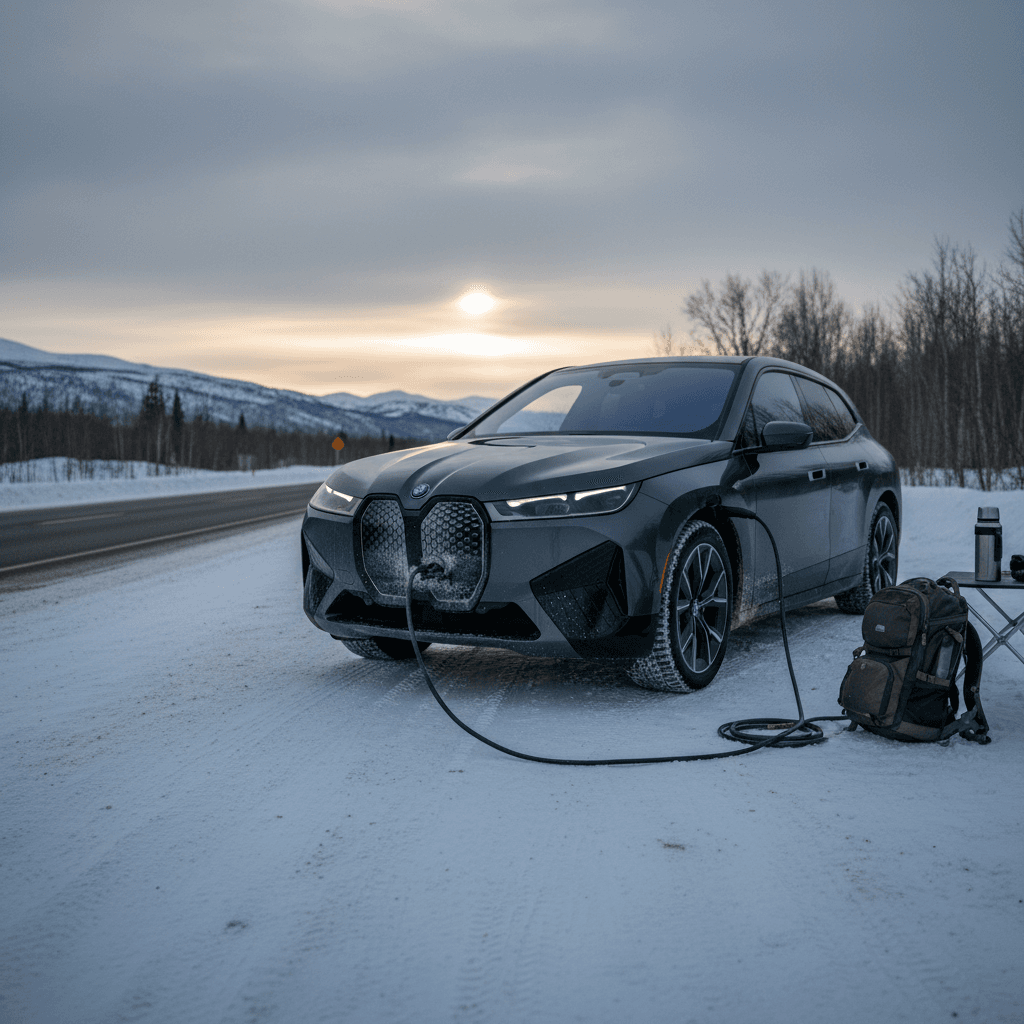
The xDrive40 uses a smaller pack, around 76 kWh gross, which translates to shorter legs. In mixed driving you’re usually looking at 200 miles plus or minus. For a commuter or someone who charges at home every night, that can be plenty. But if you routinely stack 250‑mile days or drive in cold climates, you’ll notice the difference.
The M60 shares the big battery with the xDrive50, but its extra performance and often-larger wheels chip away at efficiency. On paper its EPA range trails the xDrive50 by a few dozen miles; in practice, you’ll probably see a similar 20–40 mile deficit on a full charge if you use the power.
Range and winter driving
Charging experience: same hardware, different real-world feel
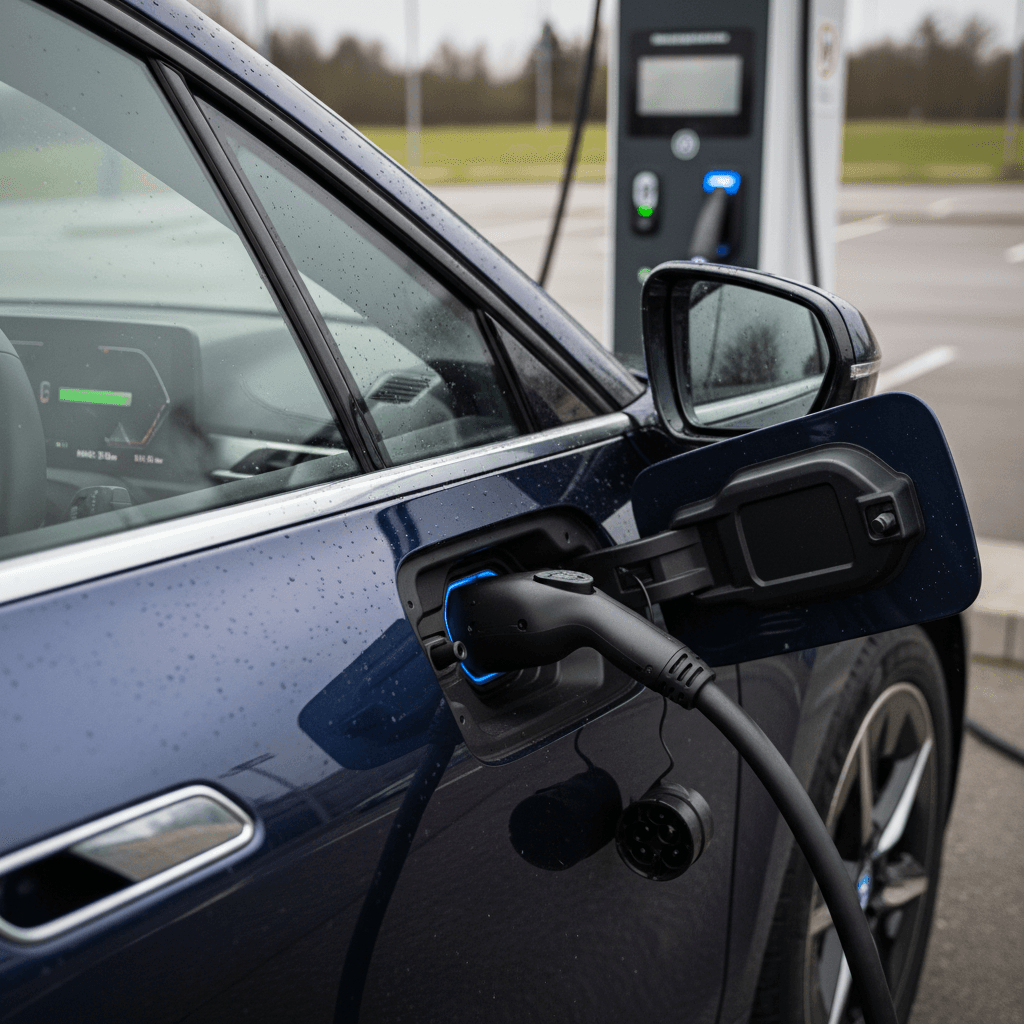
On paper, the three trims are nearly identical when it comes to charging. All versions of the BMW iX support 11 kW Level 2 AC charging and DC fast charging up to roughly 195 kW on compatible stations. From about 10% to 80% state of charge on a high‑power DC fast charger, you’re looking at roughly 30–40 minutes no matter which trim you own.
- Level 2 at home or work: roughly 10–11 hours to go from near empty to full at 11 kW.
- DC fast charging: about 30–40 minutes from 10–80% on a 150–200 kW CCS charger.
- All trims use CCS in the pre-facelift generation, so any major U.S. public fast‑charging network will work.
Where the trims feel different is how far that charge takes you. Adding 60% state of charge to an xDrive50 or M60 gives you more miles than the same 60% on an xDrive40, because the larger pack simply stores more energy. For road‑trippers, that means longer stretches between stops and more flexibility to skip a crowded or unreliable charger.
Home charging and used iX shopping
Ride, comfort, and tech: where the trims really feel different
Regardless of trim, the BMW iX is a seriously comfortable EV. The wheelbase is long, the body is aerodynamic, and the cabin is whisper-quiet thanks to acoustic glass and extensive sound deadening. That said, BMW uses the trims to layer in different levels of suspension tuning and equipment.
Comfort and tech differences by trim
You sit in the cabin every day, this is where small spec choices really matter.
xDrive40
- Usually on smaller wheels with taller tire sidewalls.
- Soft, relaxed ride that favors comfort over sport.
- Plenty of luxury: panoramic glass roof, high‑end materials.
- Some advanced features may be optional rather than standard.
xDrive50
- Often equipped with adaptive air suspension.
- More standard tech: premium audio, driver‑assist suites.
- Ride remains plush but with better body control.
- More choices in appearance packages and wheel designs.
M60
- Stiffer anti‑roll bars and sportier suspension tuning.
- Distinctive M design cues and trim pieces.
- Some top features (like the most powerful audio) more common or standard.
- Ride is still comfortable but slightly firmer and more connected.
In the luxury EV world, quiet confidence tends to age better than headline performance numbers. The xDrive50, in particular, feels like the iX BMW intended most people to live with day in and day out.
Good news for used buyers
Ownership costs: price, depreciation, and insurance
New, the price walk between these trims is substantial. In the U.S. market, the xDrive40 has historically sat at the bottom of the range, the xDrive50 in the middle, and the M60 as the six‑figure flagship. On the used market, that same ladder holds, but depreciation hits the priciest models hardest.
Typical used-market positioning (U.S.)
Exact prices change with mileage, options, and region, but this is how the trims usually line up relative to one another.
| Trim | Typical position vs others | Insurance/tires/brakes | Who it best fits |
|---|---|---|---|
| xDrive40 | Lowest purchase price | Least expensive to insure; often smaller wheels and tires | Budget-conscious buyers, shorter-range drivers |
| xDrive50 | Mid-pack pricing | Moderate insurance; more equipment and options can add cost | Families and commuters who road‑trip regularly |
| M60 | Highest purchase price & depreciation | Highest insurance, pricey performance tires | Enthusiasts who value speed and exclusivity over cost |
Think in terms of gaps: the jump from 40 → 50 is usually smaller than from 50 → M60.
Don’t forget wheel and tire costs
Which BMW iX trim fits your driving profile?
Match the iX trim to your lifestyle
Daily commuter / suburban family
Mostly city and suburban driving, 60–120 miles per day.
Charge at home most nights.
Rarely exceed 200 miles in a day.
<strong>Best fit:</strong> xDrive40 or xDrive50 if you want extra cushion.
Frequent road-tripper
Regular 250–400‑mile days on highways.
Live in a region with patchy charging or harsh winters.
Want to minimize charging stops and range anxiety.
<strong>Best fit:</strong> xDrive50. Big battery, strong range, comfortable ride.
Performance enthusiast
You enjoy acceleration runs and back roads.
You like the idea of a "rolling tech flagship."
You’re comfortable with higher insurance and tire bills.
<strong>Best fit:</strong> M60, assuming the budget works.
Luxury-first shopper
You care more about cabin quality and quiet than 0–60 numbers.
You’ll keep the vehicle for several years and want it to age gracefully.
You want strong resale and broad appeal to future buyers.
<strong>Best fit:</strong> well‑equipped xDrive50.
Five questions to settle your BMW iX trim decision
1. How far do you actually drive in a day?
Look at a typical week, not your longest-ever road trip. If most days are under 120 miles and you charge at home, the xDrive40 may be perfectly adequate. If you regularly stretch beyond 200 miles, you’ll appreciate the xDrive50’s extra battery.
2. How much will you use the performance?
Be honest: do you really need supercar‑like acceleration in a family SUV? If you love that kind of drama, the M60 delivers. If not, the xDrive50 already feels extremely quick and is easier on the budget.
3. What’s your charging situation?
Garage with 240V Level 2 charging? All the trims work well. If you rely more on public DC fast charging or live in a cold climate, the extra buffer of the xDrive50’s larger pack is worth serious consideration.
4. How sensitive are you to insurance and tire costs?
M60 and heavily optioned xDrive50 models can carry significantly higher running costs. If you’re financing, get insurance quotes for each trim before you sign, and look closely at tire sizes when shopping used.
5. How long do you plan to keep the car?
If you’ll keep your iX for many years, choose the trim that will feel "enough" three or four years from now, not just today. For many buyers, that’s the xDrive50; for value hawks who drive less, the xDrive40 makes a lot of sense.
Buying a used BMW iX: trim-specific tips
Shopping used brings its own set of questions: battery health, prior charging habits, warranty coverage, and how the previous owner spec’d the car. Here’s how to think about each iX trim on the secondhand market.
xDrive40: value play
- Fewer were sold than xDrive50s, so selection is thinner.
- Look for well-optioned examples if you care about premium audio or driver-assistance packages.
- Battery health is key: a smaller pack means each lost percentage point of capacity matters more.
xDrive50: sweet-spot all-rounder
- The most common trim, so you’ll see a wide range of colors and option mixes.
- Large battery gives you more tolerance for some degradation over time.
- Prior DC fast‑charging intensity matters, but the pack is robust when treated reasonably.
M60: niche flagship
- Often loaded with every option and eye‑catching colors or wheels.
- Higher probability of spirited driving, so inspect tires, brakes, and suspension carefully.
- Depreciation can be steep, great for buyers, but budget for ongoing running costs.
What Recharged checks on a used iX
How Recharged can help you choose the right iX
Choosing between the BMW iX xDrive40, xDrive50, and M60 is about much more than a spec sheet. It’s about aligning range, performance, and cost with how you really drive. That’s where a transparent used‑EV marketplace like Recharged can tilt the odds in your favor.
- Battery health diagnostics: Every iX on Recharged includes a Recharged Score with an in‑depth look at battery condition, so you can see how much usable range you’re actually buying.
- Fair, data-backed pricing: We benchmark each vehicle against real‑world market data, so you’re not guessing whether that M60 premium is justified.
- EV‑specialist guidance: Our experts can walk you through the differences between xDrive40, xDrive50, and M60 trims, and how they line up with your commute, road‑trip habits, and budget.
- Financing and trade‑in support: You can finance your iX, get an instant offer or consignment for your current vehicle, and arrange nationwide delivery, all online.
- Experience Center in Richmond, VA: If you prefer to see and feel an EV before you buy, you can visit our Experience Center to talk through options in person.
BMW iX xDrive40 vs xDrive50 vs M60: FAQ
Frequently asked questions about BMW iX trims
Final thoughts: choosing the smart iX for the long term
When you strip away the spec‑sheet noise, the BMW iX lineup is actually straightforward. The xDrive40 is the value choice for shorter‑range drivers. The xDrive50 is the well-rounded all‑star that balances performance, range, comfort, and future resale. The M60 is the statement piece, the one you buy because it makes you smile every time you floor it.
Your job is to be honest about how you drive, where you charge, and what you’re comfortable spending not just today, but over the next several years. With that clarity, each trim’s strengths and compromises come into sharp focus.
If you’d like a second set of eyes, Recharged can help you compare individual iX listings by battery health, equipment, and price, not just by the badge on the tailgate. That way, whether you land on xDrive40, xDrive50, or M60, you’ll know you’re getting the right electric BMW for the way you actually live and drive.