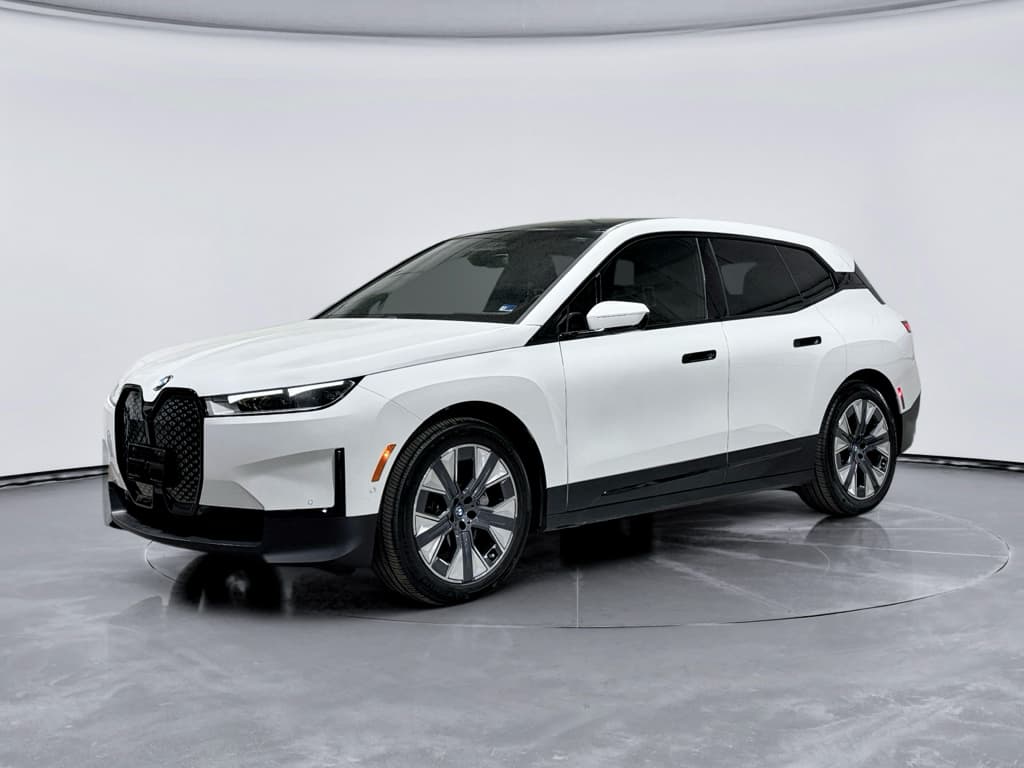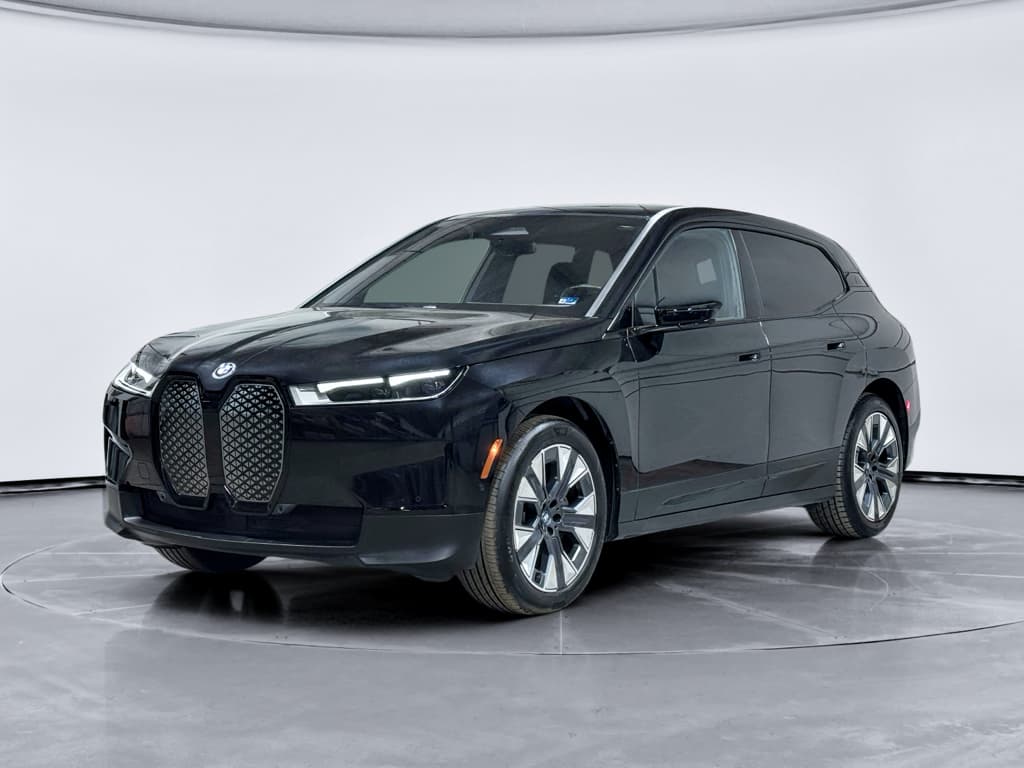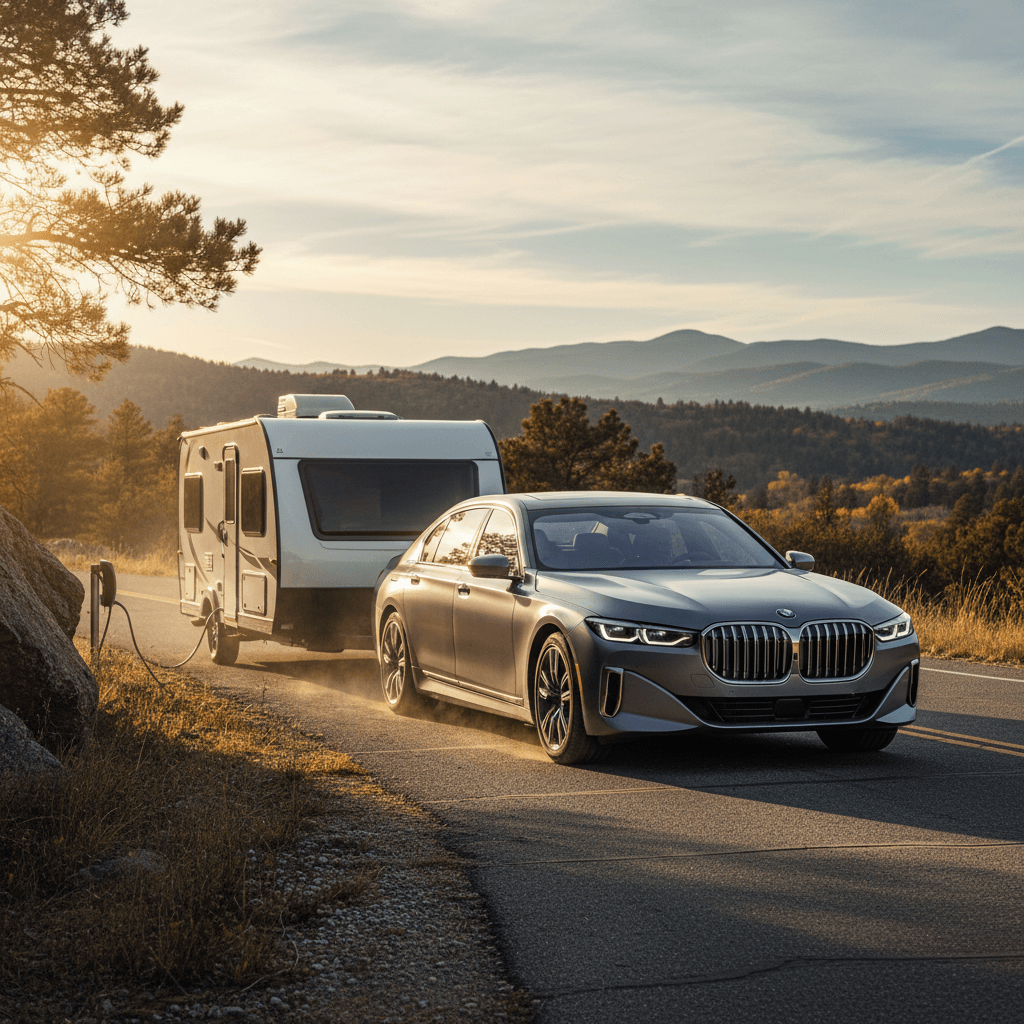
If you’re looking at a BMW i7, you’re probably thinking about quiet cross‑country miles, not camping at the gravel quarry. Still, shoppers keep asking the same question: what is the BMW i7 towing capacity and how far will it go with a trailer? This guide cuts through the brochure gloss with hard numbers, real‑world expectations, and practical advice, especially if you’re eyeing a used i7 with some road‑trip duty in its future.
Short answer
BMW i7 towing and range: quick overview
Key BMW i7 towing & range numbers (2026)
Important fine print
Can the BMW i7 actually tow a trailer?
On paper, the **BMW i7 has the mass, wheelbase, and torque to make a compelling tow vehicle**. Dual‑motor xDrive versions push out over 500 hp and close to 550 lb‑ft, and curb weight is around 5,800–5,900 lb. That’s three‑row‑SUV heft with limousine manners.
Hardware reality
- Long 126.6‑inch wheelbase helps stability.
- Adaptive air and electronic damping calm trailer motions.
- Strong regenerative braking adds confidence on downgrades.
- European data lists a **2,000 kg (≈4,409 lb) braked tow rating** and 750 kg (≈1,653 lb) unbraked for the i7 xDrive60.
Regulatory reality
- U.S. BMW marketing focuses on luxury, not towing.
- Certain U.S. trims may not be officially rated for towing even if structurally identical.
- Aftermarket hitches may not change the legal rating on your registration or insurance.
- Always check your owner’s manual and door‑jamb labels for the final word.
Never assume a tow rating
BMW i7 towing capacity by spec and setup
BMW i7 towing capacity snapshot
Approximate ratings based on published European specs for the i7 xDrive60. Always verify with documentation for your specific car.
| Configuration | Tow status | Max braked trailer | Max unbraked trailer | Max tongue weight | Notes |
|---|---|---|---|---|---|
| i7 xDrive60 (factory tow, EU‑spec) | Rated | ≈4,409 lb (2,000 kg) | ≈1,653 lb (750 kg) | ≈176 lb (80 kg) | Most commonly cited factory rating; suitable for small campers, boats, and utility trailers. |
| i7 eDrive50 (factory tow, EU‑spec) | Rated | Similar to xDrive60 in most markets | ≈1,653 lb (750 kg) | ≈176 lb (80 kg) | Check local brochure; single‑motor still has ample torque. |
| i7 M70 xDrive | Mixed | May have reduced or no tow approval depending on market | Varies | Varies | High‑performance brakes and tires can change tow rules. |
| U.S.‑spec i7 (aftermarket hitch) | Case‑by‑case | Mechanically capable, but may have **no official tow rating** | N/A | N/A | Talk to a BMW dealer, your insurer, and a hitch specialist before towing. |
BMW‑published ratings may differ by country, year, and trim. When in doubt, go lower, not higher.
Pick the right trailer class
BMW i7 range by trim, battery and wheels
Every i7 uses the same roughly **101.7 kWh usable battery**, but range changes with powertrain and wheel choice. Larger wheels are the enemy of efficiency, and the high‑output M70 pays a range tax for its theatrics.
EPA‑estimated BMW i7 range by trim (2025–2026, U.S.)
Representative numbers for recent model years. Exact range varies slightly year‑to‑year and by tire spec; always check the window sticker on the car you’re buying.
| Trim / wheels | Drivetrain | EPA range (approx.) | Comments |
|---|---|---|---|
| i7 eDrive50, 19" wheels | RWD, single motor | ≈314 mi | Most efficient i7; best choice if you care more about range than all‑wheel traction. |
| i7 xDrive60, 19" wheels | AWD, dual motor | ≈314 mi | Surprisingly close to the eDrive50; plenty of power with limousine comfort. |
| i7 xDrive60, 20" wheels | AWD, dual motor | ≈308 mi | Heavier wheels and more tire hurt efficiency slightly. |
| i7 xDrive60, 21" wheels | AWD, dual motor | ≈296–308 mi | Real‑world tests have beaten EPA estimates even on big wheels, but plan conservatively. |
| i7 M70 xDrive | AWD, dual motor (high output) | ≈285 mi | Brutally quick, but least efficient of the lineup. |
All figures are approximate EPA combined range on a full charge under ideal conditions.
Real‑world test note
How towing affects BMW i7 range in the real world
Hook a boxy trailer to a slippery luxury sedan and physics sends you a bill. Drag goes up, weight goes up, and your i7’s impressive range melts like gelato on an Alabama dashboard. The good news: if you stay sensible with trailer size and speed, the numbers are manageable.
Typical i7 range impact with trailers
Rough planning numbers to keep you out of trouble, not lab‑grade measurements.
Small utility trailer
Load: 1,000–1,500 lb open trailer, bikes or yard gear.
Expected range loss: ≈20–30% at 65 mph.
Example: xDrive60 19" wheels: from ~310 mi to ~220–250 mi per charge.
Compact camper
Load: 2,000–3,000 lb teardrop or low‑profile camper.
Expected range loss: ≈30–40%.
Example: From ~310 mi to ~180–220 mi, depending on terrain and weather.
Tall box trailer
Load: 3,000–4,000 lb enclosed or high‑roof cargo trailer.
Expected range loss: ≈40–50%+.
Example: You may only see ~150 miles or less of comfortable highway range.
Wind, weather, and speed matter more than you think
- Use the i7’s built‑in efficiency and consumption displays to track how your trailer affects Wh/mi on a familiar route.
- Plan your first long towing trip with **extra charging stops** until you understand your personal consumption patterns.
- Treat the EPA number as a starting point; subtract 30–50% for towing, then subtract a bit more for safety.
Charging the i7 on road trips (with and without a trailer)
All i7 trims can DC fast‑charge at roughly **195 kW peak**, taking the battery from 10–90% in under an hour at a strong station and adding about **80–100 miles of range in 10–12 minutes** under ideal conditions. BMW has also bundled complimentary Electrify America credits on recent model years, which softens the blow of those peak‑hour charging sessions.
Without a trailer
- Plan **150–200 mile hops** to stay in the fast‑charging sweet spot (10–70% SOC).
- Use apps like PlugShare and Electrify America's app to verify station status.
- On a well‑planned route, a xDrive60 can feel like any other luxury GT, just quieter.
With a trailer
- Look for sites with **pull‑through or end stalls**; otherwise you may need to briefly unhook.
- Shorten hops to **80–140 miles**, especially with tall or heavy loads.
- Consider charging to a slightly higher SOC (80–90%) in rural areas with sparse infrastructure.
Use the range buffer to your advantage
Is the BMW i7 a good tow vehicle for you?
BMW i7 as a tow rig: strengths vs compromises
Who the i7 suits, and who might be happier with a different EV.
Where the i7 shines
- Stability and comfort: Long wheelbase and adaptive suspension keep the combo composed.
- Instant torque: No drama merging or passing, even with a loaded trailer.
- Luxury first: If your trips are half towing, half five‑star hotel, the i7 nails the ambiance.
- Battery size: Over 100 kWh gives you more to work with than many smaller EVs.
Where it falls short
- Limited official tow support in some markets, especially the U.S.
- Range shrinkage: Even with a modest trailer, expect frequent fast‑charge stops.
- Ground clearance: It’s still a low luxury sedan; gravel forest roads and steep campsites may be nerve‑racking.
- Cost of entry: You’re paying flagship money for what is, realistically, a light‑to‑moderate tow solution.
The i7 is a limousine that happens to be capable of towing, not a tow vehicle that happens to be luxurious.
Used BMW i7 towing & range checklist
If you’re shopping the used market, the i7 is intriguing: you get a massive battery, flagship‑grade comfort, and the early depreciation hits the original owner instead of you. But towing and range performance live or die on how the car was treated, which is where a structured inspection, and real battery data, matter.
Key checks before you buy a used BMW i7 for towing or road trips
1. Confirm tow rating and hardware
Ask for the original window sticker and owner’s manual pages that specify towing. Verify whether the car has a **factory tow package** or a quality aftermarket hitch, and make sure wiring is properly fused and integrated.
2. Inspect for hitch or rear‑end damage
Look under the rear bumper for signs of poor installs, rust, or impact repairs. A bent hitch receiver or wrinkled metal near the mounting points is a red flag.
3. Get a real battery‑health report
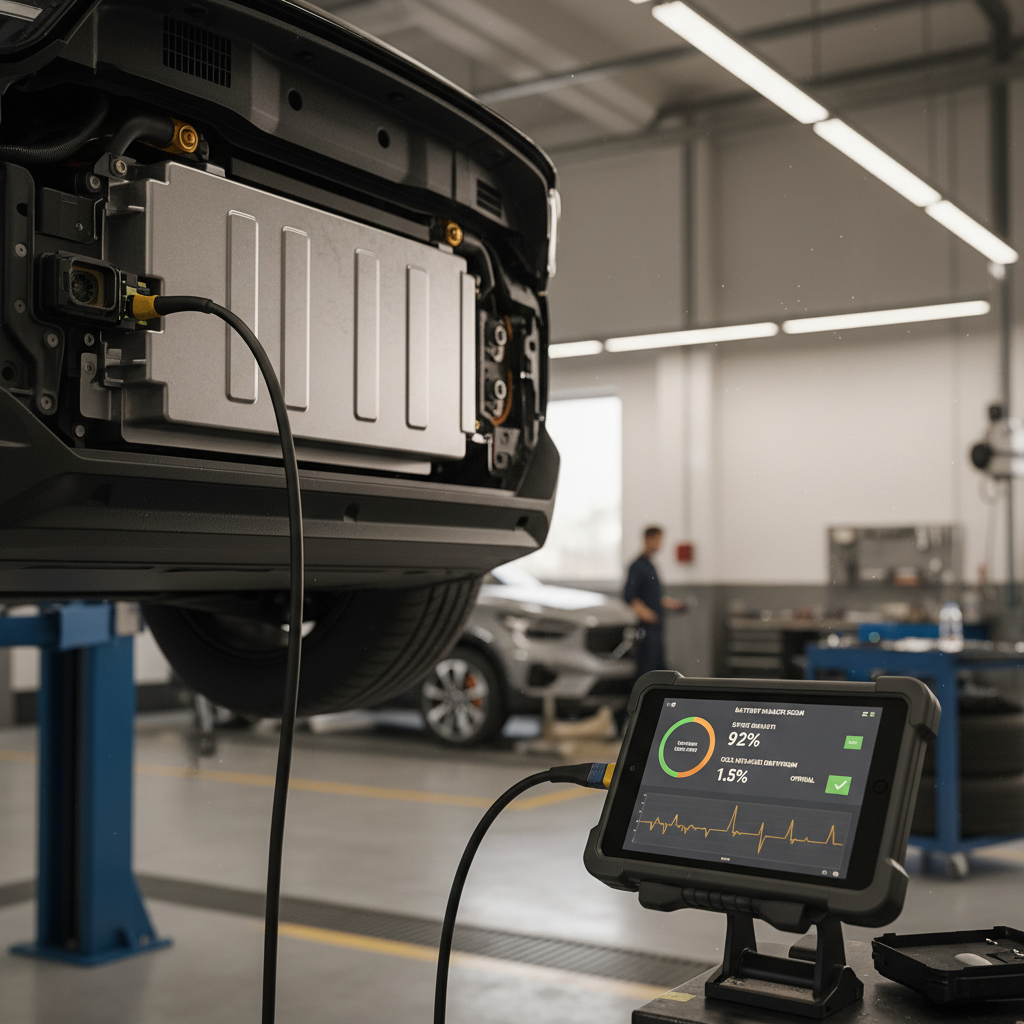
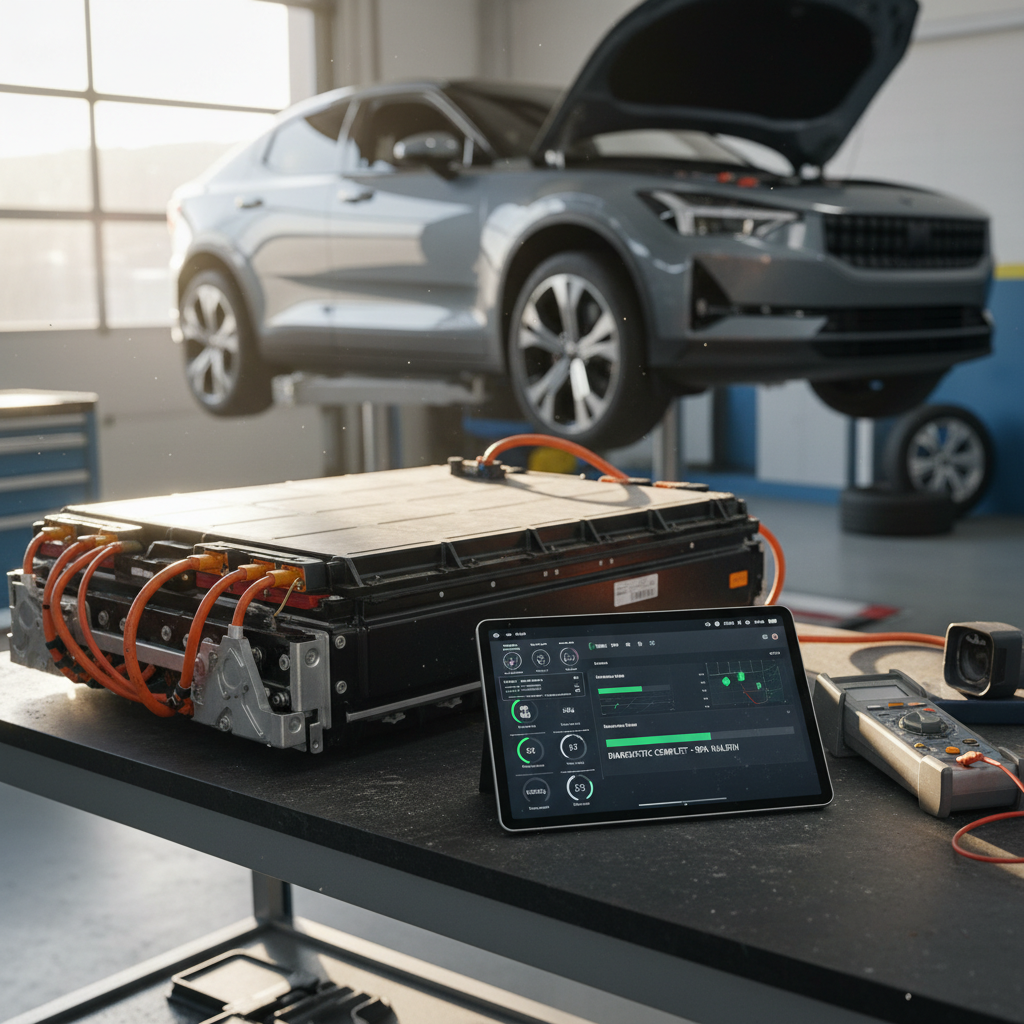
Range promises mean nothing if the battery has lost a large chunk of usable capacity. A <strong>professional diagnostic like the Recharged Score battery health test</strong> gives you an objective view of pack health before you sign anything.
4. Compare real range to EPA figures
On a test drive, reset trip data and do a **40–60 mile mixed loop**. Extrapolate the remaining range and compare it to the original EPA number. Big gaps may mean heavy prior use or battery issues.
5. Check fast‑charging behavior
Stop at a DC fast charger and watch the charge curve from roughly 10–50% if the seller allows it. You’re looking for <strong>stable power delivery</strong> and no warning messages or thermal throttling.
6. Review software and service history
Make sure the i7 is on current software, especially for battery and charging controls. Ask for service records to confirm any recalls or high‑voltage system work were handled by a qualified BMW center.
How Recharged can help
Ready to find your next EV?
Browse Vehicles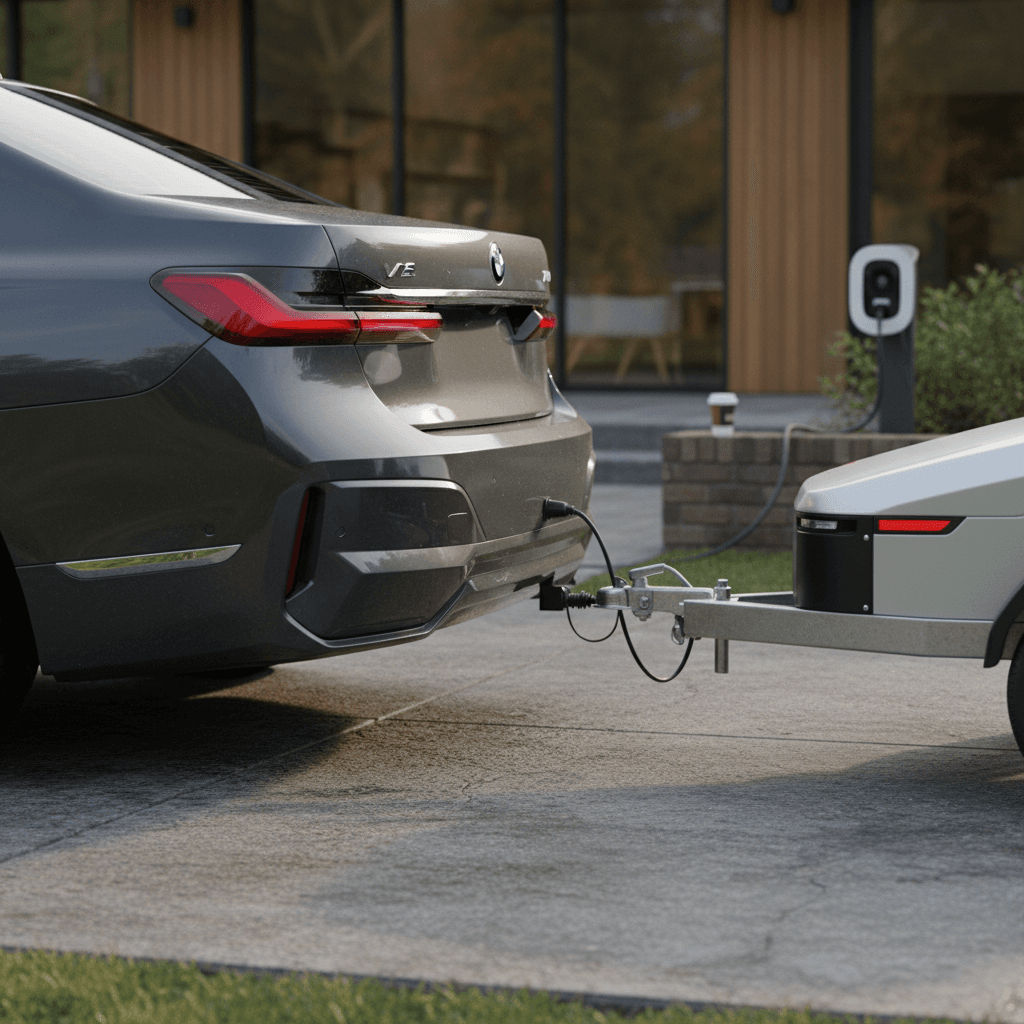
BMW i7 towing & range FAQ
Frequently asked questions about BMW i7 towing capacity and range
Bottom line: who the BMW i7 suits as a tow rig
Think of the BMW i7 as a **quiet, long‑legged luxury flagship that moonlights as a part‑time tow vehicle**. With the right trailer and realistic expectations, it will happily drag a small camper, a pair of motorcycles, or a utility trailer across state lines in near silence. Push up against its theoretical 4,400‑lb rating, or ignore the fine print about market‑specific tow approvals, and you’re asking a limousine to do pickup‑truck work.
If you want an EV that spends most of its life towing, a dedicated SUV or pickup will serve you better. But if your life looks more like **airport runs, client dinners, and the occasional glamping weekend**, the i7’s combination of range, refinement, and torque makes a lot of sense. And if you’re shopping used, pairing a promising i7 with a **battery‑health report and expert guidance from Recharged** turns a gorgeous gamble into a well‑informed decision.