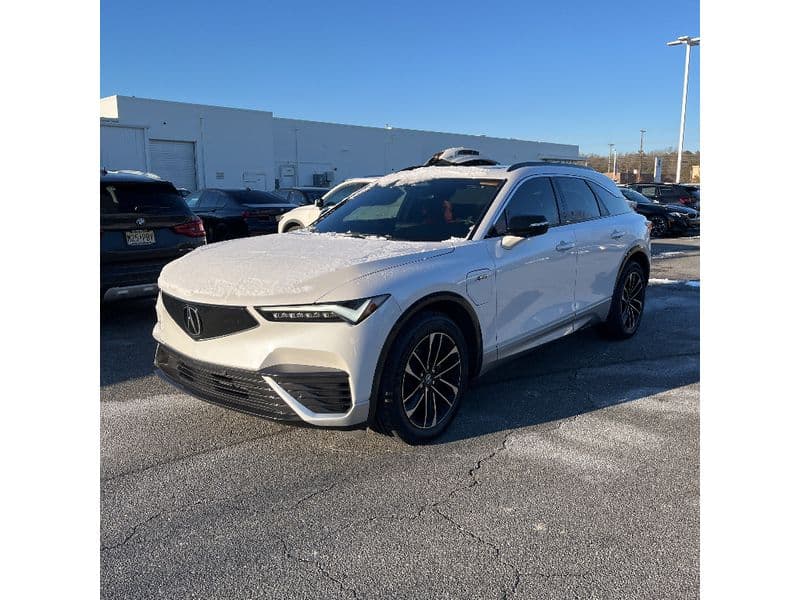
If you’re considering an Acura ZDX, or already living with one, the big invisible question is the battery. How much does the Acura ZDX battery degrade per year, and will today’s 278–313 miles of rated range still feel usable eight or ten years from now? With an expensive Ultium pack under the floor and Acura already canceling future ZDX production, you’re right to ask hard questions before you sign a lease or shop used.
Quick takeaway
Does the Acura ZDX have a battery degradation problem?
The short answer right now: no systemic degradation problem has emerged for the Acura ZDX, but we also don’t have a 10‑year track record yet. The ZDX only arrived for the 2024 model year and rides on GM’s Ultium platform, shared with the Cadillac Lyriq, Chevy Blazer EV, and Honda Prologue. Early owner complaints tend to focus more on software, charging behavior, and winter range swings than on obvious, permanent capacity loss.
That said, every lithium‑ion pack loses capacity over time. Across large independent datasets covering tens of thousands of EVs, average battery degradation today clusters around about 2% per year, with some models a little better and some worse. The key point is that modern, liquid‑cooled packs like Ultium age more gracefully than the early EV batteries you might be picturing from 2011 Leafs and the like.
Caution when reading anecdotes
How the Acura ZDX battery is built (and why that matters for degradation)
To understand Acura ZDX battery degradation per year, start with the hardware. The ZDX uses a roughly 102 kWh usable Ultium battery pack, with liquid cooling and a sophisticated battery management system (BMS). Ultium stacks large-format pouch cells into modules and then into the pack, with active thermal management designed to keep the pack in its comfort zone during fast charging and spirited driving.
Modern Ultium advantages
- Liquid cooling keeps cell temperatures in a narrow band, reducing heat‑driven aging.
- High‑energy cells mean the pack rarely runs at its absolute limits in daily use.
- Advanced BMS can rebalance cells and limit peak power when needed to protect longevity.
How it improves degradation
- Less time sitting at extreme high or low state of charge.
- Better control during DC fast charging so the pack doesn’t cook itself at 200 kW for too long.
- More consistent temperature from cell to cell, which keeps the whole pack aging at a similar rate.
This isn’t a science‑project battery. It’s a mass‑market, long‑life component engineered to survive well past a one‑or‑two‑owner life cycle. For you, that means you should expect gradual, boring capacity loss, not a sudden cliff.
Expected Acura ZDX battery degradation per year
Normal EV battery degradation today
There isn’t yet a giant, model‑specific dataset on Acura ZDX battery degradation per year. What we do have is: (1) early Ultium experience from sibling vehicles, and (2) large, brand‑agnostic EV battery studies from 2024–2026. Taken together, those point to a realistic long‑term average of roughly 2–3% capacity loss per year for a ZDX driven and charged normally.
Illustrative Acura ZDX battery degradation over time
This table shows a realistic, example scenario for a ZDX with a 313‑mile EPA rating from new. These are ballpark numbers, not a promise, your results will vary with climate and driving habits.
| Vehicle age | Estimated capacity remaining | Approx. usable range (originally 313 mi) | What you’d notice |
|---|---|---|---|
| Year 1 | 95–97% | 298–304 mi | Small drop, mostly visible on long highway trips. |
| Year 3 | 90–93% | 282–291 mi | You may add an extra 5–10 minutes to some road‑trip stops. |
| Year 5 | 86–90% | 269–282 mi | Daily commuting unchanged; fast‑charging stops a bit more frequent. |
| Year 8 | 78–84% | 244–263 mi | This is near the typical warranty horizon; still solid for most commutes. |
| Year 10 | 72–80% | 225–250 mi | Road‑trip flexibility is reduced, but the car remains very usable for many drivers. |
Example of how a 2–3% annual degradation rate feels over a decade of ZDX ownership.
Think in miles, not percentages
Factors that speed up or slow down ZDX battery degradation
What really controls Acura ZDX battery degradation per year?
The chemistry doesn’t care how nice the interior is; it cares about heat, voltage, and cycles.
Heat exposure
High temperatures accelerate chemical aging inside the cells.
- Hot‑climate parking in direct sun
- Long DC‑fast‑charge sessions in summer
- Daily driving in regions with extended heat waves
High SOC & fast charging
Keeping the pack near 100% and hammering it with DC fast charging wears it faster.
- Frequent 100% charges and days parked full
- Ultra‑fast DC charging as your default, not your backup
Mileage & usage patterns
Every cycle costs a tiny bit of life, but how you use those cycles matters.
- Lots of short trips vs. long highway miles
- Hard driving that heats the pack repeatedly
Worst‑case behavior for a ZDX pack
How range loss actually shows up in daily driving
Range loss rarely arrives as a dramatic, dashboard‑flashing moment. Instead, for most ZDX drivers it shows up as a slow shift in what the car can comfortably do on a single charge. You’ll first notice it on your longest regular trip, the airport run, the cabin, that weekly 180‑mile client visit, where you suddenly need an extra stop you didn’t used to make.
- In winter, you may see 20–35% less range even on a healthy battery because energy is going into cabin and battery heating.
- At 70–80% long‑term capacity, most daily commutes feel unchanged; it’s longer highway legs that get squeezed.
- The car’s range estimator (the "guess‑o‑meter") will bounce around day‑to‑day based on your last few drives, which can feel like degradation but isn’t.
Don’t confuse winter loss with permanent loss
Acura ZDX battery warranty and capacity loss
For U.S.‑market 2024 Acura ZDX and ZDX Type S models, Acura backs the high‑voltage battery with a mainstream EV warranty: roughly 8–10 years and around 100k–150k miles, depending on state and specific trim. The warranty explicitly covers defects and excessive capacity loss, though Acura, like many brands, is cautious about publishing a hard capacity percentage in marketing materials.
How the Acura ZDX battery warranty compares
ZDX uses an Ultium pack and Honda/Acura warranty terms that broadly match other modern EVs.
| Model | Battery warranty (years / miles) | Typical capacity threshold |
|---|---|---|
| Acura ZDX / Type S | ≈8–10 yrs / ~100k–150k mi | Not always published; typically ~70% |
| Cadillac Lyriq (Ultium sibling) | 8 yrs / 100k mi | Around 70% in practice |
| Mainstream EV average | 8 yrs / 100k–150k mi | 50–70%, model‑dependent |
Most modern EVs cluster around an 8–10‑year / 100k–150k‑mile high‑voltage battery warranty with a ~70% capacity floor.
What this means for you
Ready to find your next EV?
Browse VehiclesSlowing Acura ZDX battery degradation: best practices
Daily habits that protect your ZDX battery
1. Live between ~20–80% for daily use
For routine commuting, keep your ZDX between about <strong>20% and 80% state of charge</strong>. Save 90–100% charges for road trips or when you genuinely need the full buffer.
2. Avoid letting it sit at 0% or 100%
Full or empty and parked for days is harder on the cells than anything you’ll do on the road. If you top off before a trip, try to time the charge to finish near your departure.
3. Treat DC fast charging as a tool, not a lifestyle
Occasional high‑power DC charging is fine; it’s what the ZDX is built for. But if you lean on DC fast charging several times per week instead of home Level 2, you’ll likely see slightly faster long‑term degradation.
4. Be kind in extreme heat
In hot climates, park in shade or a garage when you can. Precondition while plugged in so the battery cooling system can do its job without depleting the pack.
5. Update your software
Battery management and charging profiles can improve with over‑the‑air updates. Staying current helps the car better protect the pack over time.
6. Log long-term range trends
Once or twice a year, note how far you can go on a mild‑weather 100–10% highway run. That’s a simple, repeatable way to track real capacity over time.
Use scheduled charging to your advantage
Used Acura ZDX battery health checklist
Because Acura has already pulled the plug on future ZDX production, the used market is where this SUV really gets interesting. Battery health becomes the difference between a screaming deal and a science experiment. Here’s how to size up Acura ZDX battery degradation per year when you’re shopping used.
What to check before you buy a used Acura ZDX
Ask for a battery health report
Whenever possible, get an objective <strong>state‑of‑health</strong> reading rather than relying on seat‑of‑the‑pants range impressions. Every used EV sold through <strong>Recharged</strong> comes with a <strong>Recharged Score Report</strong> that verifies battery health and flags abnormal degradation.
Review charging history
A ZDX that lived on Level 2 at home will usually have aged more gently than one fast‑charged three times a week. Ask the seller about road‑trip habits and access to home charging.
Match claimed range to odometer & climate
If a seller in a mild climate claims "no degradation" at 80,000 miles, be skeptical but open‑minded; if they claim terrible range at 12,000 miles in a cold‑winter state, suspect winter efficiency before assuming a bad pack.
Check for battery‑related recalls or repairs
Ask for service records. A properly handled module or pack replacement under warranty isn’t a deal‑breaker, but you want to understand why it happened.
Inspect tires and brakes for driving style clues
Chopped‑up tires and glazed brakes can hint at hard, frequent fast driving, which also heats the pack. Not conclusive, but part of the puzzle.
Confirm remaining battery warranty
Note the in‑service date, mileage, and market. A ZDX with several years of battery coverage left is a safer long‑term bet than one that’s just aged out.
FAQ: Acura ZDX battery degradation
Frequently asked questions about Acura ZDX battery life
Bottom line: should battery degradation stop you from buying a ZDX?
If you strip away the internet noise, Acura ZDX battery degradation per year looks…pretty normal. You’re not getting a miracle chemistry that bends the laws of physics, but you’re also not buying a time bomb. A liquid‑cooled Ultium pack, used intelligently, should age at roughly the same 2–3% annual clip we now see across the broader EV market.
What will matter most is how the previous owner treated the car, their charging habits, their climate, their mileage, not the badge on the steering wheel. If you’re shopping used, that’s where a verified battery health report becomes worth its weight in lithium. Every used EV sold through Recharged comes with a Recharged Score Report outlining battery state of health, fair market pricing, and expert guidance so you’re not guessing about the most expensive part of the car.
So no, battery degradation alone shouldn’t scare you away from an Acura ZDX. Respect the chemistry, buy with your eyes open, and the pack under your feet will likely outlast your interest in the monthly payment.