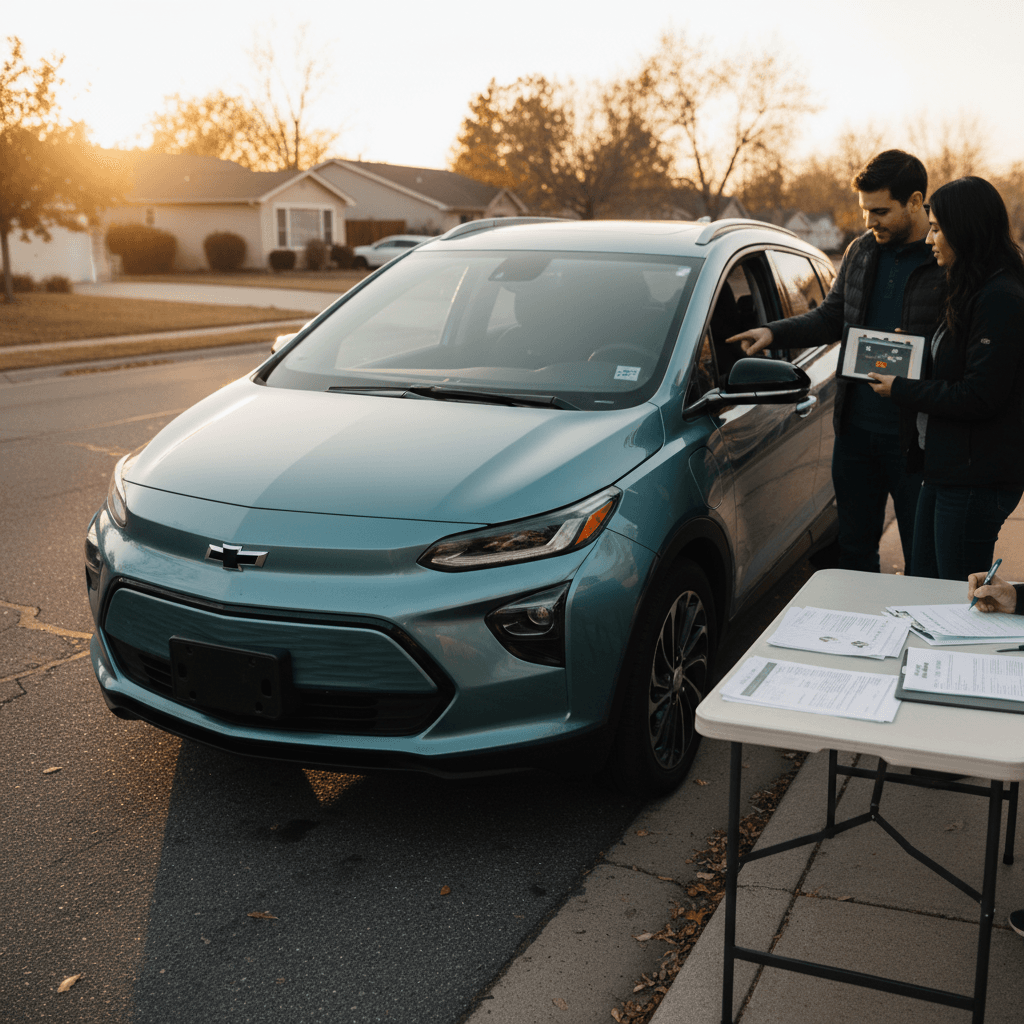
If you own a Chevy Bolt EUV and you’re wondering how to sell it in a private sale, rather than trading it into a dealer, you’re not alone. The Bolt EUV has a loyal following, strong efficiency, and a unique position in the used EV market. With the right prep and a clear plan, you can sell your Chevy Bolt EUV privately for more money while keeping the process safe, simple, and transparent for both you and the buyer.
EV-specific selling is different
Why sell your Chevy Bolt EUV privately?
Potentially higher sale price
On average, a private-party sale can net you more than trading in at a dealer, especially on an in-demand EV like the Bolt EUV. Online valuation tools show that 2022–2023 Bolt EUVs often bring strong private-party prices compared with trade-in values, especially for low-mileage examples with clean histories and no recall baggage.
More control over the process
When you sell privately, you decide how to present the car, what to highlight, and when to say yes or no. You can screen buyers, choose your payment method, and even time your sale around tax season or local demand spikes to maximize your price.
But it takes more work
Step 1: Understand your Bolt EUV’s market value
Before you write a single ad, you need a realistic price range. EV shoppers are savvy; they’ll check pricing sites and listings, so you should, too. The goal is to know what similar Bolt EUVs are actually selling for, not just what sellers are asking.
Chevy Bolt EUV value factors that matter most
- Check at least two pricing guides (KBB, Edmunds, etc.) for private-party values, not trade-in values, using your exact year, trim, mileage, and ZIP code.
- Search local marketplaces (Facebook Marketplace, Craigslist, Autotrader, etc.) for other Chevy Bolt EUV listings and note asking prices, mileage, and condition.
- Compare your car honestly: Is your mileage lower or higher? Are you first owner? Any accidents? This helps you land on a realistic price band.
- Set a target ask price and a quiet minimum price in your mind before you talk to buyers.
Price for search filters
Step 2: Get your battery-health story straight
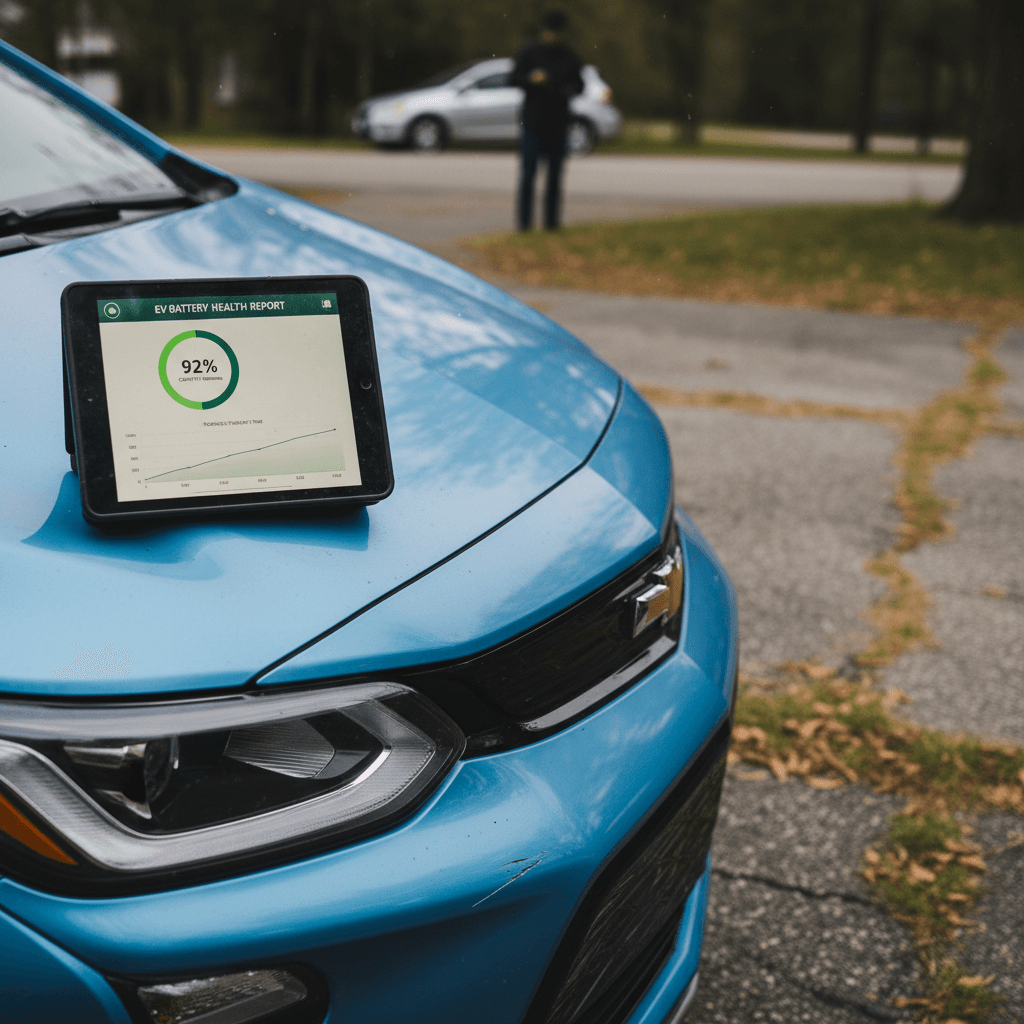
When you sell a Chevy Bolt EUV privately, the high-voltage battery is the star of the show. Buyers want to know three things: how healthy it is, how far they can realistically drive, and what happens if something goes wrong.
What Bolt EUV buyers care about most on the battery side
Turn unknowns into selling points
Remaining warranty
Real-world range
Recalls & replacements
Battery-health prep checklist for your listing
1. Gather your charging habits
Write down how you typically charge, Level 2 at home, DC fast only on trips, whether you regularly charge to 100%, and how often you fast-charge. Thoughtful, moderate usage is a selling point.
2. Document recent range
Take a photo of your Bolt EUV’s dash at a typical full charge (or 90%) showing estimated range. Note temperature and driving mix so buyers can interpret it correctly.
3. Print or save service records
If your Bolt EUV had recall work or battery-related service, download or print those records from your Chevy account or service center. This shows the car has been kept current.
4. Consider a third‑party battery report
A dedicated EV battery health report, such as the <strong>Recharged Score</strong> used on vehicles sold through <a href="/">Recharged</a>, can quantify remaining capacity and make your listing stand out versus vague claims.
Turn recalls into reassurance
Step 3: Decide where and how to sell
You don’t have to list your Bolt EUV everywhere on day one. Choose 2–3 channels where serious EV shoppers actually look, and decide how hands‑on you want to be.
Popular channels to sell a Chevy Bolt EUV privately
Mix and match based on your comfort level
Local marketplaces
Great for local buyers who can come see the car quickly. Expect more tire‑kickers and low offers, but you’ll also find serious shoppers who value a fair price from an individual.
National classifieds
Better reach and a more car‑focused audience. Listings may cost a fee, but they attract shoppers already comparing EVs, not just scrolling their neighborhood feed.
Hybrid options
List locally first, then expand
Step 4: Prep your Bolt EUV so it stands out
Buyers equate condition with how a car has been treated. That’s doubly true for EVs, where many shoppers are new to the technology and looking for visual signs they can trust you and the vehicle.
Pre‑sale prep checklist for your Bolt EUV
Deep clean inside and out
Wash, clay, and wax the exterior if needed. Vacuum thoroughly, wipe down interior plastics, and clean the infotainment screen. EV cabins show dirt and fingerprints more than old-school dashboards.
Fix small, inexpensive issues
Replace burnt‑out bulbs, wiper blades, missing valve caps, and any inexpensive trim pieces. Top off washer fluid and make sure tire pressures are correct. A car that feels ready to drive inspires confidence.
Address curb rash and scuffs (if cheap)
Light wheel rash and scuffed plastic can often be touched up affordably. Don’t sink thousands into cosmetics, but do tackle things that make the car look neglected in photos.
Organize keys, manuals, and chargers
Gather both key fobs, the portable charge cord, any wall‑mount documentation, and the owner’s manual. Having the full kit laid out for photos and showings is a subtle but powerful trust signal.
Don’t overspend on reconditioning
Step 5: Create a high-converting listing
Your listing is your digital showroom. A clear, honest ad that answers EV‑specific questions up front will attract serious buyers and filter out the rest.
Essential details to include in your Chevy Bolt EUV listing
Hit these points so buyers don’t have to guess or message you for basic info.
| Category | Details to include | Why it matters |
|---|---|---|
| Basics | Year, trim (LT/Premier), color, mileage, VIN (optional in ad) | Buyers use this to compare apples to apples. |
| Battery & range | Approx. real‑world range at typical charge, any battery recalls or replacements, remaining battery warranty | This is the #1 concern for EV shoppers. |
| Charging | Included charging cable, any home charger you’re bundling, DC fast‑charging habits | Helps buyers understand how they’ll live with the car. |
| Ownership & history | Number of owners, accident history, service records, recall completion | A clean, documented history supports your asking price. |
| Features & options | Packages (e.g., Super Cruise), safety features, driver‑assist tech | Highlights why your car might be worth more than a base example. |
| Extras | Floor mats, winter tires, accessories, remaining factory or extended coverage | Sweetens the deal and differentiates your listing. |
More information, presented clearly, translates into more qualified buyers and less back‑and‑forth.
Use an EV-savvy headline
Step 6: Handle inquiries and test drives safely
Once your listing is live, you’ll start fielding messages. Your goal is to quickly separate serious buyers from curiosity seekers and keep safety front and center.
- Screen buyers with a few simple questions: How soon are you looking to buy?, Will this be your first EV?, Do you have any questions about charging?
- Avoid sharing your home address until you’ve had a real conversation and confirmed the person seems legitimate.
- Meet in a well‑lit public place, some police stations even have designated safe‑exchange zones.
- Ask to see a valid driver’s license and snap a photo of it (with permission) before any test drive.
- Ride along on test drives. For an EV‑curious buyer, this is also a great chance to explain one‑pedal driving, regen, and charging.
Never compromise on payment safety
Step 7: Negotiate price like a pro
Negotiation doesn’t have to be uncomfortable. Because you’ve done your homework on pricing and battery health, you can confidently explain how you arrived at your number and where you have (or don’t have) room to move.
Lead with facts, not feelings
When a buyer makes an offer, respond with the data behind your price, recent comparables, condition, battery warranty remaining, and any EV‑specific extras like a home charger. This shifts the discussion from “I want more” to “Here’s why the car is worth this.”
Use your walk‑away number
Before you ever show the car, decide the lowest price you’re willing to accept. If an offer dips below that level, politely decline and invite the buyer to circle back if they reconsider. Knowing your floor keeps you from making an in‑the‑moment decision you’ll regret.
Consider sweetening, not just discounting
Step 8: Paperwork, payment, and tax credit nuances
The last step in selling your Chevy Bolt EUV privately is making sure the money and paperwork are handled correctly. This protects both you and your buyer and avoids any surprises at the DMV, or with the IRS.
Closing the sale: paperwork & payment checklist
1. Confirm the title status
Verify that you have a clear title in your name. If you still owe money on the car, call your lender to understand the exact payoff amount and how they handle third‑party sales.
2. Choose a secure payment method
Cash (for smaller amounts) or a cashier’s check verified at the issuing bank are the most common. For high‑value transactions, consider meeting the buyer at your bank so funds and title transfer can happen together.
3. Complete a bill of sale
Many states provide a simple bill‑of‑sale template. Include VIN, mileage, sale price, date, and both parties’ information. Keep a signed copy for your records.
4. Handle plates and registration correctly
Every state is different: in some, plates stay with the seller; in others, they stay with the car. Check your state DMV site in advance so you and the buyer know what to expect.
5. Understand used EV tax credit rules
In the U.S., the <strong>used clean vehicle tax credit</strong> typically applies only when a qualified buyer purchases from a <strong>licensed dealer</strong>, not from a private seller. Make sure buyers understand they’re primarily getting a better price from you, not a tax credit.
6. Cancel insurance once the sale is complete
After the buyer pays, you sign over the title, and they drive away, call your insurer to remove the vehicle from your policy. Note the exact date and time of transfer for your records.
Explain tax credits without giving tax advice
Alternative: Skip the hassle with Recharged
If this all sounds like more work than you’re looking for, you don’t have to choose between a lowball trade‑in and a chaotic private sale. Recharged was built specifically around used EVs, including the Chevy Bolt EUV, and can simplify both sides of the transaction.
How Recharged can help when you’re selling a Bolt EUV
EV‑specific tools for pricing, battery health, and finding the right buyer
Fair, data‑driven pricing
Verified battery health
Flexible selling options
Ready to find your next EV?
Browse VehiclesUse a Recharged offer as a safety net
FAQ: Chevy Bolt EUV private sales
Frequently asked questions about selling a Bolt EUV privately
Selling your Chevy Bolt EUV in a private sale doesn’t have to be stressful or mysterious. When you understand your car’s market value, prepare a clear battery‑health story, present it well, and protect yourself on payment and paperwork, you put yourself in position to earn top dollar and hand the keys to a confident new owner. And if you decide you’d rather skip the DIY route, Recharged is there with EV‑specific tools, verified battery diagnostics, and flexible selling options to match the value of your Bolt EUV with the right buyer, on your terms.