If you’re cross‑shopping a Toyota RAV4 Hybrid and a Hyundai Ioniq 5, you’re really asking one big question: over five to ten years, which one quietly drains more money from your bank account? This guide looks past sticker price and digs into total cost of ownership, fuel or electricity, maintenance, depreciation, insurance and what happens if you buy used.
Hybrid vs EV in one sentence
Why compare Toyota RAV4 and Hyundai Ioniq 5?
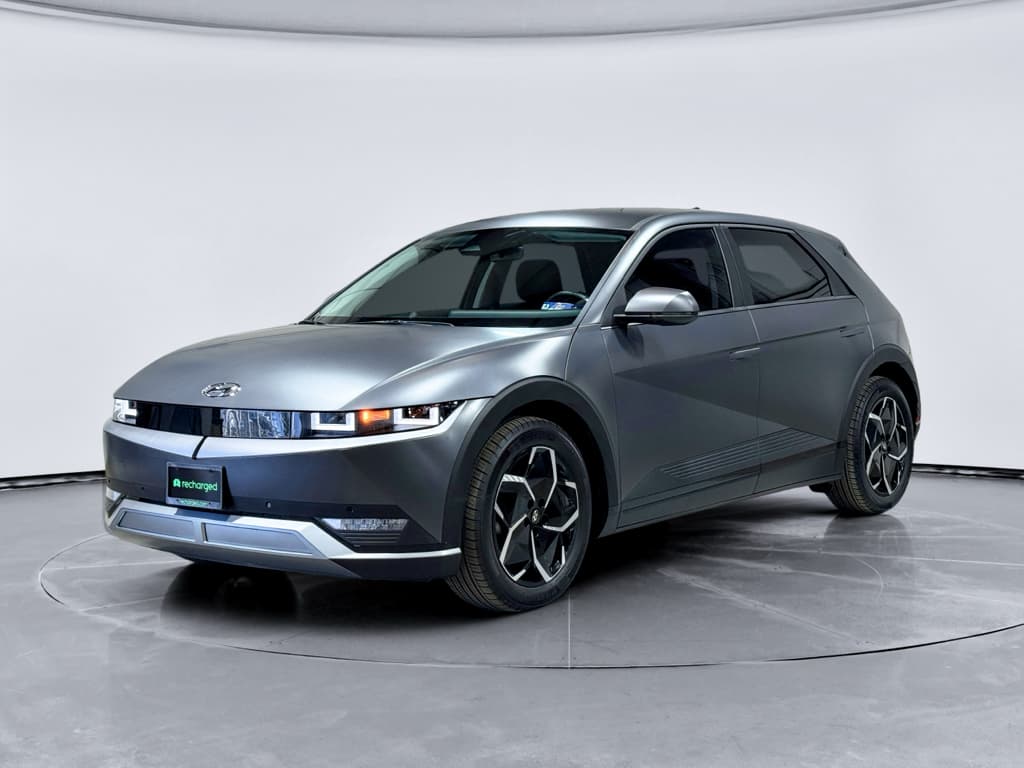
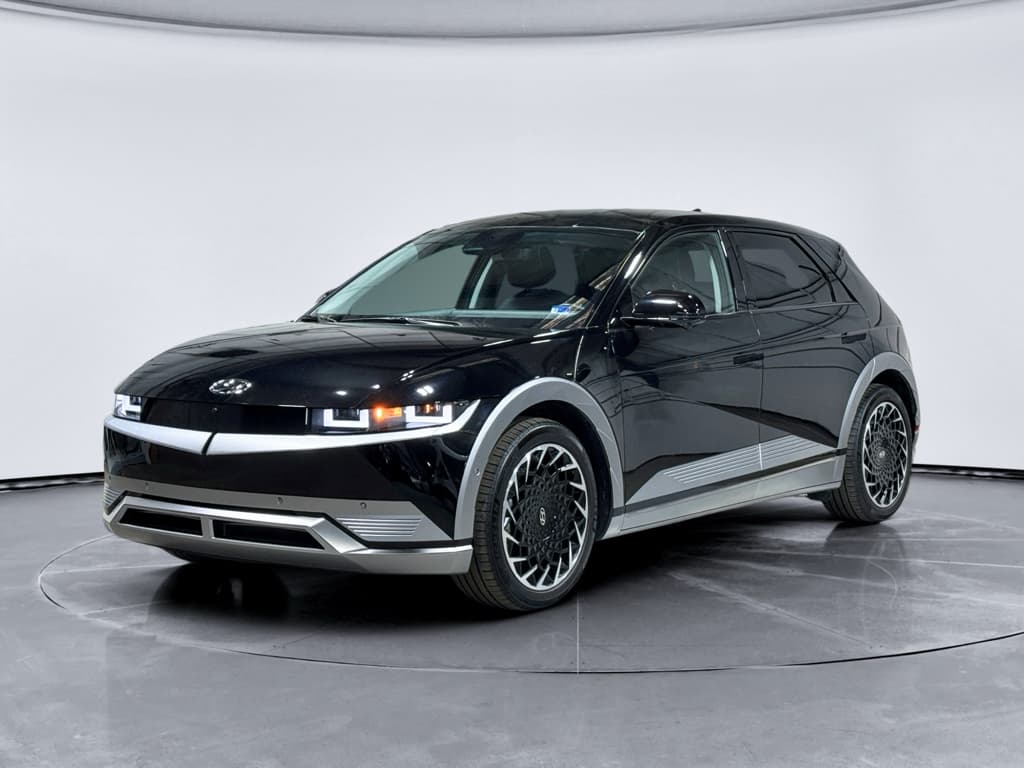
The Toyota RAV4 Hybrid is America’s default answer to “I need a practical family SUV that won’t kill me at the pump.” The Hyundai Ioniq 5 is one of the most compelling all‑electric alternatives: roomy, quick, stylish, and built on a modern 800‑volt EV platform. They occupy the same driveway space, appeal to the same two‑kids‑and-a-dog households, and increasingly share the same used‑car shoppers on sites like Recharged.
- Both are compact family crossovers with usable rear seats and cargo space.
- Both can be had with all‑wheel drive, road‑trip comfort, and advanced safety tech.
- Both have strong reliability reputations so far, especially compared with early‑generation EVs and turbos.
- Both now appear in meaningful numbers on the used market, where total cost of ownership really decides the winner.
Quick take: which one is cheaper to own?
Five‑year cost snapshot (high‑level)
Roll everything together and for a typical U.S. driver doing ~12,000 miles a year, the RAV4 Hybrid often ends up similar or slightly cheaper to own over 5 years, mainly because it’s cheaper to buy and holds its value stubbornly well. Over 8–10 years and higher annual mileage, the Ioniq 5 can pull ahead, especially if you have low home electricity rates or solar and can exploit the EV’s lower running costs.
A simple rule of thumb
Key assumptions behind the cost comparison
Total cost of ownership is incredibly sensitive to your personal situation. To keep this comparison honest, we’ll state our assumptions up front and you can adjust them later using the checklist below.
Baseline assumptions used in this article
You can mentally tweak any of these to better match your own situation.
| Factor | Assumption | Notes |
|---|---|---|
| Annual mileage | 12,000 miles | Rough U.S. average for daily‑driver family vehicles. |
| Ownership period | 5 years | We’ll also discuss 8–10 year scenarios. |
| Gasoline price | $3.50/gal | Approximate medium‑term U.S. blend of cheap and expensive years. |
| Electricity price | $0.17/kWh | Around the recent U.S. residential average per kWh. |
| RAV4 Hybrid efficiency | 40 mpg combined | Between EPA ratings and real‑world owner reports. |
| Ioniq 5 efficiency | 30 kWh/100 miles | Typical for long‑range RWD trims; AWD can be a bit higher. |
| Financing | 6.5% APR, 60 months | A representative used‑car loan; your rate may differ widely. |
All figures in U.S. units and dollars, focusing on a national‑average owner.
Your numbers will differ
Purchase price, incentives and financing
Unless you’re paying cash, your first experience of “cost of ownership” is that monthly payment. Here the RAV4 Hybrid usually walks in with a lower bill, especially on the used market where supply is deep and Toyota’s brand recognition props up financing options.
How they typically price out
Numbers will vary by trim and region, but the pattern is consistent.
Toyota RAV4 Hybrid (new & used)
- New: Frequently in the low‑to‑mid $30,000s for volume trims.
- Used 3–4 years old: Often high‑20s to low‑30s, thanks to strong demand and Toyota reliability halo.
- Financing: Easy to finance with mainstream lenders; hybrid tech is no longer “exotic.”
Hyundai Ioniq 5 (new & used)
- New: Typically mid‑to‑high $40,000s as equipped by real shoppers, though deals and lease specials can cut that.
- Used 2–3 years old: Often mid‑30s, sometimes less, reflecting faster EV depreciation.
- Financing: Similar APRs available, but lenders sometimes use tighter loan‑to‑value ratios on EVs.
Don’t forget EV incentives
If you’re shopping used, a marketplace like Recharged helps level that playing field by showing verified battery health on Ioniq 5s alongside fair market pricing for comparable RAV4 Hybrids. That battery report matters, because it directly affects the long‑term cost picture in ways a gas tank never will.
Fuel vs electricity: real cost per mile
This is where the Ioniq 5 quietly sharpens a knife. Electricity is usually cheaper per mile than gasoline, even when gas is having one of its more reasonable months.
Energy cost per mile: RAV4 Hybrid vs Ioniq 5
Based on our baseline assumptions; plug in your own prices to re‑run the math.
| Vehicle | Efficiency assumption | Energy price | Cost per mile | Annual energy cost (12k mi) |
|---|---|---|---|---|
| RAV4 Hybrid | 40 mpg | $3.50/gal | ≈$0.09/mi | ≈$1,050/year |
| Ioniq 5 | 30 kWh/100 mi | $0.17/kWh | ≈$0.05/mi | ≈$600/year |
Rounded to the nearest cent for simplicity.
Under these conditions the Ioniq 5 saves roughly $450 a year in energy versus the RAV4 Hybrid. Over five years that’s about $2,250, ignoring inflation and wild swings in gas prices. It’s real money, but it may or may not offset a higher purchase price or faster depreciation.
Home charging is the unlock
What if gas spikes?
If gasoline jumps to $5.00/gal while electricity stays at $0.17/kWh, the RAV4’s cost per mile rises to about $0.13/mi while the Ioniq 5 stays near $0.05/mi. At 12,000 miles a year that’s a nearly $1,000/year advantage for the EV.
What if electricity is expensive?
In states with $0.28/kWh residential rates, the Ioniq 5 climbs to about $0.08/mi. Suddenly it’s neck‑and‑neck with the RAV4 Hybrid on operating cost, and the Toyota’s lower purchase price and stronger resale start to dominate the equation.
Maintenance and repairs: hybrid vs EV
The RAV4 Hybrid wears Toyota’s reputation for bulletproof reliability like a tailored suit, but it still has an engine, oil, exhaust, cooling system, and a traditional automatic‑adjacent driveline. The Ioniq 5 ditches all of that in favor of motors, inverters and a big battery pack.
Where EVs save money, and where they don’t
Think in terms of systems you’ll never service versus new ones you might.
RAV4 Hybrid routine items
- Regular oil and filter changes
- Engine air filters, spark plugs (over time)
- Transmission and coolant services
- More complex exhaust/emissions hardware
Ioniq 5 routine items
- No oil changes, no exhaust work
- Fewer fluids overall
- Brake wear is lower thanks to regen
- Tires can wear faster due to torque and weight
Potential big‑ticket items
- Hybrid: Engine or transmission failures are rare but not free.
- EV: Out‑of‑warranty battery repairs are expensive, though full replacements are uncommon in the first decade.
- Electronics and infotainment aging on both.
Good news on battery longevity
Ready to find your next EV?
Browse VehiclesOver five years, most owners will see lower scheduled maintenance costs in the Ioniq 5 than in the RAV4 Hybrid, fewer shop visits, fewer fluids, fewer wearable mechanical bits. But if you’re buying very high‑mileage or older used vehicles, the potential cost of a major EV battery or power‑electronics issue is something you can’t ignore. That’s why objective diagnostics matter so much in the used‑EV world.
Insurance, taxes and fees
Insurers are still figuring out long‑term risk on EVs, and that shows up in premiums. A Hyundai Ioniq 5 can cost more to insure than a RAV4 Hybrid, partly because of higher repair costs for EV‑specific components and bonded aluminum bodywork.
- Insurance premiums: In many U.S. ZIP codes, quotes for an Ioniq 5 will come in somewhat higher than for a RAV4 Hybrid, though your driving history and local repair economics dominate.
- Registration and taxes: Some states offer reduced registration fees for hybrids, but many now tack on extra annual fees for EVs to replace lost gas‑tax revenue.
- Tolls and perks: Depending on your state, EVs may get HOV lane access, reduced tolls, or other small monetary perks that nibble away at your overall costs.
Watch for EV surcharges
Depreciation and resale value
Here the RAV4 Hybrid throws a haymaker. Hybrids have moved from novelty to default choice for many suburban buyers, and Toyota is the brand that made that happen. Demand for clean, low‑mileage RAV4 Hybrids on the used market is fierce, and that shows up in resale values.
RAV4 Hybrid resale
Historically, a RAV4 Hybrid retains a high percentage of its original MSRP after 5 years. Even during periods of rising fuel prices, used‑car shoppers know exactly what a RAV4 is and are willing to pay for the badge, the reliability record, and the familiar packaging.
Ioniq 5 depreciation
The Ioniq 5 has been a critical darling, but it lives in a faster‑moving tech class. Newer EVs arrive with more range, faster charging and better driver‑assist stacks every year. EV resale values are more volatile, which is why you’ll often see 2–3‑year‑old Ioniq 5s discounted more steeply than similarly aged RAV4 Hybrids.
EV price swings cut both ways
How the math changes for used RAV4 and Ioniq 5
On the used market, the balance of power shifts. Because the RAV4 Hybrid keeps its value so well, a three‑year‑old example is still surprisingly expensive. Meanwhile the Ioniq 5, as a tech‑heavy EV, often takes a bigger early‑life depreciation hit, which you, the second owner, can exploit.

Typical used‑market scenarios
How shoppers on Recharged often think about this choice.
Used RAV4 Hybrid buyer
- Accepts higher purchase price for a proven formula.
- Values long‑term reliability and strong resale if life plans change.
- Doesn’t have easy home charging or drives fewer miles.
Used Ioniq 5 buyer
- Buys after the steepest depreciation has happened.
- Has reliable home charging (garage, driveway, or dedicated spot).
- Checks battery health and DC‑fast‑charge history carefully, something Recharged’s battery diagnostics and Recharged Score are designed for.
Where the Ioniq 5 really shines used
Lifestyle factors that affect total cost
Money isn’t everything; it just shows up every month. The car that costs a little more to own but actually fits your life may be the cheaper choice in the long run, because you’ll keep it longer and be less tempted into an early, expensive switch.
- Home charging access: Without a dedicated outlet or Level 2 charger, the Ioniq 5 loses a huge chunk of its appeal. The RAV4 Hybrid happily lives on gas forever.
- Trip patterns: If you do frequent long road trips through DC‑fast‑charger deserts, the hybrid’s ability to refuel anywhere in five minutes has immense practical value.
- Climate: Very cold climates punish EV range and can nudge electricity usage higher; hybrids also suffer but usually less dramatically.
- Garage space and HOA rules: Some condos and townhomes still make EV charging installations painful or impossible, which nudges you back toward the RAV4 Hybrid.
- Driving feel: The Ioniq 5 is simply quicker and quieter; if that joy makes you more likely to keep the vehicle 8–10 years, that spreads its higher up‑front cost over more time.
Deal‑breaker scenarios
Simple checklist to run your own numbers
Run the RAV4 vs Ioniq 5 math for your life
1. Nail down your actual annual mileage
Check your service records, odometer photos, or telematics app, don’t guess. A driver doing 8,000 miles a year and one doing 18,000 live in different economic universes.
2. Look up local gas and electricity prices
Use your last utility bill for $/kWh and a real local pump price for gas. Re‑run the cost‑per‑mile math using those instead of national averages.
3. Be honest about home charging
Can you install a Level 2 charger or at least a 240‑volt outlet? If you’re an apartment dweller with no guaranteed spot, weight that heavily against the Ioniq 5.
4. Get insurance quotes for both VINs
Before you fall in love, get real insurance quotes on actual example vehicles, a used RAV4 Hybrid and an Ioniq 5 you’re considering.
5. Estimate your ownership horizon
If you routinely swap cars every 2–3 years, depreciation matters more. If you keep vehicles 8–10 years, running costs and long‑term reliability dominate.
6. For used EVs, demand a battery health report
A third‑party battery diagnostic, like the <strong>Recharged Score</strong> that comes with every EV on Recharged, turns a giant unknown into a quantifiable risk you can price into your decision.
FAQ: RAV4 vs Ioniq 5 ownership costs
Frequently asked questions
Bottom line: which one should you pick?
If your life is built around a commute, kid duty and the occasional interstate slog, the Toyota RAV4 Hybrid remains the quietly brilliant default. It’s cheaper to buy, easy to live with anywhere in the U.S., cheap enough to maintain, and rock‑solid on resale. Over five years of average driving, its total cost of ownership is very hard to beat.
The Hyundai Ioniq 5 is for the driver who can fully exploit what an EV offers: reliable home charging, decent electricity prices, and enough annual miles to let lower energy and maintenance costs work in their favor. Especially as a carefully chosen used EV, with verified battery health and fair pricing, the Ioniq 5 can undercut a RAV4 Hybrid on true cost of ownership while delivering a more refined and futuristic driving experience.
The smartest move is to run your numbers: real mileage, real utility rates, real insurance quotes on specific VINs. If you’re browsing the used market, Recharged can help you compare RAV4 Hybrids and Ioniq 5s side‑by‑side, including battery‑health‑backed Recharged Scores, pricing data and expert EV guidance. Once you put your life into the spreadsheet, the right answer usually announces itself.