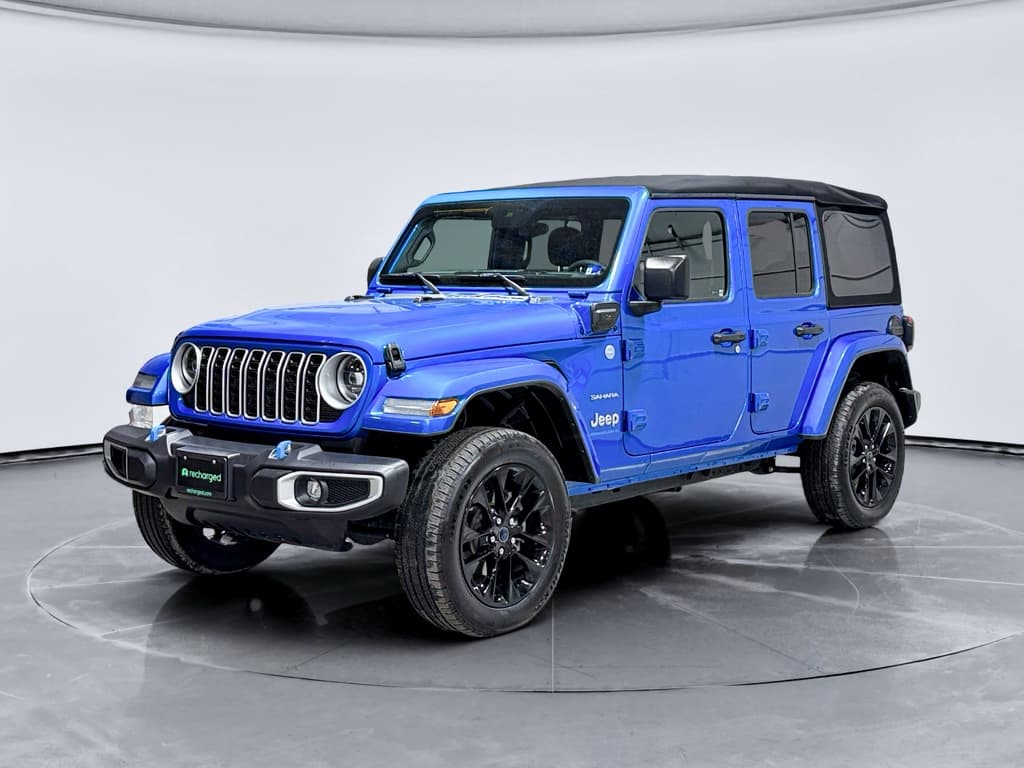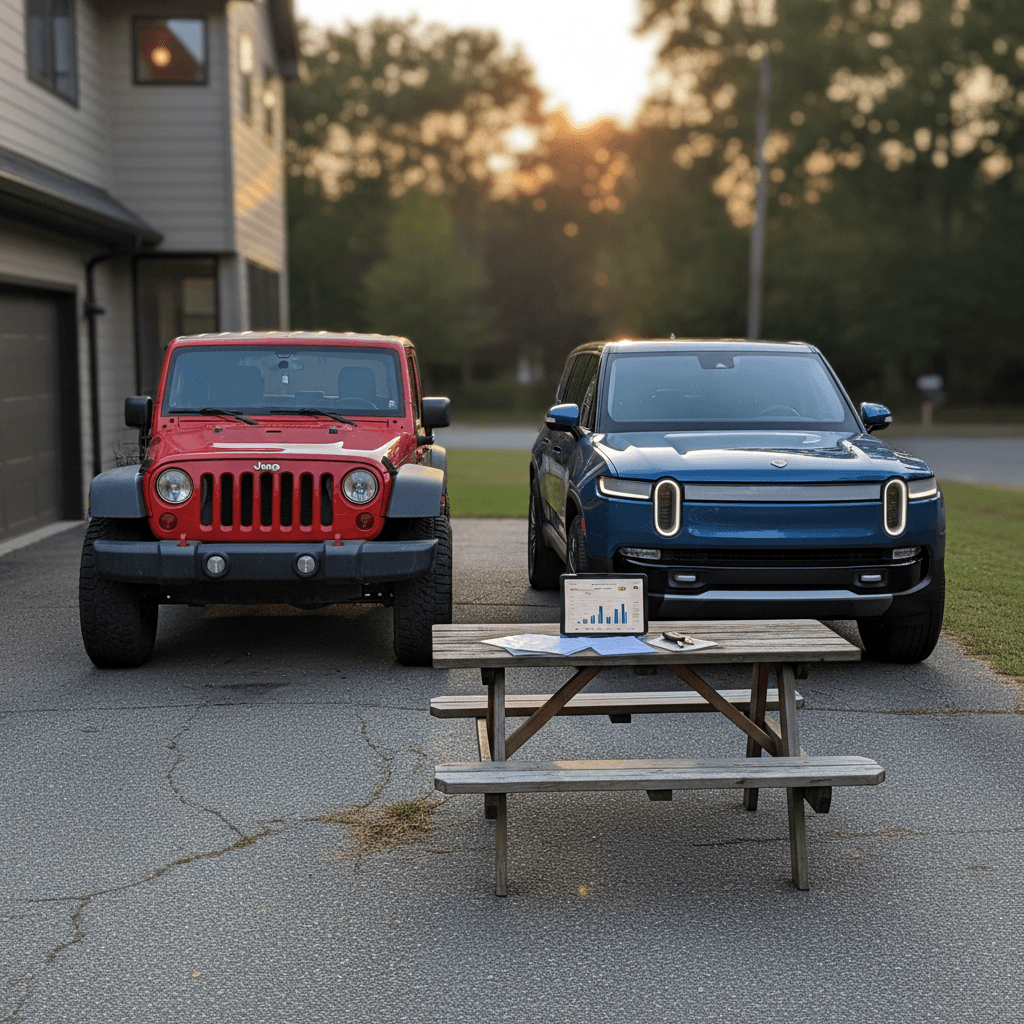
If you love the go-anywhere attitude of a Jeep Wrangler but you’re tired of gas bills and oil changes, the Rivian R1S is probably on your radar. Switching from a Jeep Wrangler to a Rivian R1S can deliver meaningful cost savings over several years, especially on fuel and maintenance, while still scratching that adventure itch. Let’s break down where the money actually goes and when an R1S starts paying you back.
Gas SUV vs. Electric Adventure Rig
Why Wrangler Owners Are Looking at the Rivian R1S
Top Reasons Jeep Drivers Consider a Rivian R1S
It’s not just about saving at the pump
Fuel and Maintenance Savings
The Wrangler’s rugged hardware is fun, but it drinks fuel and needs regular service. An R1S replaces gas, oil, and many moving parts with a massive battery and electric motors, cutting day‑to‑day running costs.
Off-Road Capability
With air suspension, multiple drive modes, and strong approach and departure angles, the R1S can tackle the same fire roads, snow, and light rock crawling that many Wrangler owners enjoy, quietly.
Refinement and Daily Comfort
Wranglers are charismatic but noisy and bouncy. The R1S delivers a quieter cabin, smoother ride, and modern tech for commuting while still being ready for weekend adventures.
Of course, the R1S usually carries a higher purchase price than a Wrangler, especially new. That’s why the real question isn’t just “Can I afford it?” but “Does it cost less to own over time?” To answer that, we need to lay out some assumptions and then work through the line items: fuel, maintenance, insurance, and depreciation.
Key Assumptions Behind the Cost Savings Math
Ownership Scenario Used for This Comparison
Adjust these to match your own driving and local prices.
| Factor | Jeep Wrangler (Gas) | Rivian R1S (Electric) | Notes |
|---|---|---|---|
| Annual miles driven | 12,000 miles | 12,000 miles | Typical U.S. driver |
| Fuel/energy cost | $3.75/gal gas | $0.15/kWh electricity | National‑level example; your rates may differ |
| Real-world efficiency | 18 mpg combined | 2.3 mi/kWh | Wrangler varies by engine/tires; R1S by wheel size and driving style |
| Ownership horizon | 3 years | 3 years | Good snapshot of early ownership costs |
| Purchase type | Late‑model used | Late‑model used | Keeps depreciation more predictable |
All numbers are rounded estimates for illustration, not quotes.
Your Numbers Will Vary
Fuel Cost Savings: Jeep Wrangler vs. Rivian R1S
Estimated Annual Energy Cost: Wrangler vs. R1S
On fuel alone, switching from a Wrangler to a Rivian R1S can save you roughly $1,500–$1,800 per year at today’s typical prices. If gas spikes or you’re paying more than the national average at the pump, the spread widens. If you can charge at home on off‑peak rates or with solar, your electricity cost may be even lower than the estimate above.
Home Charging Multiplies Your Savings
Maintenance and Repairs: Where EVs Quietly Win
Jeep Wrangler Maintenance Profile
- Regular oil and filter changes
- Transmission and differential fluid service
- More complex 4x4 driveline with many moving parts
- Exhaust system, spark plugs, belts, and hoses as mileage climbs
Rivian R1S Maintenance Profile
- No engine, transmission, exhaust, or spark plugs
- Fewer fluids to change (no oil changes)
- Brake wear often reduced via regenerative braking
- Still needs tires, cabin filters, and periodic inspections
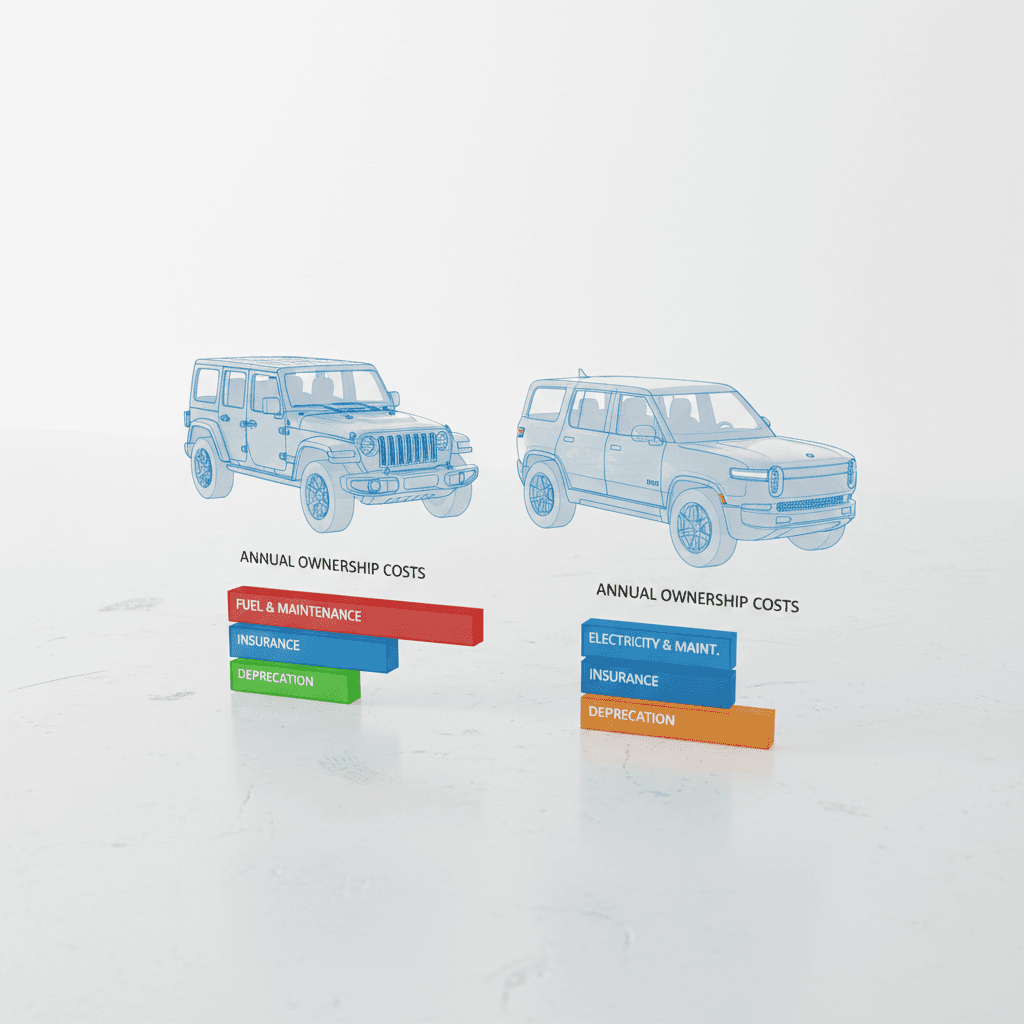
Wranglers are built to be tough, but that hardware isn’t free to keep up. Over 3 years of typical driving, it’s reasonable to expect maintenance and minor repairs on a used Wrangler to land in the $900–$1,200 per year range if you’re following the book and addressing wear items proactively.
By contrast, a Rivian R1S removes oil changes entirely and simplifies the powertrain. While Rivian service isn’t cheap when you do need it, the frequency of maintenance is generally lower. A realistic ballpark for an R1S is $400–$700 per year over the first several years, depending on tires and alignment.
Regenerative Braking = Fewer Brake Jobs
Insurance, Registration, and Other Ownership Costs
Insurance is where some Wrangler owners get surprised. The Rivian R1S is a higher‑value, high‑tech vehicle, and insurers price in the cost of collision repairs and parts availability. In some ZIP codes, you might see similar premiums between a newer Wrangler and an R1S; in others, the Rivian may run several hundred dollars more per year.
- If your Wrangler is older and already paid off, insurance may be relatively low; expect a jump moving to any higher‑value SUV, electric or not.
- If you’re moving from a newer, financed Wrangler to a used R1S of similar value, premiums may be closer than you think.
- Registration and taxes depend heavily on your state. Some states charge EV fees; others discount registration for low‑emission vehicles.
Don’t Forget Local EV Fees
Purchase Price, Depreciation, and Why Used R1S Models Make Sense
New for new, a Rivian R1S usually costs significantly more than a Jeep Wrangler. But once you’re shopping late‑model used vehicles, the gap often narrows. And that’s where a marketplace like Recharged can materially change your cost picture.
How a Used R1S Changes the Cost Equation
Depreciation can work in your favor if you buy smart
Depreciation Already Baked In
Early buyers absorbed the steepest initial drop in value. A carefully‑selected used R1S lets you step in after the big hit, improving your long‑term cost of ownership.
Verified Battery Health
Every EV on Recharged includes a Recharged Score Report with verified battery health. That transparency helps you avoid overpaying for a vehicle with hidden degradation.
Financing and Trade‑In Options
With EV‑savvy financing, trade‑in, and instant offers, you can roll your Wrangler’s value into a used R1S and spread your upgrade cost over predictable monthly payments.
What About Tax Credits?
3‑Year Cost Comparison: Wrangler vs. R1S
Estimated 3‑Year Ownership Costs (12,000 Miles/Year)
Illustrative example comparing a late‑model used Jeep Wrangler to a late‑model used Rivian R1S.
| Category (3 Years) | Jeep Wrangler | Rivian R1S | What’s Driving the Difference? |
|---|---|---|---|
| Fuel / Electricity | ≈$7,500 | ≈$2,300 | R1S uses electricity at home prices instead of gasoline |
| Maintenance & Minor Repairs | ≈$3,000 | ≈$1,800 | Fewer moving parts, no oil changes, less brake wear for R1S |
| Insurance | ≈$4,500 | ≈$5,100 | Assumes ~$1,500/yr Wrangler vs. ~$1,700/yr R1S; varies by driver and region |
| Registration & EV Fees | ≈$900 | ≈$1,200 | Some states add EV fees; others offset with incentives |
| Net Purchase Cost (Depreciation) | Varies | Varies | On a used R1S bought smart, depreciation can be similar to or better than a newer Wrangler |
| Estimated 3‑Year Running Costs (Excl. Depreciation) | ≈$15,900 | ≈$10,400 | Illustrative savings of around $5,000 over 3 years |
Purchase prices are placeholders; plug in your real quotes for a personalized view.
How to Personalize These Numbers
Non-Financial Benefits You’ll Notice Every Day
- Quieter cabin: Long highway drives feel less tiring without engine and wind roar at Wrangler levels.
- Instant torque: The R1S leaps forward from a stop in a way even a modified Wrangler can’t match.
- One‑pedal driving: In many situations you can slow the Rivian just by easing off the accelerator, which quickly becomes addictive in traffic.
- Tech and safety: Modern driver‑assist systems, over‑the‑air updates, and a sophisticated user interface give the R1S a much more modern feel.
Smaller Tailpipe Footprint (Literally None)
How to Make the Switch Smartly, with Recharged
Step‑by‑Step Plan for Moving from Wrangler to R1S
1. Audit Your Current Costs
Total up a full year of Wrangler costs: fuel, maintenance, insurance, and any payments. This is your baseline to beat.
2. Decide How You’ll Charge
Confirm you have access to reliable Level 2 charging at home or near work. If not, factor in the cost and convenience of installing a charger.
3. Shop Used R1S Listings
Browse used Rivian R1S vehicles on Recharged to see real‑world prices, equipment, and battery health via the <strong>Recharged Score Report</strong>.
4. Get Pre‑Qualified
Use Recharged’s EV‑friendly financing tools to see your payment range with <strong>no impact to your credit</strong>. This helps you compare an R1S payment to what you pay on your Wrangler today.
5. Value Your Wrangler
Request an instant offer or explore consignment through Recharged. Rolling your Wrangler’s value into the deal can reduce how much new cash you need to bring to the table.
6. Run a 3‑Year Projection
With a specific R1S price, payment, and your personalized fuel and electricity numbers, calculate your 3‑year total cost of ownership side by side.
Nationwide Delivery, Local‑Style Experience
FAQ: Switching from Jeep Wrangler to Rivian R1S
Common Questions from Wrangler Owners
Bottom Line: Is Switching from a Wrangler to a Rivian R1S Worth It?
If you’re driving a Jeep Wrangler and racking up miles, the math for switching to a Rivian R1S can be compelling. Between lower energy costs, simpler maintenance, and the possibility of tax incentives, it’s entirely possible to save thousands of dollars over a few years, without giving up the ability to explore back roads and trailheads.
The trick is buying smart: focus on a well‑priced used R1S with verified battery health, realistic monthly payments, and a clear charging plan. That’s exactly where Recharged comes in, with expert EV guidance, the Recharged Score battery report, trade‑in options for your Wrangler, and nationwide delivery. Run your own numbers, compare them to the estimates in this guide, and you’ll know whether the switch from Wrangler to R1S isn’t just exciting, it’s financially sound for you.