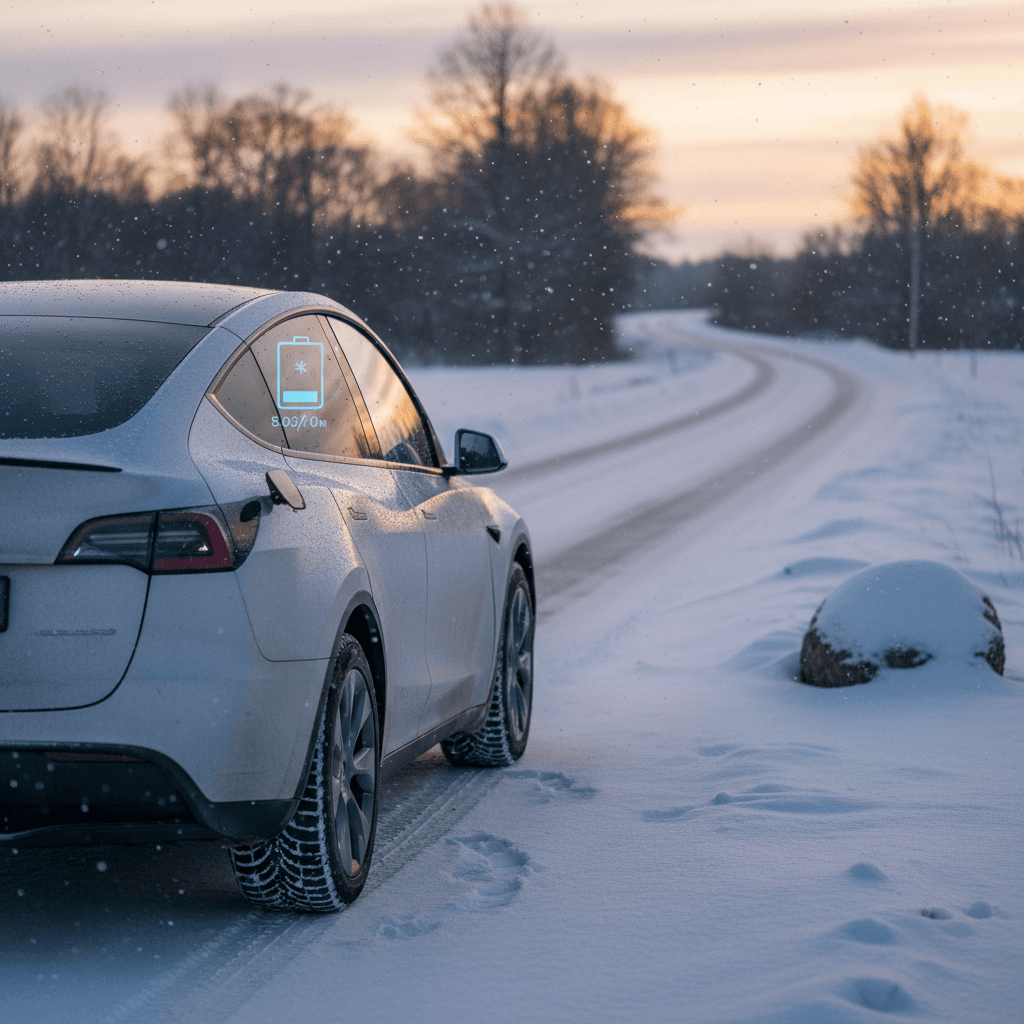
If you live in a cold climate, you’ve probably noticed your BMW i5 winter range loss as soon as temperatures drop. That’s not a defect; it’s how lithium‑ion batteries behave in the real world. The good news is that the i5’s efficient powertrain and modern thermal management can keep winter range predictable if you know what to expect and how to drive.
Bottom line up front
BMW i5 winter range loss at a glance
BMW i5 winter range: planning numbers
Across independent winter‑range studies, EVs generally lose around a quarter to a third of their range in cold weather, with some tests showing worst‑case losses approaching 40% in deep cold. The BMW i5 uses the same broad battery and thermal strategies as other modern BMW EVs, so its behavior in winter is more about physics and driving patterns than anything uniquely flawed in the car.
How much winter range loss is normal for a BMW i5?
The exact number depends on temperature, speed, and how you use the heater, but you can use these planning bands for your BMW i5:
- Mild winter (32–45°F / 0–7°C): Plan on roughly 10–20% less than EPA if you precondition and drive smoothly.
- Typical cold (20–32°F / -6–0°C): Many drivers see 20–35% winter range loss in mixed driving with normal cabin heat.
- Deep cold (< 10°F / -12°C): On short trips or fast highway runs with lots of heat, it’s realistic to see 35–40%+ loss, especially if you start with a cold-soaked battery.
- Stop‑and‑go vs highway: Short errands with cold starts are much harder on range than one long, warmed‑up drive.
For a 2024–2025 BMW i5 eDrive40 with EPA‑rated range of about 270–295 miles depending on wheel size, that translates roughly to:
Approximate BMW i5 eDrive40 winter range bands
Illustrative ranges based on EPA ratings; your results will vary with driving style and conditions.
| Condition | Planning loss vs EPA | Example range on 270‑mi i5 | Example range on 295‑mi i5 |
|---|---|---|---|
| Mild winter, efficient driving | 10–20% | 215–240 mi | 235–265 mi |
| Typical cold, mixed use | 20–35% | 175–215 mi | 190–235 mi |
| Deep cold, short trips, snow | 35–40%+ | 160–175 mi or less | 175–190 mi or less |
Use these as conservative planning numbers, not promises.
These are planning ranges, not guarantees
BMW i5 EPA range and real-world baselines
To understand winter range loss, you first need a baseline. For U.S. models, the BMW i5 launches with two main variants:
- BMW i5 eDrive40 (RWD): Uses an ~81.2 kWh usable pack. EPA combined range is around 295 miles on 19" wheels, dropping into the high‑270s on larger wheels. Real‑world reviewers have matched or even slightly exceeded those numbers in mild conditions with efficient driving.
- BMW i5 M60 xDrive (AWD, performance): Same pack, but dual motors and stickier tires mean more consumption. EPA combined sits roughly in the 240–256 mile range depending on wheels, a meaningful hit versus the eDrive40 but typical for performance trims.
Wheel size quietly matters a lot
If you’re trying to reconcile your real‑world winter numbers with the sticker, start from the EPA range for your specific trim and wheel size, then apply the seasonal loss bands above. An i5 M60 on 21s in a Midwest winter will have a very different real‑world range story than an eDrive40 on 19s in the Pacific Northwest.
Why cold weather cuts BMW i5 range
The physics side
- Cold batteries are less efficient. Lithium‑ion chemistry moves ions more slowly at low temperatures, so internal resistance goes up and usable energy effectively goes down until the pack warms.
- Thicker air, heavier rolling. Cold air is denser, which hurts aerodynamics, and winter tires and cold rubber usually increase rolling resistance.
- Thermal management overhead. The i5 uses active thermal management to keep the battery in its preferred temperature window, which itself consumes energy in very cold or hot weather.
The usage side
- Cabin heating dominates short trips. Resistive or heat‑pump‑assisted cabin heating can draw several kilowatts. On a 10‑minute errand, that overhead is a big share of total energy use.
- More defrost, more drag. De‑icing, running the rear defroster, and driving through snow or slush all add load.
- Frequent cold starts. If the car fully cools between trips, it has to re‑warm the battery and cabin over and over, compounding losses.
Why the second leg feels better
City vs. highway: How your winter driving pattern changes range
At moderate temperatures, EVs often do better in city driving than on the highway. In winter, that rule of thumb gets more complicated for a BMW i5:
How driving patterns affect BMW i5 winter range
Same car, same temperature, very different outcomes.
Short city errands
- Battery and cabin start cold and may never fully warm up.
- Heater and defrosters run nearly the entire time.
- Lots of stops means more time idling with climate on.
- Outcome: Worst‑case efficiency; expect the higher end of winter loss bands, even if speeds are low.
Steady highway runs
- Battery and cabin get up to temperature and stay there.
- Once warm, proportionally less energy goes to heating.
- Higher speed increases aero drag, but fewer cold starts.
- Outcome: Often better than stop‑and‑go in deep cold, but you’ll still see more loss than in summer.
Don’t trust the first 5 miles
Practical ways to minimize BMW i5 winter range loss
You can’t repeal thermodynamics, but you can bend the curve. Here are practical, model‑specific ways to keep your BMW i5 winter range as close as possible to its warm‑weather behavior.
Key steps to protect BMW i5 range in winter
1. Always precondition while plugged in
Use the BMW app or in‑car scheduling to warm the cabin and battery before you leave, while connected to home or workplace charging. This moves a big part of the heating load off the high‑voltage battery and onto the grid.
2. Use seat and wheel heaters first
Heated seats and steering wheel use far less energy than blasting cabin air heat. In the i5, you can be genuinely comfortable at a slightly lower cabin setpoint if you lean on those features.
3. Dial back peak speeds
Above about 65–70 mph, aero drag rises sharply. In winter‑dense air, that penalty is even harsher. Cruising at 65 instead of 75 can save double‑digit percent range on a long highway leg.
4. Check tire type and pressure
Winter tires are smart in snow, but they do cost some range. Keep pressures at manufacturer recommendations (cold), and avoid under‑inflation, which can noticeably increase consumption.
5. Avoid frequent deep cold soaks
If possible, park in a garage or at least out of the wind. A car starting from 25°F will behave very differently than one starting from 5°F after an outdoor overnight sit.
6. Plan charging stops with a buffer
In winter, aim to arrive at fast chargers with 10–20% state of charge, not 2–3%. That margin protects you if headwinds, traffic, or temperature are worse than forecast.
BMW’s thermal management works for you
Planning winter road trips in a BMW i5
Long winter drives are where the i5’s fast‑charging capability and solid efficiency really matter. With DC charging up to roughly 200 kW and smart route planning, winter road trips are absolutely doable, they just look a bit different than in July.
- Start from your specific EPA range (trim + wheels), then plan legs at about 60–70% of that number in winter, with 10–20% arrival buffers.
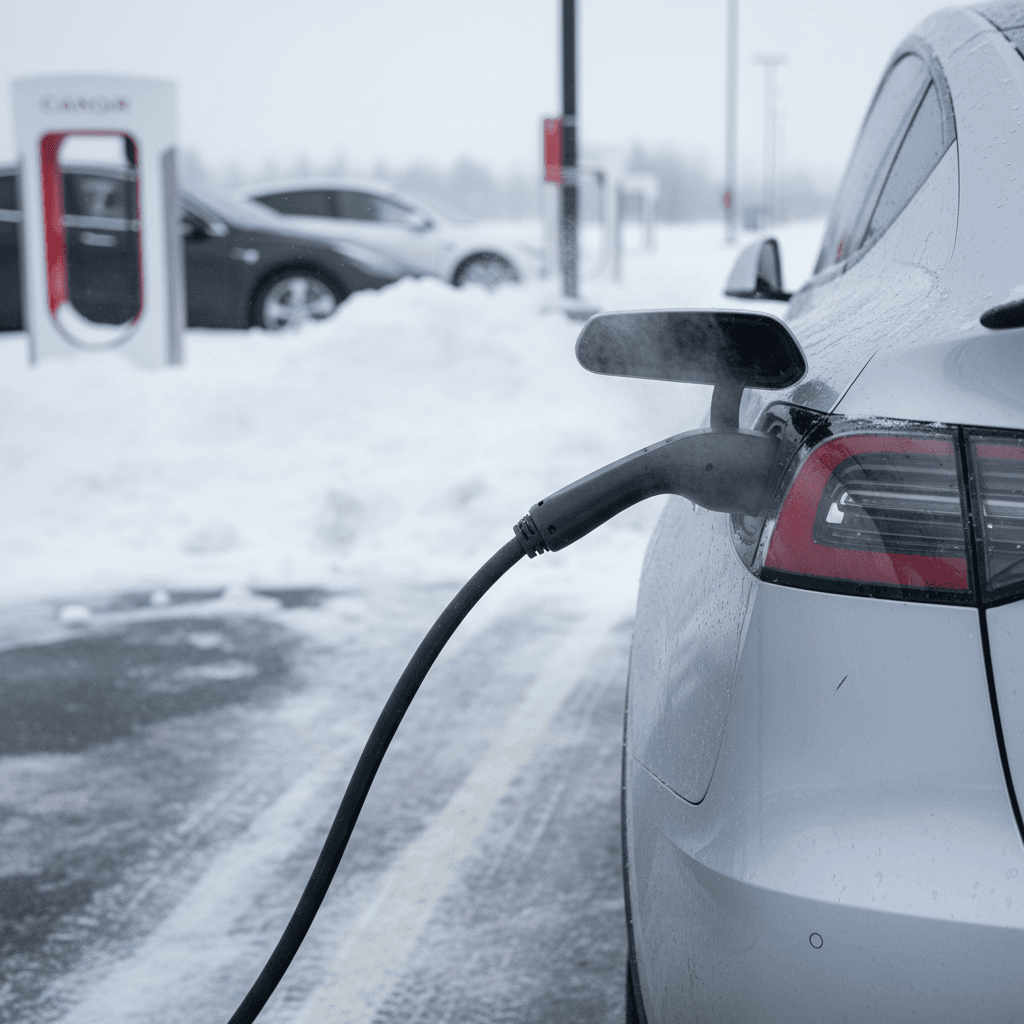
- Use the BMW navigation or a third‑party planner to precondition the battery before DC fast charging in cold weather. That keeps charge rates up and reduces time on the plug.
- On marginal days, shorten your legs slightly instead of gambling on one long hop; an extra 10‑minute top‑off halfway can buy a lot of peace of mind.
- Remember that snowy roads slow you down but also increase consumption. Plowing through slush at 55 mph can be heavier on energy than dry pavement at 65.
- If you’re new to EV winter road trips, run a “practice” route close to home to see how your i5 behaves at your typical speeds and climate settings.
Avoid empty‑battery heroics in winter
How the BMW i5 compares to other EVs in winter
Range loss in cold weather isn’t a BMW problem, it’s an EV reality. Multiple independent studies have found average winter range reductions of roughly 25–40% across a wide spread of brands and models, from compact hatchbacks to large SUVs. Some important context for the i5:
BMW i5 winter behavior in context
Where the i5 tends to land relative to the EV pack.
Battery & efficiency
Aerodynamics & shape
Charging & trip comfort
Cold weather range loss is a reality for every EV on the market today. The question isn’t how to avoid it entirely, but how to make it predictable and easy to live with.
Buying a used BMW i5? What winter range shoppers should know
If you’re considering a used BMW i5, winter performance shouldn’t be an afterthought. Range loss in the cold will always be there, but how the specific car has been used and maintained can influence both its warm‑weather range and how it behaves in February.
Used BMW i5 winter range checklist
Review real‑world consumption history
Ask the seller for photos of long‑term consumption averages or trip logs from colder months. You’re looking for consistent, reasonable Wh/mi numbers rather than one heroic hypermiling screenshot.
Understand battery health, not just miles
A low‑mileage i5 that sat outside unplugged through multiple winters can age differently than a higher‑mileage car that was mostly garaged and charged smartly. A structured battery health report makes that transparent.
Test drive in your real conditions
If possible, drive the car at your typical winter speeds with climate set how you actually use it. Watch the projected range adjust as the car warms up; that will teach you more than any brochure.
Look at wheel and tire setup
Huge performance wheels plus aggressive winter tires will cost range. If you care about winter efficiency, consider an i5 on 19" wheels with a more efficiency‑oriented winter tire.
Ask about thermal & software updates
BMW, like other EV makers, can improve thermal strategies via over‑the‑air or dealer updates. Make sure the car is up to date so you’re not missing refinements that benefit cold‑weather behavior.
How Recharged can help
BMW i5 winter range loss: FAQ
Frequently asked questions about BMW i5 winter range
Key takeaways for BMW i5 winter range loss
Every BMW i5 will lose range in winter, the real question is whether that loss is predictable and manageable. If you plan on roughly 20–35% winter range loss, lean on preconditioning, keep your speeds reasonable, and choose sensible wheels and tires, the i5 remains a very capable all‑weather EV.
If you’re shopping for a used BMW i5, especially in a cold‑weather market, pairing this winter‑range understanding with objective battery data is crucial. That’s why Recharged includes a Recharged Score battery health report and EV‑specialist guidance with every vehicle, so you know not just how far an i5 could go when new, but how it will actually behave on a cold Tuesday in January.