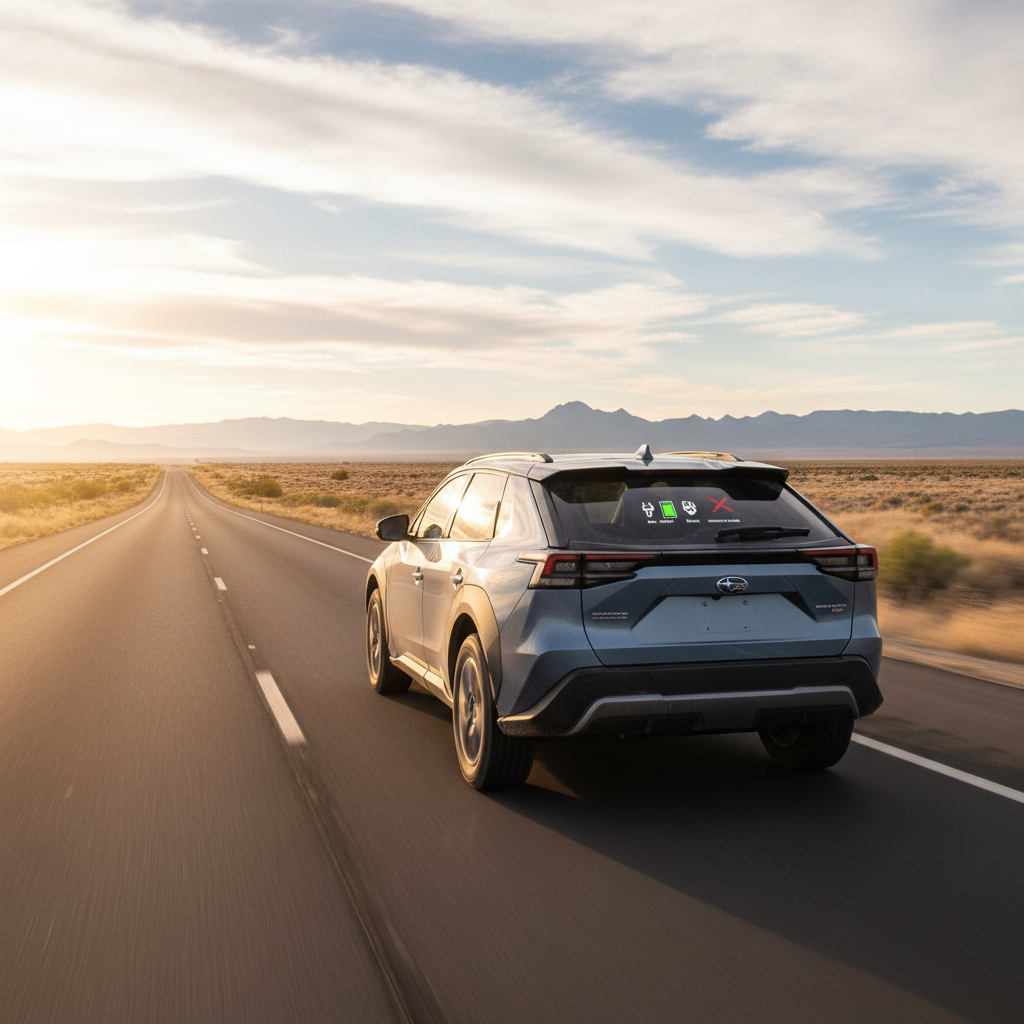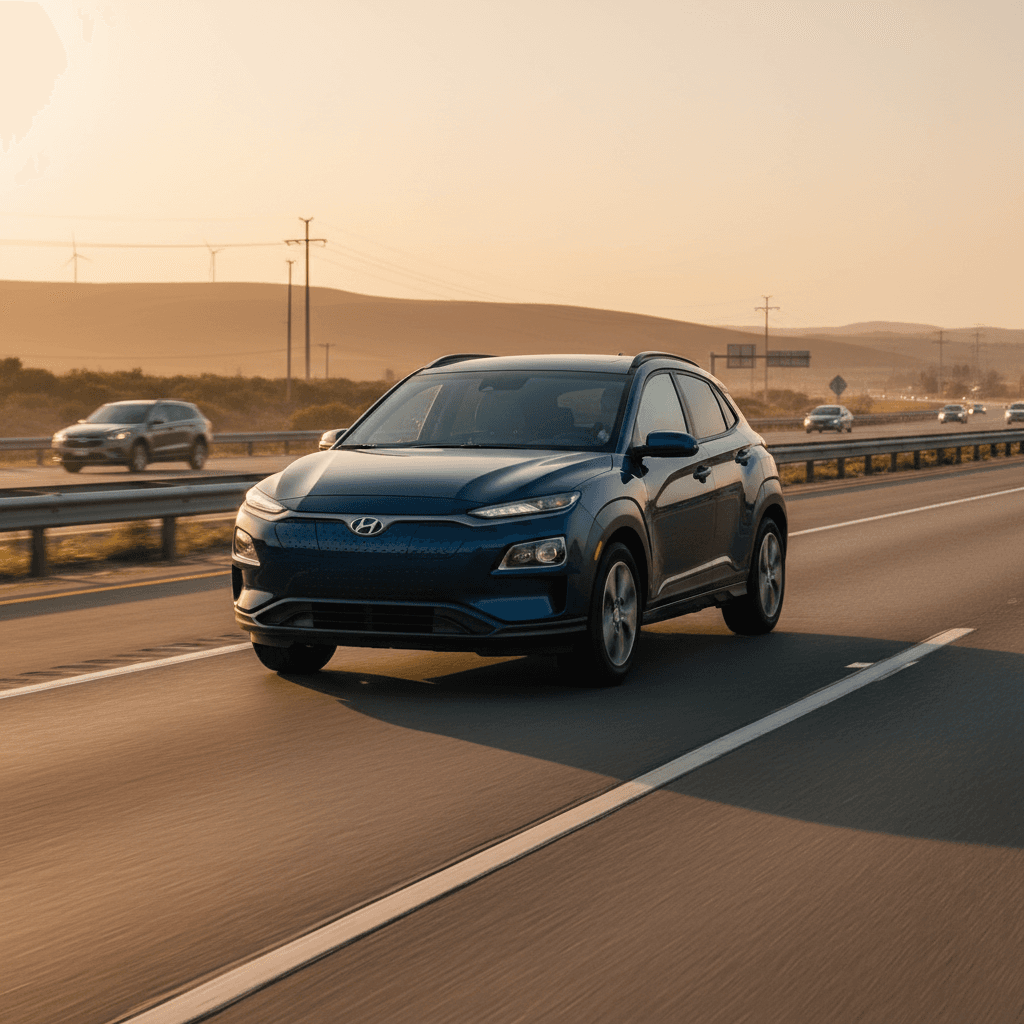
The BMW i5 is BMW’s electric 5 Series, an executive sedan repowered by electrons and anxiety graphs. On paper, it looks like the perfect interstate weapon: nearly 300 miles of range, DC fast charging up to about 205 kW, and an interior that does a convincing 7 Series impression. But paper doesn’t sit in traffic, hunt for chargers, or try to keep kids amused in the back seat. A proper BMW i5 road trip review lives or dies on real-world range, charging rhythm and comfort at hour four, not mile four.
Who this review is for
BMW i5 road trip at a glance
Key BMW i5 road trip numbers
On a modern U.S. interstate, the BMW i5 behaves like a classic German grand tourer: solid, unflappable, and faster than you probably should go. The twist is the electric infrastructure. Where your old 5 Series just wanted Premium Unleaded at Exit 179, the i5 wants a 150 kW+ CCS fast charger and a coffee shop.
EV road trip reality check
Range realism: how far the BMW i5 really goes
eDrive40: the sensible long-distance choice
Both current i5 variants share the same large battery pack with about 81 kWh of usable energy. The rear-drive eDrive40 is the efficient one, with EPA ratings up to roughly 295 miles on 19-inch wheels and about 270 miles on 21s. In independent highway-style tests, reviewers have seen the eDrive40 overachieve, well north of 300 miles when driven at modest speeds in mild weather.
- 19-inch wheels: best for range; figure 260–290 miles realistic depending on speed and weather.
- 20- or 21-inch wheels: nicer stance, but more aero drag and rolling resistance; budget 230–260 miles on the highway.
- Mixed city/highway: the i5’s motor is very efficient; it can beat EPA numbers in suburban slogging.
Watch your winter expectations
M60 xDrive: speed costs, and not just at the pump
The dual-motor i5 M60 trades distance for drama. With all-wheel drive and serious power, EPA range falls into the mid-200s, about 240–256 miles depending on wheels. In real highway use, you should think in terms of 170–210-mile legs if you’re keeping pace with left-lane traffic. The upside: merging and passing become surgical procedures; you choose your gap and simply appear there.
What highway range feels like
- eDrive40: 3.1–3.4 mi/kWh at 70–75 mph in decent weather is realistic. That’s ~250–275 miles if you ran it down, or 180–220 miles between 10–80% to stay in the fast-charging zone.
- M60: think 2.7–3.0 mi/kWh when you use the power. That’s closer to 210–240 miles full-to-empty, and 160–190 miles between 10–80% on road trips.
How to translate that into planning
- Plan legs around 60–70% of the claimed range.
- On long days, work in a longer lunch stop (20–40 minutes of DC fast charging) and one or two quick 10–20 minute top-ups.
- Leave extra buffer if you’re climbing mountains, pulling a trailer, or facing winter headwinds.
Charging on the road: speed, coverage, and routine
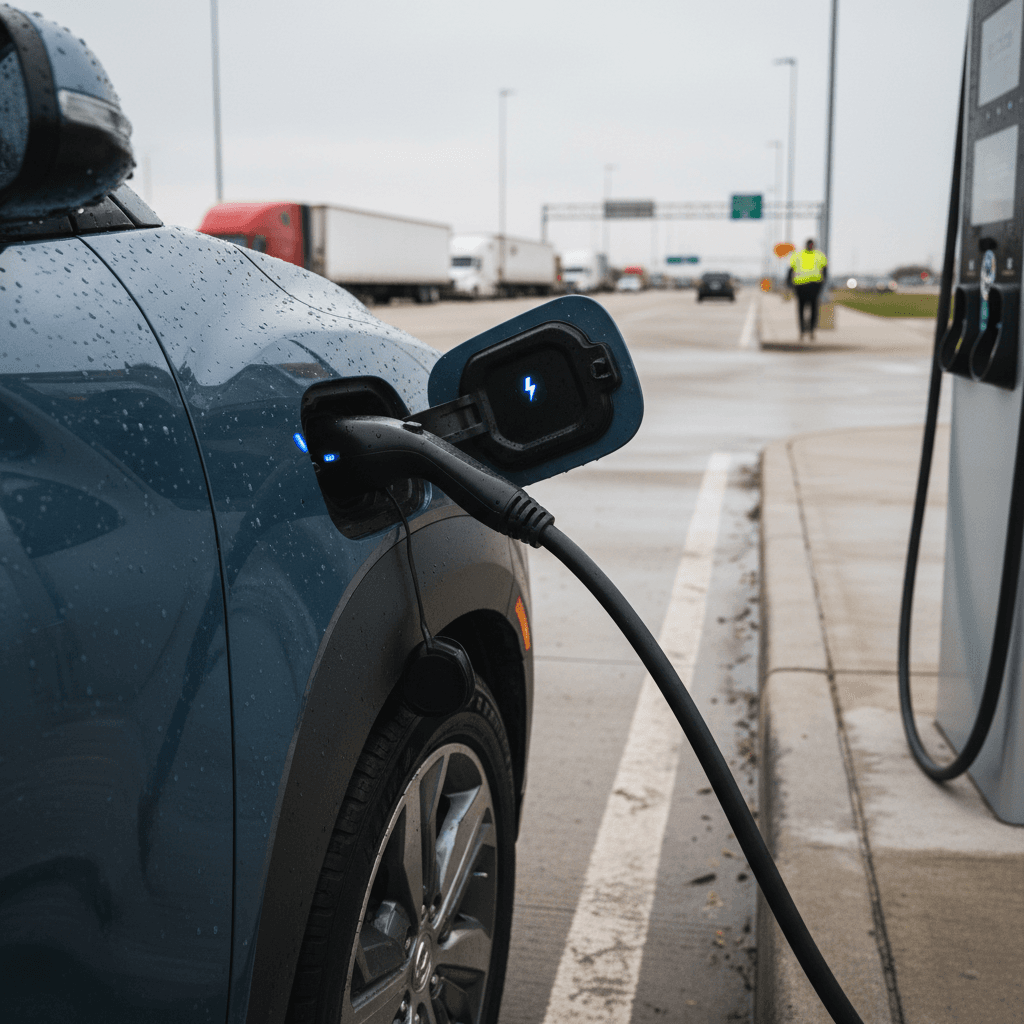
The BMW i5 uses the CCS fast-charging standard and can accept up to about 205 kW on a DC fast charger. In practice, that means a well-planned stop from about 10–80% state of charge takes roughly 30–35 minutes when the battery is warm, and you’re on a healthy 150 kW or 350 kW station.
BMW i5 charging times (approximate)
Rough road-trip-relevant charging times for both eDrive40 and M60, assuming the standard 11 kW onboard AC charger.
| Charging type | Power | 0–100% | 10–80% | Road-trip use |
|---|---|---|---|---|
| Level 2 home / AC | 11 kW | 8–10 hours | N/A | Overnight only, don’t road trip on AC unless you must |
| DC fast (good 150–350 kW unit) | Up to 205 kW | ~55–60 minutes | ~30–35 minutes | Primary road-trip fuel, plan legs around 10–80% |
| Weak DC (50 kW) | 50 kW | ~80–90 minutes | ~45–50 minutes | Usable but slow; good for meals or overnight hotel stops |
Actual times vary with temperature, charger quality, and your starting state of charge.
Best charging rhythm for the i5
Network reality: it’s not all Autobahn out there
Comfort and noise: the quiet luxury angle
On a road trip, the hero spec is not 0–60 mph. It’s how you feel at hour five. Here the BMW i5 plays its strongest card: this is a 5 Series first and an EV second. The seating position is textbook BMW, low, supportive, with a long adjustment range. The front buckets are firm in the German way, but after a day’s drive you realize they’ve held your spine together instead of coddling it into jelly.
- Ride quality is supple but controlled. The i5 has enough mass and wheelbase to iron out the broken concrete that defeats smaller EVs.
- Cabin noise is low even at 80 mph; wind and road hush better than most rivals, especially on 19-inch wheels.
- Optional seat ventilation and massage, plus a heated steering wheel, make long cold-weather runs much easier to tolerate.
- Back-seat space is generous; adults can sit behind adults without knees touching seatbacks.
The quiet car paradox
Tech and driver assistance on long drives
BMW’s latest iDrive (8.5 and beyond) turns the i5 into a rolling gadget, for better and for worse. The curved display is gorgeous; the learning curve, less so. On a road trip, three tech features matter most: navigation with EV routing, adaptive cruise with lane centering, and the head-up display.
BMW i5 tech that actually matters on a road trip
Skip the gimmicks; focus on these three systems when you’re crossing time zones.
EV-aware navigation
Use BMW’s native nav or a good third-party app to:
- Route via fast chargers automatically.
- Arrive with a sensible buffer (10–20%).
- Precondition the battery before a DC stop for faster charging.
Adaptive cruise & lane assist
On long freeway stretches, these systems take the edge off:
- Maintains distance in traffic.
- Centers the car without ping-ponging.
- Reduces fatigue so you have more mental bandwidth for charging decisions.
Head-up display & energy info
The HUD and energy screens help you:
- Track consumption in real time.
- See arrival state-of-charge estimates.
- Adjust speed to stretch or shrink your next leg.
Bring your own apps
Packing space, kids, and dogs: practicality check
Because the i5 is based on the regular 5 Series platform, it inherits both its strengths and limitations. You get a traditional sedan trunk, not a cavernous hatch, and no front trunk. Official cargo volume is about 490 liters (roughly 17 cubic feet), which in real terms means: two big suitcases, a stroller, and assorted duffel bags if you plan carefully.
Family road trip scenario
- Two adults + two kids: No problem for a week away if you pack like Europeans, not like Americans moving house.
- Rear seats: Good legroom, easy child-seat mounting with ISOFIX/LATCH, doors open wide enough for wrangling toddlers.
- Interior storage: Big door bins, decent center console, but you’ll want a small organizer for snacks and cables.
Dogs and outdoor gear
- Large dog? Consider a rear-seat hammock rather than the trunk; the sedan opening is tight for big crates.
- Ski gear or bikes will likely require a roof rack or hitch-mounted carrier (check tongue-weight and towing specs).
- Remember that external racks affect range, budget an extra charging stop on long days if you’re carrying gear outside the cabin.
BMW i5 eDrive40 vs M60: which is better for road trips?
The choice between eDrive40 and M60 is not just a spec-sheet debate; it’s an existential one. Are you building a long-legged continental cruiser or a four-door missile that occasionally crosses state lines?
BMW i5 eDrive40 vs M60 for road trips
Both trims share the same basic structure and battery; their personalities diverge sharply once you leave town.
| Feature | i5 eDrive40 | i5 M60 xDrive | Road-trip verdict |
|---|---|---|---|
| EPA range (approx.) | 270–295 miles | 240–256 miles | eDrive40 wins on distance between stops |
| Drivetrain | RWD, single motor | AWD, dual motor | M60 offers superior all-weather grip and brutal passing power |
| 0–60 mph (approx.) | ~6.0 seconds | ~3.7–3.8 seconds | M60 is hilariously quick; eDrive40 is more than adequate |
| Efficiency | More efficient, lower kWh/100 mi | Higher consumption | eDrive40 uses less energy and charges slightly less often |
| Ride/tires | Often on smaller wheels | More likely on 20–21" | Smaller wheels = better ride and range |
| Price | Lower | Significantly higher | eDrive40 gives you more miles per dollar on every trip |
If road-tripping is your priority, the eDrive40 makes a quieter, longer-legged case.
The sweet-spot spec
Planning a BMW i5 road trip: step-by-step
BMW i5 road trip planning checklist
1. Map your fast chargers first
Before worrying about hotels or brunch, lay out your primary DC fast-charging stops along your route at 150–220-mile intervals (eDrive40) or 150–190 miles (M60). Use multiple apps to cross-check locations and recent reliability reviews.
2. Aim for 10–80% charging windows
The i5 charges fastest between roughly 10–60% state of charge and then tapers. Don’t obsess over reaching 100%; you’ll travel faster overall by doing more frequent, shorter sessions in the brisk part of the charge curve.
3. Precondition the battery before DC stops
Use the car’s navigation to set a fast charger as your destination. The i5 can warm or cool the battery on the way, which significantly improves charging speeds when you plug in, especially in cold weather.
4. Pack a fallback plan
For each major stop, identify at least one backup charger within 20–30 miles, ideally on a different network. That way a broken or congested station is an inconvenience, not a disaster.
5. Sync your human needs with the car’s needs
Plan charging around meals, coffee breaks, kid stops, and hotel check-in. The i5 needs 20–35 minutes every few hours; your spine and brain also need 20–35 minutes every few hours.
6. Check weather, elevation, and load
Heavy rain, headwinds, cold temperatures, mountains, trailers, or roof boxes all eat into range. If any of these apply, shorten your planned legs by 10–20% and add one extra stop into the day.
Safety first, range second
Buying a used BMW i5 for road trips: what to look for
The i5 is just starting to filter into the used market, which is where Recharged lives. A lightly used BMW i5 can make a superb long-distance car, if you buy with your road-trip priorities in mind instead of just chasing the cheapest VIN.
Used BMW i5 road-trip buyer’s checklist
Four big questions to answer before you trust an i5 with your annual 1,000-mile migration.
1. How healthy is the battery?
Range is the whole game in an EV road-tripper. Ask for a verified battery health report rather than guessing from the dash estimate. At Recharged, every car gets a Recharged Score Report with objective battery diagnostics and projected range, so you know what you’re buying before you sign.
2. Which wheels and tires?
Those gorgeous 21-inch wheels cost you both range and comfort. If you care about big days on I-95 more than Instagram, prioritize cars on 19-inch wheels with touring-oriented tires. You’ll stop less, enjoy the ride more, and save money on replacements.
3. Does it have the right driver assists?
For road trips, spec matters. Look for adaptive cruise with stop-and-go, lane keeping, head-up display, and heated seats/steering wheel. These are the options that change how a 600-mile day feels, not the ambient light color.
4. Total cost, not just purchase price
Factor in financing, expected energy costs, insurance, and tires. Recharged can help you line up financing, evaluate your trade-in, and compare the total cost of ownership against that V8 sedan you’re thinking of keeping.
Why buy used through an EV specialist
BMW i5 road trip FAQ
Frequently asked questions about BMW i5 road trips
Final thoughts: is the BMW i5 a good road trip car?
If your mental picture of a road trip is a 500-mile cannonball with five-minute gas stops and a melted candy bar on the dash, any EV will feel like a philosophical adjustment. But judged on its own terms, as an electric grand tourer for the 2020s, the BMW i5 is deeply convincing. It’s quiet, quick, efficient, and composed in that very BMW way, with enough real-world range to make all-day interstate runs routine rather than acrobatic.
The eDrive40, in particular, feels like the natural successor to the great straight-six 5 Series sedans: fast enough, effortlessly comfortable, and happy to cross time zones without complaint. The charging curve is strong, the cabin is a good place to burn daylight, and the compromises are predictable enough that you can plan around them.
If you’re looking at a used BMW i5, that’s where Recharged comes in. With verified battery health, transparent pricing, financing and trade-in support, and EV specialists who can help you sanity-check your road-trip plans before you buy, you’re not just getting a sleek electric 5 Series. You’re getting a long-distance travel partner you actually understand.