You bought a BMW i5 for silent speed, big torque, and that effortless electric glide. To keep it feeling fresh years from now, you’ll want to **maximize your BMW i5’s battery life**, not just for peace of mind, but to preserve range and resale value whether you keep the car or trade it in for the next thing.
The short version
Why BMW i5 battery care matters
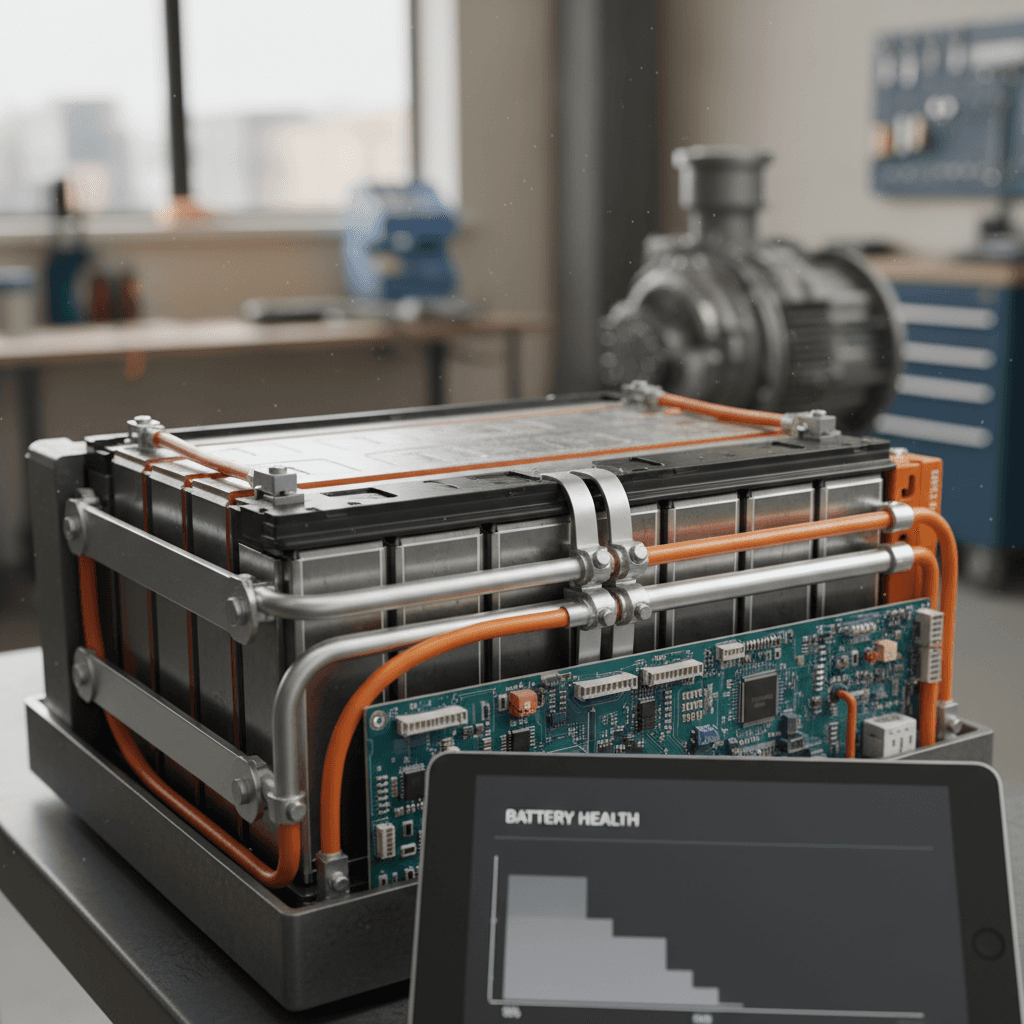
Modern BMW packs are robust, but they still follow the laws of chemistry. Your i5’s lithium‑ion battery will naturally lose a bit of capacity over time. Early owner reports on the i5 show exactly what we’d expect: a small range dip in the first couple of years, then a slower taper rather than a cliff. Thoughtful habits can keep that curve shallow, so you’re not watching your estimated range shrink before the loan is paid off.
What good battery habits actually affect
It’s not just about range on a single charge
Real‑world range
Gentle charging and driving help preserve usable capacity, so that "280‑ish miles when new" doesn’t quietly become 220 sooner than it has to.
Resale value
Used‑EV shoppers increasingly ask about battery health. A well‑cared‑for i5 with documented habits and reports is easier to sell for a strong price.
Long‑term confidence
Knowing you’re treating the pack kindly makes it easier to relax, road‑trip, and enjoy the car instead of obsessing over every percent of state of charge.
BMW i5 battery basics: specs and warranty
BMW i5 battery and charging snapshot
BMW also builds in software‑controlled buffers at the top and bottom of the pack. So when your display says “100%,” the cells themselves are typically kept shy of their true maximum. That buffer helps protect against abuse, but it’s not a free pass to ignore good habits, think of it as a safety net, not permission to walk the tightrope blindfolded.
Don’t rely only on the warranty
Daily charging habits to maximize BMW i5 battery life
If you remember nothing else from this guide, remember this: for daily life, your i5’s battery is happiest living in the middle, roughly 20–80% state of charge (SoC). BMW’s own guidance for high‑voltage packs focuses on moderate SoC, regular AC charging, and avoiding long stays at 100%.
Everyday charging checklist for your BMW i5
1. Set a sensible charge limit
In your iDrive charging settings, set a **daily charge limit around 70–80%**. That’s plenty of range for most commutes and dramatically cuts time the pack spends at high SoC.
2. Prefer Level 2 AC at home
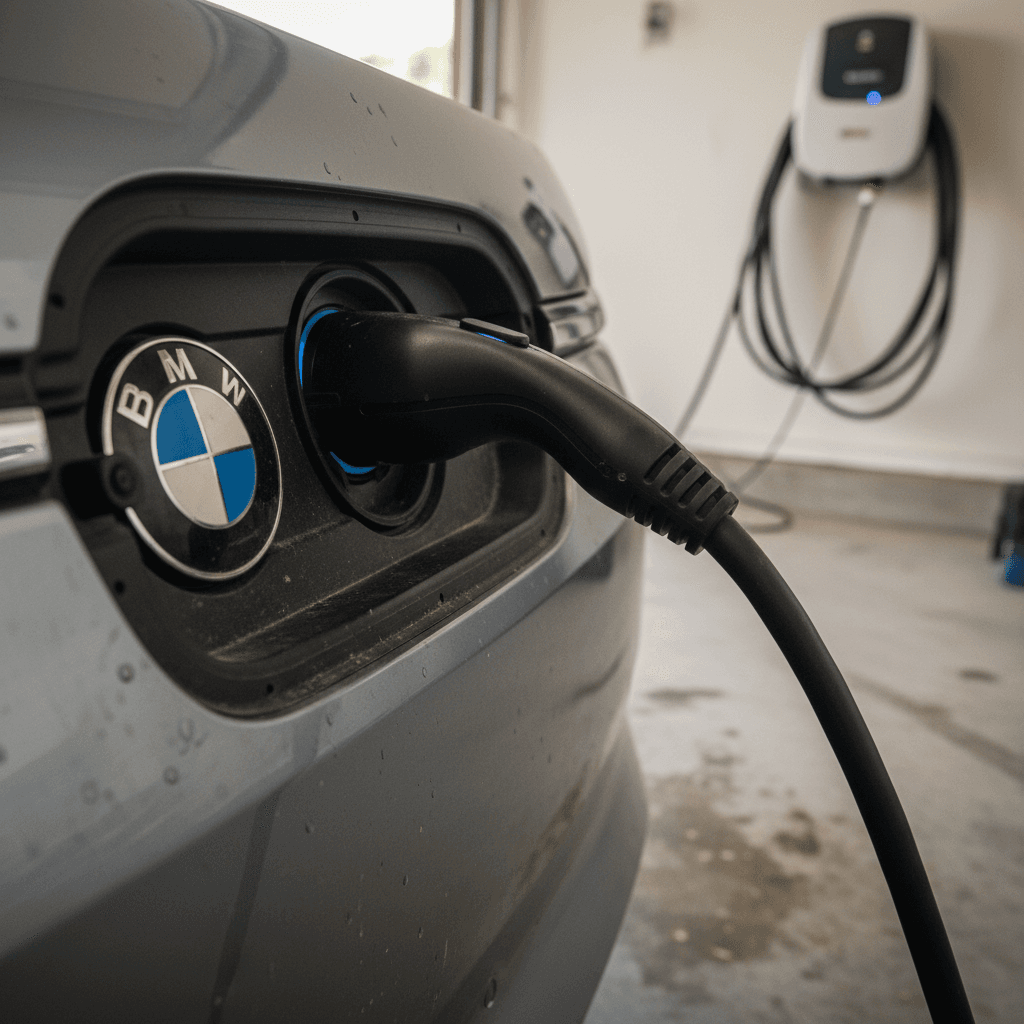
Whenever you can, charge with a **Level 2 home or workplace charger** instead of DC fast charging. Slower AC charging is gentler on the cells and gives the battery more time to manage heat.
3. Avoid sitting at 100% for days
Need a full charge for a trip? Great. Just **schedule charging to finish close to departure** so the car isn’t parked at or near 100% all night or all weekend.
4. Don’t obsess over topping off
It’s fine to arrive home at 40–50% and plug in. There’s no need to chase 100% every night. **Shallow cycles between, say, 30–70%** are very easy on lithium‑ion packs.
5. Keep some buffer at the bottom
Try not to run to 0% unless it’s an emergency. Dipping briefly under 5–10% occasionally won’t ruin the battery, but **regular deep discharges and then leaving the car parked low** are harder on it.
6. Use scheduled charging when electricity is cheaper
Many utilities offer off‑peak rates overnight. Use the BMW app or in‑car menus to **start charging in those windows**, which usually line up nicely with slower, cooler nighttime charging.
Garage 120V vs. Level 2
Fast-charging strategy: road trips vs. daily use
The i5 is excellent on a road trip precisely because it can gulp down power quickly: roughly 205 kW max on a strong DC fast charger, often going 10–80% in about half an hour when the battery is warm and the station is healthy. Used occasionally, this won’t “kill” the battery. Used as your primary charging source, week in and week out, it can accelerate ageing compared with Level 2.
How to use DC fast charging wisely
- Save it for travel: Aim to use DC fast charging mainly on road trips, or when life throws you a curveball and you truly need a quick turn‑around.
- Arrive low, leave around 60–80%: For fastest trips and happier chemistry, start your DC session near 10–20% and unplug somewhere between 60–80%, where charge rates are still strong.
- Avoid repeated back‑to‑back sessions: Multiple high‑power DC sessions in one long day are fine occasionally, but as a lifestyle they build heat and stress into the pack.
When Level 2 is the better tool
- Daily commuting: Plug in at home or work and let Level 2 bring you gently back to your daily limit overnight or during your shift.
- Top‑ups before short trips: If you’re leaving town tomorrow and want a bit more buffer, schedule a Level 2 top‑up to 90–100% just before you pull out of the driveway.
- After a big DC day: If you’ve been bouncing from fast charger to fast charger, give the battery a break with a couple of nights on AC before the next marathon.
Cold battery + fast charging = bad mix
Driving habits that help your i5 battery last longer
You don’t need to hypermile your BMW to keep the battery healthy, but your right foot and your speed still have a say in how hard the pack works. The more often you ask for maximum power or cruise at very high speeds, the hotter the battery runs and the more energy it cycles through in a given trip.
- Use the i5’s **Eco Pro or Efficient driving modes** when you don’t need full performance; they soften throttle response and can stretch range noticeably.
- Lean into **regen rather than friction brakes** by lifting early instead of charging hard to every stop. That’s kind to the pack and smoother for passengers.
- High sustained speeds (think 80+ mph) are a double whammy: they burn more energy and keep the battery working hard. **If you can back off 5–10 mph, you ease stress and extend range.**
- Avoid “parking” the car with a hot battery after repeated launches or a long high‑speed run. **A few minutes of gentler driving** before you stop gives the pack time to cool and the thermal system time to work.
You can still enjoy the car
Temperature, storage, and long parking
Lithium‑ion batteries dislike extremes, very hot, very cold, very full, or very empty. Your i5’s thermal management system works constantly in the background, but you can make its life easier, especially when the car will sit for longer stretches.
Best practices for temperature and storage
Think about where and how your i5 spends the night
When parking for days or weeks
- Leave the car around **40–60% SoC** if it will sit more than a week.
- Whenever possible, **park in a garage or shaded spot** instead of baking in full sun.
- Don’t store the car long‑term at 0% or 100%. That’s where chemistry is least comfortable.
Dealing with heat and cold
- In very hot climates, minimize long stays above 80% SoC, especially if parked outside.
- In deep winter, expect **reduced range** and slower initial charging until the pack warms up.
- Use pre‑conditioning while plugged in so cabin and battery come up to temperature on shore power, not from the pack itself.
Don’t leave it dead in the cold
Using BMW tech features to protect your battery
One advantage of the i5 is that BMW has already baked a lot of battery‑friendly logic into the software. A few minutes in the menus can automate most of what we’ve talked about so far.
Settings to tweak on your BMW i5
Set a smart charge limit
In iDrive, under Charging settings, choose a **default maximum charge** (often 70–80%) for daily use. Bump it up only when you need extra range.
Turn on departure and preconditioning times
Use the BMW app or iDrive to **schedule departures** so the car can pre‑condition the cabin and battery while plugged in. You start warm (or cool) without a cold‑soaked or overheated pack.
Use navigation to a fast charger
When you route to a DC fast charger through the car’s navigation, the i5 can **precondition the battery for best charging speed**, arriving in a happier temperature window.
Watch the charging power display
If you notice DC fast‑charge speeds dropping far below what’s advertised, especially after many back‑to‑back sessions, the car may be **protecting the pack**. That’s your cue to switch back to AC for a while.
Stay current on software updates
BMW continually tunes charging behavior and thermal management. Keeping your i5’s software updated ensures you get the latest **battery‑health protections and improvements**.
Signs of battery ageing, and when to worry
Some capacity loss over time is normal. Many EVs, including the i5, see an early dip in the first couple of years, then degradation slows. What you’re watching for is *pattern* rather than perfection.
Normal vs. concerning battery behaviour in a BMW i5
Use this as a guide rather than a hard rule, ambient temperature, wheel size, and software updates also change range estimates.
| Scenario | What you see | Is it normal? | What to do |
|---|---|---|---|
| New to 2 years old | Range estimate down by ~5–10%, cold‑weather range hit in winter | Usually yes | Improve habits, monitor over a few months. |
| 4–6 years old, mixed use | Gradual range drop, maybe 10–20% vs. new, DC fast used mostly for trips | Generally yes | Keep using best practices; plan charging stops a bit more carefully. |
| Sudden large range loss | Over a few weeks, range falls off a cliff or car limits power | No | Book service; could be a failing module or sensor issue. |
| Frequent DC fast, very hot climate | Noticeable range loss in only 2–3 years, especially at high SoC | Maybe | Dial back fast‑charging, park shaded, have battery health checked. |
If you see several “concerning” signs together, it’s time for a visit to a BMW dealer or an EV specialist for a deeper look.
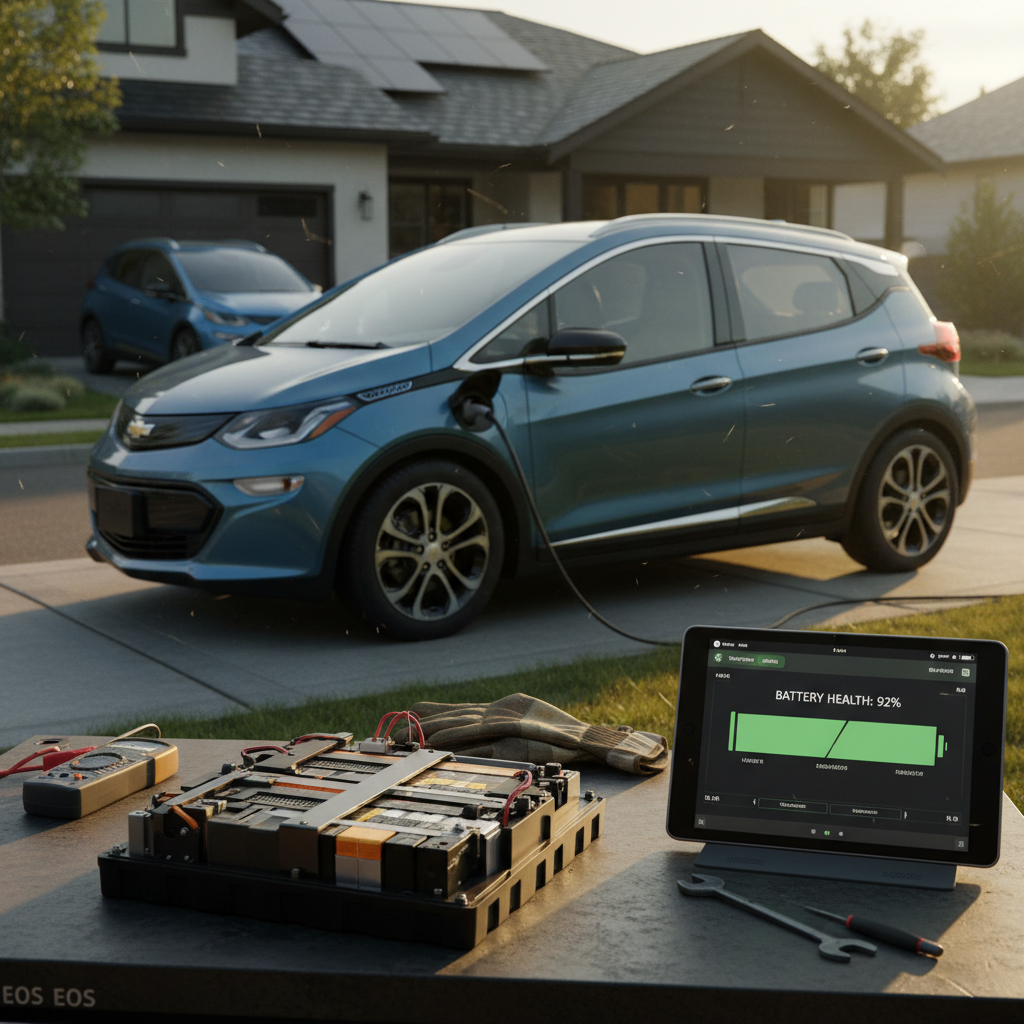
What about battery health readouts?
BMW i5 battery life tips when shopping used
If you’re eyeing a used BMW i5, whether at a BMW store, an independent lot, or online, battery life moves from “nice to have” to “must understand.” The good news: early i5s are showing typical, manageable degradation when they’ve been cared for. The catch: you need a way to verify that.
Questions to ask about a used i5
- How was it charged? Ask if previous owners mostly used home Level 2 or leaned heavily on DC fast charging.
- What’s the typical range today? On their normal commute or highway run, what does the car show at 80% or 100%?
- Any battery‑related service? Look for documentation of software updates, high‑voltage system work, or warranty claims.
How Recharged helps de‑mystify it
Every EV on Recharged comes with a Recharged Score Report that includes verified battery health diagnostics, not just a fuel‑economy sticker slapped on an EV. Our specialists look at charging history where possible, real‑world range behavior, and high‑voltage system checks, so you’re not guessing about the pack that powers your i5.
If you’re selling or trading in your own i5, that same transparency can help you get credit for the care you’ve taken, especially if you’ve followed the habits in this guide.
Why diagnostics matter more than odometer
BMW i5 battery life FAQ
Frequently asked questions about BMW i5 battery life
Key takeaways for maximizing your BMW i5 battery
Maximizing **BMW i5 battery life** isn’t about babying the car; it’s about building a few smart habits into your routine and letting the hardware do what it was designed to do. Keep your daily SoC in the 20–80% window, lean on Level 2 charging at home or work, save DC fast charging for when it really makes sense, and avoid parking at extreme charge levels or temperatures for long stretches.
Do that, and your i5 should keep delivering the kind of range and performance you bought it for, well into its later years, and if you decide to sell or trade it in, a healthy battery will be one of the first things a savvy buyer (or a marketplace like Recharged) is looking for. If you’re exploring a used i5, Recharged’s **Recharged Score Report** and EV‑specialist support can help you see past the paint and the options list to the heart of the car: the battery that makes it all work.