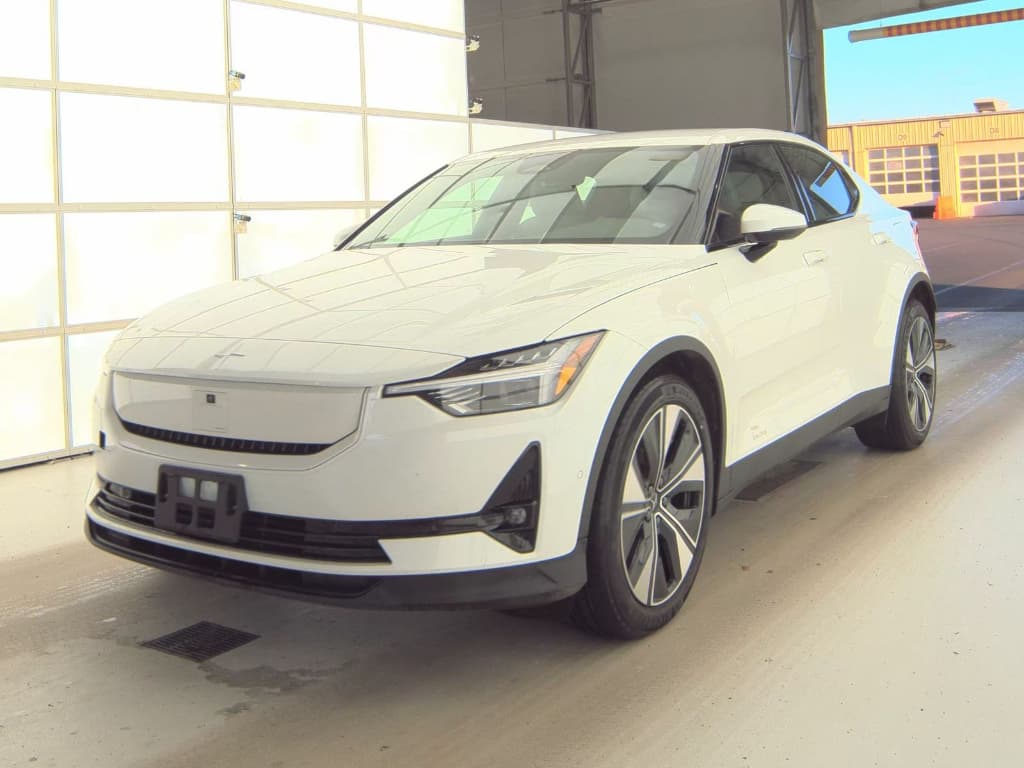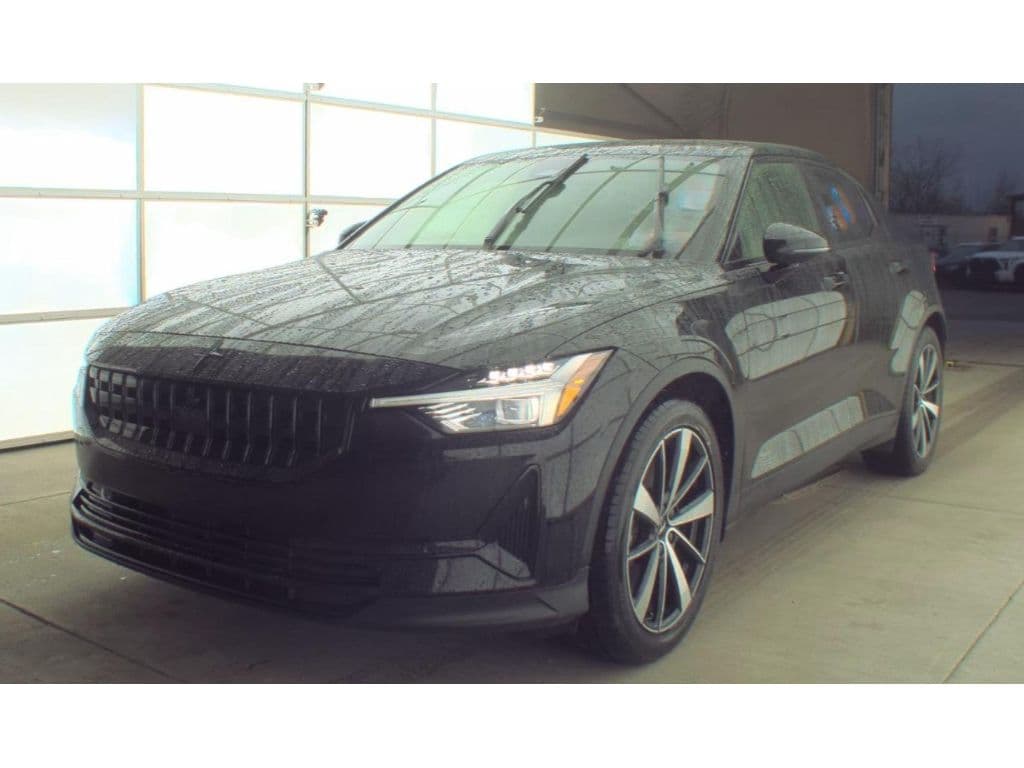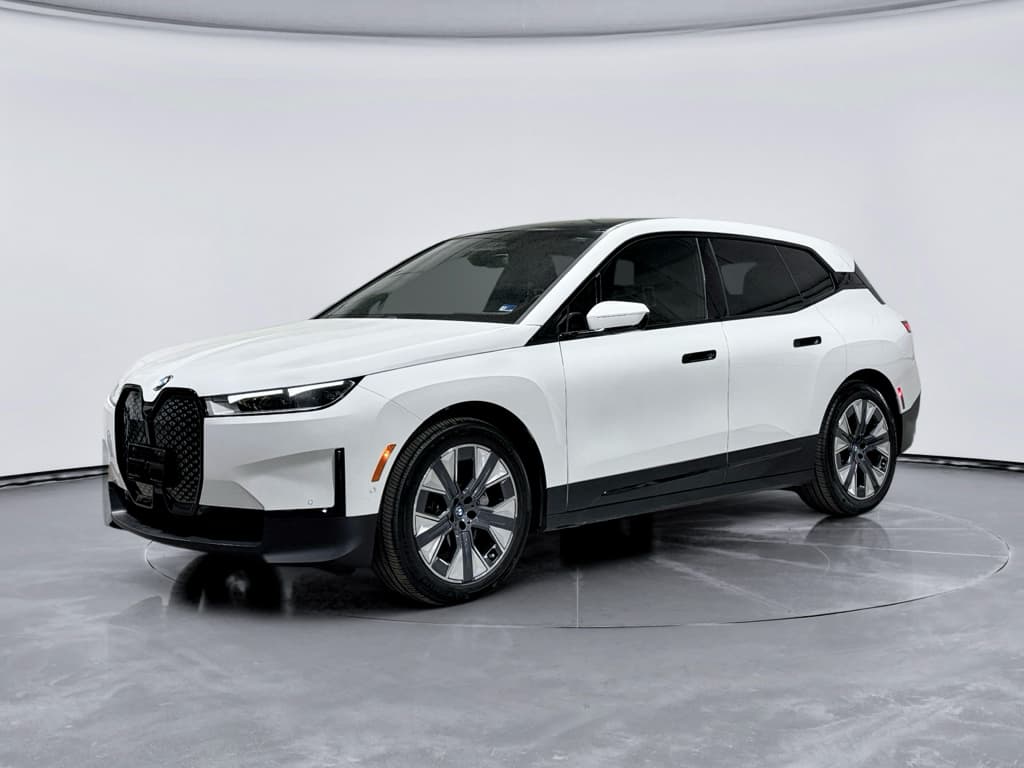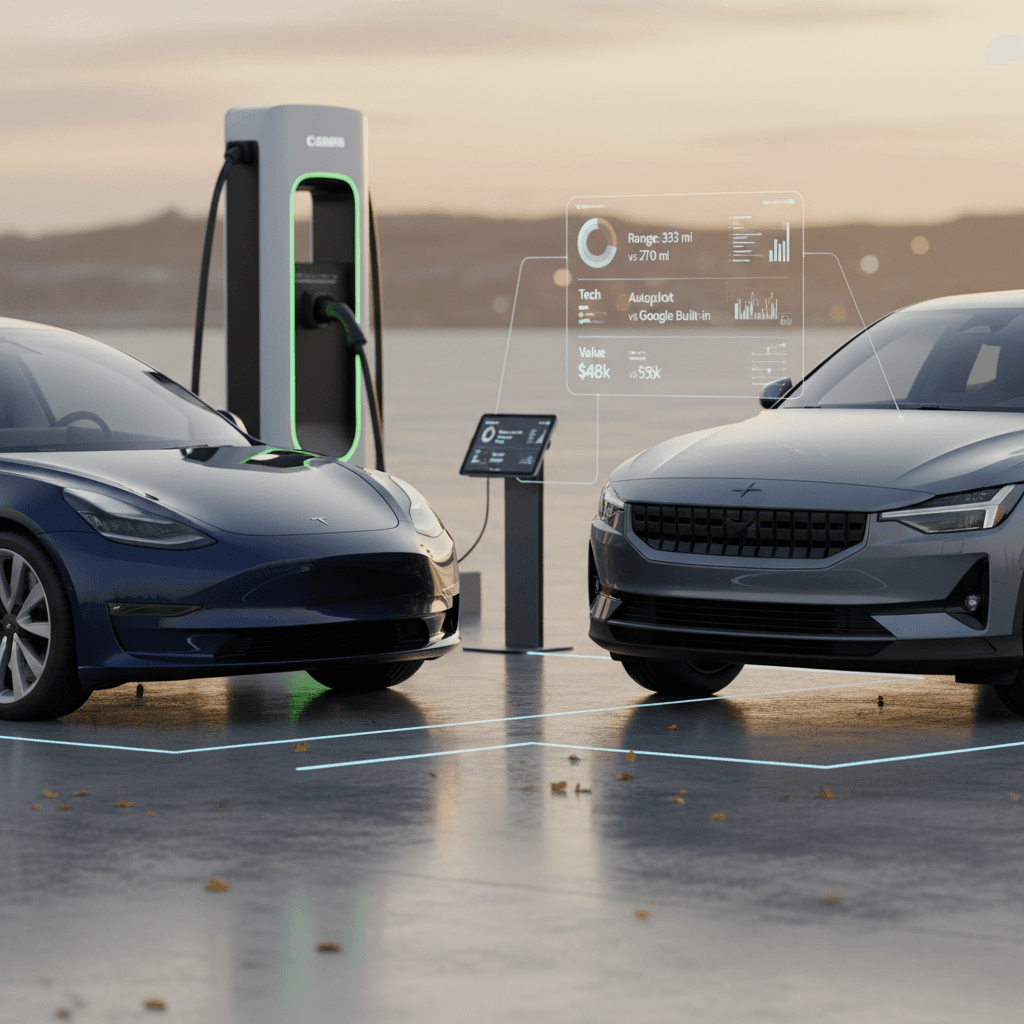
You could call the BMW i4 and Polestar 2 the thinking person’s Teslas. Same basic recipe, compact electric fastbacks with liftgates, but very different flavors. If you’re cross‑shopping a BMW i4 vs Polestar 2, you’re probably chasing a premium EV that still feels like a driver’s car, not a rolling smartphone. This guide breaks down how they stack up on range, performance, comfort, tech, and long‑term ownership, with a special focus on the used market.
Quick take
Overview: BMW i4 vs Polestar 2 in one glance
Headline numbers: i4 vs Polestar 2
Core specs: BMW i4 vs Polestar 2 (U.S.-market highlights)
Key trims most U.S. shoppers see new and used. Exact specs vary by model year and wheel size.
| Model | Drivetrain | Battery (usable est.) | EPA range (mi) | 0–60 mph (approx.) | Peak DC charge |
|---|---|---|---|---|---|
| BMW i4 eDrive35 | RWD, single motor | ~66 kWh | ~256 | ~5.8 s | 180 kW |
| BMW i4 eDrive40 | RWD, single motor | 83.4 kWh | 301 | ~5.4 s | 200 kW |
| BMW i4 xDrive40 | AWD, dual motor | 83.4 kWh | 307 (18" wheels) | ~4.9 s | 200 kW |
| BMW i4 M50 | AWD, dual motor | 83.4 kWh | 245–269 | 3.7 s | 200 kW |
| Polestar 2 single‑motor LR | FWD/RWD*, single motor | 79 kWh | up to ~320 | ~6.0 s | 205 kW |
| Polestar 2 dual‑motor LR | AWD, dual motor | 75 kWh | around 270–276 | ~4.2–4.5 s | 155–205 kW |
EPA ranges are for recent model years; always confirm the specific car you’re considering.
Model‑year fine print
Range, batteries & charging: how far, how fast
Range is where the BMW i4 quietly beats the Polestar 2 at its own game. BMW’s 83.4‑kWh pack and slippery aerodynamics deliver some of the best efficiency in the luxury EV class. The i4 eDrive40 and xDrive40 are rated around 301–307 miles on a charge, and independent testing has shown the i4 can get very close to its EPA numbers in real‑world highway use. The hotter M50 sacrifices some range for power but still lives in the mid‑200s.
The Polestar 2, especially after its 2024 refresh, isn’t far behind on paper. The long‑range single‑motor car can crest 300 miles of EPA range when lightly optioned, with dual‑motor variants landing in the 270‑ish neighborhood when equipped with sensible wheels. In practice, highway testing often lands the Polestar 2 a bit below its EPA promise, especially in dual‑motor and Performance trims, so plan for more conservative real‑world numbers, think 230–260 miles from full to nearly empty on the highway.
BMW i4: Efficient and consistent
- Battery: 83.4 kWh pack on most trims (smaller pack on eDrive35).
- Max DC rate: Up to 200 kW; real‑world 10–90% in under 40 minutes on a strong charger.
- AC charging: 11 kW onboard, ideal for Level 2 home charging.
- Efficiency: Among the better luxury EVs, helps on road trips and in winter.
The i4 is especially kind to owners who mostly DC‑fast‑charge; its charging curve stays healthy well past 50% state of charge.
Polestar 2: Slight edge in peak DC, similar in practice
- Battery: 75–79 kWh, depending on single vs dual motor and year.
- Max DC rate: Up to around 205 kW on newer long‑range packs.
- AC charging: 11 kW onboard; detailed AC/DC charge‑time charts right in the owner’s manual.
- Efficiency: Respectable but usually a bit behind the i4, especially on dual‑motor cars.
On a 150–200 kW DC fast charger, plan on roughly 30–40 minutes from about 10–80% on either car in good conditions.
Real‑world rule of thumb
Performance & driving feel: sport sedan vs calm cruiser
Driving character: who they feel like on the road
Same segment, very different personalities.
BMW i4: Classic sport sedan energy
The i4 is unapologetically a BMW first, EV second. Steering is precise and nicely weighted, the chassis is buttoned‑down, and the rear‑drive trims have that playful, throttle‑adjustable attitude BMW loyalists expect.
- eDrive40/xDrive40: Quick, smooth, quietly rapid, perfect daily performance.
- M50: A genuine performance car with super‑sedan acceleration and stout brakes, at the expense of ride firmness and range.
- Ride & noise: Firm but controlled; well‑insulated at highway speeds.
Polestar 2: Nordic calm with a punch
The Polestar 2 feels like a Volvo that’s been to the gym. Steering is lighter and less talkative than the BMW’s but easy to live with; the suspension skews toward comfort with a touch of firmness.
- Single‑motor: Easygoing, more about smoothness than thrills.
- Dual‑motor: Properly quick, especially with the Performance Pack, though less overtly playful than the i4 M50.
- Ride & noise: Quiet, composed, with that minimalist Scandinavian restraint.
If the i4 is a tailored German suit with sporty shoulders, the Polestar 2 is a minimalist Scandinavian cardigan that happens to run a 12-second quarter mile.
Performance verdict
Interior, space & practicality
Both of these are technically five‑door fastbacks, not sedans, which means you get a hatch and useful cargo space. The i4 rides on a platform shared with the 4 Series Gran Coupe; the Polestar 2 uses Volvo’s compact CMA architecture. That shared‑platform heritage shows up in surprisingly similar ways.
Space & practicality highlights
Dimensions are approximate and vary slightly by year and trim, but the overall pattern holds.
| Metric | BMW i4 | Polestar 2 | What it feels like |
|---|---|---|---|
| Rear legroom | ~34 in | ~34 in (slightly tighter) | Adults fit, but tall passengers will notice knees first. |
| Rear headroom | Mid‑30s in | High‑30s in | Polestar’s taller roof helps; i4’s sloping roof can brush tall hairstyles. |
| Cargo behind rear seats | ≈16.6 cu ft | ≈14.4 cu ft | i4 swallows a bit more luggage or Costco runs. |
| Seating position | Lower, cocooned | Slightly higher, more crossover‑like | i4 feels like a classic sports sedan; Polestar 2 like a low SUV. |
| Frunk | None | Tiny or none depending on year | Neither is a storage king up front. |
BMW i4 wins on rear legroom and cargo volume; Polestar 2 wins on front headroom.
Daily usability
Tech, infotainment & driver assistance
BMW i4: Curved Display, classic BMW logic
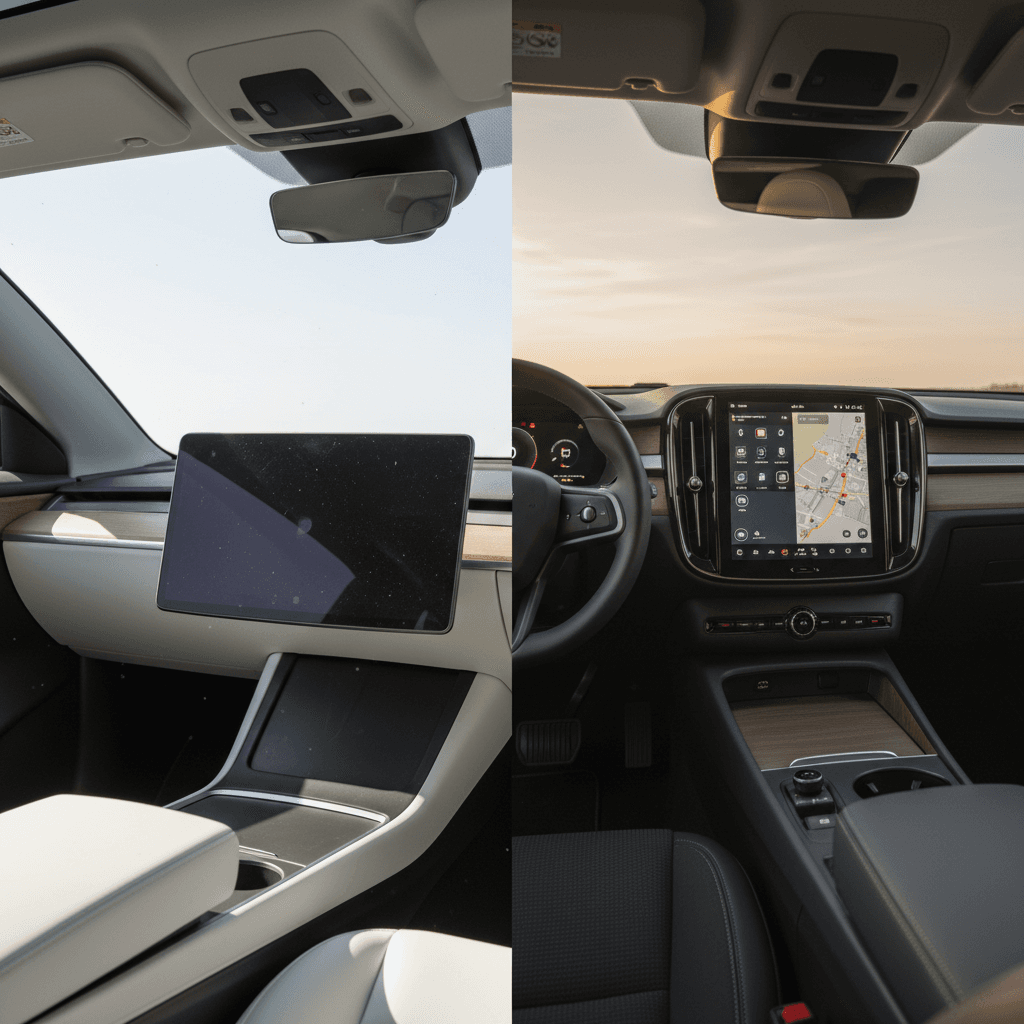
The i4 runs BMW’s iDrive (8 and now 8.5 in newer cars) on a sweeping curved display that merges digital gauges and central touchscreen. You get wireless Apple CarPlay and Android Auto, a robust navigation system, and tightly integrated vehicle settings.
- Pros: Beautiful graphics, responsive hardware, deep customization, excellent optional Harman Kardon audio.
- Cons: Menu complexity and some climate controls buried in the screen; route planning and EV‑specific UX still not as seamless as the best EV‑native systems.
Polestar 2: Google built‑in, if you live on Android, you’ll love it
Polestar 2 famously runs Android Automotive OS with Google built‑in: Google Maps, Assistant and Play Store are baked into the car, not mirrored from your phone. It’s one of the most intuitive nav and voice‑control experiences in any EV, full stop.
- Pros: Excellent native navigation with EV routing, natural‑language voice commands, clean interface, easy over‑the‑air updates.
- Cons: Apple users can still use CarPlay, but the whole vibe favors Android. Some basic functions live only in the touchscreen.
Driver‑assist & safety
Both are serious about crash protection and active safety tech.
BMW i4 safety & assist
- Standard active safety: forward‑collision warning, automatic emergency braking, lane‑keeping assist.
- Available: adaptive cruise, highway assist, 360° cameras, parking assistants.
- Crash scores: based on 3/4‑Series family; strong performance in most major tests.
Polestar 2 safety & assist
- Volvo DNA shows up: strong crash‑test results and thoughtful safety details.
- Available Pilot Pack: adaptive cruise, Pilot Assist lane‑centering, 360° camera.
- Standard advanced safety expanded with 2024 update (blind‑spot monitoring, rear collision mitigation, more standard cameras).
Long‑trip friendliness
Pricing, costs & value, especially used
New, the BMW i4 and Polestar 2 live in the same neighborhood as well‑equipped Tesla Model 3s and Model Ys. As of the 2025 model year, a new i4 starts in the low‑to‑mid‑$50,000s and runs into the low‑$70,000s for a loaded M50. The Polestar 2 tends to start higher, mid‑$60,000s for well‑equipped dual‑motor cars, making it the pricier option at the window sticker for similar performance.
Federal tax credit reality check
Used BMW i4 value
- Plenty of supply from early‑adopter leases returning after 3 years.
- Wide trim spread, from efficient eDrive35/40 to wild M50, lets you pick your performance/price balance.
- i4’s strong range and BMW brand cachet help resale; M50s may depreciate faster due to higher original MSRP.
As a used buy, the i4 often offers more range per dollar than Polestar 2 with similar mileage.
Used Polestar 2 value
- Smaller sales volume means fewer on the market; good if you like something rare, tricky if you want lots of choices.
- Early (pre‑2024) cars are less powerful and have shorter range, which can push prices down, but be careful not to overpay for an older spec.
- Later, post‑refresh cars hold value better thanks to big range and tech updates.
The Polestar 2 makes most sense used when you can find a fairly priced 2024+ car with the bigger battery and updated safety tech.
Cost questions to ask yourself
1. Do you need maximum range?
If yes, prioritize BMW i4 eDrive40 or xDrive40 trims. Polestar 2 is competitive but usually offers fewer real‑world miles per charge.
2. How quickly do you expect to fast‑charge?
Both are solid, but if you live on DC fast chargers, look for later‑model cars with the highest DC rating and healthy battery behavior in the Recharged Score report.
3. What’s your budget ceiling?
On the used market, an i4 eDrive40 is often cheaper than a similarly equipped dual‑motor Polestar 2 while offering more range.
4. Are you okay paying more for style and rarity?
If the Polestar’s design and Google tech really speak to you, a slightly higher price might still feel worth it.
Ownership, reliability & battery health
Both cars come with the modern EV standard: around 8 years/100,000 miles of battery warranty on the high‑voltage pack, and roughly 4 years/50,000 miles on the basic vehicle warranty. Real‑world reliability data is still developing, these are relatively young models, but a few patterns have emerged.
Long‑term ownership themes
What current owners tend to report.
BMW i4
- Solid build quality; feels like a conventional BMW inside.
- Some complaints about tight rear seats and lack of frunk.
- Software and infotainment quirks more than hardware failures.
Polestar 2
- Generally good build with some early‑run trim and software bugs.
- Over‑the‑air updates have improved range, charging and features.
- Small service network in the U.S. compared with BMW, which can mean longer trips for warranty work in some regions.
Battery health (both)
- Liquid‑cooled packs and conservative fast‑charge management support good long‑term health.
- Degradation so far appears gradual when cars are charged sensibly (home Level 2, limited 100% charging).
- Individual history matters more than badge, how the previous owner used and charged the car is critical.
Why battery health checks matter most on used EVs
Which one is right for you? Scenarios & recommendations
Pick your persona
Here’s how the BMW i4 vs Polestar 2 matchup changes depending on who you are.
Enthusiast driver, long commute
Lean BMW i4. You’ll appreciate the steering feel, chassis balance, and subtle rear‑drive playfulness. The extra range of eDrive40/xDrive40 trims means fewer charging stops, especially in winter. The M50 is grin‑inducing if you can live with firmer ride and shorter range.
Design‑led urban professional
Lean Polestar 2. If you love Scandinavian interiors, clean lines and integrated Google tech, the Polestar will feel like your space. Range is ample for city life; dual‑motor trims are more than quick enough for on‑ramps and Sunday drives.
Small family hauler
Edge to BMW i4. The slightly roomier back seat and larger cargo hold make the i4 a more forgiving choice for car seats, strollers and weekend bags. Either car works if the kids are small and you pack efficiently.
Frequent road‑tripper
BMW i4, with a caveat. Its combination of efficiency and range is hard to beat. However, if you live heavily in the Google ecosystem and value best‑in‑class native navigation, a Polestar 2 with Google built‑in may balance the scales for you.
Bottom‑line matchup
Shopping used BMW i4 or Polestar 2 with Recharged
If you’re looking at this comparison, odds are you’re also eyeing the used market, where depreciation has turned these premium EVs into surprisingly accessible daily drivers. This is exactly where Recharged is built to help: we specialize in used EVs, and every car comes with a Recharged Score Report that doesn’t just tell you what’s on the window sticker, it tells you what’s going on inside the battery.
How Recharged de‑risks a used i4 or Polestar 2
You bring the taste; we handle the homework.
Verified battery health
Transparent pricing & financing
Nationwide, digital‑first buying
Ready to find your next EV?
Browse VehiclesAsk the right questions
FAQ: BMW i4 vs Polestar 2
Frequently asked questions
Lined up side by side, the BMW i4 and Polestar 2 are a reminder that the EV future doesn’t have to be one‑size‑fits‑all. The i4 is the rational choice that happens to be a lot of fun: big range, polished dynamics, familiar luxury. The Polestar 2 is the stylish outlier that trades a little practicality for a lot of character and some of the best native tech in the segment. If you’re torn between the two, the smartest move is to compare actual cars, not just spec sheets, using objective battery data, pricing and expert help. That’s exactly what Recharged was built for.