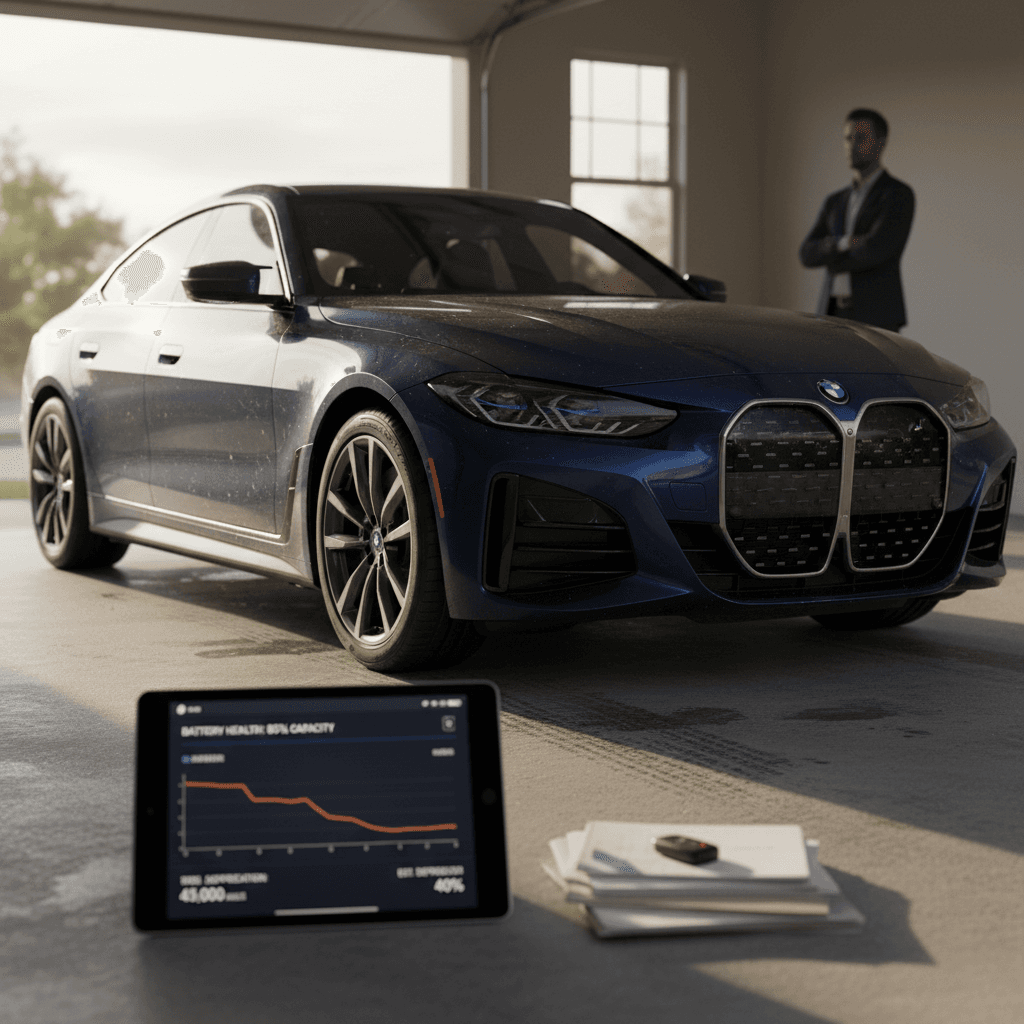
Three years is where the truth shows up on the balance sheet. For the BMW i4, that’s when the rosy showroom promise turns into a residual value, a monthly payment on a lease buyout, or a used‑car asking price on your screen. If you’re wondering about BMW i4 value after 3 years, whether you own one or you’re shopping used, this guide walks through what the data says, what the market is actually doing, and how battery health fits into the picture.
Key context
BMW i4 value after three years: the short version
BMW i4 3‑year value at a glance
Put simply, a BMW i4 that stickered in the high‑$50,000s is often sitting in the low‑$30,000s after three years. That’s a big haircut in absolute dollars, but not shocking for a German luxury sedan on a new EV platform. The important nuance: trim, options, and battery condition can easily swing value by several thousand dollars either way.
How much does a BMW i4 depreciate in 3 years?
Let’s start with the math. Different analysts slice the data slightly differently, but they’re all reading from the same hymnbook: the i4 loses a large chunk of its value early, then settles into a slower slide.
Estimated BMW i4 depreciation over 3 years
Approximate average depreciation for mainstream trims in the U.S., assuming typical mileage and condition.
| Metric | Estimate | What it means |
|---|---|---|
| Original MSRP (typical well‑equipped eDrive40) | $58,000–$62,000 | Most 2022–2023 cars were optioned into this band. |
| Typical 3‑year retained value | ≈50–60% | Many data sets and lease residuals cluster in the low‑to‑mid‑50% range after three years. |
| Typical 3‑year depreciation | ≈40–50% | Roughly two‑fifths to half of the original MSRP gone in three years. |
| Aggressive estimates (worst case) | Up to ~49% in 3 years | Some analyses put the i4 at just under 50% loss in the first three years for certain trims. |
| Projected 3‑year value of a $60k car | ≈$30,000–$36,000 | A realistic resale range for mainstream trims without extreme mileage or damage. |
Actual results will vary with options, mileage, incentives at original sale, and regional demand.
Sticker price vs. real transaction price
If you zoom in on the BMW i4 eDrive40 specifically, some independent depreciation modeling suggests it retains roughly 67% of MSRP after two years and around 61% by year three. That works out to roughly a 39% total loss over three years for that base trim, slightly gentler than some broader i4 averages, which are dragged down by incentive‑heavy deals and less‑desirable specs.
Real‑world 3‑year BMW i4 used prices
Looking at actual listings is often more useful than staring at percentages. By early 2026, the bulk of 3‑year‑old cars are 2022 i4s, with some 2023s creeping in depending on build date. Here’s what you tend to see on U.S. used‑car sites and in dealer inventory.
Typical 3‑year BMW i4 price bands
Real asking prices you’re likely to encounter in the U.S. market
eDrive35 / value‑spec cars
Low‑to‑mid $20,000s to low $30,000s
- Lower‑range eDrive35 and lightly optioned early cars.
- Often higher miles or less desirable colors/options.
- Good hunting ground if you care more about price than range.
eDrive40 sweet spot
Low‑to‑mid $30,000s
- Most 3‑year‑old eDrive40s with normal miles (25k–40k).
- Premium package, driver assists and nicer wheels push toward the top of the band.
- These are the cars most buyers should be cross‑shopping.
M50 performance trims
Mid‑$30,000s to low‑$40,000s
- Higher‑output dual‑motor M50s command a premium.
- Low‑mile or heavily optioned examples can still flirt with the low‑$40,000s after three years.
- Expect steeper future depreciation than a comparable eDrive40.
How to sanity‑check a price

What actually drives BMW i4 value after 3 years
1. Trim, options and original MSRP
An i4 is not an i4 is not an i4. A modestly optioned eDrive40 with cloth seats and smaller wheels started life thousands cheaper than a fully loaded M50 with every tech package. Three years later, the absolute dollars lost can be similar, but the percentage loss looks worse on the expensive car.
- M50s depreciate harder in dollars because they start higher and appeal to a narrower, performance‑oriented audience.
- "Right" options, HUD, Harman Kardon audio, adaptive cruise, parking assists, help resale more than wild colors or oversized wheels.
2. Mileage, use pattern and region
At three years, most i4s live between 20,000 and 45,000 miles. Cars at the lower end of that range can easily pull a several‑thousand‑dollar premium over 45k‑mile examples.
- Cold‑weather regions may discount cars that clearly lived their lives fast‑charging on winter road trips.
- Sunbelt cars can raise questions about long‑term thermal stress, but buyers also love clean underbodies with no road‑salt corrosion.
- Urban shoppers tend to overpay for parking‑scuffed, city‑miles cars because local inventory is thin. Casting a wider net can save meaningful money.
- Battery and charging history – Frequent DC fast charging, lots of 100% charges left sitting hot, or a history of high‑mileage fleet use can all put downward pressure on price, even if the on‑screen range still looks fine.
- Software and features – Over‑the‑air updates have added and refined driver‑assist features on later cars. Shoppers will pay more for cars that feel up to date, not like early‑adopter science projects.
- Macro EV sentiment – Incentive changes, gas prices, and headlines about charging infrastructure all move the needle. In 2024–2025, softening EV demand pushed many used EV prices down, the i4 included. If sentiment rebounds, three‑year values may stabilize or even firm up a bit.
BMW i4 vs Tesla Model 3 and gas 4 Series resale
Context matters. Is the i4 a resale hero? No. Is it a disaster? Also no. It lives in that familiar German‑luxury middle ground: a wonderful thing to drive, less wonderful to own from new if you stare too long at the depreciation curve.
How the i4 stacks up on 3‑year value
Broad, model‑to‑model comparisons using typical U.S. data and lease residual assumptions
Tesla Model 3
Generally better resale
- Historically holds value better than the i4 over 3–5 years.
- Huge brand recognition and dense charging network support prices.
- Greater supply and periodic price cuts can still cause swings.
BMW i4
Heavier early depreciation
- Analyses peg 3‑year depreciation close to 50% for some trims.
- Five‑year projections often show around two‑thirds of value gone.
- Luxury‑level running costs and BMW brand cachet keep it from total freefall.
Gas BMW 4 Series
Typically shallower drop than i4
- Some data sets show the gas 4 Series down roughly one‑third at 3 years, less than the i4.
- ICE buyers are more numerous, and dealers know exactly how to price them.
- As EV adoption rises, this gap may narrow, but we’re not there yet.
Why this matters for you
Battery health and range after three years
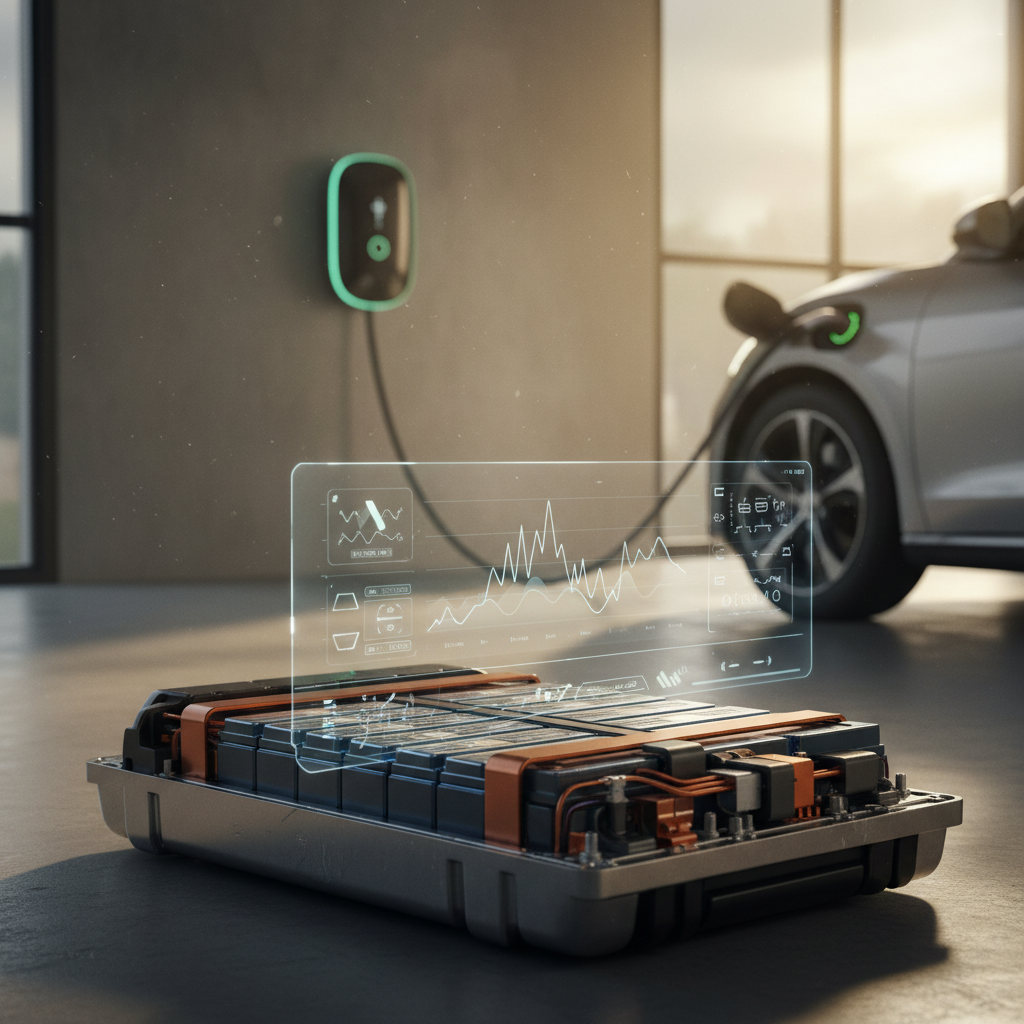
With EVs, depreciation isn’t just metal and leather; it’s chemistry. The question behind every used‑i4 search is the same: what’s left in the pack?
The good news on i4 batteries
- Real‑world range at 3 years is more sensitive to driver behavior and weather than to modest degradation. An owner who hammers the highway at 80 mph in winter will see far shorter range than a gentle commuter in mild weather, regardless of state of health.
- BMW backs the high‑voltage battery with a long warranty window (typically 8 years / 100,000 miles in the U.S., with minimum capacity guarantees), so a 3‑year‑old car is still deep inside the coverage period.
- Third‑party testing and fleet data on modern BMW packs suggest the brand’s conservative thermal management pays off: outright early pack failures are rare, and most degradation curves flatten after the first few years.
Battery red flags on a 3‑year‑old i4
Is a 3‑year‑old BMW i4 a good buy?
From a value perspective, a 3‑year‑old i4 is often the best way to experience the car. You still get a thoroughly modern BMW interior, a properly quick EV powertrain, and a remaining battery warranty window, without the fiscal drama of being the first owner.
3‑year‑old BMW i4: pros and cons
Who should be shopping this car, and who shouldn’t
Why it makes sense
- Big discount vs. new: You’re often stepping into a $60k‑plus car for low‑to‑mid $30k money.
- Modern tech, less beta: Early bugs are largely ironed out; software is more mature.
- Battery still young: With typical use, degradation is modest and warranty coverage is generous.
- Classic BMW feel: Especially with the M50, you get a proper sport sedan that just happens to be electric.
Where it falls short
- Not a resale champion: If you plan to flip it again in 2–3 years, you won’t be insulated from further drops.
- Luxury‑grade running costs: Tires, brakes, and dealer service are still BMW‑priced, even if you’ve dodged early depreciation.
- Charging reality: Public infrastructure still lags behind Tesla’s, and the i4’s fast‑charging curve isn’t class‑leading.
- Market volatility: EV incentives and sentiment can move used prices faster than you’re used to from gas sedans.
Who’s the ideal 3‑year i4 buyer?
How to evaluate a 3‑year‑old BMW i4 like a pro
Shopping for a used EV means looking at everything you’d check on a gas car, plus one big extra chapter: the battery. Here’s how to approach a 3‑year‑old i4 so you don’t buy someone else’s experiment.
Inspection checklist for a 3‑year‑old BMW i4
1. Decode the trim and options
Confirm exactly which i4 you’re looking at, eDrive35, eDrive40, or M50, and which packages it has. A seemingly cheap M50 with missing safety or comfort features may be overpriced once you compare it to a well‑equipped eDrive40.
2. Pull the battery health data
Request a formal battery health or state‑of‑health report. At Recharged, every EV we list includes a <strong>Recharged Score battery health diagnostic</strong>, so you can see how the pack is actually performing instead of guessing from the dash estimate.
3. Ask about charging history
Look for clues about heavy DC fast‑charging use, especially daily ultra‑fast sessions. Occasional road‑trip fast charging is normal; commuter life on 250 kW pumps is not.
4. Drive it like you’ll actually use it
Do a proper test drive that includes highway speeds, stop‑and‑go, and a rough idea of your normal route. Watch energy use and how the range estimate behaves over 20–30 miles, not just the first five.
5. Inspect the underbody and suspension
EVs are heavy, and the i4 is no exception. Check for uneven tire wear, tired dampers, or scraped battery shields, especially on cars from pothole‑rich cities.
6. Verify software and feature set
Confirm the car is on current software and that key driver‑assist and infotainment features work as advertised. Out‑of‑date software can be a negotiation lever or a sign of neglect.
Don’t skip a specialist inspection
If you’d rather skip the detective work, buying from a specialist marketplace like Recharged gives you a head start: every used EV comes with a Recharged Score battery report, verified specs, and expert EV support from first click to delivery.
Should you sell or trade your 3‑year‑old BMW i4 now?
If you own an early‑build i4, you’re probably starting to wonder whether to ride it into the battery‑electric sunset or cash out while it still has a three in front of the price tag.
When it makes sense to sell now
- Your needs have changed: Longer commute, more road trips, or new home without easy charging access.
- You’re eyeing newer tech: Upgraded range, faster charging, or a different brand’s ecosystem.
- Equity is still decent: If you financed conservatively up front or leased, you may be able to exit without writing a check.
If market sentiment around EVs improves or incentives shift, you won’t necessarily get a better exit later. Three years is a reasonable, defensible time to step off the ride.
When to keep and enjoy it
- You like the car and it fits your life; there’s no replacement you genuinely want.
- Battery health looks strong and you’re still well within warranty.
- You’ve already eaten the worst depreciation; the next few years should be gentler in percentage terms.
At this point, your i4 is a sunk cost. The cheapest miles you’ll ever get out of it are the ones you drive between years three and eight.
Selling or trading through Recharged
Ready to find your next EV?
Browse VehiclesFAQ: BMW i4 value after 3 years
Frequently asked questions about 3‑year BMW i4 value
The bottom line on BMW i4 value after three years
Three years in, the BMW i4 looks exactly like what it is: a premium German EV that depreciates like a premium German sedan. It sheds a painful chunk of value early, then settles into a more civilized glide path. If you’re walking onto a showroom floor today, that’s a warning. If you’re hunting the used market, it’s an invitation.
A well‑bought 3‑year‑old i4, especially an eDrive40 with clean history and strong battery health, can be a deeply satisfying daily driver for the next owner, and arguably the sweet spot in the i4 life cycle. Focus on trim, options, verified battery condition, and realistic pricing, and you’ll get the car’s best years at a fraction of its original price. And if you want a shortcut through all that homework, that’s exactly the niche Recharged was built to fill.