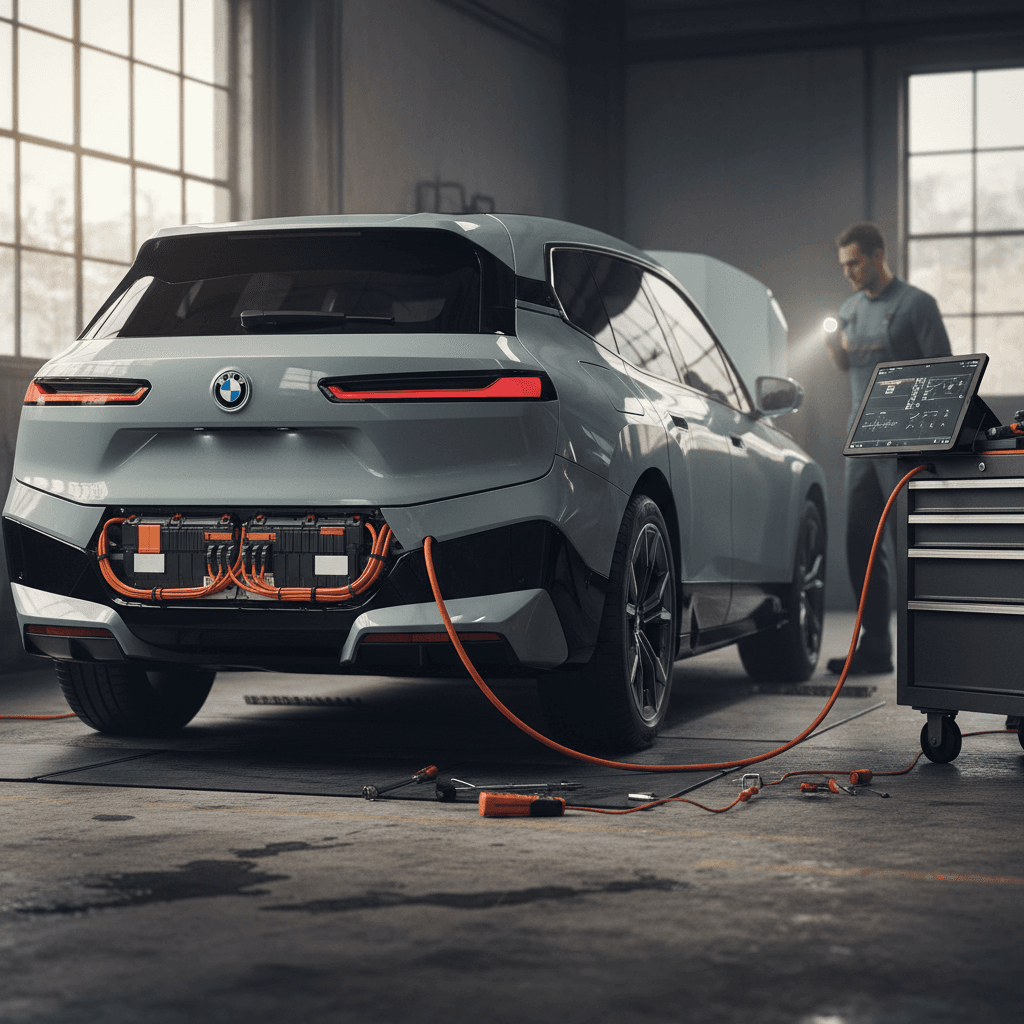
If you’re looking for a clear, up‑to‑date BMW i4 recalls list, you’ve probably noticed two problems: official recall notices are written for lawyers, and they’re scattered across multiple campaigns for the same car. This guide pulls the major BMW i4 recalls into one place, explains them in plain English, and shows you how to check any i4, especially a used one, in a few minutes.
Quick context
BMW i4 recalls overview: what’s on the list?
The BMW i4 launched in the U.S. for the 2022 model year, and like most brand‑new EVs, it’s had a handful of recalls as real‑world miles pile up. Broadly, the BMW i4 recalls list falls into four buckets:
- High‑voltage battery manufacturing issues that could lead to power loss or, in rare cases, fire risk
- Battery management and drive‑unit software glitches that can shut down the high‑voltage system
- Structural problems on a limited batch of 2024 cars
- Miscellaneous EV‑specific items (like coolant valve or charging electronics) that show up as campaign codes on your service history
The recalls are targeted by build date, trim, and sometimes even individual battery batch, so most i4s are not affected by every campaign. That’s why checking by VIN is essential, especially if you’re buying used.
BMW i4 recall landscape at a glance
Don’t assume a clean Carfax means no recalls
High-voltage battery recalls on the BMW i4
When people ask about BMW i4 recalls, they’re usually thinking about the battery. There have been several campaigns tied to the high‑voltage pack, some large, some tiny. Here are the big ones you should know about.
Key BMW i4 battery-related recalls
Exact eligibility depends on build date and battery module batch, always confirm by VIN.
High-voltage battery misdiagnosis (power loss risk)
This early recall covered roughly 14,000 2022–2023 BMW i4, iX, and i7 vehicles. A bug in the battery management electronics could misdiagnose internal faults and reset the control unit. That reset could briefly cut high‑voltage power and cause a loss of drive power.
Fix: Dealers reprogram the battery control module with updated software. No parts replacement is needed.
Stop‑drive battery fire risk (small population)
Separately, BMW recalled a much smaller batch of early 2022–2023 i4s (and iXs) due to manufacturing defects inside specific battery cell modules from one supplier. Because those modules could short internally, BMW issued a cautious Stop‑Drive order for affected VINs until packs were inspected and replaced.
Fix: Dealers replace the high‑voltage battery modules, or in some cases the entire pack, free of charge.
More recently, BMW has issued highly targeted battery recalls tied to very small build windows and cell batches.
Recent BMW i4 battery manufacturing recalls
These campaigns focus on specific production windows and battery module batches. Exact inclusion is VIN‑specific.
| Approx. year announced | Models involved | What can happen | Typical remedy |
|---|---|---|---|
| 2023 | 2022–2023 i4 eDrive40 & M50 (select builds) | Internal battery defect could cause thermal event (fire risk) or sudden power loss | Replace affected high‑voltage battery modules or pack |
| 2024 | 2024 i4 xDrive40, i4 M50, some i5 eDrive40 | Insufficient welds in a battery module could cause overheating | Replace the suspect high‑voltage battery module |
| 2025 | 2022–2023 i4 (very small group of VINs) | Excessive force during cell compression may crack the module frame over time, shutting down the high‑voltage system | Replace affected high‑voltage battery cell modules |
Dates and descriptions are simplified for shoppers, refer to BMW or NHTSA for the formal wording.
Take battery stop‑drive notices seriously
Drive system & software recalls
Not every EV recall involves a wrench. Several major BMW i4 campaigns are essentially software fixes that keep the drive system from shutting itself down unnecessarily.
Drive motor software shutdown
One of the newer campaigns affects a broad spread of 2022–2025 BMW i4s (along with some iX, i7, and i5 models). The electric drive motor software can, under certain conditions, shut down the high‑voltage system as a self‑protection move. In the worst case, that means loss of propulsion while driving.
Fix: BMW pushes an over‑the‑air (OTA) software update in many cases, or dealers install it during a service visit. There’s no parts replacement and the repair is relatively quick.
Battery management & charging behavior
Separate from formal recalls, BMW has issued multiple software updates that smooth DC fast‑charging behavior, address Level 2 charging bugs, and improve thermal management. Some of these updates show up as campaign codes in your service history even if they’re not "safety recalls" in the legal sense.
Takeaway: It’s worth asking a dealer to confirm your i4’s software is current whenever you’re in for service, especially if you’re seeing charging quirks or drivability hiccups.
Pro tip on OTA updates
Structural and safety-related recalls
A smaller slice of the BMW i4 recalls list has nothing to do with electrons. These campaigns are about good old‑fashioned metal and crash safety.
Non‑battery BMW i4 recalls to know about
Exact coverage varies by trim, 2024 cars are the most commonly affected here.
Left‑side longitudinal beam cracking
A batch of 2024 BMW i4 eDrive40, xDrive40, and M50 vehicles may have a left‑side longitudinal frame member that can crack. That’s the kind of structural piece you want rock‑solid in a crash.
Fix: Dealers inspect the affected area and replace the beam if necessary, restoring full structural integrity.
Coolant valve & high‑voltage component campaigns
Owners have reported recall notices for items like a coolant changeover valve, charging control unit (CCU), or other support hardware for the high‑voltage system. These are generally precautionary campaigns to prevent overheating or leaks around sensitive electronics.
Fix: Replace the valve or component and, if needed, update software. These are typically one‑day jobs.
BMW i4 recalls by model year (U.S.)
Here’s how the major BMW i4 recalls list shakes out by model year. This is a shopper’s snapshot, not a legal document, always confirm any specific car by VIN.
BMW i4 recall highlights by model year
Use this to sense-check a car you’re considering. An individual VIN may be affected by some, all, or none of these campaigns.
| Model year | Typical trims | Notable recall themes |
|---|---|---|
| 2022 | eDrive40, M50 | Early high‑voltage battery recalls (including small stop‑drive group), battery electronics power‑loss campaign, later drive‑motor software update. |
| 2023 | eDrive40, M50 | Continuation of battery electronics recall, small‑batch battery module campaigns by build date, drive‑motor software update. |
| 2024 | eDrive40, xDrive40, M50 | New xDrive variants join; structural longitudinal‑beam recall on some cars, battery module weld‑seam recall on xDrive40/M50, drive‑motor software update. |
| 2025 | eDrive35 and later trims (where offered) | Primarily software/drive‑system updates so far; any battery‑module campaigns will target very specific builds. Expect ongoing OTA improvements rather than big hardware recalls. |
Summary only, official BMW or NHTSA tools will show the exact status for a particular vehicle.
How to read this chart
How to check if a specific BMW i4 has any recalls
Whether you already own an i4 or you’re eyeing one on a used‑car site, checking recall status is straightforward and free. All you need is the 17‑character VIN (Vehicle Identification Number), usually visible at the base of the windshield or on the door jamb.
Step‑by‑step: check a BMW i4 for open recalls
1. Grab the VIN
Write down the 17‑character VIN from the lower windshield, driver’s door jamb, registration, or digital listing. Double‑check every character, one typo can show you the wrong car.
2. Run it through an official recall lookup
Use BMW’s recall page or the U.S. government’s NHTSA recall lookup to see all open safety recalls tied to that VIN. These tools are free and don’t require ownership.
3. Confirm recall status in the My BMW app
If you already own the car, the My BMW app will usually display active recalls. Just remember app status can lag; the VIN lookup is still the authority.
4. Call a BMW service advisor
Ask a BMW dealer to pull the VIN’s "campaign" history. They can see completed recalls, outstanding campaigns, and any service actions BMW pays for, even if they’re not legally defined as recalls.
5. Ask for paperwork on completed recalls
If you’re shopping used, request service invoices or a printout of the campaign history. You want to see dates, mileage, and which recall codes were performed.
6. Schedule repairs if anything is open
If you find an open recall on a car you own, or are about to buy, schedule the fix with a BMW dealer. The work should be free, regardless of ownership history.
How Recharged handles recalls on used BMW i4s
Ready to find your next EV?
Browse VehiclesWhat BMW i4 recalls mean if you’re buying used
Recalls can look scary in a listing, especially when they involve "high‑voltage batteries" and "loss of propulsion." But from a used‑car shopper’s perspective, they can actually work in your favor, if you approach them the right way.
When recalls are a red flag
- Stop‑drive battery recalls not yet fixed. If BMW has told owners not to drive or not to park indoors until repairs are complete, the car should not be sold or delivered until the remedy is done.
- Structural repairs with no documentation. For campaigns involving frame rails or crash structures, you want clear paperwork that the inspection or replacement happened.
- Multiple missed service appointments. If the prior owner ignored recall notices for years, that’s a clue about how they treated other maintenance.
When recalls are actually a plus
- Battery module replaced under recall. A fresh high‑voltage module (or entire pack) installed by BMW is a long‑term win for you as the next owner.
- Latest software on board. Drive‑unit and charging updates often improve efficiency, refinement, and charging reliability beyond the original spec.
- Documented dealer history. A car that’s been in regularly for campaigns and services usually has better overall care.
Use recalls in price negotiations
After the fix: smart owner tips for recalled i4s
Once a recall repair is done, most owners simply carry on driving. That’s fine, but a little extra diligence helps you get the most from your i4 and its shiny new parts or software.
- Keep your repair paperwork in a safe place or scanned to the cloud. It’s useful for future buyers and for your own peace of mind.
- Pay attention to how the car behaves after a major battery or software campaign, charging speed, range estimates, and drive feel can all change slightly.
- If your My BMW app keeps showing a recall banner long after the dealer fix, ask the service department to resync the vehicle’s status in BMW’s backend systems.
- Use recall visits as a free opportunity to ask about other campaign updates or technical service bulletins that can quietly improve the car.
- If you’re relying on public fast‑charging, verify that any DC‑charging related campaigns and software updates are complete; they can have a big impact on road‑trip usability.
Watch for lingering software gremlins
BMW i4 recall FAQ
Frequently asked questions about BMW i4 recalls
Bottom line: are BMW i4 recalls a dealbreaker?
The BMW i4 is one of the more polished first‑generation EVs from a legacy automaker, and its recall history looks a lot like that of other early electric models: some conservative high‑voltage battery campaigns, a few structural outliers, and a steady drumbeat of software updates. None of that has to be a dealbreaker, especially if you use recalls as a lens into how carefully a specific car has been maintained.
If you’re already an owner, treat recall notices as free insurance and get them handled promptly. If you’re shopping used, focus on documentation, completion of any stop‑drive campaigns, and current software rather than running from any car that’s ever seen a recall. And if you’d rather not do all the legwork yourself, a marketplace like Recharged can help you compare used BMW i4s with verified battery health, recall status, and expert guidance baked in from the first click.