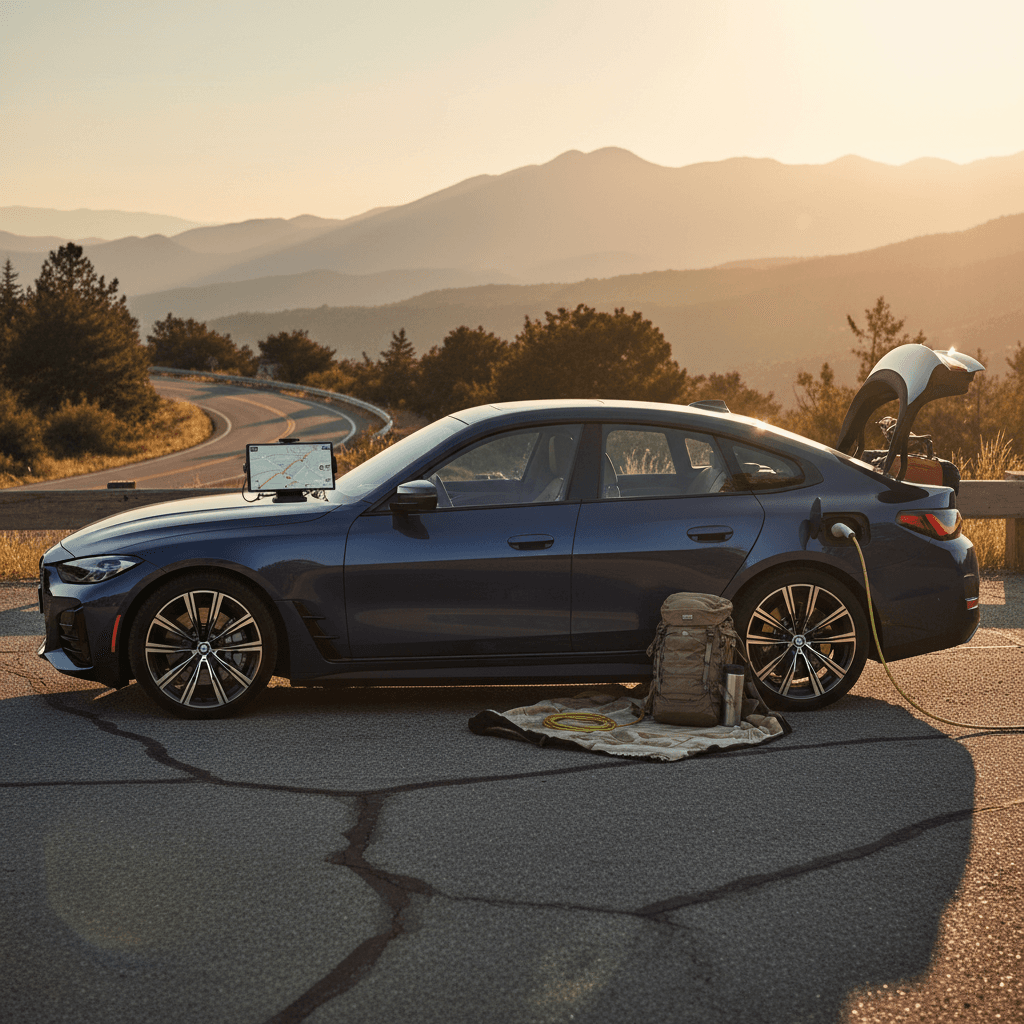
If you’re eyeing a BMW i4 for long-distance driving, you’ve probably seen a mix of glowing range claims and horror stories about road-trip anxiety. The truth is in between: the i4 can be an excellent road-trip car if you understand its real-world range, how to plan charging, and how your driving style affects efficiency. This guide walks you through practical BMW i4 long-distance driving tips so you can hit the highway with confidence instead of guesswork.
Big picture
Can you really road-trip a BMW i4?
Yes, drivers routinely use the BMW i4 for 200–400 mile days and beyond. In long-term testing, a 2024 i4 xDrive40 managed about 210 miles at a steady 75 mph before needing a charge, and owners commonly report 260–300 miles at more moderate speeds in good weather. On an actual road trip, you won’t run the battery from 100% to 0%; instead you’ll cycle between roughly 10–80% and stop every 120–180 miles for fast charging. Plan around that pattern and the i4 becomes straightforward to live with on long drives.
Good rule of thumb
Know your BMW i4’s real-world highway range
Before you worry about charging apps and hotel plugs, you need a realistic sense of how far your specific i4 will go at typical U.S. highway speeds. Battery size and motor layout matter, but so do wheels, temperature, and your right foot.
Typical real-world BMW i4 highway range (starting ~100%, down to ~10%)
Approximate highway range at 70–75 mph in mild weather, based on road tests and owner reports. Your results will vary with speed, temperature, wheels, and terrain.
| Trim | Usable battery (approx.) | Typical highway range 70–75 mph | Notes |
|---|---|---|---|
| eDrive35 | ~67 kWh | ~220–250 miles | Best for shorter legs, efficient in city/mixed driving |
| eDrive40 / xDrive40 | ~81 kWh | ~240–290 miles | Sweet spot for most long-distance drivers |
| M50 | ~81 kWh | ~210–250 miles | Strong performance; range drops faster at high speeds |
Use this as a planning baseline, not a promise. Always leave a buffer.
Be careful with EPA stickers
The easiest way to calibrate your own car is to reset one of the trip meters before a long freeway stretch, drive at your normal speed for at least 50–100 miles, and note your consumption in mi/kWh. Multiply that by usable battery capacity and you’ll have a realistic personal range estimate for planning future trips.
Plan a smart charging strategy, not just maximum range
Most new i4 trims support up to 200 kW DC fast charging under ideal conditions. In practice, you’ll see your best time savings by hopping from about 10% to 60–80% rather than waiting for a full charge. Below 10% and above ~80%, charging speeds slow down substantially.
Core pieces of a BMW i4 charging plan
Think in legs and charge windows, not "one big fill-up"
1. Map legs, not just destination
Break your route into 120–180 mile segments based on your trim and conditions. On very fast or cold drives, shrink the legs to 100–140 miles for comfort.
2. Prioritize reliable fast chargers
Filter for 150 kW+ stations where possible. A solid 150–350 kW site can cut a stop from 45 minutes to 20–30 minutes compared with older 50 kW units.
3. Time stops around meals
Plan a longer charge during lunch or dinner and shorter top‑ups for coffee and bathroom breaks. That way, charging feels like normal breaks, not wasted time.
Aim for charger “clusters”
Don’t rely on a single app or network. Use a combination of your in-car BMW navigation, PlugShare/ABRP/Chargeway, and the apps for any networks you expect to frequent. Check recent user check-ins to ensure a site is working before committing to it as your critical stop.
Speed, driving modes, and other efficiency levers
The i4 is quiet and composed at 80+ mph, but aerodynamic drag rises quickly with speed. On many trims, jumping from 70 to 80 mph can shave 15–20% off your effective range. Over a 600-mile day, that can mean an extra charging stop.
How speed affects BMW i4 road-trip range (ballpark)
Use your i4’s drive modes to your advantage. Eco Pro softens throttle response, reduces climate load, and can easily add a noticeable buffer to your predicted range on long stints. Comfort is a good default for mixed driving; Sport is best saved for short bursts where you can enjoy the power without worrying about the next charger.
- On long, flat highway stretches, stay in Eco Pro or Comfort and use adaptive cruise to hold a steady speed.
- Avoid hard acceleration up to passing speed; roll into the power instead of matting the pedal.
- Use B mode or higher regen in traffic and rolling hills, but on steady highway cruise, coasting smoothly in D can sometimes be more efficient than aggressive regen.
- Set the climate to a reasonable temperature (e.g., 68–72°F) and avoid constant big swings from max heat to full A/C.
Watch climate use in extreme temps
Using the tech: BMW i4 road-trip features that actually help
The i4 quietly gives you a lot of tools for long-distance driving, you just need to know where to look. Before a big trip, spend a few minutes setting up these features so you aren’t learning them at 75 mph.
Navigation with charging stops
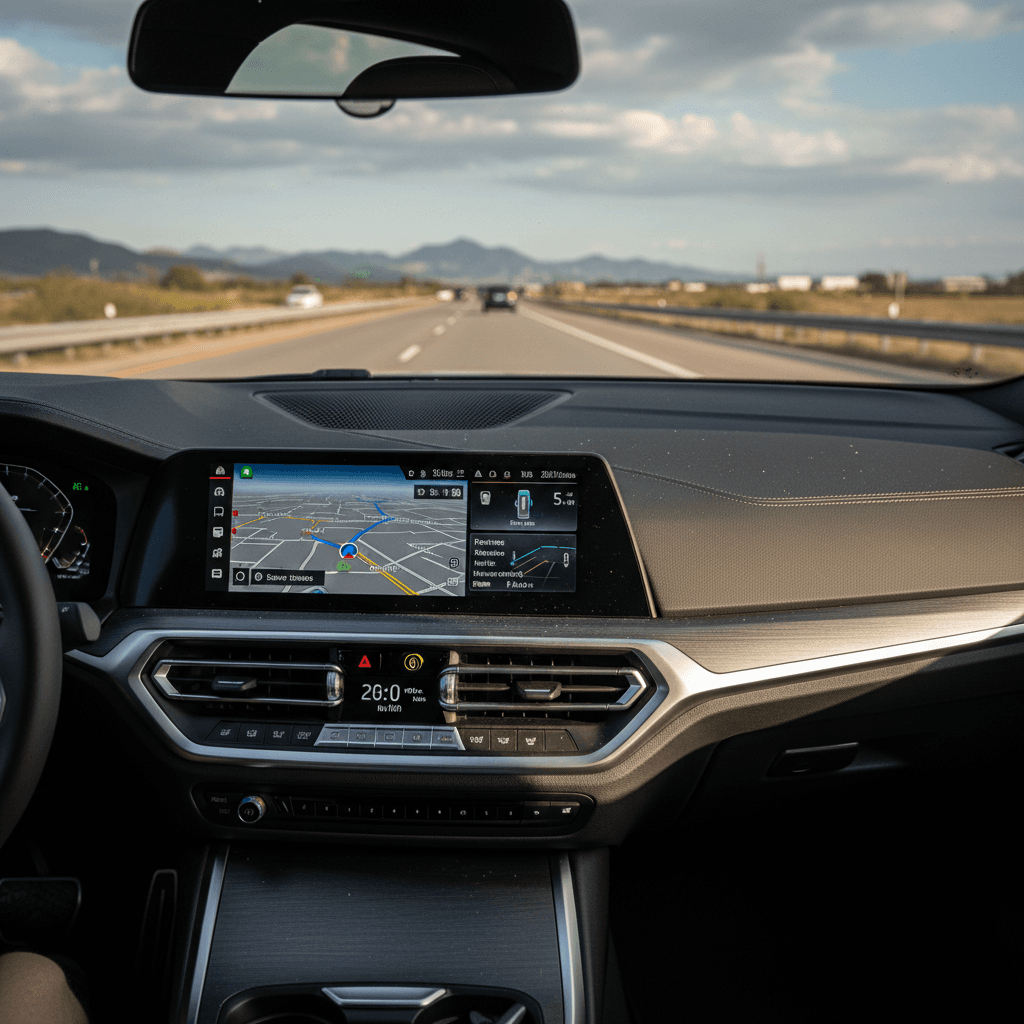
Use the built-in BMW navigation to route directly to DC fast chargers along your path. Many recent software versions consider elevation, traffic, and remaining state of charge when suggesting stops, and they can precondition the battery when you route to certain high-speed chargers, improving charging speeds.
Live energy and range displays
Keep an eye on your average consumption (mi/kWh), predicted arrival state of charge, and the live energy flow graph. If your remaining range or arrival percentage is slipping faster than expected, ease off the speed, switch to Eco Pro, or plan an earlier stop before range anxiety sets in.
- Save your favorite fast chargers as destinations or favorites before you leave.
- Make sure your main charging apps are logged in with payment set up so you can plug in and start charging quickly.
- If your car supports it, enable battery preconditioning for DC fast charging so the pack is warm when you arrive at a high-power site.
- Use the MyBMW app to check charging status during meal stops so you don’t babysit the car in the parking lot.
Pre‑trip tech rehearsal
Comfort, cargo, and passenger planning for long days
One underrated strength of the BMW i4 on long trips is that it feels familiar: seating position, driving dynamics, and noise levels are very 3/4 Series–like. But the combination of a heavy EV platform and lots of cargo or passengers can nudge your efficiency down, so it’s worth packing with some intention.
Make your BMW i4 a pleasant long-distance companion
Small adjustments add up over 300+ mile days
Seat & cabin setup
Dial in lumbar support and thigh extension before you leave. For multi‑day trips, memorize your seat and steering wheel positions in memory so you can quickly return to a comfortable baseline after swapping drivers.
Smart cargo loading
Avoid roof boxes and racks if possible, they are range killers at highway speeds. Keep heavier items low and centered in the hatch area, and pack light enough that you aren’t burying your charging cables and emergency kit.
Passengers & breaks
With a full car, plan slightly shorter legs and more frequent breaks. More body heat and more frequent door openings can nudge climate use higher, and everyone will be happier with a 20-minute coffee/charger stop every 2–2.5 hours.
Think in "stints," not tanks
Weather, elevation, and other range wildcards
Even if you’ve memorized the specs, real-world range will move around on you. Cold weather, big elevation changes, strong headwinds, and wet pavement all add drag or force the battery to work harder.
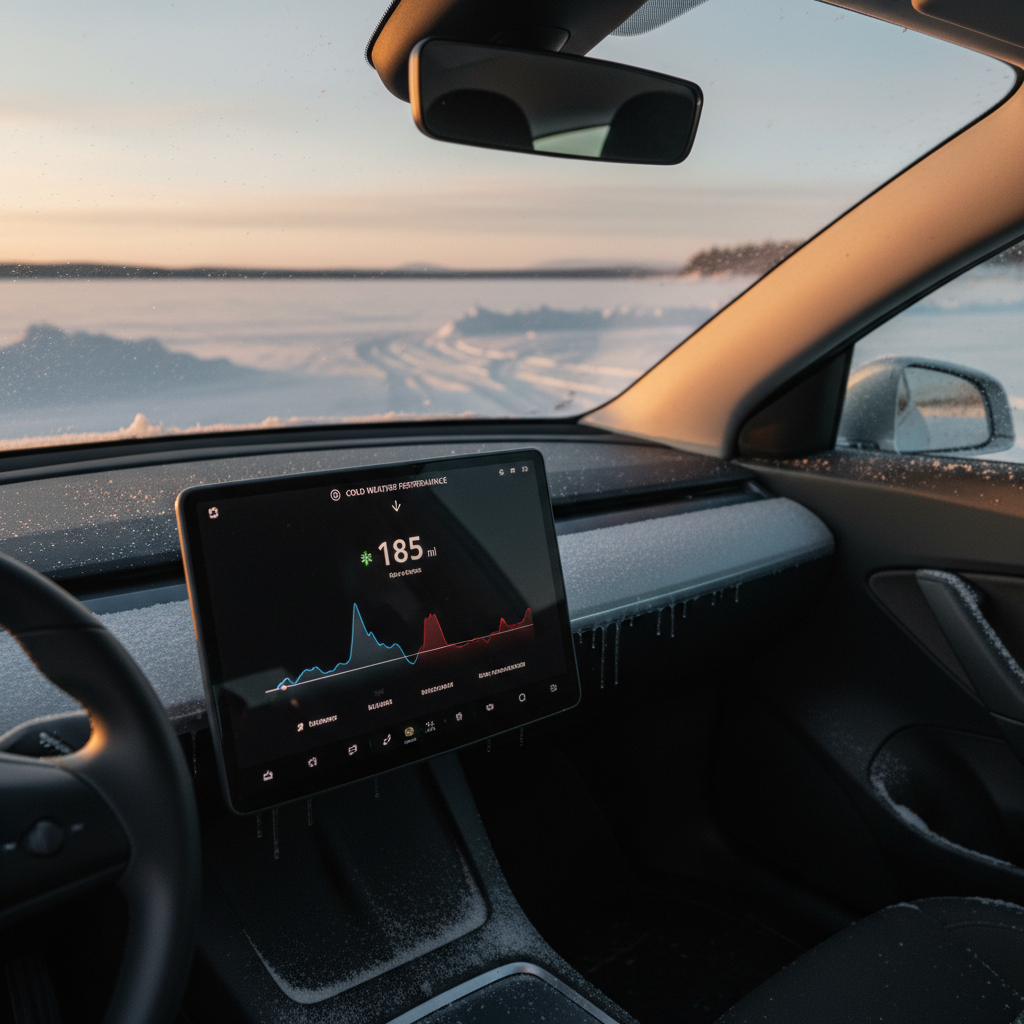
- Cold weather: Below freezing, expect 15–30% less range until the battery and cabin are fully warmed. Precondition while plugged in and plan shorter legs for the first few hours.
- Heat: High A/C use plus hot asphalt adds rolling resistance, shaving a few percentage points off range. Parking in the shade and using the i4’s pre‑cooling features help.
- Elevation: Long climbs can temporarily spike your consumption. You’ll gain some of that back on the descent through regen, but don’t count on a perfect 1:1 payback.
- Wind and rain: Strong headwinds and heavy rain increase aerodynamic and rolling drag. If your arrival SOC is dropping fast, back off the speed and consider an earlier backup charger.
Mountain passes need a buffer
Long-distance driving and your i4’s battery health
Fast charging and highway use are part of normal EV life, and the BMW i4’s thermal management is designed for it. Occasional DC fast charging from 10–80% on road trips is not something to lose sleep over. The biggest long-term battery stressors are chronic over‑ or under‑charging and extreme heat, not a few road‑trip weekends each year.
- For daily use, keep your regular charge limit around 70–80%, raising it to 90–100% only when you actually need the extra range for a trip.
- Try not to leave the car sitting for days at 100% or near 0%; swing through the middle of the pack (20–80%) as much as possible.
- On summer road trips, park in the shade when you can and avoid stacking multiple full 10–90% fast-charge sessions back-to-back unless necessary.
- If you road-trip often in very hot or very cold climates, an occasional battery-health check can give peace of mind, on Recharged, every used i4 listing includes a Recharged Score Report with a quantified battery-health snapshot so you know what you’re starting with.
Good news for road-trippers
Sample BMW i4 long-distance driving plan
To ground all this in something concrete, here’s how you might approach a roughly 600‑mile day in an i4 eDrive40 in mild weather, starting near 100% at home. Adjust distances if you drive an eDrive35 or M50, or if your speeds are significantly higher or lower.
Example 600-mile BMW i4 eDrive40 road-trip day
Assumes mild temperatures, mostly 65–75 mph traffic, and efficient driving in Eco Pro/Comfort.
| Leg | Distance | Start SOC | Arrival SOC (approx.) | Stop length & charge | Notes |
|---|---|---|---|---|---|
| 1: Home → Stop 1 | 150 miles | 100% | ~45% | 10–20 min (to ~75%) | Quick coffee + bathroom break, short fast charge. |
| 2: Stop 1 → Lunch | 150 miles | ~75% | ~25% | 35–45 min (to ~80%) | Longer stop for lunch; main charging session of the day. |
| 3: Lunch → Stop 3 | 140 miles | ~80% | ~30% | 10–20 min (to ~70%) | Stretch and top up while grabbing a drink. |
| 4: Stop 3 → Destination | 160 miles | ~70% | ~15–20% | Overnight L2 | Plug into Level 2 at destination or nearby hotel to be back near 100% by morning. |
Distances and charge levels are illustrative, not promises. Always build in a safety buffer.
Build a Plan A and Plan B
BMW i4 long-distance driving checklist
Pre‑trip BMW i4 long-distance checklist
1. Get a realistic range number for your trim
Do at least one 50–100 mile highway test at your usual speed and note mi/kWh. Multiply by your usable battery size to get a practical planning number for your car.
2. Update maps, apps, and payment
Confirm your i4’s navigation data is current and log into major charging apps with valid payment methods so you aren’t creating accounts in a parking lot.
3. Map primary and backup chargers
Break the route into 120–180 mile legs, then pick a primary DC fast charger plus at least one backup for each leg. Favor sites with multiple stalls and amenities.
4. Set sensible charge limits
For most long days, plan to bounce between ~10–70/80% instead of sitting for a 10–100% fill. Set your target in the car or simply unplug once you’ve reached your planned SOC.
5. Precondition cabin and battery
While plugged in at home or a hotel, schedule departure so the cabin is at temperature and, if supported on your route, the battery is preconditioned for your first fast charge.
6. Pack with range in mind
Avoid roof boxes or unused racks, keep heavy cargo low and centered, and store charging cables where they’re easy to reach without unloading half the hatch.
BMW i4 long-distance driving FAQ
Frequently asked questions about BMW i4 long-distance driving
When a used BMW i4 is a great long-distance companion
If you like the idea of a BMW i4 but don’t want to absorb new‑car depreciation, a well‑cared‑for used example can deliver the same long-distance comfort and charging experience at a lower monthly cost. The key is transparency around battery health, charging history, and prior ownership, not just a glossy range number on a spec sheet.
That’s where Recharged leans in. Every i4 listed on the marketplace includes a Recharged Score Report with verified battery diagnostics, pricing tied to real market data, and expert EV guidance from test drive to delivery. If you’re trading out of a gas 3 Series or another EV, Recharged can also streamline your trade‑in or sale and help you get pre‑qualified for financing with no hit to your credit.
Long-distance driving in a BMW i4 isn’t about chasing a theoretical maximum range; it’s about building an honest baseline for your car, planning sensible charging legs, and using the car’s tech to reduce surprises. Do that, and the i4 becomes what it was designed to be: a genuinely comfortable, quiet, and capable Grand Tourer that just happens to run on electrons. With the right preparation, and, if you’re shopping used, a clear picture of battery health, you can treat interstate trips in your i4 as normal driving days with a few well‑timed coffee stops rather than a science experiment.