If you’re shopping for a BMW i4, you’re probably torn between its silky BMW road manners and the nagging fear of buying the wrong used EV. This BMW i4 buying checklist walks you through trims, battery health, charging, options, warranties and pricing so you can separate the great cars from the meh ones, especially on the used market.
Who this checklist is for
Why a BMW i4 buying checklist matters
The BMW i4 is, fundamentally, a 4‑Series Gran Coupé that went to battery finishing school. It’s quiet, quick, handsome, and complicated. Between multiple battery sizes, fast‑charging quirks, over‑the‑air software, and a luxury‑car option list as long as the EPA charging curve, it’s easy to miss something expensive. A structured BMW i4 buying checklist helps you ask the right questions in the 30 rushed minutes you spend on a test drive or video walk‑through.
BMW i4 fast facts (use these as baselines)
Treat these numbers as guardrails, not gospel. What you’re trying to determine when you inspect a specific i4 is: does this car still behave roughly like a healthy example, or is it the one unlucky outlier that’s been DC‑fast‑charged to within an inch of its lithium‑ion life?
BMW i4 trims, batteries and key specs
Before you get into the weeds on an individual car, know which i4 you’re actually looking at. BMW’s badges sound similar but drive quite differently, and the battery pack hiding under the floor isn’t the same on every trim.
BMW i4 trims and what they mean
Use this when comparing listings so you know what battery, drivetrain and performance to expect.
| Trim | Drivetrain | Usable battery* | Power | 0–60 mph (approx.) | EPA range ballpark |
|---|---|---|---|---|---|
| eDrive35 | RWD | ~68–70 kWh | ~280 hp | ~6.0 s | ~245–260 mi |
| eDrive40 | RWD | ~81 kWh | ~335 hp | ~5.5–5.7 s | ~280–300 mi |
| xDrive40 | AWD | ~81 kWh | ~390+ hp | ~5.1 s | ~260–280 mi |
| M50 xDrive | AWD | ~81 kWh | ~536 hp | ~3.7–3.9 s | ~235–270 mi |
Trim and battery basics for recent BMW i4 model years (U.S. spec). Always confirm exact specs for the model year you’re shopping.
Trim‑shopping shortcut
When you’re scanning listings, make the trim level your first filter. Then note battery size, wheel size, and whether the car has key packages (Premium, Driver Assistance, parking, etc.). Those matter more to day‑to‑day enjoyment than one extra color of ambient lighting.
Battery health: what to check on a used BMW i4
In an EV, the battery pack is the car. The i4’s pack is generally robust and backed by an 8‑year/100,000‑mile high‑voltage warranty, but how the previous owner charged and stored the car can still leave fingerprints. This part of the BMW i4 buying checklist is non‑negotiable, especially if you’re buying used from a non‑EV‑specialist dealer.
BMW i4 battery‑health checklist
1. Confirm battery warranty status
Ask for the in‑service date from the original sale. BMW’s high‑voltage warranty typically runs 8 years/100,000 miles from that date. A 2022 car sold in March 2022 will have coverage through roughly March 2030, assuming mileage limits aren’t exceeded.
2. Pull a battery health report if possible
Some BMW dealers can generate a high‑voltage battery test report. On Recharged vehicles, the <strong>Recharged Score Report</strong> includes a battery health diagnostic so you see measurable degradation instead of guessing.
3. Compare indicated range to spec
Charge the car to 90–100% and check the predicted range in the cluster. Compare it to the original EPA figure for that trim and wheel size. Being 5–10% under is normal; a much bigger gap may point to heavy DC‑fast‑charging or lots of high‑speed use.
4. Ask about charging habits
Politely ask the seller how they typically charged the car. Ideal answer: mostly Level 2 at home, kept around 20–80%, DC fast charging only on road trips. Red flag answer: “I fast‑charged it to 100% a few times a week because it was convenient.”
5. Look for warning lights or messages
On your test drive, watch for any drivetrain warnings, reduced‑power messages, or charging faults. Even intermittent faults stored in the memory can show up when the car is scanned at a BMW dealer or EV‑savvy shop.
6. Inspect underbody and charge port area
You won’t be dropping the battery pack in a parking lot, but do look for underbody damage, scraped jacking points, or signs of collision repair near the rear quarter where the charge port lives.
Don’t skip the battery report
Charging capability: home and DC fast charging
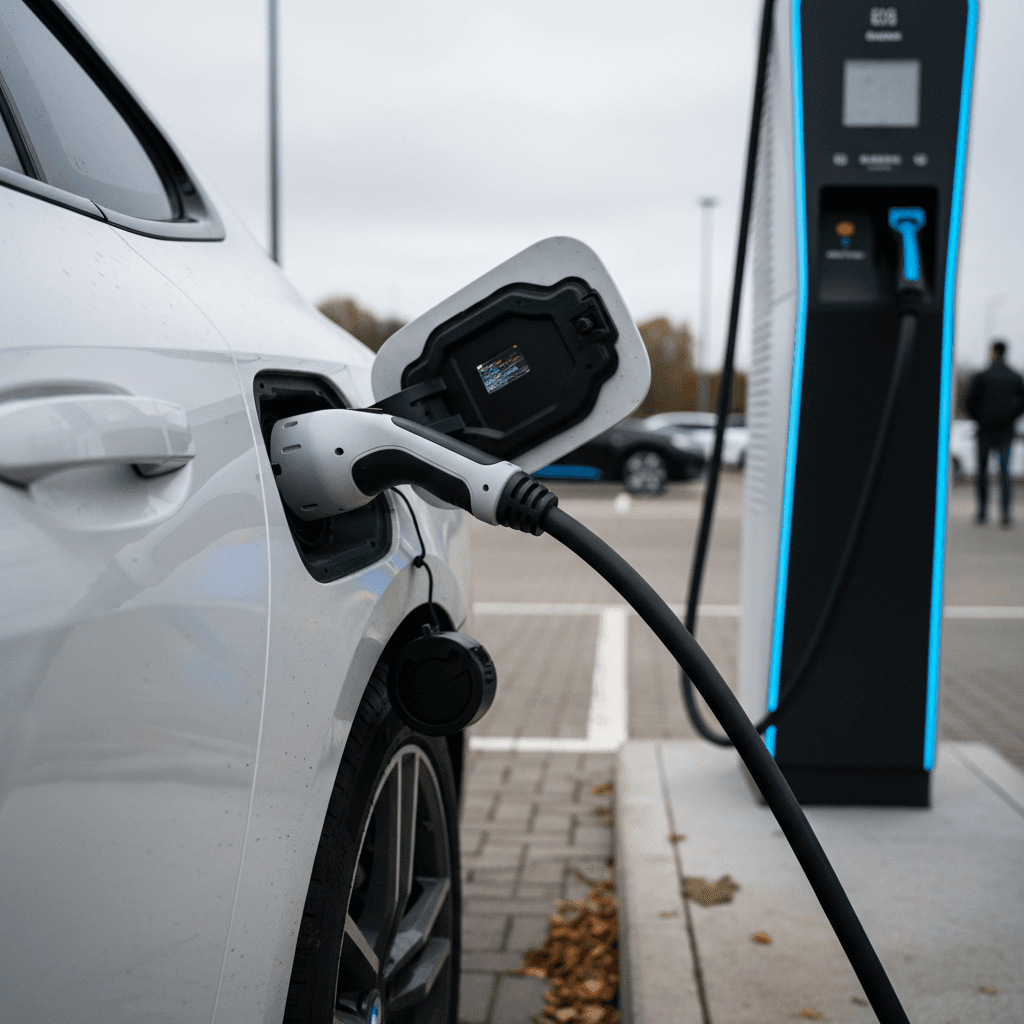
The i4 is a pleasure to live with if you match the car’s charging capability to your lifestyle. That means understanding how it charges at home and how quickly it can refill on a road trip.
BMW i4 charging basics to verify
Use this when asking the seller or testing the car at a charger.
AC home charging
The i4 supports up to 11 kW Level 2 AC charging. On a 40–48 amp home charger, expect a full charge in roughly 8–9 hours from low state of charge.
Bring or borrow a portable Level 2 unit and confirm the car charges at a 240 V outlet without fault messages.
DC fast charging
Larger‑battery trims (eDrive40, xDrive40, M50) can briefly peak around 200 kW on a 150–350 kW DC fast charger, then taper down through the 10–80% range.
You should see well over 100 kW around 20–40% on a healthy car with a warm battery and a good charger.
Real‑world fast‑charge times
Assuming a healthy pack and decent charger, plan roughly 30 minutes from 10–80% on the big‑battery trims and a bit less on the smaller eDrive35 pack.
If you’re stuck at 50–70 kW on a warm day with low state of charge and preconditioning, either the charger is weak or the car is limiting charging.
Road‑trip charging sanity check
Range, wheels and weather: real‑world expectations
BMW’s official i4 range numbers live in a laboratory. Your life does not. Before you buy, sanity‑check whether the trim, wheels and climate you’re dealing with actually line up with your commute and road‑trip plans.
Range reality check
- eDrive35: Think of this as a 200–220 mile comfortable daily range buffer in mixed driving, more in mild weather, less in winter.
- eDrive40/xDrive40: Real‑world 230–260 miles before you get antsy, assuming you don’t run it to 0% or sit at 95% every night.
- M50: The power tax is real. Figure on 200–230 miles in normal mixed driving, less if you sample launch control with enthusiasm.
Wheels, climate and driving style
- Bigger wheels, less range: 19" and especially 20" wheels look fantastic and cost you range and ride comfort.
- Cold weather hurts: In a real winter, 25–35% range loss isn’t unusual until the pack is fully warmed.
- Speed kills range: Cruising at 80 mph vs 65 mph can feel like driving with a slow leak in the battery icon.
Winter shoppers, take note
Driving experience: test‑drive checklist
It’s still a BMW. The mechanical feel should be tight, quiet and precise, even as the car sneaks around on electrons. Use this part of the BMW i4 buying checklist to listen for the wrong kind of drama.
BMW i4 test‑drive checklist
1. Cabin noise and ride
On a smooth road at 40–60 mph, the i4 should feel solid and quiet. Listen for wind whistles around frameless doors, rattles from the hatch, and thumps that could indicate worn suspension or cheap replacement tires.
2. Steering and brakes
Steering should be accurate and linear, not twitchy or vague on‑center. Regenerative braking should be smooth; test both one‑pedal driving and blended brake modes to check for shudder, noise, or an inconsistent pedal.
3. Power delivery
Even the eDrive35 pulls harder than most ICE sedans. The car should accelerate smoothly with no hesitations or sudden loss of power. On M50s, check that full‑throttle pulls don’t trigger fault messages or limp‑home behavior.
4. Suspension and alignment
Drive over imperfect pavement and through a sweeping highway curve. The car should track straight with no vibration through the wheel at 70+ mph and no pulling under braking. Excessive inner tire wear can hint at poor alignments or curb strikes.
5. Parking and low‑speed behavior
Test low‑speed creep, reversing, and tight parking maneuvers. Check for parking sensors and camera views functioning correctly, especially critical in a low‑roofed fastback with limited rear visibility.
6. Charging test if possible
If the seller allows it, plug into a nearby Level 2 or DC fast charger during the test drive to verify handshake, charging rate, and that you don’t get random charging‑system warnings.
Software, tech and driver-assistance
The i4’s software stack is where the modern BMW ownership experience either delights you or grinds your teeth down. iDrive versions, app connectivity and driver‑assist packages vary a lot by model year and options, so don’t assume the car in front of you matches the brochure you saw online.
Software and tech checks
Take 10 minutes in the driveway to run through these.
BMW app & remote features
Pair your phone with the BMW app if the seller allows. Confirm you can see charge status, lock/unlock, and pre‑conditioning. If nothing connects or the car shows as offline, ask why.
iDrive version & updates
Note which iDrive version the car runs and whether software updates have been applied. A car stuck on very old software may have skipped important bug fixes and feature updates.
Driver‑assist & parking tech
Test adaptive cruise, lane‑keeping assist, blind‑spot monitoring, surround‑view cameras, and automated parking if equipped. Glitchy radar or camera systems aren’t cheap fixes out of warranty.
Why Recharged i4s feel easier to buy
Ready to find your next EV?
Browse VehiclesWarranties, service history and recalls
Even though EVs have fewer moving parts than their gasoline cousins, the parts they do have wear the same old‑fashioned way: bushings, brakes, tires, door hardware, infotainment screens. A clean paper trail still matters.
Paperwork checklist for a BMW i4
1. High‑voltage battery & drivetrain warranty
Confirm remaining time and mileage on the battery and electric‑drivetrain warranties. Ask the seller for a printout from BMW or, in the U.S., check with a BMW dealer using the VIN.
2. Scheduled maintenance and tire history
Review invoices for brake fluid changes, cabin filters and tire replacements. Uneven tire wear and repeated alignment work may hint at pothole damage or aggressive driving.
3. Collision and body repairs
Look for any structural repairs, especially to the rear floor where the pack mounts or the right‑rear quarter where the charge port lives. High‑quality cosmetic work is fine; badly repaired structure is not.
4. Open recalls and campaigns
Ask a BMW dealer to check for outstanding recalls or service campaigns on the VIN, and have them performed before you buy if possible.
5. Number of owners and usage pattern
A one‑owner car with consistent mileage and regular service is ideal. Former rentals, rideshare, or fleet cars can still be good buys, but price them accordingly and scrutinize battery health and interior wear.
Pricing, depreciation and financing strategy
The i4 is a luxury BMW and an EV, which means it depreciates like a new smartphone in a bubble economy, and that can work in your favor. Two‑ to four‑year‑old cars often represent the sweet spot between price and remaining warranty, provided the battery checks out.
How to frame BMW i4 pricing
Use this as a mental model; always compare to current local market data.
| Car profile | What you’re looking for | How to think about price |
|---|---|---|
| Nearly‑new (under 15k miles, 1–2 years old) | Still under most of the factory bumper‑to‑bumper and battery warranty; minimal cosmetic wear; full feature set | Will cost significantly more but may qualify for certain used‑EV incentives and cheaper financing. |
| Sweet‑spot used (2–4 years, 20–45k miles) | Major depreciation already happened; plenty of battery warranty left; good maintenance history | Often the best balance of price vs. remaining coverage, where Recharged focuses its inventory. |
| High‑mileage (60k+ miles or 6–7 years old) | Battery and drivetrain warranty close to expiring; interior wear more visible | Needs a clean battery report and sharp pricing to make sense. Budget for out‑of‑pocket repairs down the line. |
Approximate value cues for a BMW i4 in the U.S. used market. Exact prices vary by region, mileage, spec and incentives.
Use fair‑market data, not vibes
If you’re financing, remember that some lenders now treat EVs and especially used EVs a bit differently. Shorter terms and slightly higher rates are common. Consider pre‑qualifying so you know your budget before shopping; Recharged offers no‑obligation, soft‑pull pre‑qualification tailored to used EVs.
BMW i4 pre-purchase checklist (summary)
One‑page BMW i4 buying checklist
✔ Pick the right trim
Decide up front whether you’re shopping eDrive35, eDrive40, xDrive40 or M50 based on range and performance needs. Don’t pay M50 money if you drive like a commute‑mode librarian.
✔ Verify battery health & warranty
Confirm the in‑service date, remaining high‑voltage warranty, and get a battery health assessment (or Recharged Score Report) whenever possible.
✔ Test AC and DC charging
Make sure the car charges properly on Level 2 at 240 V and, ideally, on at least one DC fast‑charging session, with reasonable power levels for state of charge and conditions.
✔ Sanity‑check range vs. your life
Match real‑world range, including winter and highway penalties, to your commute, road‑trip habits, and local charging network quality.
✔ Examine software, tech and driver assists
Confirm the BMW app works, iDrive is up to date, and driver‑assistance systems behave consistently with no random error messages.
✔ Review service history and price
Look for a clean, documented history, check for open recalls, and compare asking price to similar cars. If anything feels off, be willing to walk away, there are many i4s out there.
BMW i4 buying FAQ
Frequently asked questions about buying a BMW i4
The BMW i4 is one of the most convincing arguments yet that going electric doesn’t mean giving up “real car” dynamics. Use this BMW i4 buying checklist to strip the romance away just long enough to make a rational decision: confirm the battery is healthy, the charging behavior makes sense, the tech is stable, and the price reflects reality, not wishful thinking. Get those four right and you end up with what the i4 is at its best, a quiet, fast, deeply competent BMW that just happens to run on electrons instead of premium unleaded.