If you’re driving or shopping for a BMW i4, you’ve probably heard that EV brakes last a long time thanks to regenerative braking. That’s mostly true, but at some point you’ll still face a BMW i4 brake pad replacement cost, whether you own the car now or you’re considering a used i4 coming off lease. Knowing what’s normal can help you avoid overpaying at the dealership and budget realistically for long‑term ownership.
Key takeaway
BMW i4 brake pad replacement cost: quick overview
Typical BMW i4 brake service numbers (U.S., 2025–2026)
Those ranges reflect current U.S. pricing for BMW‑style brake hardware, pads, pad wear sensors, and sometimes rotors, plus 1.5–2.5 hours of labor per axle at 2025–2026 labor rates. Luxury‑brand parts and labor are simply more expensive than mainstream cars, but the good news is that the i4’s pads usually last far longer than a comparable 3 Series.
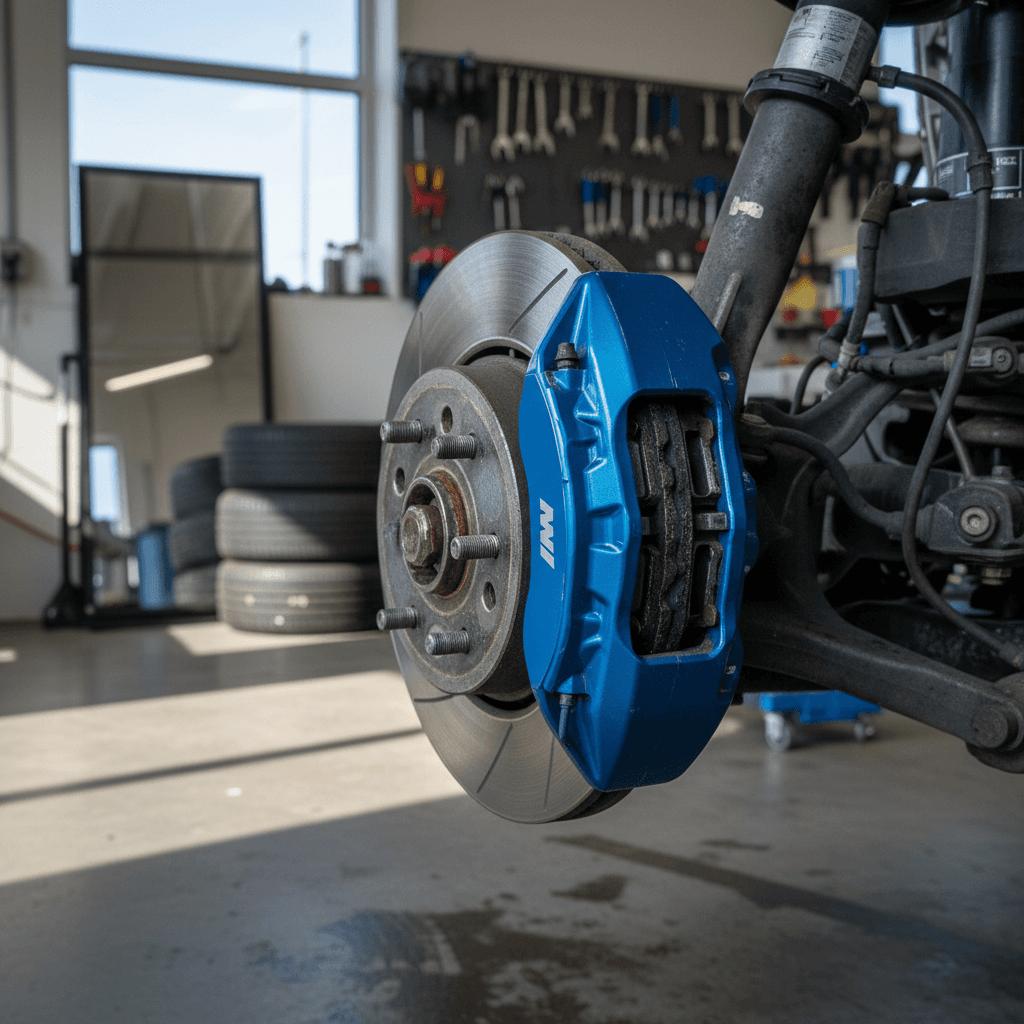
Why BMW i4 brake pads last longer than gas BMWs
The i4 shares its basic brake hardware with the 4 Series, but the way you use those brakes is very different in an EV. Every time you lift off the accelerator, the car’s regenerative braking uses the electric motor to slow the car and recapture energy, taking load off the physical pads and rotors.
- In daily driving, much of your slowing happens via regen, not the friction brakes.
- Pads stay cooler and experience less high‑heat abuse than on a gas BMW with frequent hard stops.
- In city driving with one‑pedal style regen, some owners go an entire three‑year lease without needing pads at all.
- Light‑to‑moderate highway driving is also easy on pads, as long as you look ahead and coast into stops instead of late‑braking.
Extend pad life with your right foot
The flip side is that **pads can glaze** or corrode if they’re almost never used, which can cause noise or a rough, grabby feel. Occasional firm brake applications, such as a few controlled hard stops from 40–50 mph in a safe area, help keep the pads and rotors clean.
BMW i4 brake pad replacement cost breakdown
When you see a quote for a BMW i4 brake pad replacement, it usually bundles several components and services. Here’s what generally goes into that bill in the U.S. as of 2025–2026.
Typical BMW i4 front or rear brake service costs (per axle)
Approximate retail pricing for a single axle (front or rear) on a BMW i4 in the U.S. today. Taxes and shop fees are extra, and metro‑area dealers tend to sit at the high end of each range.
| Line item | Dealer price range | Independent shop range | Notes |
|---|---|---|---|
| Brake pads (OEM or OEM‑equivalent) | $180–$320 | $130–$260 | Ceramic or low‑dust formulations cost more than basic semi‑metallic pads. |
| Pad wear sensor(s) | $30–$70 | $20–$50 | Most i4 configurations use at least one sensor per axle. |
| Rotors (if needed) | $260–$520 | $200–$420 | Often replaced with pads on modern BMWs rather than resurfaced. |
| Labor (1.5–2.5 hours) | $230–$500 | $150–$320 | Driven mostly by local hourly rate and whether parking brake calibration is needed. |
| Brake fluid flush (optional add‑on) | $150–$220 | $120–$180 | BMW typically calls for this every ~2 years regardless of pad life. |
Use this as a ballpark; always get an itemized estimate for your specific VIN.
Add it up and a **pads‑only** job on a BMW i4 typically falls around $350–$750 per axle at a dealership and $250–$600 at an independent European or EV‑focused shop. If rotors are below spec and need replacement at the same time, as often happens around 70,000–90,000 miles, a full pads+rotors service can move into the $650–$1,100 per axle range depending on parts choices and local labor rates.
Watch for “full brake packages” you don’t need
BMW dealer vs independent shop vs DIY
BMW dealer
- Pros: Factory parts, up‑to‑date technical info, easy warranty handling, loaner vehicles at many stores.
- Cons: Highest labor rates, OEM parts markup, more likely to bundle extra services.
- Best for: Cars still under warranty, complex brake issues, or owners who value convenience over cost.
Independent specialist
- Pros: 20–40% cheaper labor on average than dealers, flexible on quality aftermarket pads and rotors.
- Cons: Quality varies, look for BMW or EV experience specifically.
- Best for: Out‑of‑warranty i4s, cost‑conscious owners who still want high‑quality work.
DIY in your garage
- Pros: Parts‑only cost (often $150–$350 per axle), full control over components.
- Cons: You’ll need jack stands, torque tools, and familiarity with electronic parking brake procedures and brake bleeding safety.
- Best for: Experienced DIYers; not recommended if you’re new to European cars or EVs.
Brake jobs are not a first‑time DIY project
If you do go DIY, you can often source name‑brand pads and sensors for a BMW i4 in the $150–$300 per axle range from reputable online parts houses as of 2025–2026. Just remember to factor in your own time, the right tools, and the risk that any installation‑related issues are on you, not a shop.
How long do BMW i4 brake pads last?
On a gasoline BMW, it’s common to need pads somewhere in the 30,000–50,000‑mile window. The BMW i4 is different. With regen doing so much of the work, many owners report going an entire 36‑month lease, often 30,000–45,000 miles, without touching the pads. Some high‑mileage EV drivers push well past 70,000 miles before the first pad replacement.
Real‑world BMW i4 brake pad life scenarios
Your driving style matters more than the hardware.
Urban commuter
Lots of stop‑and‑go? Ironically, that can be good for pad life on an EV if you mostly let regen slow you down.
Expect: 60,000–80,000 miles on original pads in many cases.
Highway cruiser
Moderate highway use with light traffic is still easy on pads if you look ahead and avoid hard braking.
Expect: 50,000–70,000 miles before pads get thin.
Aggressive driver
Heavy braking, spirited driving, mountain descents, or towing will chew through pads sooner.
Expect: 30,000–50,000 miles, closer to a gas BMW.
BMW’s service computer will tell you
Signs your BMW i4 brake pads actually need replacement
Because the i4’s friction brakes are used less often, early warning signs can be subtle, or you may suddenly notice poor braking after a long period of smooth, quiet operation. Here’s what to watch for.
Common indicators it’s time for new pads
1. Dash warning or CBS alert
If the brake pad wear sensor trips, you’ll see a yellow or red brake warning in the cluster and/or an iDrive message. This usually means the pad has hit a minimum thickness or the sensor wire has been exposed.
2. Grinding, scraping, or metallic noise
A high‑pitched squeal or grinding when you use the pedal, especially at low speeds, can mean the pads are worn to the backing plate or have uneven deposits. Don’t ignore this; metal‑to‑metal contact will quickly damage rotors.
3. Vibration or pulsation under braking
A pulsing pedal or steering wheel shake when you brake suggests warped or unevenly worn rotors. In that case, most shops will quote pads and rotors together on that axle.
4. Noticeably longer stopping distances
If you need to press the pedal deeper or the car feels lazy to respond, it could be glazed pads, contaminated friction surfaces, or worn components. Have the system inspected immediately.
5. Rust ridges on rotor edges
Because the i4 often relies on regen, the rotors may develop rust or an unused lip. A visual inspection through the wheel spokes can reveal deep grooves or flaky rust that may justify resurfacing or rotor replacement along with pads.
Don’t wait until you hear metal
How to save money on BMW i4 brake pad service
You can’t change the fact that BMW‑grade parts and labor are pricey, but you do have options. A few smart moves often shave hundreds off the bill without cutting corners on safety.
Cost‑saving strategies for BMW i4 brake pads
Keep safety non‑negotiable, save on everything else.
Get 2–3 competing quotes
Use your VIN and current mileage to get itemized quotes from at least one BMW dealer and one or two independent shops. Compare:
- Labor rate per hour
- Pad and rotor brands
- Whether sensors and brake fluid are included
Ask about OEM‑equivalent pads
Independent shops can often use respected brands that supply BMW from the factory, but without the BMW logo and markup. You still get excellent performance and low noise, at a lower parts price.
More ways to keep i4 brake costs in check
Time service with other maintenance
If your i4 is due for a brake fluid flush or tire rotation, ask whether combining services saves labor or reduces shop fees, especially at dealers with service packages.
Drive to protect your pads
Use regen aggressively, avoid high‑speed tailgating that forces late braking, and occasionally clean off the pads with a few firm stops. The cheapest brake job is the one you don’t need yet.
How Recharged fits in
Ready to find your next EV?
Browse VehiclesBrake pads & costs when buying a used BMW i4
Brake pad condition might not be the first thing you think about when you’re excited about torque and range, but it’s a real ownership cost, especially if you’re buying a three‑ or four‑year‑old i4 that’s nearing its first major brake service window.
Used BMW i4 brake checklist before you buy
Simple checks you (or a pre‑purchase inspector) can do on a used BMW i4 to avoid surprise brake costs right after purchase.
| What to check | Why it matters | What to look for |
|---|---|---|
| Service history | Confirms whether pads, rotors, and fluid have already been done. | Look for documented brake service with mileage and parts list. |
| Dash warnings | Active warnings may point to immediate costs. | Turn the car on and check for any brake or ABS warnings in the cluster or iDrive. |
| Rotor condition | Tells you whether a full pads+rotors job is coming soon. | Visible grooves, lips, or heavy rust suggest rotors will need replacement, not just pads. |
| Remaining pad thickness | Indicates how soon you’ll pay for pads. | Many shops will measure in millimeters during a pre‑purchase inspection and estimate remaining miles. |
| Driving feel | A test drive often reveals issues no report can. | Pulsation, noise or a soft pedal can point to upcoming brake work. |
Consider a pre‑purchase inspection
When you shop through Recharged, our specialists handle much of this homework for you. We focus exclusively on EVs, provide transparent vehicle histories where available, and back every car with a Recharged Score that helps you compare long‑term ownership costs, including likely future brake service, across different i4s.
BMW i4 brake pad replacement cost: FAQ
Frequently asked questions about BMW i4 brake pads
For most BMW i4 owners in 2026, brake pads are a **rare but not insignificant** maintenance item. The combination of regenerative braking and premium hardware means you may go many years between pad jobs, but when service is due it’s worth approaching it strategically: get multiple quotes, insist on an itemized breakdown, and prioritize quality parts and proper procedures over rock‑bottom pricing. If you’re comparing used i4s, factoring in likely brake costs alongside battery health and tire wear will give you a clearer picture of total ownership cost, and that’s exactly the kind of transparency Recharged is built to provide.