If you own a BMW i4 and you ride bikes, you eventually hit the same question: what’s the smartest way to carry them? The good news is that there are now solid BMW i4 bike rack options, from hidden hitches to low-drag roof systems, but they’re not all created equal, especially if you haul heavy e-bikes or care about range on road trips.
Quick take
BMW i4 bike rack overview
Unlike some electric SUVs, the BMW i4 doesn’t always leave the factory with a visible tow hitch, especially in North America. That’s why early owners struggled to find a simple way to mount bikes. The market has caught up: you now have three main paths, hitch-mounted, roof-mounted, and trunk/hatch-mounted racks, each with trade-offs in cost, convenience, and efficiency.
- Hitch-mounted racks: Best all-round solution, easy loading, especially good for heavier e-bikes.
- Roof-mounted racks: Great if you don’t want to modify the rear bumper and your bikes are light enough to lift.
- Trunk/hatch-mounted racks: Budget-friendly and no permanent hardware, but more contact with the paint and not ideal for heavy bikes.
Important note on towing
Can the BMW i4 use a hitch-mounted bike rack?
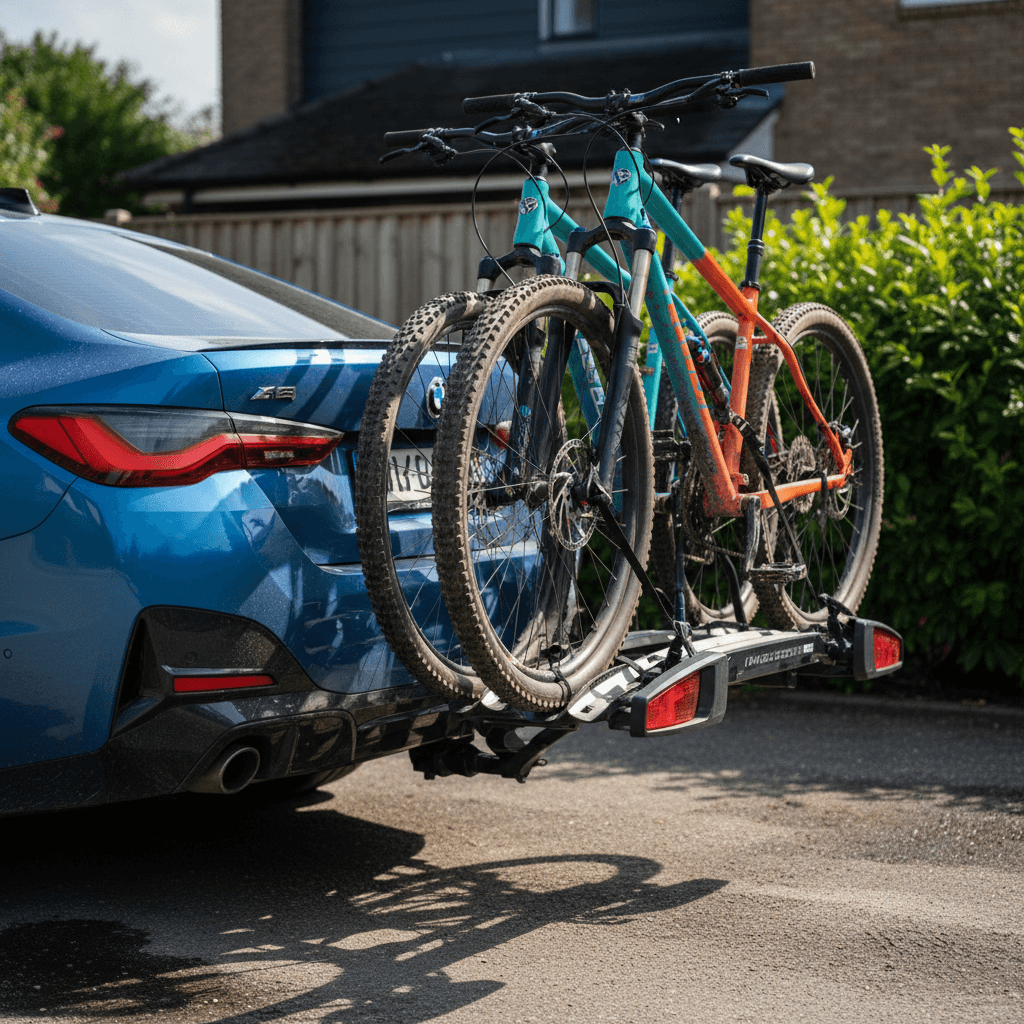
Yes, if you install the right hardware. There are now several aftermarket hitches built specifically for the BMW i4’s G26 body, including stealth-style receivers that sit behind the bumper and heavier-duty solutions that support e-bike racks.
BMW i4 hitch options at a glance
You’ll see three broad hitch categories when you search for BMW i4 bike rack options:
- Hidden or "stealth" hitches that tuck behind the bumper with a removable 2" receiver, keeping the rear of the car clean when you’re not hauling bikes.
- Eco-style hitches that mount behind the bumper and exit through a modest receiver opening, emphasizing ground clearance for racks.
- European-style detachable towbars (often from brands like Westfalia) that add a ball mount or receiver and may be rated for towing in markets where BMW approves it.
Why hitch racks pair well with EVs
Best hitch bike rack options for the BMW i4
Once you have a hitch on your i4, you can choose almost any hitch-mounted bike rack that matches the receiver size and weight rating. For most owners, a 2" receiver with a platform-style rack is the sweet spot: stable at highway speeds, friendly to carbon frames, and strong enough for most e-bikes.
Common hitch rack types for the BMW i4
Choose based on weight, number of bikes, and how often you carry them
Platform-style racks
Great for carbon and e-bikes:
- Support wheels instead of top tube.
- Higher weight capacity (often 60–80 lb per bike).
- Easier loading and unloading.
Ideal for BMW i4 owners who regularly move heavier bikes.
Hanging (mast-style) racks
Lighter and cheaper:
- Good for traditional diamond frames.
- Usually lower weight per bike.
- Can sway more in crosswinds.
Best if you carry light, non-carbon bikes occasionally.
Hitch cargo + bike combos
Storage plus bikes:
- Some platforms carry bikes and a box or tray.
- Watch total tongue weight carefully.
- Great for road trips with lots of gear.
Mind the numbers
1. Hidden "rack-only" hitches
Several brands now sell hidden receivers specifically for the 2022–2025 BMW i4. These kits bolt to factory mounting points behind the bumper and include a removable 2" square receiver that you insert only when you’re carrying a bike rack.
They’re usually labeled "rack only", meaning the hardware is tested and warranted for bike racks and cargo carriers, not for towing a trailer. This is the most common choice for U.S. i4 owners who just want bike-carrying capability.
2. Heavy-duty and EU-style towbars
Some stainless or OEM-style towbars marketed for the i4 (or the closely related 4 Series Gran Coupé) offer higher static and towing ratings and are popular with drivers who haul e-bikes or tow in regions where BMW allows it.
Installation is more involved, and you should only tow where it’s legal and supported by your local regulations and insurance. But for bikes alone, these systems offer plenty of capacity and secure mounting for premium platform racks.
BMW i4 roof rack and roof-mounted bike carriers
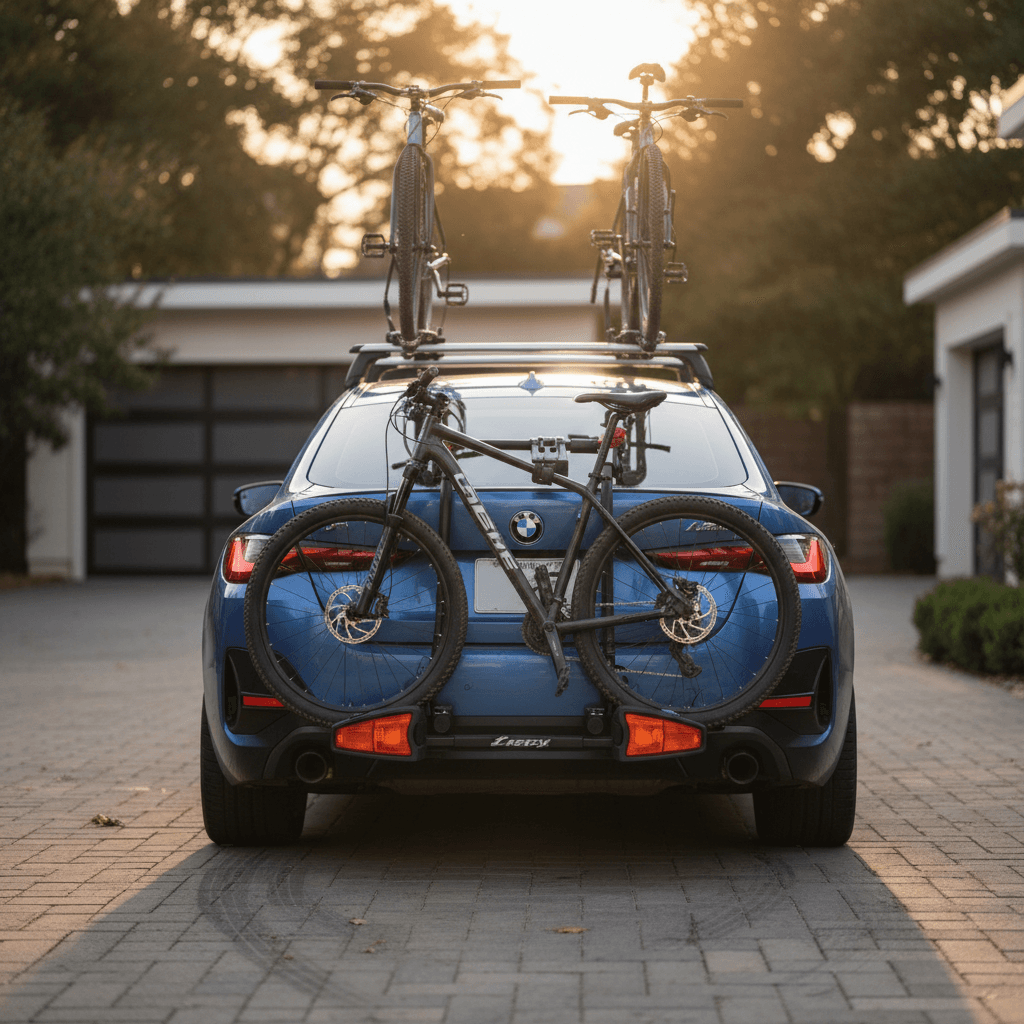
If you’d rather not touch the rear bumper, or you occasionally swap the rack between vehicles, a roof rack system is your next-best option. The BMW i4 has hidden mounting points in the roof rails, and both BMW and major aftermarket brands sell compatible crossbar kits.
Roof rack options for the BMW i4
Popular base systems and how they fit into a complete bike-carrying setup.
| Component type | Typical provider | What it does | Best for |
|---|---|---|---|
| Base crossbars | BMW OEM, Thule, others | Attach to the i4’s fixed mounting points and provide the base for any roof accessory. | Owners who want a factory-looking, quiet setup. |
| Fork-mount bike trays | BMW, Thule, Yakima | Hold the bike by the fork (front wheel removed) for a low, stable position. | Road and gravel bikes where wheel removal is easy. |
| Frame or wheel-mount trays | BMW, Thule, Yakima | Clamp the frame or wheels with both wheels on the bike. | Mountain bikes and riders who don’t want to remove wheels. |
| Universal crossbar kits | Aftermarket brands | Fit multiple cars with the right fit kit; often a bit noisier. | Drivers who already own a rack and just need the i4-specific feet. |
Exact availability varies by region; always verify fitment for your specific model year and trim.
Roof racks and wind noise
BMW’s own branded crossbars for the i4 are typically built by one of the big rack manufacturers and tuned for the car’s roof contour. Third-party options, often a bit cheaper, work well too as long as you use the correct fit kit for the G26 i4.
Trunk and hatch-mounted bike racks on the i4
Trunk or hatch-mounted bike racks use straps and hooks on the edge of the hatch to support one to three bikes. They’re popular on compact cars because they’re inexpensive and don’t require permanent hardware. On a BMW i4, though, they’re the least elegant choice.
- The i4’s liftback hatch is steeply raked and made of lightweight materials, so load paths are less ideal than on a traditional sedan.
- Straps and hooks can rub on paint and trim if they’re not padded and tightened correctly.
- Many trunk racks are not rated for heavy e-bikes and may interfere with the i4’s rear camera or sensors.
When to avoid trunk racks
E-bike considerations: weight limits and clearance
The electric bike boom changed the game for bike racks, especially on EVs like the BMW i4. A modern e-MTB or commuter can easily weigh 50–70 lb, which pushes the limits of older racks designed for 25–35 lb analog bikes.
Checklist: setting up your i4 to carry e-bikes safely
1. Confirm hitch tongue weight
Look up the tongue weight rating for your specific hitch. Many i4 owners use rack-only hitches in the 150–200 lb range; some EU-style towbars may be higher. Stay under the lowest-rated component in your setup.
2. Choose an e-bike-rated rack
Pick a platform rack explicitly rated for the weight of your heaviest bike. Many popular two-bike e-bike racks support 60–80 lb per tray (check the fine print).
3. Consider a 2" receiver
Serious e-bike racks almost always prefer a 2" receiver. If your i4 hitch is 1.25", you’ll have fewer high-capacity rack choices and more flex at the hitch.
4. Watch pedal and tire clearance
With a low sedan like the i4, use a rack with a built-in rise or tilt so tires and pedals clear steep driveways and speed bumps.
5. Remove batteries for long trips
If it’s convenient and secure to do so, remove the e-bike batteries on long highway stints to reduce weight and stress on the rack.
6. Check suspension and tire pressures
Heavier bike loads put more weight behind the rear axle. Make sure your tires are at recommended pressure and pay attention to how the i4 feels over bumps and dips.
Range impact: hitch vs roof bike racks on an EV
Any bike rack will affect range, but not equally. On an EV with a slick body like the i4, aerodynamics matter more than weight once you’re at highway speed. That’s why the position of the bikes on the car makes a noticeable difference.
Hitch-mounted bikes
- Bikes sit in the aerodynamic wake behind the car.
- Less extra frontal area = smaller range hit.
- Owners often report single-digit to low-teens percentage losses on the highway, depending on speed and wind.
You’ll still use more energy, but a hitch rack is usually the most efficient way to haul bikes.
Roof-mounted bikes
- Add tall, messy airflow to the smooth roofline.
- More drag, especially with wide MTB bars or multiple bikes.
- Range reductions can climb into the teens or higher at fast interstate speeds.
This is noticeable on any car; on an EV, it’s the difference between arriving comfortably and hunting for an extra fast charger.
Slow down, save range
Installing a hitch or roof rack on a BMW i4
The i4 shares a lot of structure with the 4 Series Gran Coupé, but it’s still a high-voltage EV with a big battery under the floor. That means you should be more careful about drilling, wiring, and load paths than you might be on an old gas sedan.
Hitch vs roof rack installation: what to expect
Time, complexity, and who should do the work
Installing a hitch on the i4
- Typically requires removing the rear bumper cover and crash beam.
- Many kits are fully bolt-on using factory mounting points.
- May need a small trim cut for the receiver opening.
- Professional install often takes 3–5 hours.
If you’re not comfortable pulling a modern bumper apart, let a trusted shop or hitch installer handle it.
Installing a roof rack on the i4
- Use the hidden fixed points under flip-up covers in the roof channels.
- BMW and Thule kits include the correct bolts and torque specs.
- Typically a 30–60 minute DIY job with careful measuring.
Follow the instructions for bolt torque and spacing, overtightening or misaligning the bars can damage the mounts or cause wind noise.
Protect the high-voltage system
If you’re shopping used, you may find an i4 that already has a hitch or roof system installed. That can be a nice bonus, but it’s worth inspecting the work carefully.
Used BMW i4 owners: what to check on a car with a rack
Because many BMW i4 bike rack setups are aftermarket, a used i4 might have anything from a beautifully integrated stealth hitch to a bargain trunk rack that’s left its mark on the paint. When you’re evaluating a car, whether privately or on a marketplace like Recharged, add the rack and mounting points to your inspection list.
Checklist: inspecting a used i4 that’s been hauling bikes
1. Look closely at the rear bumper
If there’s a hitch, check that the bumper trim is neatly cut (if at all) and that the receiver sits straight and secure. Mismatched gaps or cracked paint can hint at a low-speed impact while backing with a rack installed.
2. Inspect the hatch edges and paint
Evidence of a strap-on trunk rack shows up as scuffs or chips on the hatch lip and bumper cover. Light marks are cosmetic; deeper gouges can require repainting.
3. Check the roof mounting points
Pop the little covers off the roof rack attachment points and look for stripped threads, bent covers, or rust around the openings.
4. Ask about e-bike use
If the previous owner regularly carried e-bikes, verify that the hitch and rack they used were rated for the loads. Chronic overloading can stress the hitch mounts and rear suspension.
5. Review the paperwork
Quality hitch installs usually come with receipts and manuals. That’s a good sign the job was done by a professional following the instructions.
How Recharged can help
Ready to find your next EV?
Browse VehiclesFAQ: BMW i4 bike rack options
Frequently asked questions about BMW i4 bike racks
Bottom line: choosing the right BMW i4 bike rack
The BMW i4 may be a sleek electric gran coupé, but with the right hardware it can pull double duty as a capable bike shuttle. A hidden hitch paired with a sturdy platform rack is the most versatile and EV-friendly setup, especially if you carry e-bikes or log serious highway miles. Roof systems shine when you want to keep the rear bumper untouched or you only move lighter bikes now and then, while trunk racks are best reserved for occasional, lighter-duty use.
If you’re still hunting for the right i4, or you’re nervous about evaluating a used car that’s already been hauling bikes, that’s exactly where Recharged can help. Every used EV on our platform comes with a Recharged Score Report that goes beyond battery health to cover real-world condition and usage. That way, when you bolt on the rack and load up your favorite bike, you know the car underneath is just as ready for the ride as you are.