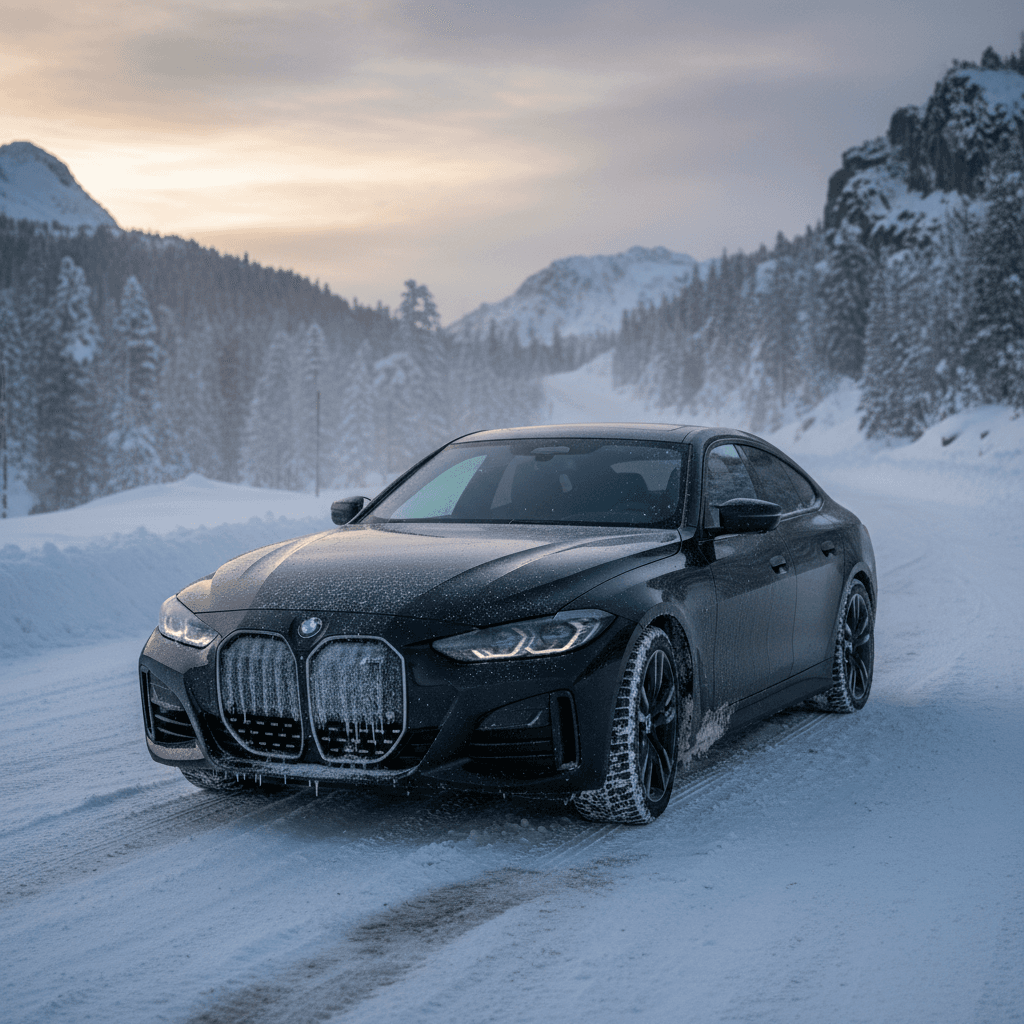
If you live where the roads turn white for months at a time, you’re probably wondering whether the BMW i4 is good in snow and ice, and which version is genuinely winter-ready. The short answer: with the right trim and proper winter tires, the i4 can be one of the better all-weather EVs on sale, but it’s still a low, heavy sport sedan with some clear limits you should understand before you buy.
Big Picture
BMW i4 in Winter: Quick Overview
BMW i4 Winter Snapshot
A recent 2026 analysis of winter‑ready EVs ranked the BMW i4 as one of the most winter‑resilient electric cars, crediting its efficient powertrain, stable road manners, and manageable cold‑weather range loss. Owners in snowbelt states echo that: on proper winter tires, the i4 feels planted and predictable, especially the xDrive versions. The tradeoffs are familiar to anyone who’s driven a sporty sedan in winter: low ground clearance and heavy curb weight mean it excels on cleared pavement but is not a replacement for a tall SUV in deep snow or rutted ice.
Which BMW i4 Is Best for Snow and Ice?
Best BMW i4 Trims for Winter Driving
All can handle winter with the right setup, but some are better starting points.
i4 xDrive40
Sweet spot for most winter drivers.
- Dual‑motor all‑wheel drive (AWD).
- Strong traction off the line in snow.
- More efficient than the M50, so you keep a bit more winter range.
i4 M50
Best for performance‑minded drivers.
- AWD with more power and sharper responses.
- Excellent traction with stability systems on.
- Heavier and more power‑hungry, so slightly more winter range loss.
eDrive35 & eDrive40 (RWD)
Capable, but technique matters.
- Single‑motor rear‑wheel drive (RWD).
- Fine in snow with quality winter tires and gentle throttle.
- Less confident starting on steep, icy hills than xDrive.
If you’re asking which BMW i4 is best for snow and ice, the honest answer is: choose an xDrive (AWD) model on proper winter tires. The i4 xDrive40 offers the best balance of efficiency, traction, and price; the i4 M50 layers on big power but doesn’t add extra winter magic beyond that. The rear‑drive eDrive35 and eDrive40 can still be solid winter cars in flatter areas or milder climates, but they demand more restraint with the accelerator and are more sensitive to tire choice.
Tip for Steep Driveways
Winter Strengths and Limitations of the BMW i4
Where the i4 Shines in Winter
- Excellent traction management: BMW’s stability and traction control systems are conservative but confidence‑inspiring. They cut wheelspin early and help the car track straight on slick surfaces.
- Predictable handling: The i4 feels like a classic BMW 4‑Series in the snow, balanced and composed, especially on a square‑setup winter tire package.
- Fast cabin warmth: The heat pump and seat heaters get you comfortable quickly without needing to blast an energy‑hungry cabin heater the whole drive.
- Refined controls: Steering, throttle, and brake feel remain consistent in the cold, which helps your confidence when grip comes and goes.
Where the i4 Struggles in Winter
- Low ground clearance: Sport‑sedan ride height means the i4 will “plow” in deeper snow sooner than a crossover or SUV.
- Weight on all‑seasons: On stock all‑season or summer tires, the i4’s weight works against it, braking distances increase and it can feel skittish.
- Range loss in the cold: Like any EV, the i4 uses energy to heat the battery and cabin, trimming usable range 15–30% on cold days.
- Regenerative braking on ice: Strong regen in slippery conditions can unsettle the rear tires if you’re aggressive with the pedal or lift abruptly.
Don’t Judge It on Stock Tires
The Tires That Make (or Break) the BMW i4 in Snow
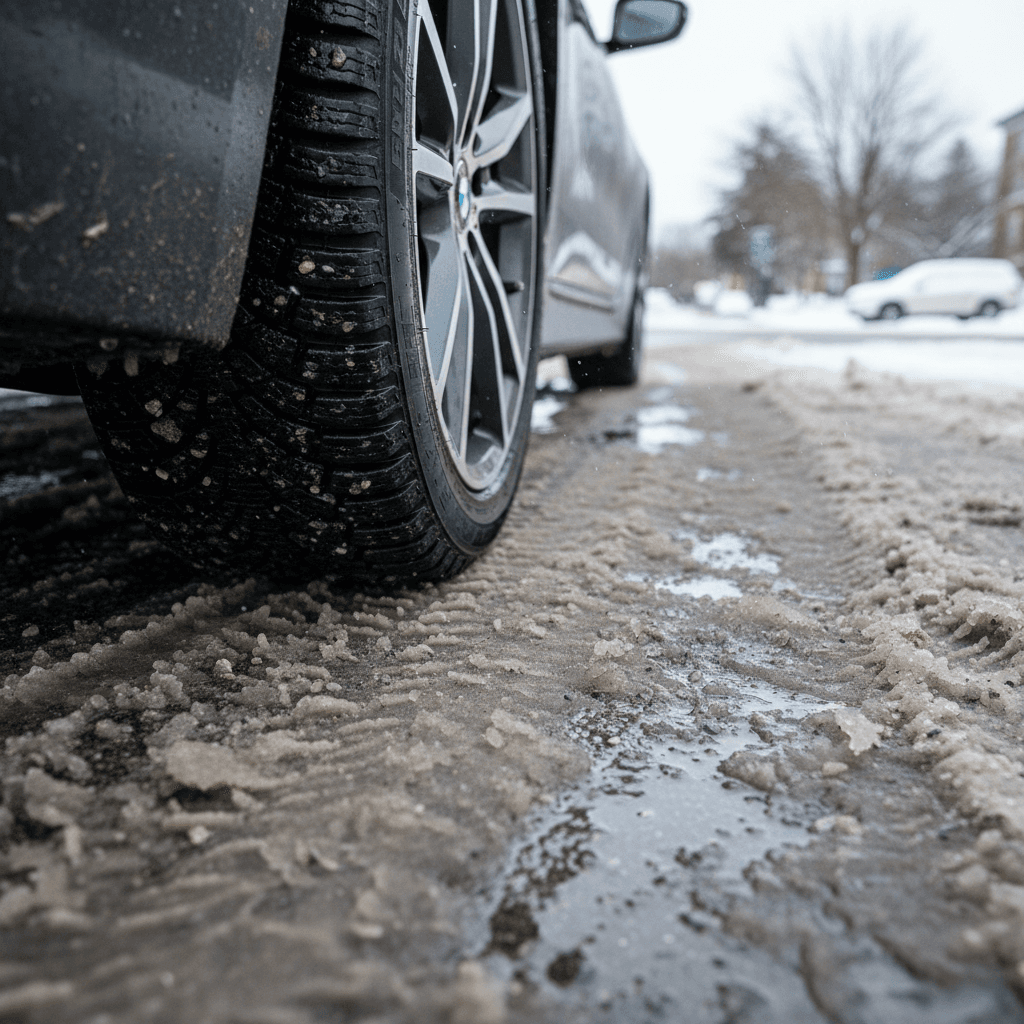
Ask any i4 owner who’s driven through a real winter and you’ll hear the same refrain: winter tires matter more than anything else. BMW and major tire brands now offer several winter tire options specifically sized for the i4. Swapping off the big summer or performance all‑season fitments for a narrower, softer winter compound transforms the car.
Common Winter Tire Choices for BMW i4
Representative examples of winter tire categories that work well on the BMW i4. Always confirm exact size and load rating for your wheels.
| Tire Type | What It’s Best At | Pros for i4 Owners | Tradeoffs |
|---|---|---|---|
| Performance winter (e.g., Pirelli Sottozero, Goodyear UltraGrip Performance) | Cold, wet, light-to-moderate snow | Sharper handling, good highway manners, quieter ride | Slightly less bite on deep snow and glare ice than studless tires |
| Studless ice & snow (e.g., Michelin X-Ice, Bridgestone Blizzak) | Packed snow, ice, sub‑freezing temps | Maximum traction on hardpack and ice, very confidence‑inspiring | Softer feel, more squirmy in warm weather; can wear faster if driven hard |
| All-weather 3PMSF (severe-snow rated) | Mixed climates, occasional snow | More winter capable than regular all‑seasons; can stay on year‑round | Still a compromise vs. dedicated winter set in harsh climates |
Dedicated winter tires dramatically improve the i4’s grip for acceleration, steering, and, most critically, braking on snow and ice.
Downsize Your Winter Wheels
- Avoid summer tires in any real winter conditions, rubber hardens and grip falls off a cliff as temps drop below about 45°F.
- If you must stick with all‑seasons, look for models with the three‑peak mountain snowflake (3PMSF) symbol rather than generic M+S.
- Check pressures regularly; cold temperatures lower tire pressure and can trigger warnings while also dulling steering response.
Cold-Weather Range: What to Expect from the i4
BMW i4 owners consistently report noticeable but manageable winter range loss. In moderate cold (around 20–32°F), many see their real‑world range drop by about 15–25% compared with summer driving. In harsher cold snaps, especially on short trips where the car must repeatedly warm its battery and cabin, 25–30% losses aren’t unusual.
How Winter Affects BMW i4 Range
What most drivers actually experience on the road.
Mild winter days (30–40°F)
- Range typically down ~10–15%.
- Once the battery is warm, efficiency looks close to shoulder‑season numbers.
- Longer highway trips are least affected.
Normal snowbelt winter (10–30°F)
- Expect 15–25% less range vs. EPA.
- Short trips hurt the most because you keep reheating the car.
- Wheel/tire setup and speed make a big difference.
Deep freeze (below 0°F)
- Range can drop 25–30% or more, especially on short urban hops.
- Fast‑charging speeds also slow until the battery warms.
- Preconditioning and seat heaters help claw back usable miles.
Good News on Winter Range
Simple Ways to Reduce BMW i4 Winter Range Loss
Precondition while plugged in
Use the BMW app to warm the cabin (and, when navigation is set to a DC fast charger, precondition the battery) while you’re still connected to your home or workplace charger, so that energy comes from the grid, not your battery.
Use seat and wheel heaters first
Heated seats and steering wheel sip energy compared with blasting the cabin heater. Lower the cabin temp a couple of degrees and rely on those surfaces to stay comfortable.
Combine short trips
String errands together instead of doing multiple cold starts. One long trip is much more efficient than several short ones when it’s below freezing.
Slow down a bit on the highway
Aerodynamic drag and cold air are a bad combo. Dropping from 75 to 65 mph can save a surprising amount of energy in winter.
Keep the car garaged if possible
Starting from a slightly warmer garage means less energy spent thawing the pack and defrosting glass.
Best Driving Modes and Settings for Snow and Ice
The BMW i4 gives you a few tools beyond just "D" and "go." How you set up traction control, regenerative braking, and drive modes can make the difference between a relaxed winter commute and an unintentionally exciting one.
Recommended i4 Settings for Slippery Roads
Tame the power, smooth the responses, and let the electronics help you.
Drive modes & traction control
- Use Comfort or Eco Pro in snow and ice; they soften throttle response, making the car easier to modulate.
- Leave full stability control ON for everyday winter driving. BMW’s electronics are quick and unobtrusive.
- On packed snow where you need a bit of wheel slip to get moving, some drivers use the "traction" or DTC mode briefly, but that’s best left for experienced hands.
Regenerative braking & one-pedal drive
- Dial back regen in the slickest conditions if your i4 allows it, or avoid aggressive "B" mode on glare ice.
- Be smooth coming off the accelerator, sudden lift-off can trigger strong regen that momentarily unsettles the tires.
- If you’re new to one‑pedal driving, practice on a quiet road to feel how regen interacts with low‑grip surfaces.
Be Careful with Max Regen on Ice
Ground Clearance, Snow Depth, and Where the i4 Struggles
The i4’s biggest winter limitation isn’t traction, it’s physics. This is a long‑roof sport sedan built on a 4‑Series platform, not an SUV. Its low center of gravity is wonderful for stability, but the ground clearance is closer to a sports sedan than a crossover. That’s fine on plowed roads, but it defines how far you can push it off the beaten path.
- On plowed streets with an inch or two of fresh snow, the i4 feels secure, especially on winter tires.
- In 3–5 inches of heavy, wet snow, you’re edging toward the limits of its clearance; rutted snow can pack under the battery and bumpers.
- In deeper, unplowed snow or heavy drifts, the car can high‑center, lose momentum, and require a tow, just like any low sedan.
- Steep, un-cleared driveways can be problematic even with xDrive, simply because the car is pushing snow with its front bumper.
Reality Check for Rural Drivers
BMW i4 Winter Setup Checklist
Set Your BMW i4 Up for Snow and Ice
1. Choose the right drivetrain for your climate
Live in the snowbelt or deal with steep, icy hills? Prioritize an <strong>xDrive40 or M50</strong>. In milder, mostly flat areas, an eDrive35 or eDrive40 with proper tires can still be a confident winter car.
2. Invest in a dedicated winter wheel-and-tire set
A square winter setup on slightly narrower wheels gives better bite in snow and protects your pricey OEM wheels from salt and pothole damage.
3. Protect your battery and range
Get used to preconditioning, smart charging habits, and planning a bit more conservatively on range in the cold. A home Level 2 charger makes winter life dramatically easier.
4. Add basic winter protection
Floor liners, mud flaps, and regular underbody washes help keep slush, salt, and grit from aging your i4 faster than necessary.
5. Practice winter maneuvers in a safe space
On the season’s first snow, find an empty parking lot and feel how your i4 accelerates, steers, and brakes in low‑grip conditions, both with and without strong regen.
6. Keep an emergency kit in the trunk
Include a small shovel, traction mats or sand, gloves, scraper/brush, and a portable power bank. EVs are great idle heaters, but you still want gear if you’re stuck waiting for a tow.
Buying a Used BMW i4 for Winter Driving
Shopping used is one of the smartest ways to get into a well‑equipped i4, and winter is when the car’s strengths and weaknesses show up most clearly. This is where buying through a specialist EV marketplace like Recharged can help: every vehicle comes with a Recharged Score battery health report, transparent pricing, and experts who live and breathe EV ownership, including cold‑weather quirks.
What to Prioritize on a Used i4
- Drivetrain: If winter capability is a top priority, look for xDrive40 or M50 models first.
- Wheel and tire packages: Ask if a dedicated winter set is included; it can save you a four‑figure purchase in your first season.
- Battery health: Use tools like the Recharged Score and service history to confirm that cold‑weather range will still meet your needs.
- Previous climate: An i4 coming from a cold region isn’t a bad thing, but look for evidence of regular washing and underbody care to ward off salt corrosion on suspension hardware.
How Recharged Simplifies Winter EV Ownership
- Battery diagnostics: Every i4 on Recharged gets a verified battery health report, so you understand real‑world range, not just the original EPA window sticker.
- Expert guidance: EV specialists can walk you through what range to expect in your specific winter climate, and which trims fit your use case.
- Financing and trade‑in: Bundle your purchase, trade‑in, and winter wheel/tire costs in one transparent, digital experience.
- Nationwide delivery: Find the right i4, then have it delivered to your driveway, snow or shine.
Winter-Ready i4, Less Guesswork
Ready to find your next EV?
Browse VehiclesBMW i4 Snow & Ice FAQ
Frequently Asked Questions About the BMW i4 in Snow and Ice
So, is the BMW i4 good in snow and ice? Set up correctly, it can be one of the most satisfying winter EVs you can buy: quick heat, calm road manners, and strong traction from its xDrive system and smart stability control. Respect its low ride height, invest in true winter tires, and learn how cold weather affects your range, and you’ll have a car that feels as composed in February as it does in June. If you’re weighing trims or shopping used, leaning on Recharged’s battery health reports and EV‑savvy advisors can turn winter uncertainty into confident, year‑round electric driving.