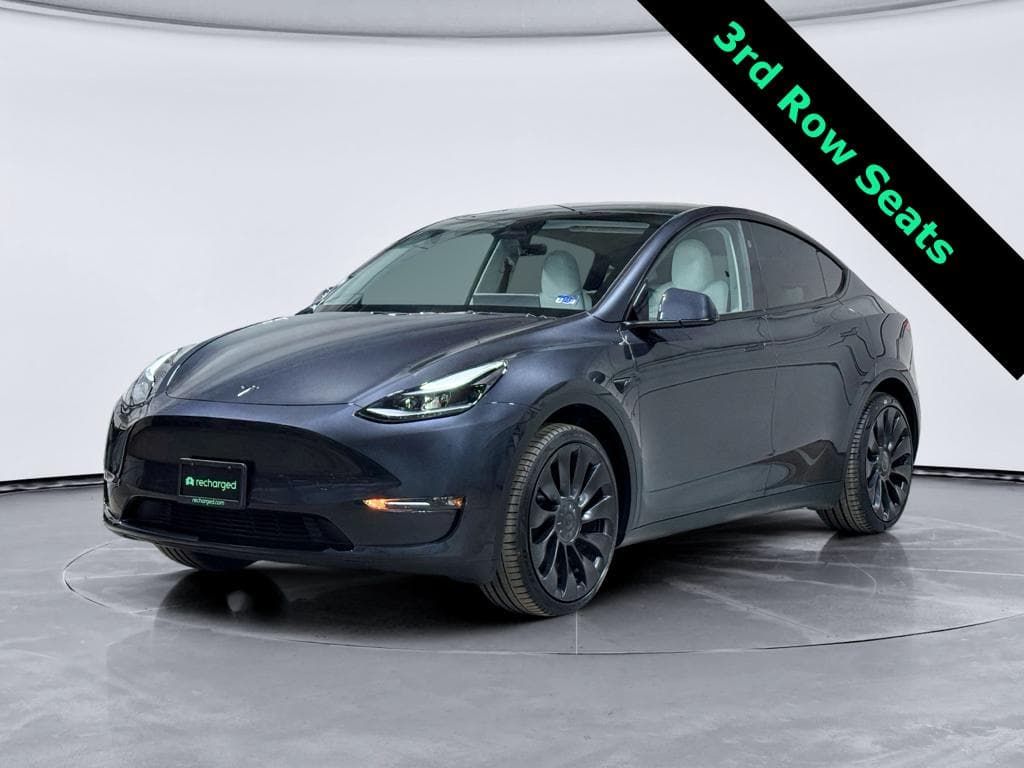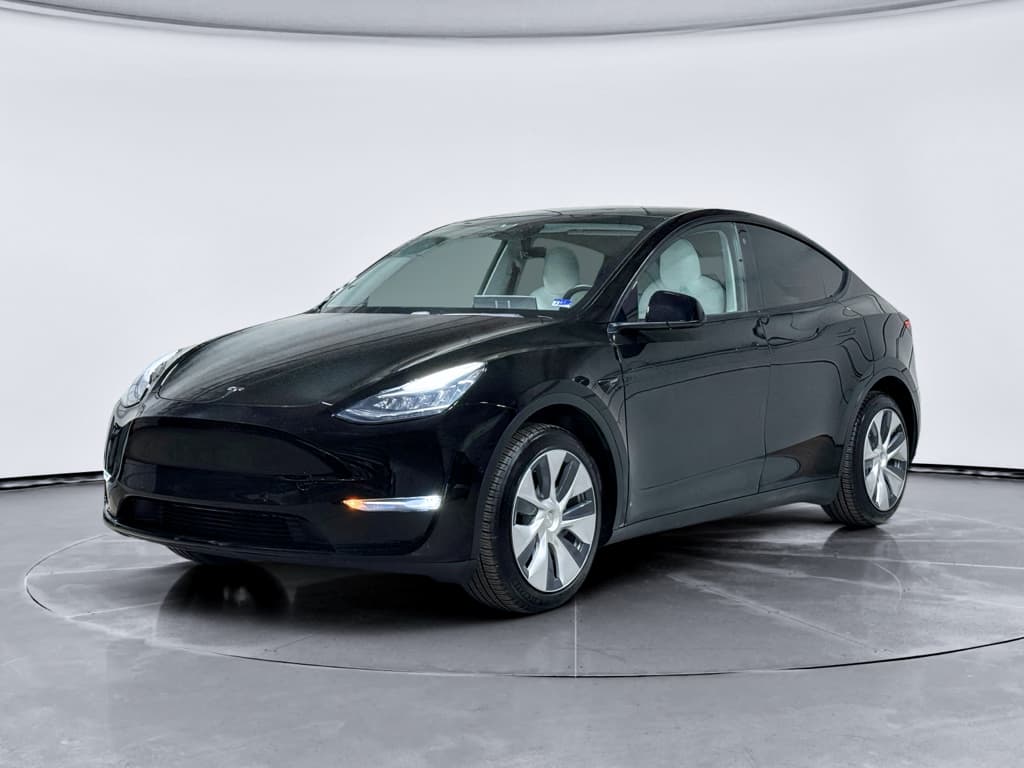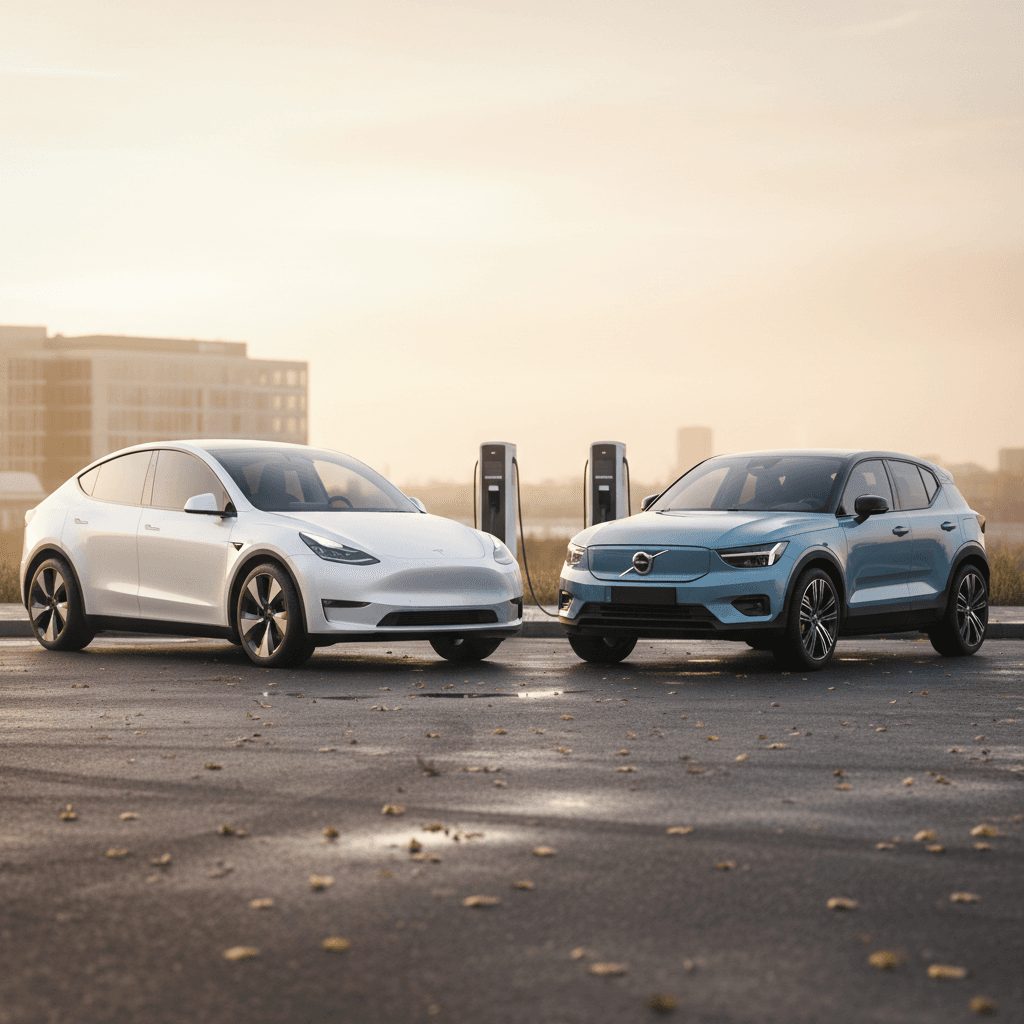
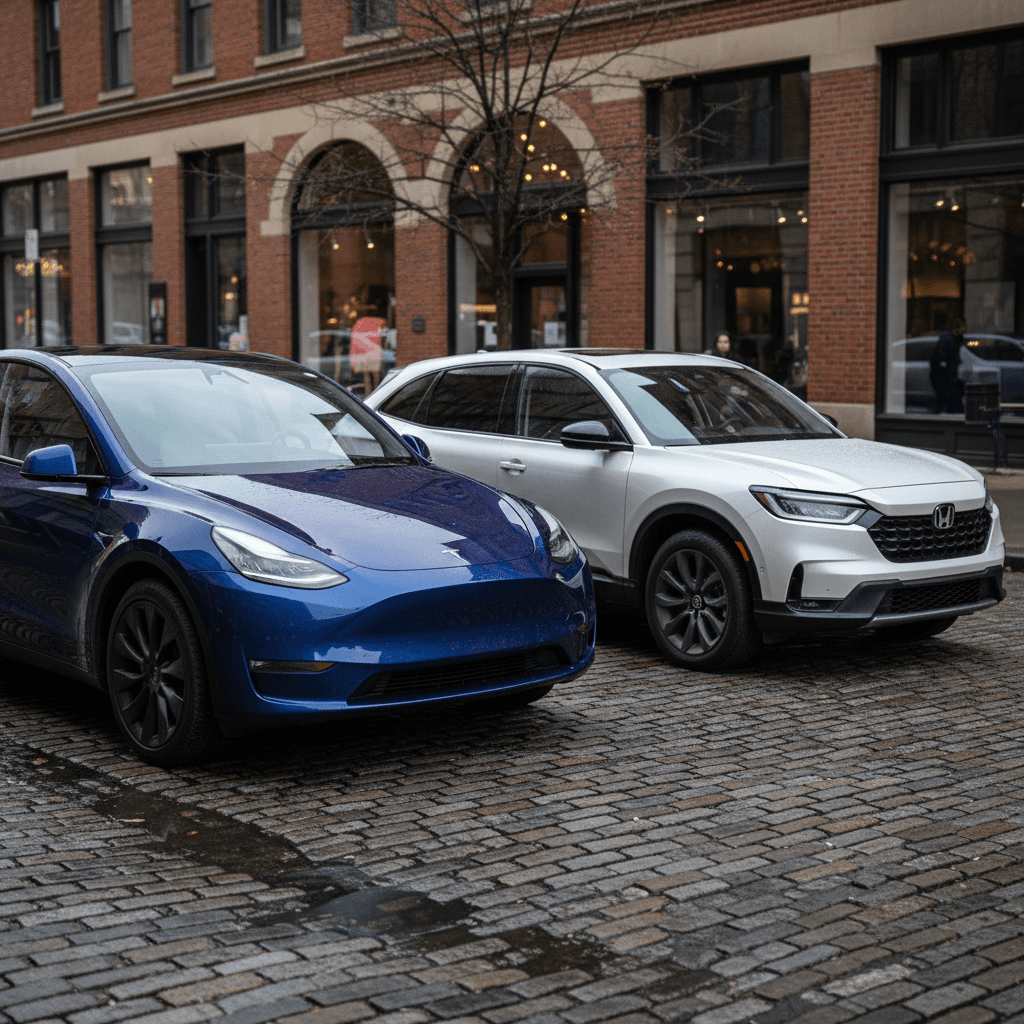
If you’re cross-shopping the Tesla Model Y vs Honda Prologue, you’re doing exactly what a smart EV shopper should: comparing the segment benchmark to the thoughtful newcomer. Both are all-electric, two-row crossovers sized right for American families, but they take very different paths to get there. One leans hard into software and speed; the other into familiarity and comfort.
Two similar shapes, two very different personalities
Tesla Model Y vs Honda Prologue: who is each SUV for?
Tesla Model Y: for the tech-forward driver
If you want blazing acceleration, over-the-air (OTA) updates, and access to Tesla’s giant Supercharger network, the Model Y still sets the pace. It’s the EV equivalent of a modern smartphone: powerful, occasionally quirky, but always plugged into the latest software.
- Best for: early adopters, road-trippers, performance fans
- Strengths: class-leading charging network, strong performance, tons of software features
- Trade-offs: minimalist interior, no Apple CarPlay/Android Auto, variable build quality
Honda Prologue: for the “just make it easy” crowd
The Honda Prologue is Honda’s first long-range EV SUV, built on GM’s Ultium platform. It feels more like a familiar Honda crossover that just happens to be electric, complete with Google Built-In, wireless Apple CarPlay and Android Auto, and traditional physical controls in the right places.
- Best for: families, first-time EV buyers, Honda loyalists
- Strengths: comfortable ride, intuitive tech, strong driver-assistance suite
- Trade-offs: new model with limited long-term data, charging speeds good but not class-leading
Key specs: Tesla Model Y vs Honda Prologue at a glance
Core specs comparison
Approximate U.S. specs for popular 2025–2026 trims. Always confirm final specs and pricing on the manufacturer site or with your dealer.
| Spec | Tesla Model Y (2026, typical trims) | Honda Prologue (2025) |
|---|---|---|
| Drivetrain options | RWD, Dual Motor AWD | Single-motor FWD, Dual-motor AWD |
| Battery (usable, approx.) | ~75–82 kWh depending on trim | Ultium pack ~85–93 kWh depending on version |
| EPA range (best-case trims) | Mid- to high-300s miles (RWD/Long Range) | Up to 308 miles (FWD); 294–283 miles (AWD trims) |
| 0–60 mph (quickest trim) | Around 3.3 seconds (Model Y Performance) | Around mid-5s to 6 seconds (AWD) |
| DC fast-charging peak | Up to ~250 kW on Supercharger V3/V4 | Up to 150 kW |
| Onboard AC charger | 11.5 kW | Typically 11.5 kW class |
| Seating | 5 | 5 |
| Cargo space | Among best in class, with front trunk | Spacious two-row SUV, no front trunk |
| Infotainment | Tesla UI only (no CarPlay/Android Auto) | Google Built-In plus wireless Apple CarPlay & Android Auto |
| Driver assistance | Tesla Autopilot with optional Enhanced/FSD | Honda Sensing standard across trims |
Model Y and Prologue are closer on paper than you might expect.
Headline numbers that matter day-to-day
Range and efficiency: which EV takes you farther?
Range is the number everyone quotes at parties, but what matters is how far you can comfortably go between bathroom breaks. Both of these SUVs land in the sweet spot: roughly 280–330 miles depending on configuration, wheels, and weather.
Range comparison by configuration
Exact EPA numbers vary by wheel size and options, but this is where they generally land.
Tesla Model Y range
- RWD / Long Range: often in the mid- to high-300s miles on the EPA cycle when equipped with smaller wheels.
- Performance: more power and bigger wheels bring range down into the low-300s or upper-200s.
- Excellent efficiency for the size; owners regularly see 3+ mi/kWh in mixed driving when driven reasonably.
Honda Prologue range
- EX & Touring FWD: up to about 308 miles of EPA-estimated range.
- AWD EX/Touring: around 294 miles EPA-rated.
- Elite AWD: about 283 miles of EPA range.
- Real-world owners should expect a solid 250–280 miles between charges in mixed use.
Real-world range sanity check
Charging and road trips: Superchargers vs Ultium fast charging
Here’s where the philosophies really split. Tesla built its reputation on fast road trips anchored by the Supercharger network. Honda leans on the rapidly improving public networks plus Ultium’s solid DC-charging performance.
Tesla Model Y charging
- Network: Native access to Tesla Superchargers, with thousands of stations along major U.S. routes.
- Speed: On V3/V4 hardware, the Model Y can briefly hit around 250 kW before tapering.
- Road-trip rhythm: Plan on 20–30 minutes from about 10–70% for a good chunk of range at a busy station.
- Home charging: 11.5 kW onboard charger paired with a 48A wall connector makes overnight top-ups trivial for most commutes.
Honda Prologue charging
- Network: Uses CCS/NACS public fast chargers from networks like Electrify America and others; availability varies by region but is improving quickly.
- Speed: Honda quotes up to 150 kW on DC fast charge. In practice, 10–80% takes roughly 35 minutes when conditions are ideal.
- Range added: Honda says you can add around 60–65 miles in about 10 minutes on a strong charger.
- Home charging: Similar 11 kW–class onboard charger; overnight Level 2 is more than enough for typical daily use.
Public charging still requires some planning
Price, trims, and incentives: what will you actually pay?
Sticker prices are one thing. What comes out of your bank account after incentives, and whether you buy new or used, is another story altogether.
Typical new pricing snapshots
MSRPs move around with options, dealer discounts, and Tesla’s frequent price changes, but these ranges capture where each model tends to land for 2025–2026.
| Model / Trim | Drivetrain | Approx. starting MSRP* | Fed. tax credit eligibility* |
|---|---|---|---|
| Honda Prologue EX | FWD single motor | Around $47,000–$49,000 | Generally qualifies for $7,500 credit if income limits met |
| Honda Prologue Touring | FWD or AWD | Low-to-mid $50Ks depending on drive | Typically qualifies for $7,500 credit |
| Honda Prologue Elite | AWD dual motor | Upper-$50Ks | Typically qualifies for $7,500 credit |
| Tesla Model Y (various) | RWD / AWD | Tesla adjusts pricing frequently; many builds end up in the mid-$40Ks to mid-$50Ks before incentives | Eligibility moves around; check Tesla’s configurator for current status |
| Tesla Model Y Performance | AWD | Often around $60K+ when new, depending on options and timing | Credit eligibility varies over time |
Always verify current pricing and tax-credit eligibility before you sign anything.
Don’t forget dealer markups and discounts
Interior space, comfort, and practicality
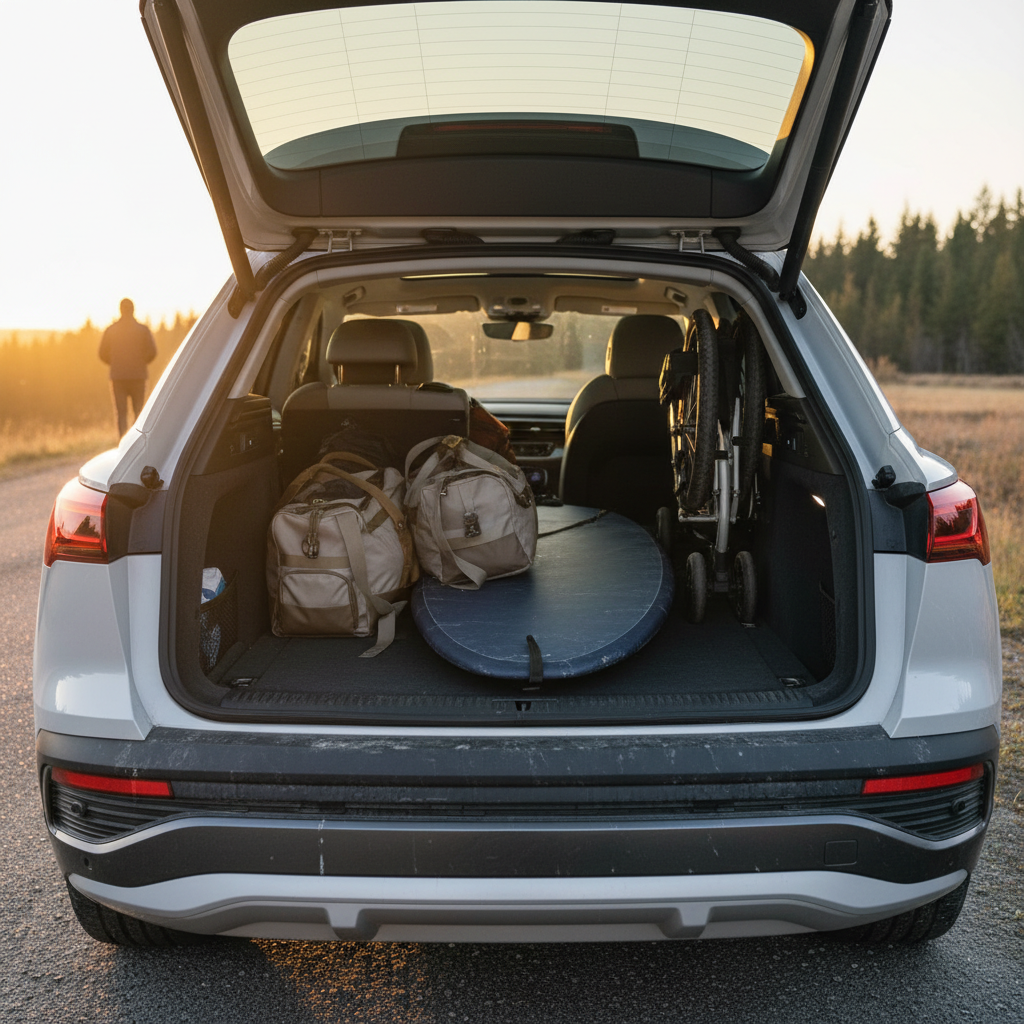
Both SUVs are sized for families: two rows, real adult space in back, and cargo holds that swallow Costco runs and strollers. The way they make you feel over a long day, though, is very different.
Tesla Model Y: airy and minimalist
- Design: Clean dashboard dominated by a single center touchscreen; almost no physical buttons.
- Space: Excellent rear legroom and headroom, plus a deep cargo well and front trunk for extra storage.
- Seats: Supportive but on the firmer side; some owners find long-trip comfort just okay rather than plush.
- Noise: Newer Model Ys have improved sound insulation, but you’ll still hear more road and wind noise than in the quietest luxury SUVs.
Honda Prologue: familiar and comfortable
- Design: Looks and feels like a modern Honda SUV, traditional gauge area plus center screen, clear physical controls for core functions.
- Space: No frunk, but a generous cargo area and thoughtful storage nooks. Rear-seat space is generous for adults.
- Seats: Typical Honda tuning: soft enough for daily commuting, with good long-distance comfort. Higher trims add leather, ventilation, and more adjustability.
- Quietness: Honda has put effort into cabin refinement; the Prologue feels calm and relaxed in daily driving.
Tech, driver assistance, and infotainment experience
On tech, these two are nearly opposites. Tesla gives you a software-first experience where nearly everything runs through the central screen. Honda chose to blend modern software with the smartphone ecosystem you already live in.
Tech showdown: software philosophy vs familiarity
Think about how you like to interact with your car before you choose.
Tesla Model Y tech
- Infotainment: Tesla’s own OS with a fast, responsive UI, built-in navigation, native streaming apps, and frequent OTA feature updates.
- No CarPlay/Android Auto: You live entirely inside Tesla’s world. Some drivers love the integration; others hate losing their favorite phone-based apps.
- Driver assistance: Autopilot standard, with paid upgrades to more advanced features. Performance varies by region and regulatory approval.
- App experience: Tesla’s smartphone app is excellent for preconditioning, charging control, and remote access.
Honda Prologue tech
- Google Built-In infotainment with Google Maps, Assistant, and the Play Store for certain apps.
- Wireless Apple CarPlay & Android Auto standard, so your favorite apps and playlists come along easily.
- Honda Sensing driver-assistance suite standard on all trims, with lane-keeping assist and adaptive cruise control.
- Interface: More traditional mix of touchscreen plus physical knobs and buttons for climate and volume.
Ask yourself how much you love your phone
Driving feel: smooth commuter or sporty crossover?
Electric SUVs all share quiet torque, but how they ride and handle can change your day-to-day happiness. Here, the Model Y chases performance while the Prologue focuses on comfort and predictability.
- Tesla Model Y: Dual-motor trims, especially the Performance variant, accelerate with sports-car urgency. Steering is quick, and the chassis is tuned on the firmer side. Some drivers love the connected feel; others find it busy on broken pavement.
- Honda Prologue: Single- and dual-motor versions are tuned for smoothness, not stoplight drag races. Acceleration is still brisk by gas-SUV standards, but you’re never launched back in your seat the way a Model Y Performance will do. The ride is supple and composed.
- Both can easily handle city duty and highway work, but only the Tesla really invites you to seek out on-ramps for fun. The Honda’s talent is making every trip feel calm and easy, even when the roads aren’t.
Ownership experience, reliability, and dealer support
The less glamorous side of EV ownership, service, repairs, warranty work, matters more the longer you keep the car. Tesla and Honda approach this very differently.
Tesla Model Y ownership
- Service network: Tesla uses its own service centers and mobile service vans. Quality of experience can vary by region and appointment availability.
- Warranty: Competitive EV powertrain and battery warranties, with longer coverage on the high-voltage battery and drive units.
- DIY & body shops: Teslas can still be more challenging for independent shops and body shops, which may mean higher repair quotes or longer waits in some markets.
Honda Prologue ownership
- Dealer network: Thousands of Honda dealers across the U.S. means familiar faces and generally easy access to service bays.
- Warranty: Strong EV component warranties plus Honda’s reputation for long-term durability give peace of mind, though the Prologue itself is a newer design.
- Transition from gas to EV: For households already used to servicing CR‑Vs and Pilots at their local Honda store, the Prologue feels like a natural next step.
Where Recharged fits in
Ready to find your next EV?
Browse VehiclesUsed Tesla Model Y vs new Honda Prologue: value play
Because the Model Y has been on sale for years and Tesla adjusts prices often, the used market is deep and diverse. The Prologue, by contrast, is just starting to appear on roads, so used choices are limited in the near term.
Why many shoppers compare a used Model Y to a new Prologue
Same monthly payment, very different stories.
Case for a used Tesla Model Y
- Lower upfront price: A 2–4-year-old Model Y can undercut a new Prologue on price while still offering strong range and access to Superchargers.
- More performance for the money: Dual-motor and Performance trims often land in the same payment range as a modestly optioned new Prologue.
- Battery health matters: Shopping used makes it crucial to understand real battery condition, not just odometer miles.
On Recharged, every used Model Y comes with a Recharged Score Report that includes verified battery health, so you know what you’re buying for the long term.
Case for a new Honda Prologue
- Full factory warranty on every part of the car, with no previous-owner history to worry about.
- Tax credits can pull the effective price down close to, or below, some used EVs, depending on your tax situation.
- Dealer incentives may sweeten the deal further, especially if your local Honda store is eager to move EV inventory.
If you prefer a traditional showroom experience and like knowing you’re the first owner, the Prologue makes a strong case.
How to choose: quick checklist for buyers
Tesla Model Y vs Honda Prologue decision checklist
1. Decide how often you road-trip
If you regularly do multi-state drives, the Model Y’s Supercharger access and slightly faster DC charging will make life easier. If most of your driving is local with an occasional road trip, the Prologue’s charging performance is more than adequate.
2. Think about your tech comfort zone
Are you excited by a car that updates like a smartphone and runs everything through one big touchscreen? Tesla will delight you. Prefer Google Maps and CarPlay on a more traditional dash? The Prologue is your friend.
3. Test-seat the ride quality
Spend time in each on real roads. The Model Y skews firm and sporty; the Prologue leans relaxed and cushy. Your back will have a clear opinion after 20 miles.
4. Run the true cost of ownership
Compare not just MSRPs but <strong>tax credits, insurance, financing, and energy costs</strong>. A slightly more expensive vehicle with better incentives or lower charging costs might be cheaper to own over 5–7 years.
5. Consider new vs used
A used Model Y, especially one sold with a <strong>verified battery-health report</strong> from Recharged, can land you more performance and range for the same monthly payment as a new Prologue. Balance that against your desire for a full new-car warranty.
6. Map service options near you
Check how close you are to a Tesla service center versus a Honda dealer, and how appointment availability looks. Convenience counts when life happens.
FAQ: Tesla Model Y vs Honda Prologue
Frequently asked questions
Bottom line: which electric SUV fits you best?
If you want the quickest, most tech-forward experience with the easiest road-trip charging, the Tesla Model Y still sets the pace. Its performance, efficiency, and Supercharger access make it the enthusiast and traveler’s choice, especially if you don’t mind living entirely inside Tesla’s software ecosystem.
If you want an EV that feels like a natural evolution of the SUV you already drive, the Honda Prologue is the calmer, friendlier option. It delivers solid range, strong safety tech, and a familiar cabin that plays nicely with your phone, backed by Honda’s broad dealer network.
And if you’re price-sensitive, or simply want more car for the money, a used Tesla Model Y can be the sweet spot. That’s where Recharged comes in: with transparent pricing, nationwide delivery, EV-focused financing, trade‑in options, and a Recharged Score Report that tells you exactly what shape the battery is in, you can shop the Model Y against the Prologue with your eyes wide open.
Whichever way you lean, the good news is that there’s never been a better time to shop for an electric SUV. Line up your budget, be honest about how you drive, and take both for an extended test drive. The right one will make itself obvious the moment you settle into a routine week behind the wheel.