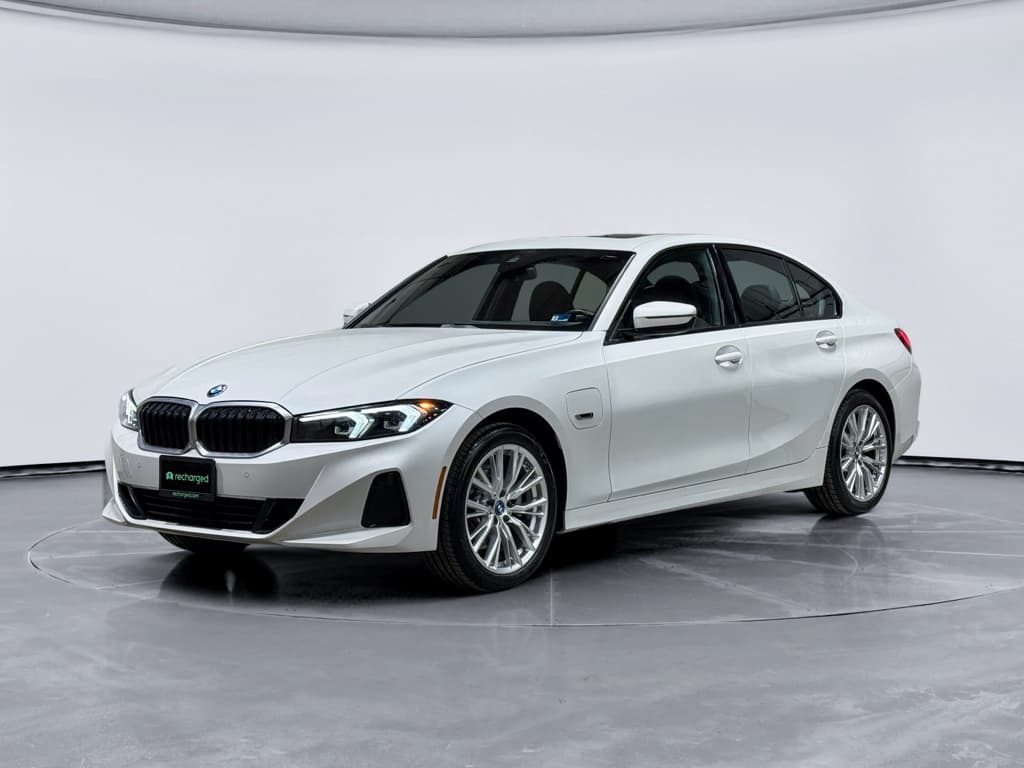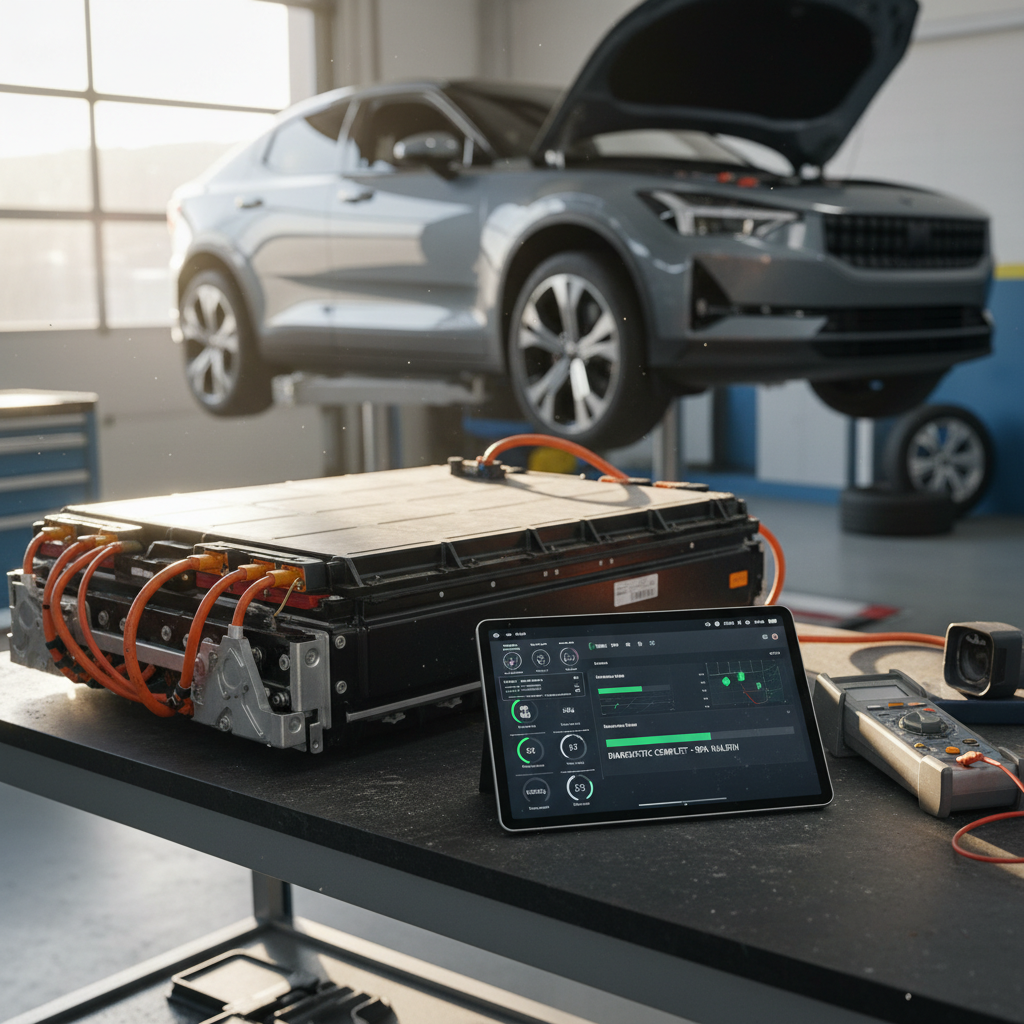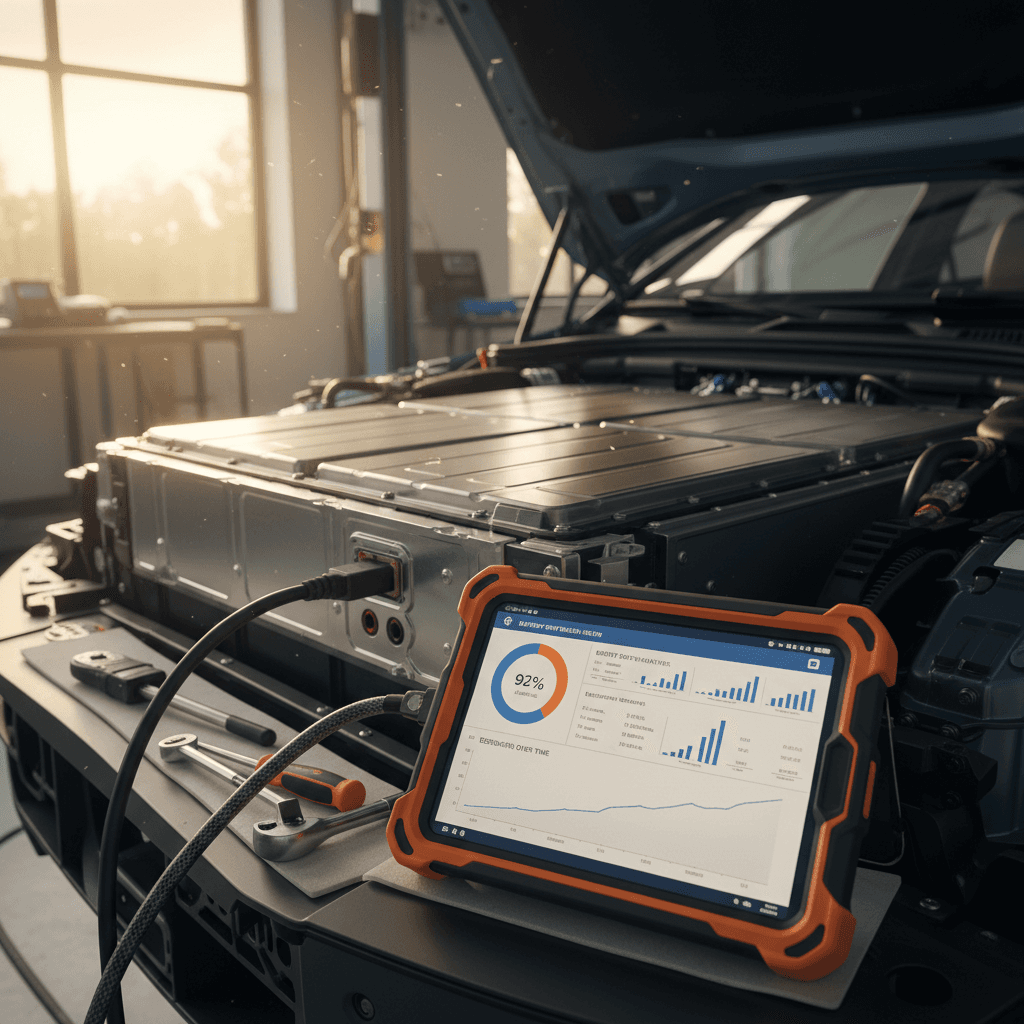
If you’re driving or shopping for a BMW i4, battery health is the big invisible number that decides how far you go, how often you charge, and what that car will be worth in a few years. The good news: you don’t need factory test gear to do a solid BMW i4 battery health check. With a little patience and the right tools, you can get a clear picture of how your pack is aging.
Quick takeaway
Why BMW i4 battery health matters more than a fuel gauge
On a gas BMW, you don’t think twice about the fuel tank. On an i4, the battery pack is the heart, the fuel tank, and a big slice of the car’s value, all rolled into one. Battery State of Health (SOH) is a percentage estimate of how much usable capacity your pack has left compared with new. A 100% SOH pack can use essentially all the energy it left the factory with; an 85% SOH pack has lost about 15% of that usable capacity.
- SOH affects real‑world range more than any EPA number or brochure spec.
- Healthy batteries support better DC fast‑charging performance and more consistent power delivery.
- When you sell or trade a BMW i4, a documented healthy pack can mean thousands of dollars in resale value.
The trick is that BMW doesn’t splash SOH on your main dash the way a fuel gauge does. You have to piece the story together from software reports, simple tests, and, if you want deep detail, professional diagnostics.
What BMW considers a “healthy” i4 battery
BMW i4 battery health: key numbers to know
BMW engineered the i4’s pack to last the life of the car, and early data from real‑world owners suggests only modest degradation in the first 3–5 years when cars are charged and driven reasonably. BMW’s high‑voltage battery warranty usually promises that if capacity falls below a set threshold (around 70% SOH) within 8 years or 100,000 miles, BMW will repair or replace modules to bring it back in line.
Warranty fine print matters
Quick BMW i4 battery health check in 5 minutes
If you only have a few minutes with the car, say you’re at a dealer or eyeing a used i4 in a driveway, you can still do a surprisingly revealing quick battery health check. You won’t get an exact SOH number, but you’ll sniff out anything obviously off.
5‑minute BMW i4 battery health snapshot
1. Wake the car fully
Sit in the driver’s seat with the car “on,” not just accessory mode. Make sure climate is on a normal setting so the systems are awake and range estimates are accurate.
2. Note charge % and rated range
On the main cluster or central screen, note the current <strong>state of charge (SoC)</strong> and the remaining range estimate. You’ll use this later against EPA range or owner reports.
3. Flip to percentage view (if needed)
If the car is only showing miles, dig into settings to enable % SoC as well. That gives you a cleaner way to compare range to a full charge and spot weird estimates.
4. Scan for warnings
Look for any amber or red warnings related to the high‑voltage system, battery, charging, or drivetrain. A healthy i4 should sit quietly with no error messages.
5. Check recent energy consumption
Open the iDrive energy or consumption screen. Recent trips that show extremely high kWh/100 mi (or low mi/kWh) with gentle driving can hint at draggy tires, alignment issues, or, in rare cases, battery or thermal quirks.
Use the “sanity math” trick
How to run a simple range test on your BMW i4
A well‑planned range test is one of the most honest ways to check BMW i4 battery health at home. You’re comparing what the car actually delivers today against what a new i4 of the same trim typically does in similar conditions.
Two types of range tests you can do
Pick the one that fits your schedule and risk tolerance
Conservative day‑trip test
Goal: Estimate capacity without running very low.
- Start around 90–100% SoC.
- Drive 80–120 miles of mixed roads.
- Aim to finish with 20–30% still in the pack.
This is ideal for everyday drivers who want a sanity check without flirting with zero.
Deeper diagnostic test
Goal: Get a tighter read on usable capacity.
- Charge to 100% (right before you leave).
- Drive until under 10% SoC on a continuous trip.
- Record total miles driven and average efficiency.
Best for experienced EV drivers or pre‑purchase testing on familiar roads.
- Pick a day with mild temperatures if you can, cold or extreme heat can skew results.
- Reset or note your trip meter and average efficiency (mi/kWh or kWh/100 mi) at the start.
- Drive as consistently as possible: steady speeds, normal traffic, no aggressive sprints.
- Avoid big altitude changes; long climbs or descents make range math messy.
- At the end, record remaining SoC, miles driven, and average efficiency.
To estimate usable capacity from your test, multiply miles driven by kWh per mile (or use the inverse of mi/kWh). Compare that rough number to what a new i4 of your trim is expected to use. You’re not chasing laboratory precision, you’re looking for obvious outliers, like a car behaving as if it only has 70% of the pack it should.
Don’t chase 0% unless you know what you’re doing
Using BMW CarData and apps to see battery capacity
BMW quietly gives you more battery information than the dash shows, just not always in obvious places. Owners have had success pulling capacity‑related data from BMW’s own systems and pairing it with third‑party tools.
BMW CarData report
In many regions, you can request a BMW CarData report through your BMW ConnectedDrive account. Owners report that this PDF can include:
- Factory battery capacity spec
- Measured or calculated current capacity
- Charging history snippets
It can take a day or two to arrive, so request it well before a pre‑purchase inspection or long trip.
Third‑party apps and OBD tools
Some owners use Bluetooth OBD adapters and apps to read high‑voltage battery data from BMW’s control units. These can sometimes surface SOH estimates, cell voltages, and temperature data.
The quality of this data depends heavily on the app. Treat it as another reference point, not the sole verdict.
Be careful with aftermarket tools
Dealer reports and certified BMW battery health checks
If you want an official verdict, especially before you write a large check for a used i4, BMW dealers can run deeper diagnostics that go beyond what you can see in the car.
What a dealer‑level BMW i4 battery check can include
Ask clearly for a high‑voltage battery capacity or health report
Capacity or SOH reading
Many BMW dealers can generate a Battery Health Quick Report or similar, which includes an estimated state of health percentage or a pass/fail rating against BMW’s internal threshold.
Cell and module diagnostics
Dealers have tools that read individual module behavior, temperature differentials, and error counters, great for spotting a weak module before it becomes a full failure.
Warranty and recall check
You’ll also get confirmation that the high‑voltage battery is still under BMW’s 8‑year/100,000‑mile coverage and that any battery‑related recalls have been performed.
If a seller claims, “The dealer said the battery is fine,” ask to see that report in writing. A simple pass/fail line is better than nothing, but a percentage or clear comment about capacity compared with new is much more useful when you’re trying to compare two cars.
How Recharged handles this for you
Ready to find your next EV?
Browse VehiclesReading the signs: normal aging vs. battery trouble
One of the hardest parts of a BMW i4 battery health check is separating normal EV quirks from true red flags. Every lithium‑ion pack loses a little capacity over time; what you’re watching for is excessive loss or inconsistent behavior.
BMW i4 battery behavior: what’s normal, what’s not
Use this as a gut check before you panic, or before you walk away from a used car.
| Sign | Probably normal | Worth investigating |
|---|---|---|
| Slightly lower range in winter | Yes, especially below ~40°F | If range is terrible in mild weather too |
| 5–10% less range than EPA after a few years | Common on many EVs | If you’re seeing 25–30% less in mild conditions |
| Range estimate jumps around after you change driving style | Normal while the car relearns you | If it’s wildly inconsistent on the same route |
| Occasional reduced DC fast‑charge power when pack is hot or cold | Protective behavior is expected | If charging is always slow on multiple stations in good weather |
| Amber battery or drivetrain warnings that clear once | Could be a transient fault; log it | If they recur or are stored as active faults in a scan |
| Sudden big drop in range over a month or two | Could be winter tires or weather | If nothing else changed, investigate capacity and codes |
Context matters. Always factor in temperature, driving style, and tire choice alongside these symptoms.
Remember: the battery is a thermal athlete
How to check BMW i4 battery health when buying used
Shopping used is where a BMW i4 battery health check really earns its keep. You’re not just deciding if the car feels good today; you’re betting on how that battery will behave years from now.
Used BMW i4 battery health checklist
1. Confirm model year, trim, and mileage
Battery size and expected range differ between an eDrive35 and an M50. Pull the original EPA range for that exact trim and compare it to what the car is showing at a similar SoC.
2. Ask for a recent BMW battery report
Request a <strong>dealer Battery Health Quick Report</strong> or service printout showing capacity or an explicit pass against BMW’s capacity threshold. No report isn’t an automatic dealbreaker, but it should factor into price and your comfort level.
3. Run a short, controlled test drive
Start with a known SoC (for example, 80%), drive at least 20–30 miles, and check remaining SoC and consumption. Watch for big drops that don’t match your driving or for warnings.
4. Inspect charge history if possible
Ask how the car has been charged. Mostly AC charging at home with occasional DC fast charging is ideal. A life lived on ultra‑fast chargers isn’t a guaranteed problem, but it does deserve a closer look at SOH.
5. Look under the car and around the charge port
You won’t be dropping the pack in a driveway, but check underbody for obvious impacts and around the rear quarter where the charge port lives for signs of collision repair or water ingress.
6. Price in uncertainty
If you can’t get a clear capacity number, build that into your negotiation. A car with a documented healthy pack and long remaining battery warranty years is worth more than a mystery car at the same mileage.
Or let someone else do the worrying
Charging and driving habits that keep your BMW i4 battery healthy
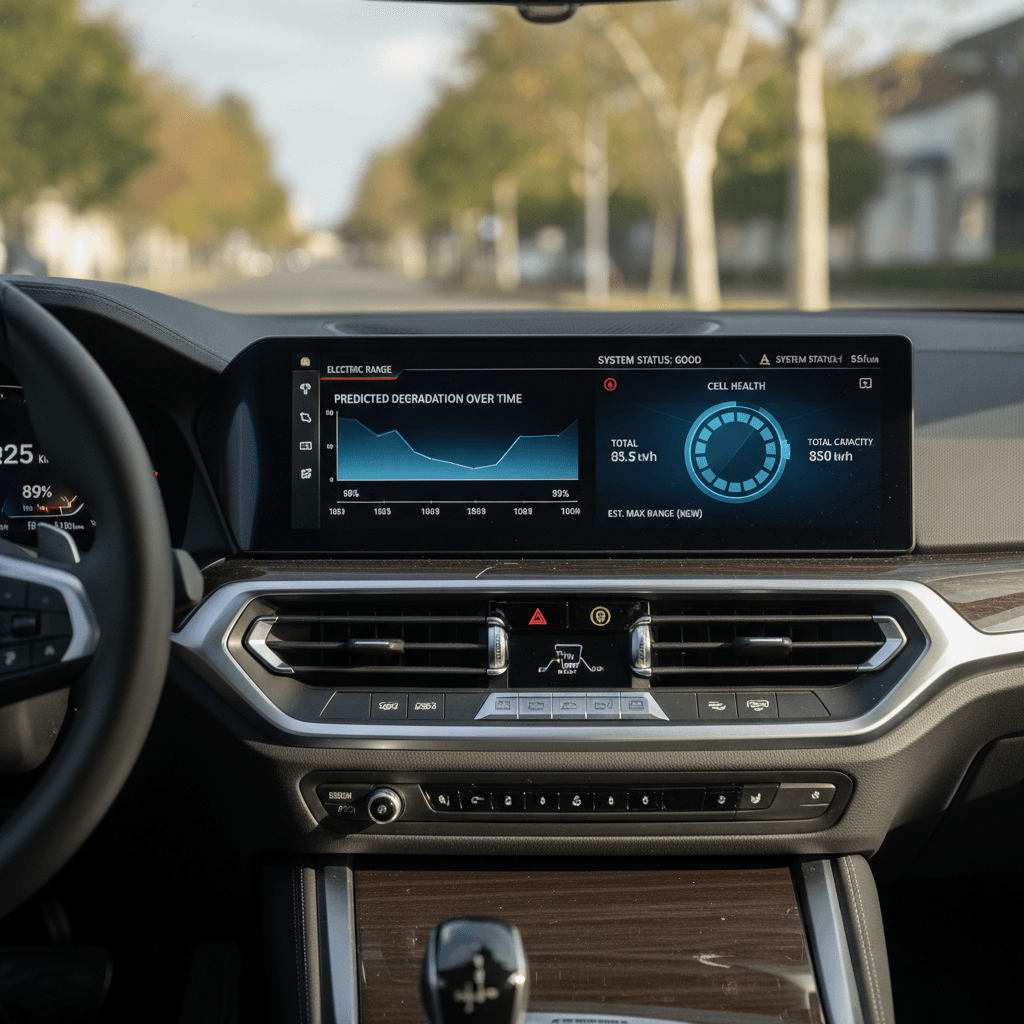
Once you’ve confirmed your pack is in good shape, the next job is to keep it that way. Lithium‑ion chemistry is fussy but predictable: it prefers shallow cycles, moderate temperatures, and time spent away from the extremes of full and empty.
Simple habits that help your BMW i4 battery age gracefully
You don’t need to live with a spreadsheet, just avoid the extremes most of the time
Live around 20–80%
For daily use, set your charge limit around 80% and try not to arrive home with single‑digit SoC every night. Full 100% charges are fine before trips; they just shouldn’t be your daily routine.
Time your charging
Use BMW’s scheduled charging so the car reaches its target SoC shortly before you leave, especially for 100% trip charges. That cuts down on time spent sitting at a high state of charge.
Be kind in extreme temps
In very cold or hot weather, let the car precondition while plugged in and don’t hammer it straight from a dead‑cold pack. The i4’s thermal management is good, but helping it a bit goes a long way.
Fast charging isn’t the villain, overuse is
BMW i4 battery health check FAQ
Frequently asked questions about BMW i4 battery health
Bottom line: build battery checks into your BMW i4 routine
You don’t need to be an engineer, or brave a lab coat, to run a meaningful BMW i4 battery health check. A five‑minute in‑car scan, an honest range test, and, when the stakes are high, a dealer or Recharged battery report will tell you most of what you need to know. Do that when you buy the car, and revisit it every so often, and the i4’s big lithium‑ion heart becomes a known quantity instead of a mystery box.
If you prefer to let experts handle the heavy lifting, shopping BMW i4s through Recharged bakes all of this work into the process. Every used EV gets a Recharged Score battery health diagnostic, fair‑market pricing, and EV‑savvy support, from instant offers and trade‑ins to financing and nationwide delivery, so your main decision is simple: which i4 fits your life, now that you understand the battery behind it.