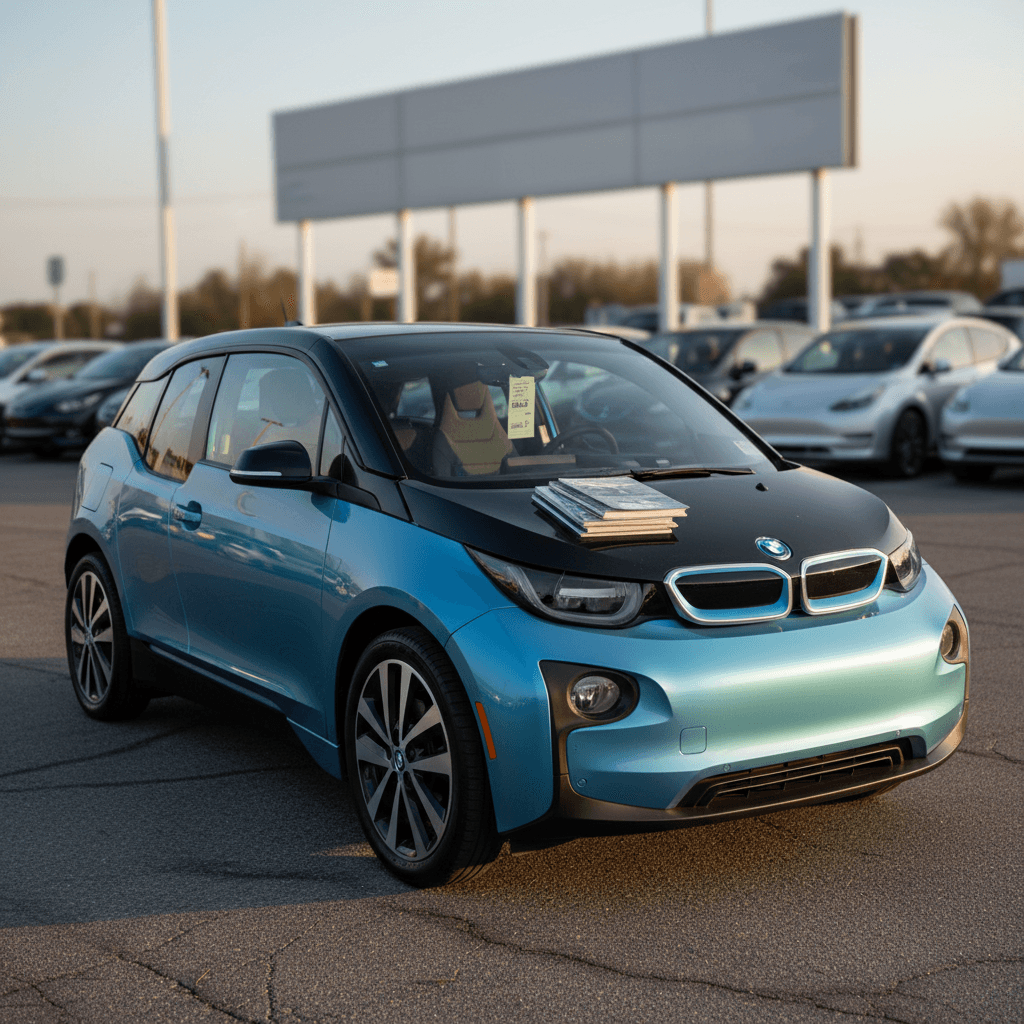
Search for a BMW i3 hybrid and you’ll mostly find the same car: a compact BMW i3 with a small gasoline engine tucked in the back. Officially it’s the BMW i3 Range Extender (often called the i3 REx), but many shoppers describe it as a plug‑in hybrid. If you’re looking at used EVs and want electric driving without giving up the safety net of gas, this guide is for you.
Quick definition
What people mean by “BMW i3 hybrid”
The BMW i3 launched in 2013 as a pure battery‑electric vehicle (BEV). Soon after, BMW added an optional Range Extender, a tiny two‑cylinder gasoline engine that works as a generator. That REx version is what many used‑car shoppers call the “BMW i3 hybrid.”
- Official names: BMW i3 (BEV) and BMW i3 with Range Extender (REx)
- Power source: both versions drive the wheels using an electric motor only
- Fuel: REx models carry both a lithium‑ion battery pack and a small gasoline tank
- Category: technically a series plug‑in hybrid, but engineered to feel like a pure EV in everyday driving
From 2014–2021 in the U.S., buyers could choose either version. On the used market today, you’ll see both BEV and REx cars, sometimes labeled as “BMW i3 hybrid,” “i3 REx,” or simply “i3 w/ gas engine.” Knowing which one you’re looking at is step one.
How to spot a Range Extender car
How the BMW i3 Range Extender actually works
The i3 REx is not a traditional hybrid like a Toyota Prius. The gasoline engine never drives the wheels directly. Instead, the car is always powered by its rear‑mounted electric motor. The Range Extender engine is there to generate electricity once the battery pack gets low.
BMW i3 REx in plain English
Electric drive first, gasoline as a safety net
1. Start on electric
2. Battery hits reserve
3. Generator sustains range
Not a long‑distance gas car
Key hardware in the i3 REx
- Electric motor: 125–135 kW (170–181 hp) driving the rear wheels
- Range Extender: 647 cc two‑cylinder gasoline engine used as a generator
- Fuel tank: ~1.9–2.4 gallons (varies by model year)
- Battery pack: 60 Ah, 94 Ah or 120 Ah, depending on year
Driving experience
- In normal use, the car feels like a pure EV, instant torque, one‑pedal driving, regenerative braking.
- When the engine starts, you get extra noise but similar acceleration, as long as you’re not demanding full power on a low battery.
- You keep full access to EV features like pre‑conditioning and fast charging on DC stations.
Battery sizes, range and real-world driving
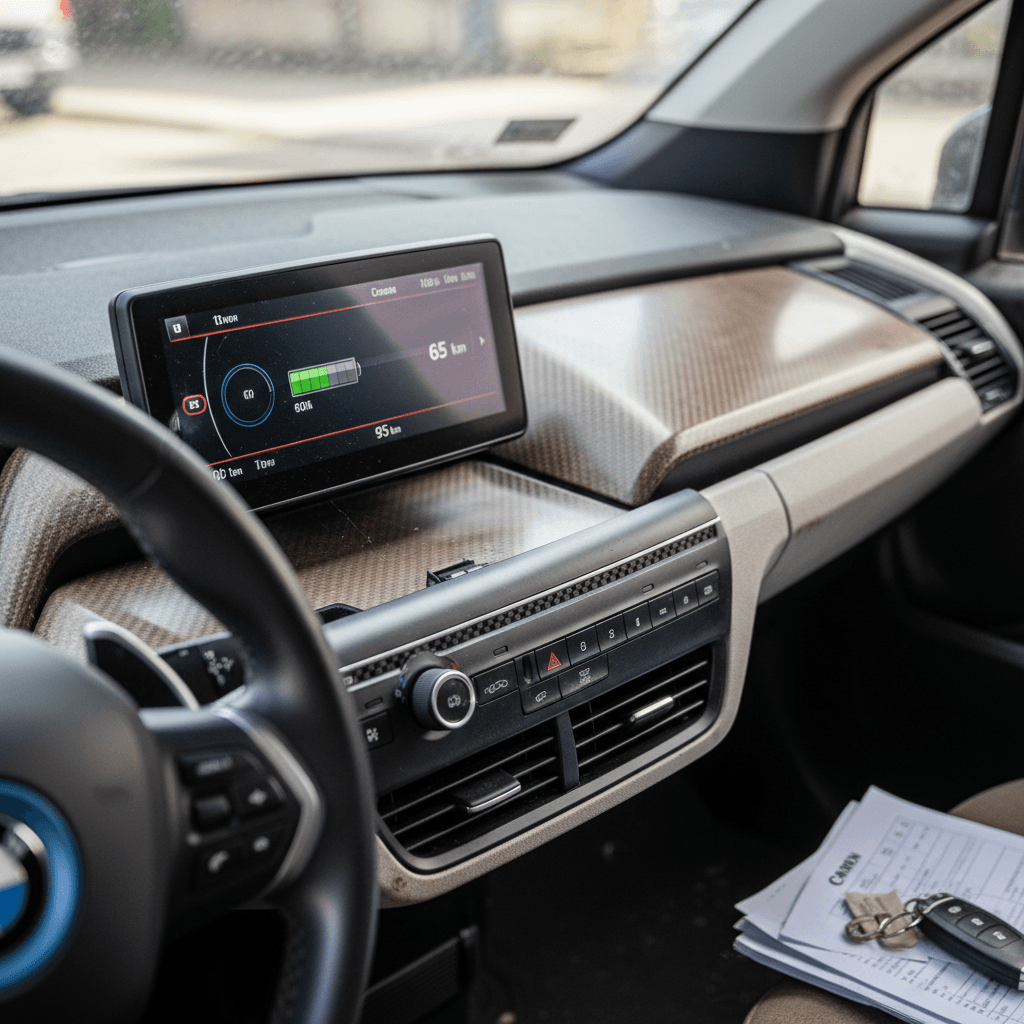
Over its life, the BMW i3 used three main battery sizes. Understanding them is crucial when you’re shopping used, because they dramatically affect both electric range and how often you’ll lean on the Range Extender.
BMW i3 battery options and typical EPA range
Approximate U.S. EPA ranges for the BMW i3, including REx versions often described as the BMW i3 hybrid.
| Model years (US) | Battery label | Usable battery (kWh) | i3 BEV EPA range | i3 REx EPA electric range | Total EPA range with REx |
|---|---|---|---|---|---|
| 2014–2016 | 60 Ah | 18.2 | 81 miles | 72 miles | ~150 miles |
| 2017–2018 | 94 Ah | 27.2 | 114 miles | 97 miles | ~180 miles |
| 2019–2021 | 120 Ah | 37.9 | 153 miles | 126 miles | ~200 miles |
Real‑world range varies with temperature, speed, terrain and driving style, but this table gives a solid baseline for comparison.
Real‑world expectations
Why the i3 REx still holds up in 2025
If you mostly drive in the city or cover under 50 miles a day, even the early 60 Ah i3 REx will feel like an EV with a backup plan. If you frequently make 120–160‑mile days, the 94 Ah or 120 Ah cars offer a much more relaxed experience with less engine runtime.
Fuel, charging and maintenance costs
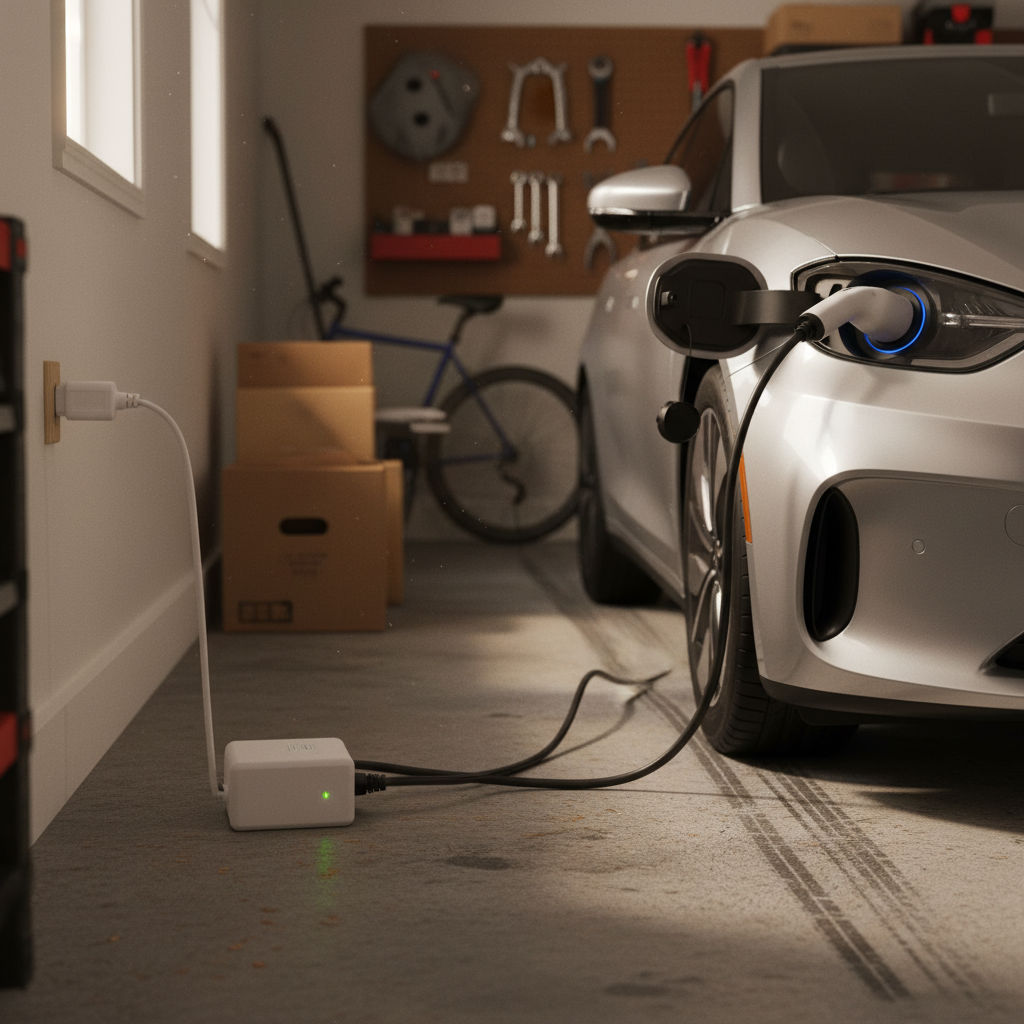
Because the i3 REx is still fundamentally an EV, your running costs look very different from a gas‑only compact. You’ll spend most of your time charging at home or work and only occasionally topping up the small gas tank.
What to budget for with a BMW i3 hybrid (REx)
Electricity is your primary fuel, gas is your backup
Charging costs
Gas usage
Maintenance
Use electricity for the bulk of your miles
BMW i3 “hybrid” pros and cons
Advantages of the BMW i3 REx
- Range security: If charging is limited where you live or travel, the REx helps bridge gaps without tow‑truck anxiety.
- Urban packaging: Tiny footprint, tight turning circle, and great visibility make it ideal for city driving.
- Distinctive design: Carbon‑fiber structure, airy interior and sustainable materials give it a premium feel even as a used EV.
- Access to EV perks: In many regions, the i3 REx still enjoys EV incentives like HOV lane access or reduced tolls (check your local rules).
Trade‑offs to keep in mind
- Small gas tank: Great for limiting fuel use, less ideal if you expect 400‑mile, one‑shot highway days.
- Limited fast‑charging speed: DC fast charging was optional early on; even when equipped, peak power is lower than newer EVs.
- Four‑seat layout: No fifth seat, and cargo space is modest compared with small crossovers.
- REx complexity: More parts than the BEV, engine, emissions hardware and fuel system to maintain over time.
Why many used‑EV shoppers love it
What to look for when buying a used BMW i3 REx
Shopping a used BMW i3 hybrid‑style REx is different from buying a conventional compact. You’re evaluating both an EV powertrain and a low‑use gasoline engine. Here’s how to approach it.
Used BMW i3 REx buyer checklist
1. Verify it’s a REx (if that’s what you want)
Confirm the second fuel door, check the build sheet or window sticker, and note the VIN description. Some listings say "hybrid" but are actually pure BEV cars.
2. Confirm battery size and DC fast‑charge capability
Ask which pack it uses (60 Ah, 94 Ah or 120 Ah) and whether it has DC fast charging. On a platform like Recharged, the listing should clearly state battery capacity and charging options.
3. Get an objective battery health report
Battery condition is central to value. A <strong>Recharged Score Report</strong> uses diagnostics to show remaining battery capacity versus new so you don’t have to guess.
4. Review Range Extender service history
Oil changes, spark plugs and any fuel‑system work should appear in records, even if the engine was rarely used. Long‑stored gasoline can cause issues if the car sat for extended periods.
5. Check for software updates and recalls
BMW issued updates over the years affecting range, REx behavior and charging. A dealer or EV‑focused retailer can confirm these are up to date.
6. Inspect tires, brakes and suspension
The i3’s tall, narrow tires are EV‑specific and not cheap. Make sure tread is healthy, alignment is good and braking feels smooth, especially important on city‑driven cars with lots of stop‑and‑go.
Don’t skip a high‑voltage inspection
BMW i3 REx vs pure electric i3: which is better for you?
You’ll often find both versions at similar prices on the used market. The right choice comes down to your charging access, driving patterns and appetite for complexity.
Side‑by‑side: BMW i3 REx (“hybrid”) vs i3 BEV
Same basic car, different safety nets
i3 BEV (pure electric)
- Best for: Reliable home/work charging and predictable daily mileage.
- Pros: Simpler powertrain, slightly lighter, no gas engine to maintain.
- Cons: When the battery is empty, you’re done, no backup plan.
i3 REx (Range Extender)
- Best for: Mixed charging situations, occasional longer drives, or early EV adopters nervous about range.
- Pros: Gas backup, more flexible road‑trip planning, easier transition from ICE ownership.
- Cons: Extra maintenance items, small tank means more frequent fuel stops on long days.
BMW i3 hybrid & REx: FAQs
Frequently asked questions about the BMW i3 hybrid
Bottom line: Is a BMW i3 hybrid a good used buy?
If you’re shopping for a compact used EV and keep typing "BMW i3 hybrid" into search boxes, what you’re really after is the BMW i3 with Range Extender. It’s a genuinely distinctive electric car: lightweight, city‑friendly and efficient, with a gasoline safety net that takes the edge off early‑EV range anxiety.
The key is to match the battery size to your driving, confirm DC fast‑charging capability, and buy a car with documented battery health and Range Extender service. That’s where a platform like Recharged can help, with a Recharged Score Report on every vehicle, expert EV guidance and flexible financing so you can choose a used BMW i3 that fits the way you actually drive.