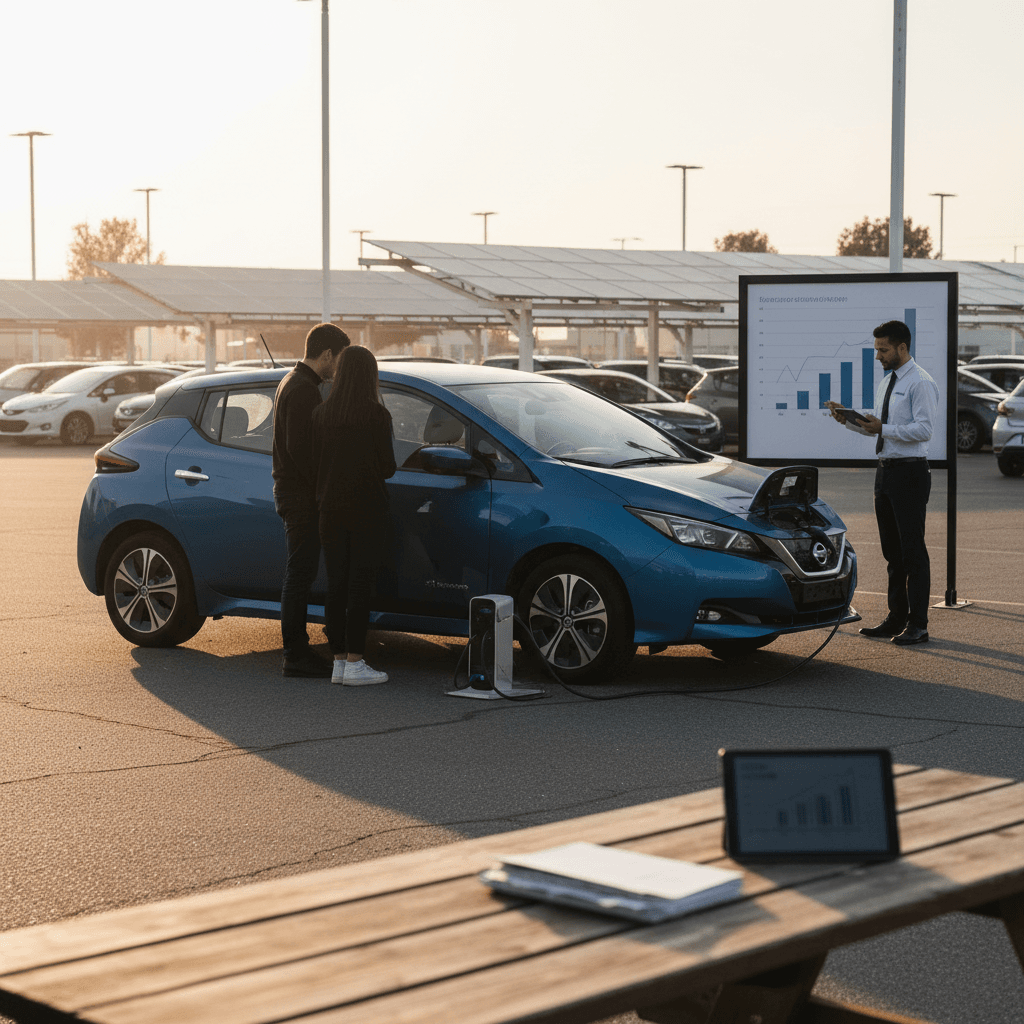
If your daily drive is chewing up time and money, a used electric car can turn your commute into the easiest part of your day. The **best used EV for commuting** isn’t automatically the newest Tesla or the longest‑range SUV, it’s the car that fits your actual route, parking, budget, and tolerance for plugging in. This guide breaks down how to think about range, battery health, comfort, and cost, then walks through specific used EV models that shine as commuter workhorses.
Commutes Are Shorter Than Most People Think
Why the “Best” Used EV for Commuting Depends on You
Search for the “best used EV for commuting” and you’ll see the same handful of models over and over. They’re good cars, but whether they’re good for *you* depends on three things: **how far you drive**, **how you charge**, and **how sensitive you are to comfort and tech** on the way to work. A 12‑mile city hop in mild weather is a very different use case than a 50‑mile freeway slog in a cold climate.
Short‑Hop Urban Commuter
- Under 25 miles round trip
- Lower speeds, lots of stop‑and‑go
- Street or garage parking, maybe no home charger
These drivers can comfortably live with smaller‑battery EVs if they have at least reliable workplace or nearby public charging.
Suburban Freeway Commuter
- 40–80 miles round trip
- Mostly highway at 65–75 mph
- Often have a driveway or garage
Here, range buffer and DC fast‑charging speed start to matter more, especially in winter or with occasional detours and errands.
Start With Your Commute Math
How Much Range Do You Really Need for Commuting?
Most drivers dramatically overestimate how much range they need. With an average one‑way U.S. commute around **27 minutes**, typically 15–20 miles, many people can commute comfortably in a used EV with **150–200 miles of real‑world range**, as long as they can charge at home or work. The key is understanding your *worst* days, not just your average ones.
- Take your **round‑trip commute miles** and add a 30–50% buffer for errands, weather, and traffic.
- If you can **charge every night** at home, a car with an honest 140–160 miles of range can be perfectly adequate.
- If you rely mostly on **public charging** or drive 60–80 miles per day, aim for **200+ real‑world miles** to avoid constant planning.
- Remember that cold weather, high speeds, and roof racks can trim **20–40%** off the rated range in winter.
Don’t Ignore Winter Range Loss
Key Features That Make a Great Commuter EV
What Actually Matters in a Commuter EV
Range is just one piece of the puzzle, daily comfort and running costs matter just as much.
Enough Real‑World Range
You want to cover your **worst commute day** without sweating the battery.
- Short city commute: 140–180 real‑world miles is fine.
- Long freeway commute: 200–260 miles gives breathing room.
Comfort & Noise
If you spend an hour a day in the car, seats, noise, and ride quality matter.
- Supportive seats and good visibility
- Quiet cabin at 65–75 mph
- Good climate control and heated seats for winter
Charging Convenience
The **best commuter EV** is the one that’s always ready each morning.
- Home Level 2 charging is ideal.
- Workplace chargers can offset low range.
- Faster DC charging is a bonus for long detours.
Battery Health
On a used EV, this matters more than almost anything.
- Look for strong remaining capacity.
- Avoid heavily fast‑charged or abused packs.
- Ask for a **battery health report** (like Recharged’s Score).
Usable Tech
Commuters lean on tech every day.
- CarPlay/Android Auto or solid native nav
- Decent driver‑assist (adaptive cruise, lane keeping)
- Efficient heat pump in colder climates, if available
Total Cost, Not Just Price
Depreciation has made many EVs **shockingly affordable** used.
- Factor in electricity vs. gas savings.
- Check insurance and tire costs.
- Consider how long you’ll keep the car.
Best Used EVs for Commuting in 2025
Thanks to aggressive new‑EV discounting and leases rolling off, used EV prices have fallen hard. Well‑equipped commuter EVs that once stickered over $40,000 can now be found in the **low‑ to mid‑teens** in many cases. Here are stand‑out models for different commuter profiles, with an emphasis on value, efficiency, and everyday ease of use.
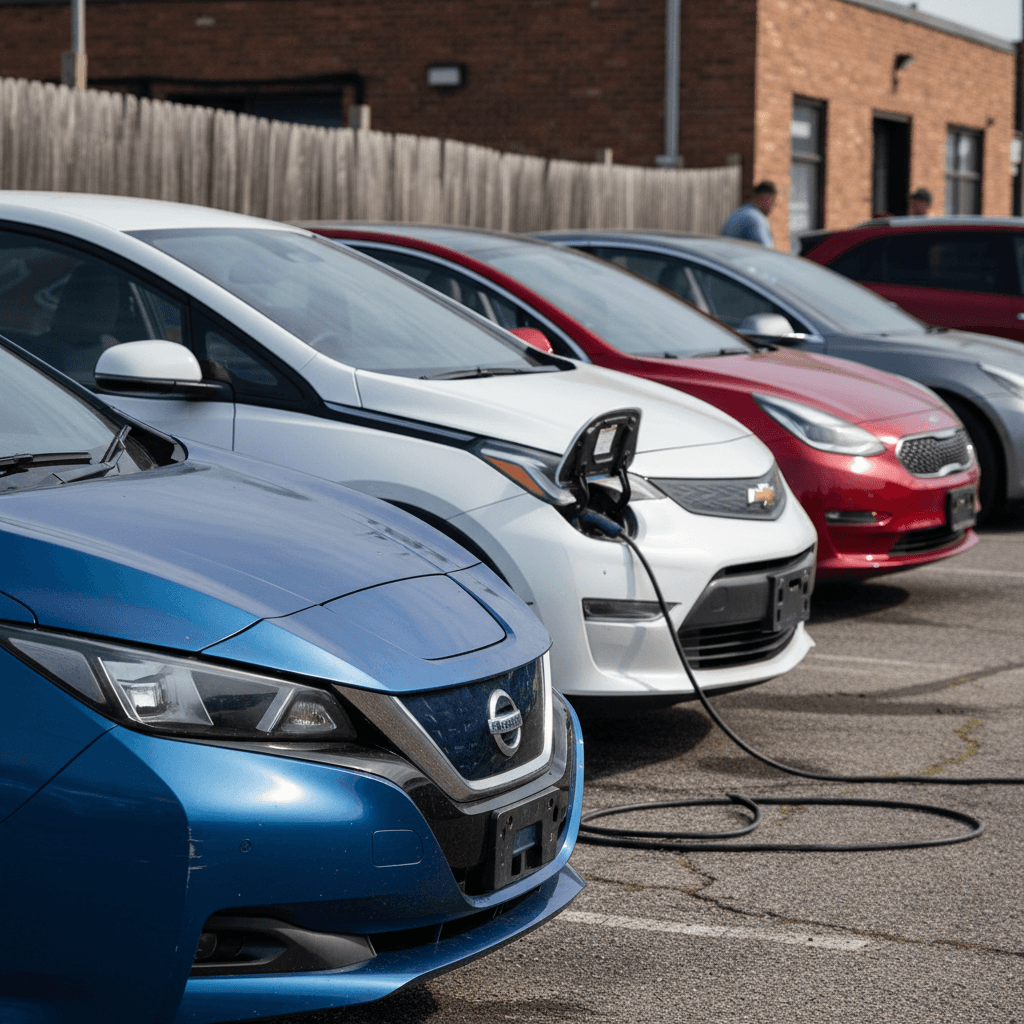
Chevrolet Bolt EV / EUV: Compact Efficiency Champ
If you’re looking for maximum **range per dollar**, the Chevy Bolt EV (and slightly larger EUV) is hard to beat. Early models delivered around 238 miles of EPA range; later cars stretch higher, and many now sit in the mid‑teens on the used market. For a typical 30–60‑mile daily commute, that’s ample buffer even with some degradation.
- Real‑world range: Typically 180–230 miles depending on year, battery health, and conditions.
- Strengths: Very efficient, easy to park, modern tech, strong DC fast‑charging versus its peers.
- Watch for: Completed battery recall work, remaining warranty, and how often the car was fast‑charged.
Bolt Is a Sweet Spot for Many Commuters
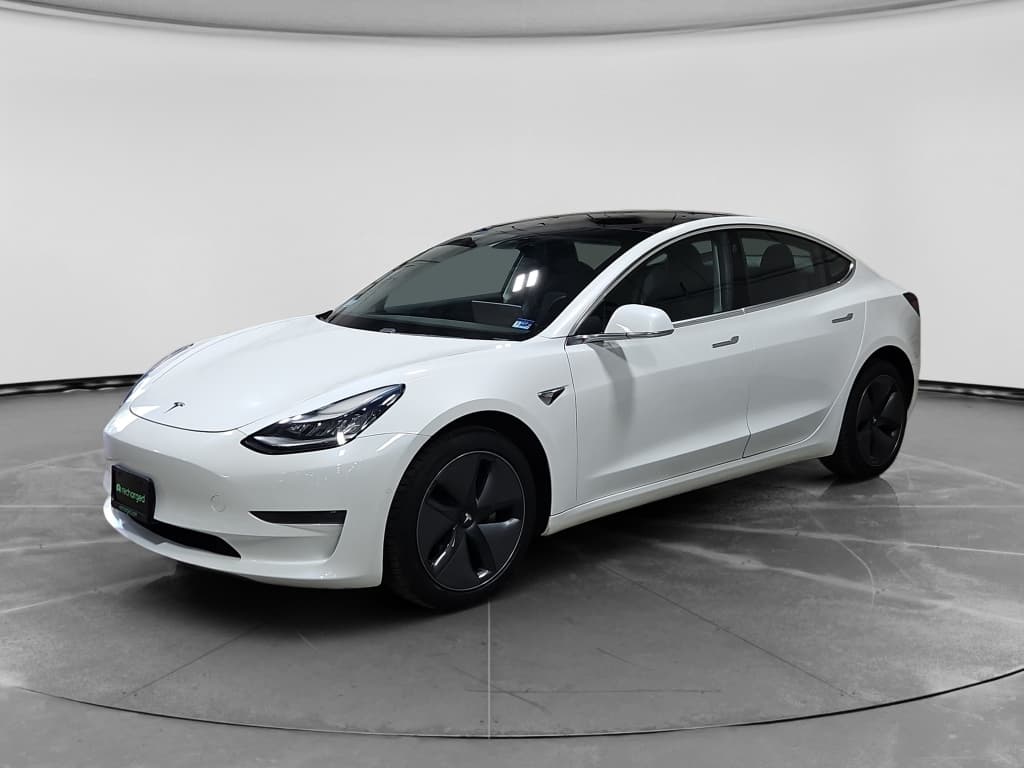
Tesla Model 3 (RWD): Highway and Long‑Range Commuter Star
If your commute leans heavily on **high‑speed freeway driving** or pushes toward 60–80 miles a day, a used Tesla Model 3, especially the rear‑wheel‑drive variants, makes an outstanding commuter. Many 2018–2021 cars now sit in the low‑ to mid‑$20,000s, with **200+ miles of comfortable real‑world range** even after some degradation, plus access to Tesla’s robust Supercharger network where compatible.
- Real‑world range: Often 220–260 miles on a healthy battery for Long Range trims; less for early Standard Range but still workable.
- Strengths: Excellent efficiency at highway speeds, strong driver‑assist, Over‑the‑Air updates, large charging network.
- Watch for: Panel and interior wear, wheel and tire condition, and any signs of heavy Supercharger abuse.
Charging Advantage on Road Trips
Hyundai Kona Electric: Quiet Range for Suburban Drives
The Hyundai Kona Electric tends to fly under the radar, but it’s one of the **most efficient and long‑legged compact EVs** you can buy used. The 64 kWh version offers an honest 230–270 miles of real‑world range for many drivers, and owners routinely report six‑year‑old cars still doing commuting duty comfortably. With prices drifting into the mid‑teens, it’s a strong alternative to the Bolt if you want a slightly more crossover‑like feel.
- Real‑world range: Often around 230–260 miles when new; expect some degradation but still generous for commuting.
- Strengths: Strong range, good standard equipment, comfortable seats, relatively quiet on the highway.
- Watch for: Limited rear‑seat space and cargo if you routinely carry adults or lots of gear.
Kia Niro EV: Practical All‑Rounder With Big Depreciation
If you want something that feels more like a conventional compact crossover, the Kia Niro EV is a compelling commuter. It has a tall-ish seating position, decent cargo room, and a rated range just over 200 miles in many trims. Thanks to heavy depreciation from original MSRPs north of $40,000, some examples now trade around the low‑teens while still offering modern safety and infotainment tech.
- Real‑world range: Roughly 190–220 miles for healthy batteries, which is plenty for most suburban commutes.
- Strengths: Practical shape, comfortable ride, user‑friendly controls, good value on the used market.
- Watch for: Option content differences (not all trims have advanced driver aids) and DC fast‑charging speeds if you plan many road trips.
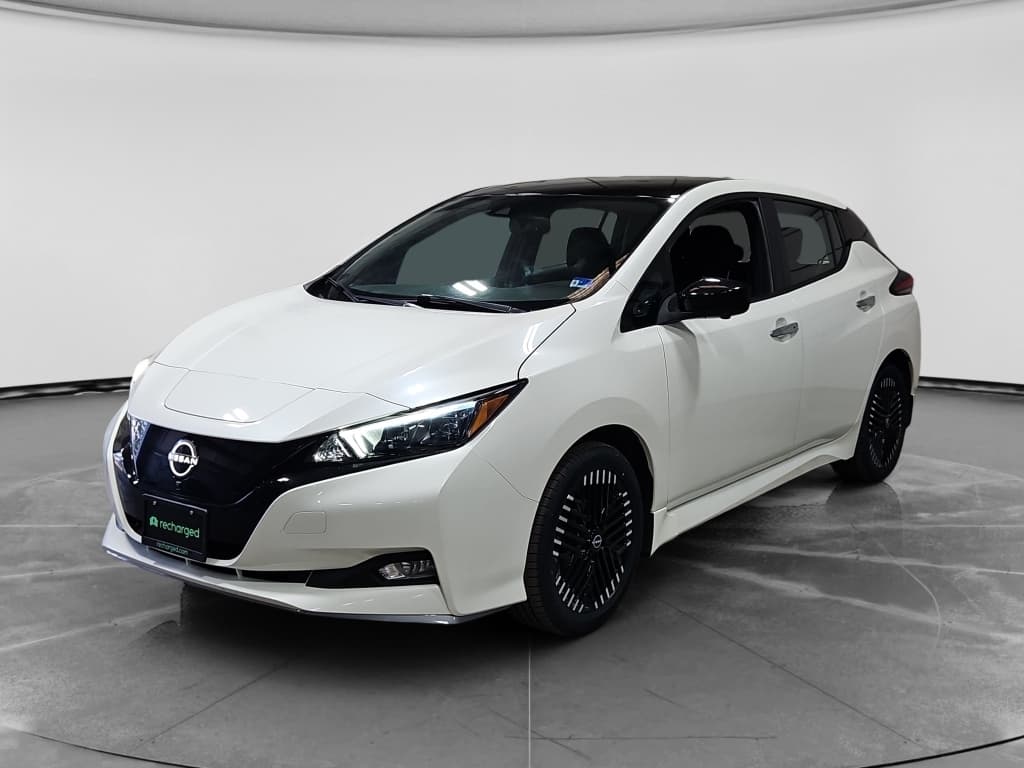
Nissan Leaf (40–62 kWh): Budget City and Short‑Suburb Specialist
If you’re on a **tight budget** and have a relatively short commute, the Nissan Leaf, especially second‑generation cars with 40 kWh or 62 kWh packs, can be an incredible value. Older Leafs often sell for just a few thousand dollars, and even newer ones undercut most of the market. The trade‑off is **no active battery cooling** and modest DC fast‑charging, so they’re best for shorter daily use and mild climates.
- Real‑world range: Anywhere from ~90–110 miles for older, degraded packs to ~170–200 miles for healthier 40–62 kWh cars.
- Strengths: Rock‑bottom prices, simple to drive, cheap to run, great for urban or short suburban commuting.
- Watch for: Rapid capacity loss in hot‑climate cars, missing capacity bars, and state‑of‑health reports that show heavy degradation.
Volkswagen e‑Golf / ID.4: Comfortable Euro Commutes
For drivers who care more about **driving feel and refinement** than maximum efficiency, the Volkswagen e‑Golf (for shorter commutes) and ID.4 (for longer ones) offer comfortable cabins and solid highway manners. The e‑Golf works best for city and inner‑suburb drives, while the ID.4’s larger battery and DC fast‑charging suit longer freeway runs.
- e‑Golf real‑world range: Often 80–120 miles, fine for inner‑ring commutes with reliable charging.
- ID.4 real‑world range: Roughly 190–240 miles depending on pack and conditions.
- Strengths: Mature driving feel, well‑tuned suspensions, solid driver‑assist in ID.4.
- Watch for: Software quirks on some early ID.4s, and whether CarPlay/Android Auto meet your daily needs.
Used Commuter EV Comparison at a Glance
Popular Used EVs for Commuting: Quick Comparison
Approximate real‑world ranges and typical used‑market roles as commuter cars. Exact numbers depend on year, trim, climate, and battery health.
| Model | Typical Real‑World Range (mi) When Healthy | Best For | Key Strength | Main Caveat |
|---|---|---|---|---|
| Chevrolet Bolt EV / EUV | 180–230 | City + suburban mixed commutes | Excellent efficiency and value | Must confirm battery recall work and warranty |
| Tesla Model 3 (RWD) | 220–260 | Long freeway commutes | Highway efficiency and strong driver‑assist | Tire wear and ride firmness on some trims |
| Hyundai Kona Electric (64 kWh) | 230–260 | Long suburban drives | Big range in a compact footprint | Tight rear seat and cargo |
| Kia Niro EV | 190–220 | Family suburban commuting | Practical crossover shape at low used prices | Not the fastest DC charging in class |
| Nissan Leaf (40–62 kWh) | 90–200 | Short‑range city commuting | Ultra‑low purchase prices | Uncooled battery can degrade in hot climates |
| VW e‑Golf | 80–120 | Urban and inner‑suburb runs | Comfortable, familiar Golf driving feel | Limited range; not ideal for long freeway slogs |
| VW ID.4 | 190–240 | Suburban freeway commuting | Comfortable ride and space | Early software quirks; check updates |
Use this table to narrow down which used EVs match your commute distance and budget before you start test‑driving.
Battery Health: The Single Most Important Used‑EV Metric
When you buy a used gasoline car, you probably obsess over mileage and service records. With a used EV, **battery state of health (SoH)** plays that role. Two identical cars on paper can be wildly different in day‑to‑day usefulness if one has lost 10% of its capacity and the other has lost 30%.
How to Judge Battery Health on a Used Commuter EV
1. Look for a Quantitative Battery Report
Instead of guessing from dash bars, ask for an objective test. At Recharged, every vehicle includes a **Recharged Score Report** with verified battery health, so you know how much usable capacity you’re actually buying.
2. Compare Remaining Range to Your Worst‑Case Commute
Take the tested usable range and stress‑test it against your **longest, coldest** commute days. If the math only barely works, step up to a longer‑range model or a healthier battery.
3. Understand the Car’s Battery Cooling Design
EVs with **liquid‑cooled packs** (Bolt, Model 3, Kona, Niro, ID.4) generally age more gracefully than early air‑cooled designs. That doesn’t make air‑cooled cars bad, but it means you should scrutinize their history more closely.
4. Check Fast‑Charging History When Possible
Constant DC fast‑charging can stress batteries over time. A car that lived on **Level 2 home charging** and only fast‑charged on road trips is often a safer bet as a long‑term commuter.
5. Use Warranty as a Tiebreaker, Not a Crutch
Many EVs carry 8‑year battery warranties, but you don’t want to live on the edge of a claim. A car with good **measured health today** is a better bet than one that’s limping along near the warranty threshold.
Don’t Buy Blind on Battery Health
Match the Used EV to Your Commute Type
Sample Commutes and Good Used‑EV Matches
Short Urban Commute (Under 20 Miles Round Trip)
Ideal cars: Nissan Leaf (40 kWh), VW e‑Golf, early BMW i3, older short‑range EVs in good health.
Priorities: Low purchase price, compact size, easy parking.
Charging: Level 1 or workplace charging might be enough; Level 2 at home is a luxury, not a necessity.
Warning: Don’t overpay for 250+ miles of range you’ll never use. Spend the savings on a home charger, parking, or insurance.
Medium Suburban Commute (20–50 Miles Round Trip)
Ideal cars: Chevy Bolt EV/EUV, Hyundai Kona Electric, Kia Niro EV, newer Leaf 62 kWh.
Priorities: Comfortable seats, decent highway manners, 180+ miles of **real‑world range**.
Charging: Level 2 at home is strongly recommended so you always start the day full.
Warning: Under‑ranged cars may technically work, but you’ll be plugging in constantly and stressing over winter days.
Long Freeway Commute (50–80 Miles Round Trip)
Ideal cars: Tesla Model 3 (RWD or Long Range), Hyundai Kona Electric, Kia Niro EV, VW ID.4.
Priorities: Highway efficiency, good driver‑assist, quieter cabin, 220+ miles of usable range.
Charging: Home Level 2 plus DC fast‑charging access near your route for bad weather or detours.
Warning: Be realistic about winter range loss at 70+ mph. A car that’s marginal in summer can feel unusable in February.
Mixed Use: Commute Plus Weekend Road Trips
Ideal cars: Tesla Model 3, Kona Electric, Niro EV, ID.4 with solid fast‑charging support.
Priorities: Balanced range, fast‑charge capability, comfortable seats for multi‑hour drives.
Charging: Home Level 2 is almost mandatory; public networks fill in the gaps on trips.
Warning: Don’t let rare road trips completely dictate your commuter choice, but don’t ignore them either. A car that’s perfect Monday–Friday and tolerable on occasional trips usually beats one optimized only for vacations.
What Your Commute Really Costs in a Used EV
Depreciation has already done the heavy lifting on many used EVs. Your day‑to‑day cost now comes down to **electricity, maintenance, and financing**. For a commuter car that racks up predictable miles, those costs are easier to model than with a gas vehicle.
Illustrative Cost Advantages of Commuting in a Used EV
Where You Save
- Energy cost: Commuting on off‑peak home electricity can cost just a few dollars a week.
- Maintenance: No oil changes and fewer mechanical wear parts.
- Depreciation already baked in: A three‑ to five‑year‑old EV has taken the steepest hit already.
Where to Be Cautious
- Insurance: Can be higher for newer or premium EVs, compare quotes before committing.
- Tires: Some EVs eat through performance tires quickly, especially Teslas.
- Battery risk: A weak pack can turn a good deal into a bad one, lean on objective diagnostics like a Recharged Score Report.
Use Financing Strategically
Used EV Commuter Checklist Before You Buy
Quick Checklist for Choosing a Used EV Commuter
Confirm Your Daily and Weekly Mileage
Write down your normal daily commute, plus errands and occasional long days. Make sure your candidate EV still covers those with a **healthy buffer**.
Decide Where and How You’ll Charge
Can you install Level 2 at home? Do you have workplace charging? Knowing this up front can expand your options, or rule out lower‑range cars.
Get Verified Battery Health Data
Ask for a recent **battery health report**, not just a dash photo at 100%. Recharged includes a diagnostic Recharged Score so you can compare vehicles on more than just odometer and price.
Test Highway Comfort and Noise
If you spend time on freeways, take a test drive at your normal cruising speed. Pay attention to seat comfort, wind noise, and how the car tracks in its lane.
Check Driver‑Assist and Infotainment
For a commuter car, features like adaptive cruise, lane‑keeping, and CarPlay/Android Auto can dramatically reduce fatigue. Confirm they work as advertised.
Model Your Monthly All‑In Cost
Look at payment, insurance, estimated electricity, and parking. Compare that to your current gas vehicle. Many commuters find a used EV is cheaper than they expect once they run the numbers.
FAQ: Best Used EV for Commuting
Frequently Asked Questions About Used EVs for Commuting
Bottom Line: There’s No Single “Best” Used EV, Only the Best for Your Commute
The right used EV commuter is less about chasing the biggest battery and more about **aligning the car with your actual life**. Short urban hops can be served brilliantly by affordable Leafs, e‑Golfs, and older compacts. Longer freeway runs reward the efficiency and comfort of Bolts, Konas, Niros, ID.4s, and Model 3s. Whatever you choose, anchor your decision in battery health, realistic range needs, and how you’ll charge.
If you’d rather not decode all of that alone, Recharged was built for exactly this kind of decision. Every EV on the platform comes with a Recharged Score battery‑health report, transparent pricing, and EV‑savvy support that starts with one question: **What does your commute actually look like?** Answer that honestly, and the “best used EV for commuting” becomes a clear, practical choice instead of a guessing game.