If you love weekends under the stars and you’re shopping for the best used electric car for camping enthusiasts, you’re in a sweet spot. Today’s used EV market has plenty of roomy crossovers, adventure-ready trucks, and clever hatchbacks that can double as rolling cabins, many with built‑in power outlets to run your camp kitchen and lights.
EVs and camping are a natural match
Why EVs Make Surprisingly Great Camping Rigs
Key advantages
- Silent nights – No idling engine droning away while you run climate control.
- Built‑in battery – Many EVs now offer vehicle‑to‑load (V2L) or interior outlets for 120V power.
- Amazing torque – Great for climbing to trailheads and mountain campsites.
- Low running costs – Electricity is typically cheaper per mile than gas, especially if you can charge at home.
Real‑world trade‑offs
- Range planning – Cold nights, roof boxes, and dirt roads all eat into range.
- Charging access – Remote national forest sites may be far from fast chargers.
- Payload limits – Batteries are heavy; know your max cargo and tongue weight if you tow.
- Ground clearance – Not every EV is ready for deep ruts or rocks.
What Makes a Great Used Electric Car for Camping?
Before you zero in on specific models, it helps to define what a "great" electric camping vehicle actually looks like. For most people, you’re not rock‑crawling in Moab, you’re driving a few hours from the city, maybe down a gravel road, then using the car as a mobile cabin and power bank.
Core Camping Criteria for a Used EV
Focus on comfort, space, and power, not just 0–60 mph.
Flat sleeping area
Rear seats that fold truly flat or close to it make car‑camping far more comfortable. SUVs like the Rivian R1S and Tesla Model Y are standouts here.
Useful range
For most camping trips, a realistic 220–280 miles between charges gives you a comfortable buffer, even with gear and elevation.
Onboard power
Look for 120V outlets or V2L so you can run lights, a small induction cooktop, or a laptop without bringing a separate generator.
Cargo practicality
Boxy cargo areas, roof‑rack mounting points, and under‑floor storage make it easier to pack bulky tents, coolers, and bins.
Ground clearance
A couple extra inches of clearance, and optional all‑wheel drive, go a long way on rutted forest roads and trailhead access roads.
Battery health
On a used EV, verified battery health is crucial. It affects not only range, but also how comfortable you’ll feel stretching to that distant campsite.
Top Used EVs for Camping: Quick Ranking
Best Used Electric Cars for Camping at a Glance
Used EVs That Shine for Camping
Approximate EPA ranges shown for popular battery versions; real‑world camping range will be lower with cargo, elevation, and cold weather.
| Model | Body Style | Approx. EPA Range (mi) | Key Camping Perks | Typical Used Positioning* |
|---|---|---|---|---|
| Hyundai Ioniq 5 | Compact SUV | 220–303 | Roomy interior, V2L power, rear seats recline and fold | Excellent value, modern tech |
| Kia EV6 | Sporty crossover | 225–310 | V2L, available heat pump, good highway range | Sportier alternative to Ioniq 5 |
| Tesla Model Y | Compact SUV | 260–330 | Huge cargo area, Camp Mode, Supercharger access | Super-popular, strong charging network |
| Rivian R1S | 3-row SUV | 260–390 | Flat‑fold seats, off‑road modes, adventure branding | Premium, serious overlanding |
| Ford F‑150 Lightning | Full‑size truck | 240–320 | Pro Power Onboard outlets, big bed, great for towable campers | Full‑size truck plus silent generator |
| Rivian R1T | Pickup truck | 270–400 | Gear tunnel, camp kitchen accessories, off‑road capable | Adventure truck with clever storage |
| Chevy Bolt EUV | Small crossover | 247 | Surprisingly roomy, budget‑friendly, simple to live with | Affordable entry into EV camping |
| Nissan Leaf (plus battery) | Hatchback | ~215 (Plus) | Flat cargo floor, good for short trips and car‑sleeping | Best for local or regional camping |
Always confirm exact specs by model year, battery size, and drive configuration when you shop used.
Used pricing varies
Best All-Around: Hyundai Ioniq 5
If you want one vehicle that can commute all week and take you to a trailhead on Friday, the Hyundai Ioniq 5 is hard to beat on the used market. It’s a roomy compact SUV with a long wheelbase, generous rear legroom, and a cargo area that works well for both gear and sleeping setups.
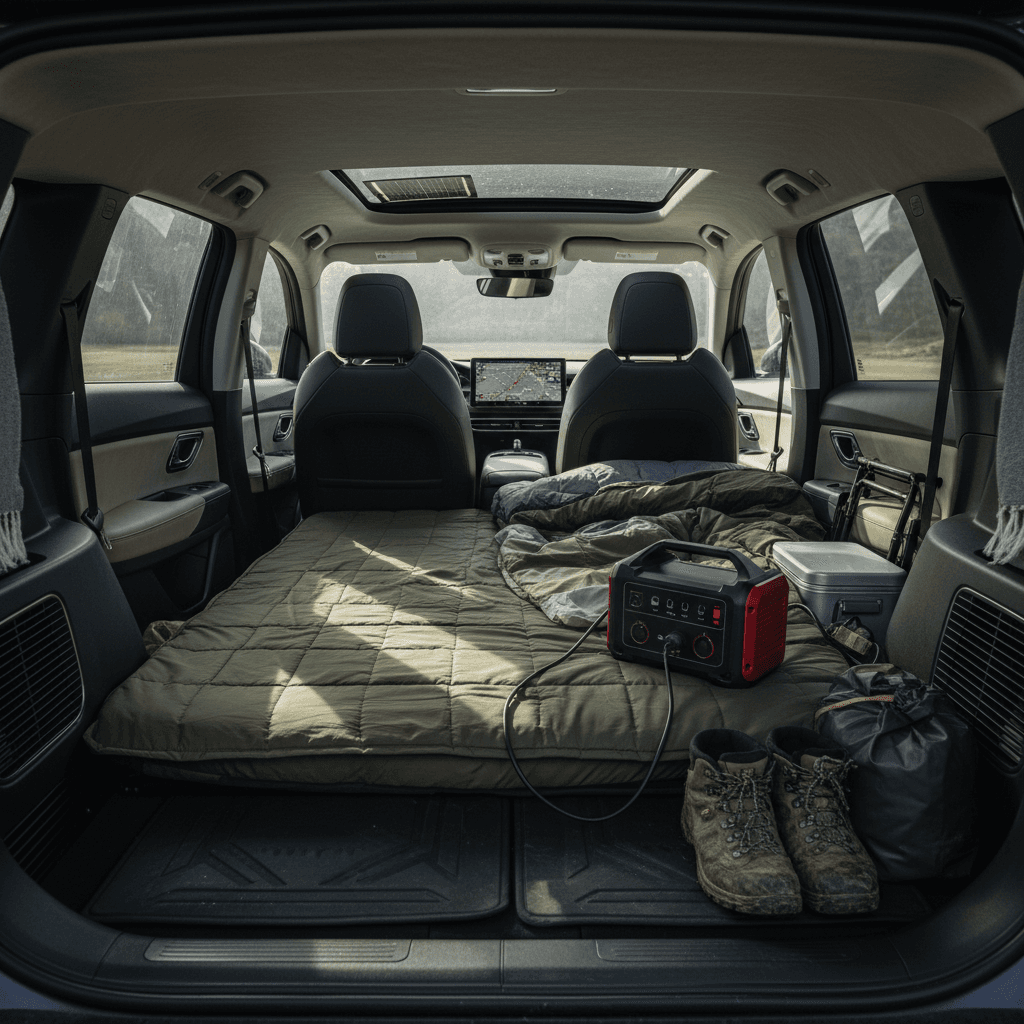
- Rear seats that recline and fold to create a long, mostly flat load floor, good for one or two people sleeping diagonally with a mattress topper.
- Strong DC fast‑charging speeds in many trims, helpful when you’re topping up between trailheads.
- Vehicle‑to‑load (V2L) capability on many U.S. trims, letting you power 120V gear like lights, a fan, or an induction cooktop using an adapter.
- Comfortable ride quality and quiet cabin, so long drives to national parks are less tiring.
Trim and year shopping tip
Best for Sleeping Inside: Rivian R1S & Tesla Model Y
If your vision of the perfect camping weekend is stretching out inside the vehicle instead of pitching a tent, two used EVs float to the top: the Rivian R1S and the Tesla Model Y. Both offer long, flat spaces behind the front seats and excellent climate control options for overnight comfort.
Rivian R1S: Adventure SUV
- Three rows of seating that can fold to create a large, flat cargo area for sleeping.
- Available adjustable air suspension and off‑road modes, ideal for rough forest or BLM roads.
- Plenty of tie‑downs and cubbies to secure gear; optional accessories are camping‑oriented.
- Premium pricing used, but arguably the most purpose‑built EV for overlanding right now.
Tesla Model Y: Versatile all‑rounder
- Rear seats fold flat to create a long, continuous surface, many owners use dedicated inflatable mattresses.
- Camp Mode keeps climate control and ventilation running quietly overnight without waking the neighbors.
- Excellent range and Supercharger access make cross‑country camping trips realistic.
- Less ground clearance than Rivian, so best for graded dirt and forest roads, not rock crawling.
Don’t overlook climate control modes
Best Electric Trucks for Camping: F‑150 Lightning, Rivian R1T, Cybertruck
If you prefer a rooftop tent, a slide‑in camper, or a small travel trailer, a used electric truck is worth a close look. The standouts today are the Ford F‑150 Lightning, Rivian R1T, and early used Tesla Cybertruck examples in markets where they’re starting to appear.
Why Electric Trucks Make Outstanding Camp Platforms
Big beds, big batteries, and built‑in power.
Ford F‑150 Lightning
Ford’s Pro Power Onboard system can deliver kilowatts of 120V and 240V power through bed and cabin outlets. That’s enough for tools, e‑bikes, or a small camper’s shore power.
Rivian R1T
Short bed but very clever storage: the gear tunnel, in‑bed outlets, and bed rail mounts make it a favorite among tent‑and‑bike campers.
Tesla Cybertruck
Offers multiple 120V outlets and a 240V outlet in the bed along with a huge battery pack, ideal if you’re running heavier loads like an electric grill or small A/C unit in a camper.
Towing and range reality check
Budget-Friendly Used EVs for Weekend Camping
Not every camper needs a six‑figure adventure rig. If your trips are within a few hours of home and you’re comfortable with simpler setups, several affordable used EVs can make excellent camping companions, especially if you’re willing to keep a tent in the mix.
- Chevrolet Bolt EUV – Compact but surprisingly roomy with the rear seats down. Best for solo sleepers or those who prefer a tent and just want efficient travel and simple packing.
- Nissan Leaf (later "Plus" models) – Older Leafs are often very inexpensive used. Range is modest and fast‑charging varies by trim, so they’re best for short‑range camping and state parks near cities.
- First‑gen Hyundai Kona Electric and Kia Niro EV – Efficient, compact crossovers. Cargo areas are less square than a Model Y or Ioniq 5 but work fine for two people with smart packing and a roof box.
Battery health matters more on shorter‑range EVs
How Much Range Do You Really Need for Camping Trips?
It’s easy to get fixated on headline range numbers, but what you really care about as a camper is usable range with gear, elevation, and weather factored in. For most people, that means thinking in terms of realistic one‑way distance from your last fast charger to the campsite, and back.
Range Planning for EV Camping
1. Map your real routes
Look at where you actually camp. If you usually drive 120–160 miles from home and can fast‑charge on the way, a used EV with a true 220–260 miles of highway range is often plenty.
2. Build in a buffer
Wind, hills, and cold can pull 20–30% off the rated range. Add a margin of safety instead of planning to arrive with 1–2% battery remaining.
3. Consider campsite charging options
Some campgrounds have 30‑ or 50‑amp RV hookups. With the right EVSE and adapters, you can slow‑charge overnight while running some limited loads.
4. Think about seasonality
Winter camping with the heater running is a different story than summer sleeping with the windows cracked. If you camp year‑round, prioritize larger packs and heat pumps where available.
5. Decide how often you’ll tow
If you’re pulling a small trailer or pop‑up, expect heavily reduced effective range. A longer‑range truck or SUV becomes more important.
Must-Have Camping Features to Check Before You Buy Used
Once you narrow down to a few models, the next step is checking whether a specific used vehicle actually has the camping‑friendly options you care about. These features often vary by trim, package, and model year.
Camping Features Checklist for Used EVs
Ask the seller, or your Recharged specialist, about these items.
Seat folding & cargo layout
Do the rear (and middle) seats fold fully flat, or is there a step or gap? Can you open the liftgate from inside? Bring a tape measure and confirm a comfortable sleeping length.
Outlets & V2L capability
Does the EV include interior 120V outlets or vehicle‑to‑load hardware? Is the V2L adapter included? Check wattage limits if you plan to cook or power tools.
Heat pump & climate modes
Heat pumps are more efficient in cold weather. Also look for Camp, Utility, or Stay modes to keep HVAC running while parked without constant key cycles.
Ground clearance & tires
Measure ground clearance and check for all‑season or all‑terrain tires. Some trims offer off‑road packages or skid plates that are worth paying for if you leave the pavement often.
Roof racks & carrying options
Factory roof rails, crossbars, and tongue weight ratings matter if you plan to use cargo boxes, bike racks, or a hitch‑mounted kitchen setup.
Verified battery and charging health
Request documentation on battery capacity, DC fast‑charging behavior, and any warranty work. A third‑party battery health report gives you confidence before you point the nose at the mountains.
Using Vehicle-to-Load (V2L) and Outlets for Camping Power
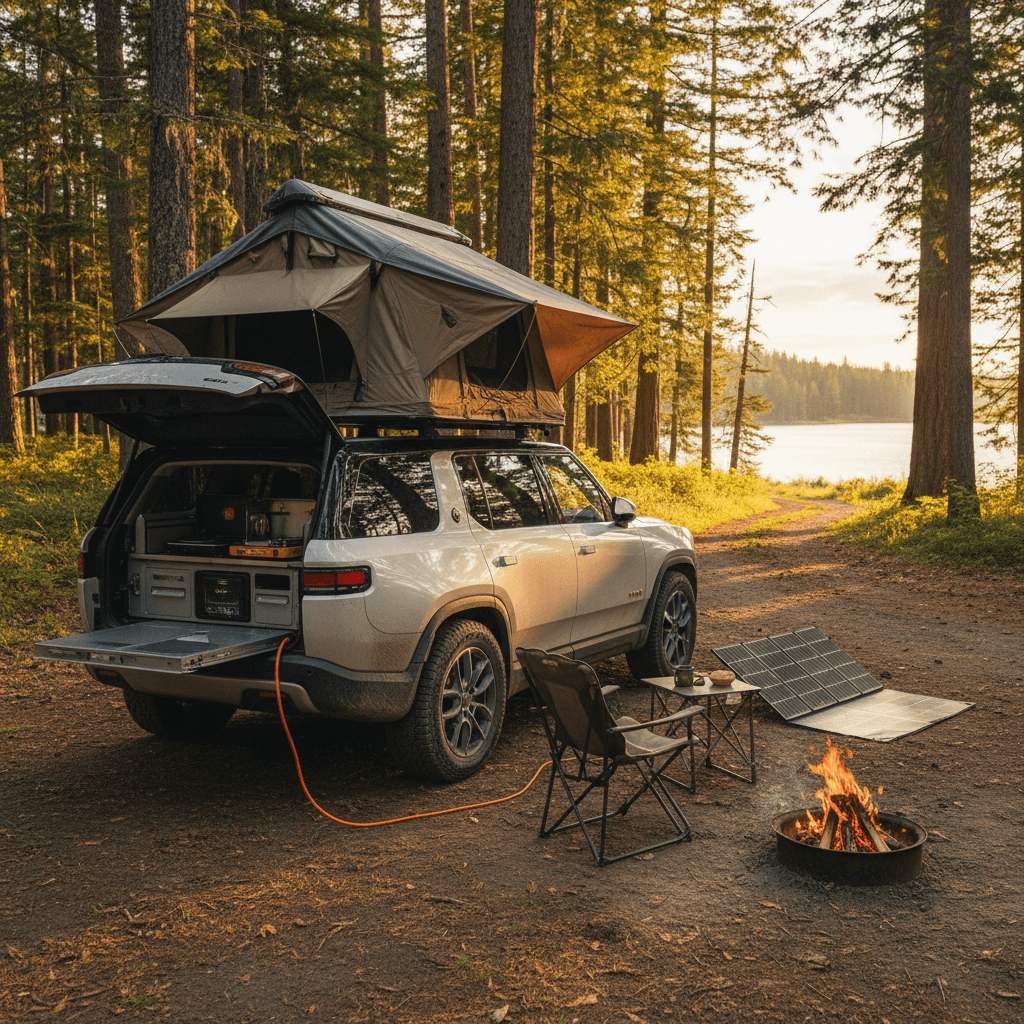
One of the biggest reasons campers are drawn to EVs is the ability to treat the battery like a giant, quiet power station. That’s where vehicle‑to‑load (V2L) and factory 120V outlets come in. Done right, you can run most of your base camp off the car without worrying about fumes or noise.
- Hyundai Ioniq 5 / Kia EV6 / Kia EV9 – Offer V2L capability, often up to roughly 1.9–3.6 kW through an adapter or interior outlet, which is plenty for lights, cooking, and charging devices.
- Ford F‑150 Lightning – Pro Power Onboard can deliver multiple kilowatts of 120V/240V power from bed, cabin, and frunk outlets, supporting heavier loads or even powering a small home circuit in a pinch.
- Rivian R1T / R1S – Provide AC outlets and robust DC‑DC hardware aimed at tools and campsite use, with several kilowatts of total output available depending on configuration.
- Tesla models and adapters – Newer Teslas are adding bidirectional features; even older models can sometimes be paired with third‑party solutions that safely convert DC battery energy into 120V AC for light camping loads.
Powering your camp safely
Buying a Used EV for Camping: How Recharged Helps
Shopping for the best used electric car for camping enthusiasts isn’t just about finding the right badge on the tailgate. It’s about confirming that a specific vehicle still has the range, battery health, and equipment you need for years of trips. That’s where Recharged comes in.
Why Campers Like Buying Through Recharged
Verified battery health with the Recharged Score
Every vehicle on Recharged includes a <strong>Recharged Score Report</strong> with quantified battery health and real‑world range estimates, critical if you’re planning campgrounds that are far from the nearest DC fast charger.
Expert EV‑specialist support
Our EV specialists understand camping use cases. If you’re torn between an Ioniq 5 and a Model Y, they can walk you through trade‑offs like seat folding, outlet power, and fast‑charging behavior.
Transparent, fair pricing
Recharged’s pricing is grounded in real market data. You can compare vehicles and trims without wondering if you’re overpaying for that off‑road or towing package.
Trade‑in and financing options
Bring your gas SUV or pickup and trade into an EV that fits your camping lifestyle. Recharged offers financing and instant offers or consignment options to simplify the switch.
Nationwide digital experience
Browse, finance, and sign online, then arrange nationwide delivery or visit the Recharged Experience Center in Richmond, VA if you’d rather see a vehicle in person.
Turn your camping vision into a short list
Ready to find your next EV?
Browse VehiclesUsed EV Camping FAQ
Frequently Asked Questions About Used EVs for Camping
Bottom Line: Choosing the Best Used Electric Car for Camping
The "best" used electric car for camping enthusiasts isn’t one model, it’s the one that fits how you actually spend your weekends. If you want a do‑everything crossover, the Hyundai Ioniq 5, Kia EV6, and Tesla Model Y are standouts. If your trips revolve around bikes, kayaks, or a towable camper, Rivian’s trucks and SUVs or a Ford F‑150 Lightning may serve you better. Budget shoppers can absolutely make a Chevy Bolt EUV, Kona Electric, or Leaf Plus into a great adventure partner with realistic expectations.
Whichever direction you go, focus on verified battery health, usable range, seat and cargo flexibility, and onboard power options. And if you’d like help turning a vague camping dream into a short list of specific used EVs, Recharged’s EV specialists, and every vehicle’s Recharged Score Report, are there to make the decision clearer, so you can spend more time planning your next trailhead, not your next test drive.