If you own a VW ID.4, you’re sitting on a compact electric SUV that buyers recognize, and that also happens to depreciate faster than many rivals. Timing your sale isn’t a cute optimization; it can change your check by thousands of dollars. Let’s walk through the best time to sell a VW ID.4, based on today’s used‑EV market, depreciation curves, and a few ticking clocks unique to EVs.
Quick answer
Why timing matters so much for your VW ID.4 sale
EVs depreciate differently
Electric crossovers like the ID.4 don’t follow the same playbook as gas SUVs. Incentives, fast‑moving tech, and software updates can swing values quickly, up or down. One model‑year refresh that adds range or power and suddenly last year’s car looks like yesterday’s smartphone.
And the ID.4 is under extra pressure
Third‑party value guides currently show the ID.4 losing value faster than the average compact SUV, meaning every extra year you hold it is expensive on paper. If you’re even vaguely considering a sale in the next 12–24 months, you’ll want to be deliberate about when you exit.
Reality check
How fast does a VW ID.4 depreciate?
VW ID.4 value drop at a glance
Depreciation isn’t a straight line, it’s a ski slope with ledges. The ID.4 takes its steepest hits in the first 3–4 years, exactly when many owners are still happily making payments. That’s why **selling at the right time within those early years** matters so much: you’re trying to bail out on one of the flat ledges, not mid‑cliff.
- Year 1–2: Big but expected drop as the car moves from new to used.
- Year 3: Another meaningful step down as warranties age and next‑gen tech beckons.
- Year 4–5: Depreciation continues, but the pool of value‑focused used‑EV buyers grows.
- Beyond 5: Values flatten, but you’re competing with newer, longer‑range EVs.
Rule of thumb
Seasonal “best time to sell” for a VW ID.4
Even in the EV world, old‑fashioned seasonality still matters. The market warms up at predictable times, and cools just as predictably. You want your VW ID.4 on the lot (or on the listing sites) when shoppers are flush with cash and thinking about road trips, not when they’re hungover from the holidays.
How seasonality shapes VW ID.4 demand
Think in terms of buyer psychology, not just weather.
Late winter–spring
Best overall window. Tax refunds hit, people start planning summer trips, and transaction data across the industry shows March–April delivering the richest prices for used cars, including EVs.
Summer
Still solid, but more competitive. Lots of sellers dump cars before road‑trip season or before school starts, which adds inventory. Great if your ID.4 is low‑miles and well‑specced; tougher if it’s just average.
Fall–early winter
Generally weaker. New model‑years arrive, dealerships discount leftovers, and private‑party buyers wait for deals. November–January is usually the cheapest time to buy, and therefore the stingiest time to sell.
Seasonal sweet spot for ID.4
Best time to sell by VW ID.4 model year
The ID.4 has evolved quickly: batteries, range, power output, even the infotainment have all stepped up since launch. That’s great for shoppers, but it means earlier model years become yesterday’s news faster than a traditional Tiguan or RAV4.
Timing your sale by VW ID.4 model year (U.S. market)
Approximate guidance for owners as of early 2026. Exact timing depends on mileage, condition, and local demand.
| Model year | Age in 2026 | If you own one now… | Timing recommendation |
|---|---|---|---|
| 2021 | ~5 years | Early adopters, often higher mileage, first‑gen software and range. | If mileage is high or you’re out of warranty, selling soon, ideally before another year rolls by, keeps you ahead of steeper discounts. |
| 2022 | ~4 years | Still appealing, but tech and range are clearly behind 2024+ models. | Plan to list between now and early 2027, preferably in a spring window before mileage crosses big thresholds. |
| 2023 | ~3 years | Closer to the current spec; many U.S. models are American‑built, which buyers like. | 2.5–4 years old is your high‑ground. You’re entering that zone now: consider selling in the next 12–18 months. |
| 2024 | ~2 years | More power and range than earlier cars; feels current. | You can hold another 1–2 years without panic, but watch for big tech jumps or price cuts from VW and rivals. |
| 2025 | ~1 year | Latest hardware; strongest warranty coverage and range. | Unless you’re flipping into a different EV, the smart money is to hold at least until it’s 2–3 years old, then reassess. |
Use this as a directional playbook, not a stock ticker.
Model refresh alert
Watch the calendar: EV tax credits and policy shifts
Because we’re in the United States, no discussion of the “best time to sell a VW ID.4” is complete without talking about federal incentives. For now, both new and qualifying used EVs can be paired with federal tax credits, but that landscape is scheduled to change, and buyers know it.
- New‑EV credits up to $7,500 and used‑EV credits up to $4,000 are currently in place, with an end date on the books for late 2025 unless policy changes.
- As deadlines approach, you typically see **a rush of buyers** trying to get into an EV before those incentives disappear.
- That last‑minute wave can buoy used‑EV prices, especially for models like the ID.4 that may not qualify new buyers for the full credit due to price caps or content rules.
How to use tax‑credit timing to your advantage
Market signals that say “sell your ID.4 now”
You don’t have to be an economist; you just have to pay attention. A few simple dials tell you when the wind is at your back, or when it’s about to turn in your face.
4 green lights that it’s the right time to sell
If you see two or more of these at once, that’s your cue.
Gas prices spike
When regular unleaded jumps toward $4 per gallon in your area, shoppers suddenly rediscover their conscience. EV search traffic surges, and practical electric crossovers like the ID.4 become more desirable.
Used‑car prices stay firm
Check a few pricing guides over a couple of months. If values for your year and trim are flat or rising, that’s the knife‑edge you want to sell on, before the curve bends down again.
No major negative headlines
If there’s no fresh recall, no safety scandal, and no wave of angry‑owner coverage, you’ve got a calm sea. That’s the moment to list, not after the internet decides your car is a meme.
New competition is heating up
When you see rival EVs adding big range or dropping prices, assume that pressure will hit ID.4 resale values next. Better to jump while you still look competitive.
Sign you may want to wait
Battery health: how long can you afford to wait?
With EVs, buyers aren’t just shopping mileage and paint; they’re buying a battery. The ID.4’s pack is robust, but perceived battery health has an outsized impact on resale. Two identical SUVs can be separated by thousands of dollars if one shows a healthy pack and the other looks tired.
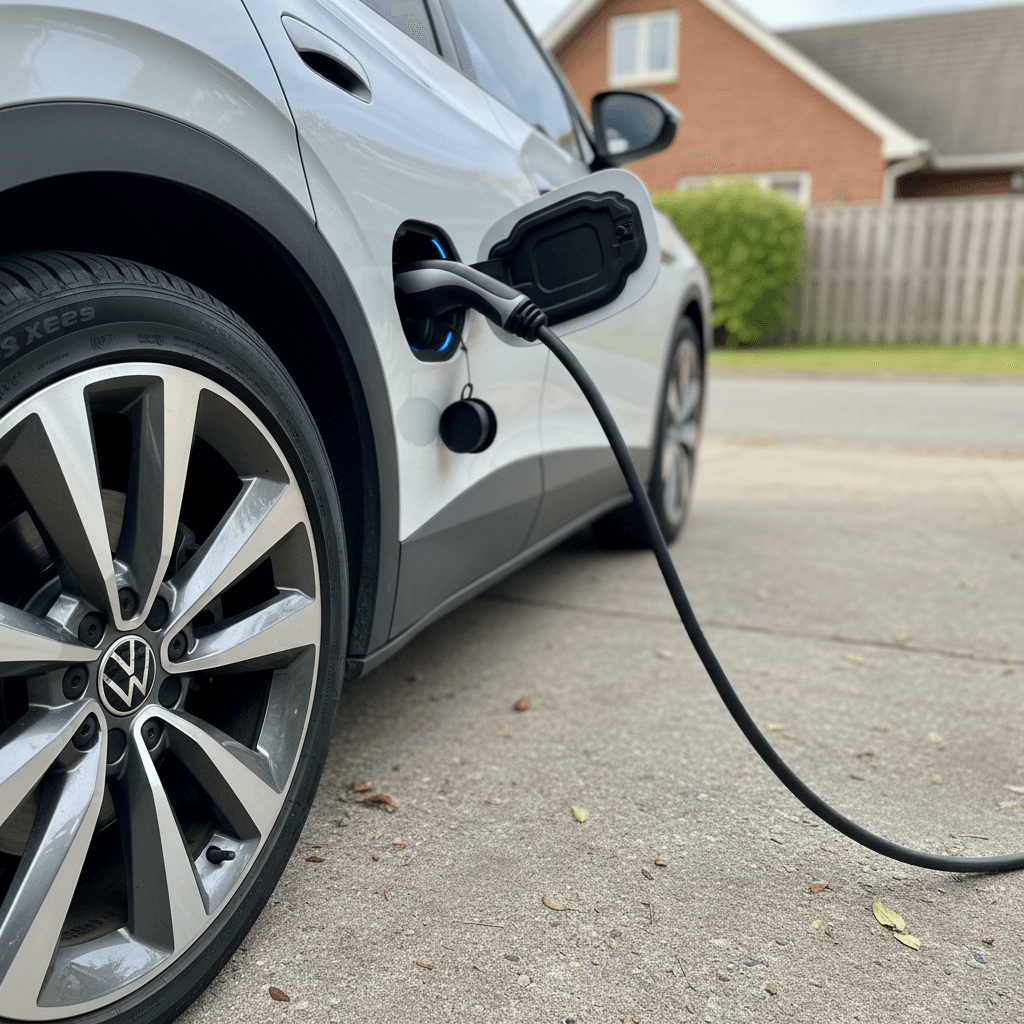
- Many ID.4 packs still show very modest real‑world degradation in the first 5–7 years when well‑cared‑for.
- Buyers don’t see lab data, they see range numbers, scan reports, and how the car feels on a long test drive.
- The older your ID.4 gets, the more they’ll worry about replacement costs, regardless of actual health.
How Recharged helps here
Recalls, reliability headlines, and timing your sale
The ID.4 has had its share of recall news, including recent high‑voltage battery and fire‑risk campaigns. That doesn’t automatically tank your car’s value, but it absolutely shapes buyer psychology.
How to play recall news to your advantage
Bad headlines aren’t the end of the world if you act smartly.
Get the work done
If your ID.4 is covered by an open recall, get the fix performed before you sell. A car with completed campaigns is inherently easier to move than one with a cloud over it.
Keep receipts & documentation
Service invoices, recall letters, and updated battery‑software logs are your armor. Upload them to your listing, or hand them to the buyer. Transparency calms people down.
Watch the media cycle
When a major recall story breaks, there’s usually a few weeks of peak attention. If you can, avoid listing your ID.4 in the eye of that storm; wait until the story cools or you can show completed repairs.
Critical safety note
Mileage and usage tipping points for your ID.4
EV shoppers are still learning what mileage “means.” With gas cars, 100,000 miles is a psychic cliff. With EVs, it’s fuzzier, but people still haggle harder as the odometer climbs, and lenders get pickier.
Odometer checkpoints that matter to ID.4 buyers
Not iron laws, just the points where buyers start to raise their eyebrows.
| Mileage | Buyer reaction | What it means for timing |
|---|---|---|
| Under 30,000 mi | “Basically new.” | Best‑case scenario. You can ask a clear premium, especially in a strong season. |
| 30,000–60,000 mi | “Lightly used family car.” | Still very comfortable for most; just price correctly and show flawless maintenance. |
| 60,000–90,000 mi | “Highway commuter.” | More questions about battery and tires. Strong diagnostics and documentation are mandatory. |
| 90,000+ mi | “Long‑term bet.” | You’re fishing for value‑hunters and EV nerds. Timing matters less; transparency matters more. |
If you’re brushing up against one of these, think seriously about selling before you step over the line.
Simple odometer rule
Where to sell: maximizing your VW ID.4 payout
Timing is half the equation. The other half is where you sell. The ID.4 isn’t a Camry, you want a buyer or platform that understands EVs, can explain battery health, and can arrange financing that reflects the car’s true value.
Your main options for selling a VW ID.4
Each comes with its own trade‑off between price, effort, and risk.
Sell through Recharged
Best for price + peace of mind. Recharged specializes in used EVs, provides a Recharged Score Report with battery diagnostics, offers financing and nationwide delivery, and can handle trade‑ins or consignment. You get expert guidance, not guesswork.
Dealer trade‑in
Fastest, but often lower value. Great if you’re swapping into something new today, but most general dealers will price your ID.4 conservatively, especially if they’re not EV‑savvy.
Private‑party listing
Potentially highest price, but most work. You handle photos, ads, tire‑kickers, paperwork, and questions about range and charging. You also wear the risk hat if something goes sideways after the sale.
How Recharged changes the math
Ready to find your next EV?
Browse VehiclesStep-by-step 60‑day timeline to sell your ID.4
Your 60‑day VW ID.4 selling game plan
1. 60 days out: Decide your window
Pick your ideal sale month, ideally March–May, and sanity‑check it against your car’s age, mileage, and any coming life changes (move, new baby, lease ending, etc.).
2. 45 days out: Audit condition & recalls
Check for open recalls, software updates, and overdue maintenance. Address cosmetic issues that photograph poorly: curb‑rashed wheels, stained seats, cracked glass.
3. 30 days out: Get battery health documented
Have a professional EV inspection done. If you use Recharged, the resulting <strong>Recharged Score Report</strong> gives buyers hard numbers on pack health and range performance.
4. 21 days out: Research pricing
Pull valuations from multiple guides, but also search live listings for ID.4s similar to yours in your region. Aim to be competitive, not the cheapest thing on the page.
5. 14 days out: Prep photos and listing copy
Shoot the car clean, in daylight, with charging cable visible. Emphasize range, charging habits (mostly home Level 2? minimal DC fast‑charging?), and recent service work.
6. Launch week: List and respond fast
Once your chosen window opens, list the car and reply quickly to inquiries. The first 7–10 days are when your ID.4 gets the most eyeballs; don’t squander that momentum.
VW ID.4 selling FAQ
Frequently asked questions about selling a VW ID.4
Key takeaways: the best time to sell your VW ID.4
- Seasonally, aim for mid‑March through May whenever possible.
- If you bought new, consider selling your ID.4 between 2.5 and 4 years of ownership, before the steepest part of the depreciation curve flattens into low‑value territory.
- Try to sell before a big model refresh, major recall headline, or obvious battery‑tech leap from rivals hits the news.
- Watch your odometer: getting out before crossing big mileage thresholds (60k, 100k) keeps more buyers in your pool.
- Document everything, service, recalls, battery health. In the EV world, good paperwork is money.
- Where you sell matters: a platform like Recharged, built around used EVs, can turn your ID.4 from an unknown quantity into a confident, data‑backed purchase for the next owner.
You don’t control the economy, gas prices, or Volkswagen’s next product reveal. But you do control when you step to the plate. Pick the right season, exit before the next big tech leap, and present your VW ID.4 with clear battery‑health data, and you stop being a haggler in a parking lot and start acting like what you are: the only person who really knows how good this car has been. Time it well, and the market will pay you accordingly.