If you own a Subaru Solterra, you’re probably watching resale values and wondering about the **best time to sell a Subaru Solterra** before depreciation really bites. Electric SUVs are still a young segment, Solterra is tied at the hip to Toyota’s bZ4X, and new models are arriving fast, so timing your exit can easily mean thousands of dollars gained or lost.
Quick answer
Why timing matters for your Solterra sale
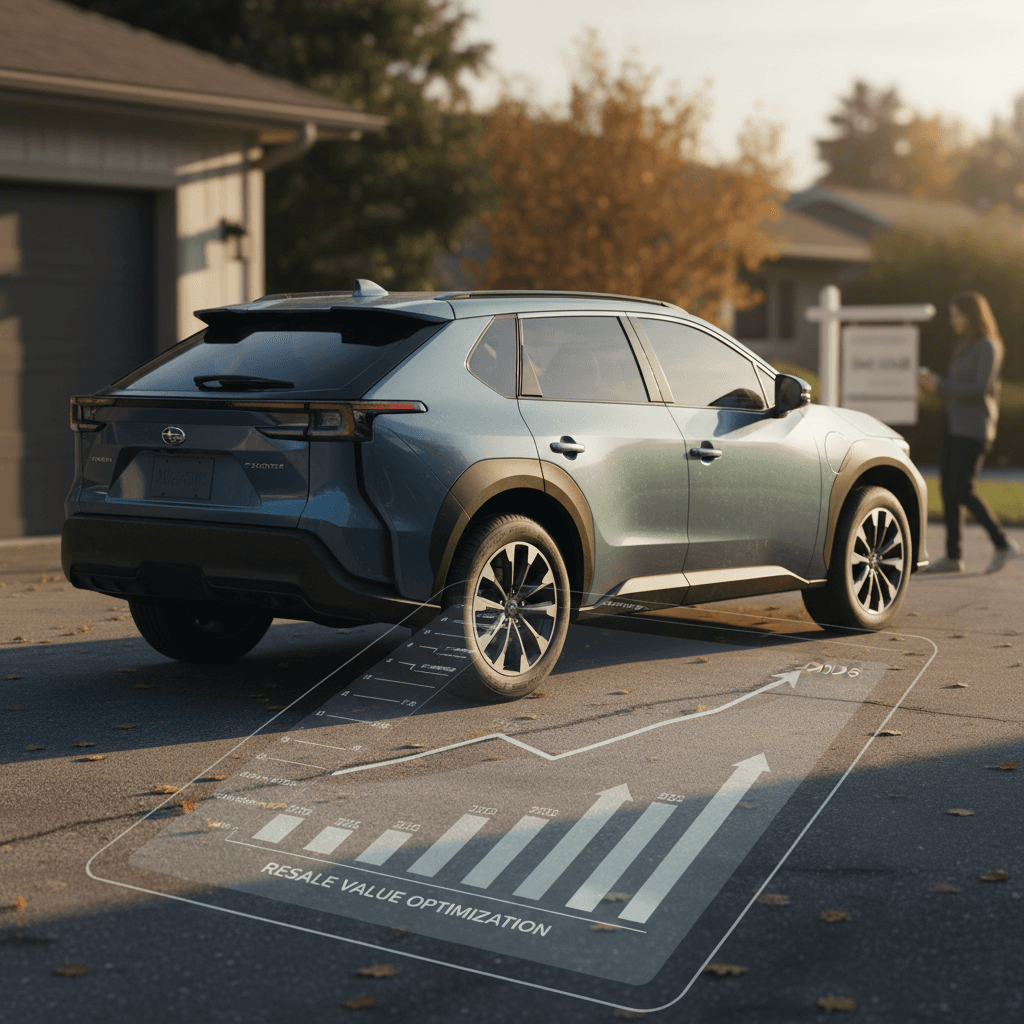
The Solterra is Subaru’s first global EV, co‑developed with Toyota. That’s exciting, but it also means resale values are still finding their footing. Early EVs took big hits when newer, longer‑range models showed up. The Solterra’s **5‑year projected depreciation of around 55%** puts it in the same ballpark as other compact electric crossovers, but you don’t have to ride that curve all the way to the bottom.
- Your Solterra is competing with newer, sometimes cheaper leases and incentives on brand‑new EVs.
- Range, charging speed, and software updates are improving quickly, which can make older EVs feel dated faster than gas SUVs.
- Battery health and warranty status are front‑and‑center for used‑EV buyers, and both are time‑sensitive.
The early‑EV trap
How Subaru Solterra depreciation works
Subaru Solterra value at a glance
Subaru and Toyota positioned the Solterra/bZ4X twins squarely in the compact EV‑SUV space. Data from valuation guides shows the Solterra losing a bit more than half its value in the first **five years**, with the sharpest slide in the **first 24–36 months**. That’s broadly in line with other non‑Tesla EVs, which tend to depreciate faster than popular gas Subarus.
Years 0–2: The cliff
Instant discounts, aggressive leases, and federal incentives mean a new Solterra effectively sells for far less than MSRP. Those deals set the baseline for what used buyers will pay. That’s why the first **18–24 months** usually deliver the largest percentage drop from sticker price.
Years 3–6: The grind
After the initial cliff, values still fall, but more gradually. At this point, buyers are comparing your Solterra to newer EVs with longer range or fresher tech. Condition, mileage, and battery health matter much more than the original window sticker.
Use data, not guesses
Model‑year guide: best time to sell each Solterra
Solterra launched for the 2023 model year. By April 2026, we’ve got a few model years on the road and an announced 2026 update on the way. Here’s how that shapes the **best time to sell a Subaru Solterra** by model year.
Best timing by Subaru Solterra model year
Approximate timing assumes U.S. ownership and typical mileage (10,000–12,000 miles per year).
| Model year | Typical age in 2026 | Good time to start marketing | Try to sell by | Key reasons |
|---|---|---|---|---|
| 2023 | 2–3 years | Now through mid‑2027 | Before 2028 | You’re just past the steepest depreciation; still attractive battery warranty and modern features. |
| 2024 | 1–2 years | Late 2026–2028 | Before 2029 | Incentive‑heavy new pricing will have normalized; you’re safely inside battery warranty with reasonable miles. |
| 2025 | 0–1 year | 2027–2029 | Before 2030 | You’ll skip the worst early drop and sell before buyers fixate on the next‑gen 2026+ updates. |
| 2026 (coming) | New/coming soon | 2028–2030 | Before 2031 | New styling and tech will reset used values; plan your exit a few years in, not at the end of warranty. |
Use this as a planning tool, not a hard rule. Local demand and your vehicle’s condition can shift these windows.
Watch the 2026 refresh
Mileage and battery health sweet spots
With a used EV, most shoppers aren’t just looking at the odometer, they’re trying to read the tea leaves on **battery health**. That’s where you can pull ahead of other Solterra sellers, because Subaru doesn’t yet have the long resale track record of, say, a Tesla Model Y.
Targets that keep your Solterra desirable
These aren’t hard cutoffs, but they line up with how buyers think.
Odometer under 50–60k
Try to sell before you sail much past 50,000–60,000 miles. Above that, buyers start mentally budgeting for more tire, brake, and suspension wear, even on an EV.
Healthy battery report
A third‑party battery health report, like the Recharged Score, gives buyers real numbers on remaining capacity instead of guesswork. That can justify a higher asking price.
Warranty peace of mind
Your Solterra’s high‑voltage battery warranty (often 8 years/100,000 miles in the U.S.) is a powerful selling point. The further you are from those limits, the more confident buyers feel.
How Recharged helps here
Market factors in 2025–2026 that affect Solterra prices
Zoom out and you’ll see three big forces tugging on Solterra resale values right now: **EV pricing trends, competition, and incentives**. Understanding them helps you decide whether to sell now or ride it out a bit longer.
- **Aggressive new‑EV deals.** Subaru and Toyota have run eye‑catching lease offers on Solterra and bZ4X to keep these twins moving. Cheap leases drag used prices down, because shoppers compare your asking price to a brand‑new payment.
- **More rivals every quarter.** Hyundai, Kia, Ford, GM and others keep adding electric SUVs with stronger fast‑charging and longer range. As those flood the used market, older Solterras must be priced sharply, or show clear advantages like lower miles and great condition.
- **Tax‑credit reshuffle.** Federal and state incentives continue to wobble as eligibility rules evolve. A new‑EV tax credit that applies to your Solterra’s competitors in a given year can pull buyers away from the used market temporarily. When incentives tighten, used demand often ticks up.
Beware of chasing the market down
Seasonal timing: when demand spikes for Solterra
Beyond model years and macro trends, simple seasonality still matters. The Solterra is an all‑wheel‑drive Subaru at heart, which means it follows some of the same rhythms as the Outback and Forester, just with an EV twist.
Seasonal timing tips for selling a Subaru Solterra
List before winter in snow states
In northern states, **September through early December** is prime time. Shoppers want all‑wheel drive and winter traction, and many are finally ready to try an EV with real ground clearance.
Capitalize on tax‑refund season
In much of the U.S., **February through April** brings tax refunds and fresh down payments. If the broader used‑EV market is healthy, this is a good window to draw in budget‑conscious buyers.
Avoid holiday distraction periods
The last two weeks of December and the week around July 4th tend to be slower for private sales. Dealers may still make deals, but individual shoppers are focused elsewhere.
Watch local gas‑price spikes
Whenever fuel prices jump in your region, interest in EVs follows. If you’re already thinking about selling, a sudden gas‑price headline is your cue to list quickly.
Leaning into the Subaru DNA
Trade‑in vs private sale vs EV marketplace
Once you’ve decided the timing is right, the next choice is **how** to sell your Solterra. Each path has its own trade‑offs between price, effort, and risk.
Where to sell your Subaru Solterra
Choose the path that matches your time, risk comfort, and price expectations.
Dealer trade‑in
Pros: Fast and low‑effort; can stack with new‑car incentives; no strangers at your house.
Cons: Usually the lowest dollar amount. Dealers will be conservative on used EVs, especially if they’re unsure about local demand.
Private‑party sale
Pros: Best shot at top dollar, especially if your Solterra is low‑mile and well‑equipped.
Cons: Time‑consuming. You’re handling marketing, test drives, paperwork, and security yourself.
EV‑focused marketplace
Pros: Platforms like Recharged are built for used EVs, with battery‑health reporting, financing, trade‑in options, and nationwide buyers who actually want electric.
Cons: You’ll pay a fee or commission, but you may net out ahead versus a low dealer trade.
How Recharged can fit into your plan
Steps to get top dollar for your Solterra
Even if your timing is perfect on paper, sloppy prep can leave money on the table. Here’s a practical checklist to get your Solterra ready to impress the next owner, and justify the upper end of market pricing.
Pre‑sale checklist for a strong Solterra price
1. Document battery and service history
Gather all records: scheduled service, software updates, tire rotations, and any warranty work. If you can add a **battery health report** from a trusted source (like a Recharged Score diagnostic), you instantly stand out from generic listings.
2. Fix small but obvious issues
A cracked windshield, worn wipers, cheap cabin filters, or a dead key‑fob battery all scream neglect. Fix the easy stuff so buyers don’t start mentally discounting your asking price.
3. Detail it like a dealer would
A professional or very careful DIY detail, inside, outside, and charging port, pays off. EV buyers are particular; they notice dusty screens and stained seat bolsters.
4. Photograph like you’re selling online
Shoot in good daylight, with the car clean, wheels straight, and no clutter. Include photos of: the charging port, both keys, floor mats, and any included charging equipment.
5. Be honest about range and charging
If you mostly DC‑fast‑charged on road trips and Level 2 at home the rest of the time, say so. Savvy buyers would rather hear a clear story than feel like you’re dodging questions.
6. Price competitively, not wishfully
Start near the realistic top of the range for your year, trim, miles, and region. Watch competing listings and be ready to adjust in the first 10–14 days if interest is soft.
Is now a good time to sell your Subaru Solterra?
Putting it all together: in 2026, **early Solterra owners are in a decision window**. The 2023s are far enough along the depreciation curve that holding them for many more years won’t save you much additional money versus selling now. The 2024s are just about to leave the honeymoon phase and will feel more pressure as the updated 2026 model hits the street.
You might lean toward selling now if…
- Your Solterra is 2023–2024 with fewer than 50,000 miles.
- You’re eyeing a longer‑range or faster‑charging EV that better fits road trips.
- Local used Solterra prices are still relatively firm compared with last year.
- You’d like to move out of a lease before buy‑out math stops making sense.
You might hold a bit longer if…
- You love how the Solterra fits your life and just want to **minimize payments per year of use**.
- Your annual mileage is low, so depreciation per year is also slower.
- You’re waiting to see real‑world reviews and pricing on the refreshed 2026 model before switching.
- Local used EV demand feels soft, but you’re not under any pressure to sell.
Run your numbers, then shop offers
Ready to find your next EV?
Browse VehiclesFAQs: best time to sell a Subaru Solterra
Frequently asked questions about selling a Subaru Solterra
The best time to sell a Subaru Solterra isn’t a single date on the calendar, it’s a convergence of **age, mileage, battery health, market conditions, and your own plans**. If your Solterra is in that 2‑to‑4‑year, sub‑60,000‑mile window, now is the time to start gathering numbers and exploring options. With a clean, well‑documented car and an EV‑savvy audience, like the one you’ll find at Recharged, you can step out of your Solterra on your terms and into the next chapter of electric driving with confidence.