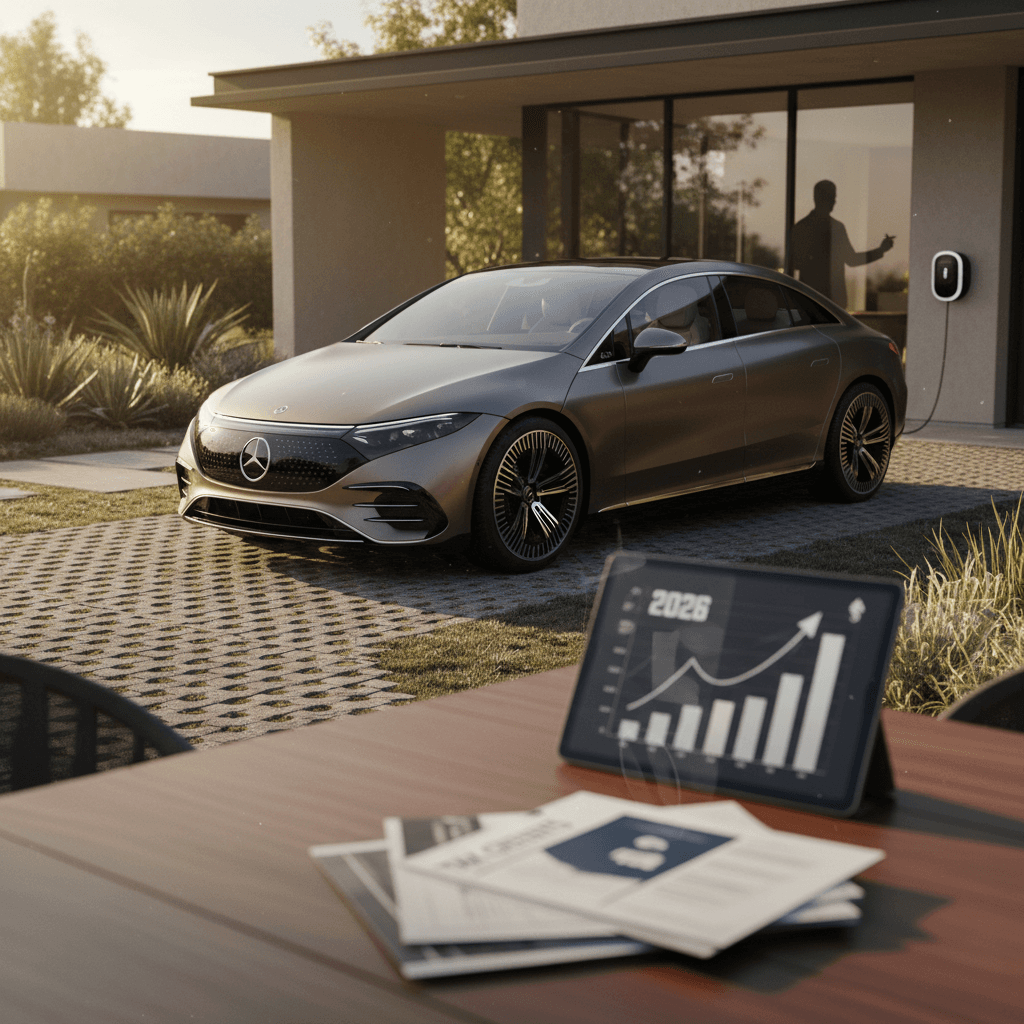
You don’t sell a Mercedes EQE the way you’d sell a gas crossover. Luxury EVs live and die by timing: model-year updates, battery tech marches forward, incentives come and go, and buyers have gotten savvier about depreciation. If you’re wondering about the best time to sell a Mercedes EQE, the answer isn’t just “whenever you’re ready”, it’s when you can get ahead of the next big drop in value.
Quick answer
Why timing matters for your Mercedes EQE sale
The EQE is a terrific car trapped in a tough segment: luxury sedans and non‑Tesla EVs have been depreciating faster than many owners expected. The bright side is, if you time your exit well, you can sidestep the steepest part of that curve and hand the next owner a great deal, without leaving thousands on the table.
Mercedes EQE value snapshot in 2026
Those numbers aren’t meant to scare you; they’re your roadmap. Selling too early means you eat new‑car depreciation. Selling too late means you’re riding the curve down after the market has moved on to newer chemistry, faster charging, and revised interiors.
How the Mercedes EQE depreciates over time
To pick the best selling window, you need to understand how the EQE sheds value. Broadly, it follows the same story as other premium EVs: a steep first three years, then a gentler slide as the car finds its second life in the used market.
Years 0–2: The steep drop
- Instant hit the moment it leaves the showroom, especially on higher‑MSRP AMG and heavily optioned trims.
- Discounted leases and factory incentives on new EQE inventory can drag used prices down faster than owners expect.
- If you sell here, you’re usually doing it for life‑change reasons, not because the math is kind.
Years 2–5: Prime resale territory
- Depreciation is still real, but the **curve flattens** compared to the first couple of years.
- Buyers like this window: modern tech, plenty of warranty left, but a big discount off MSRP.
- Most EQE owners will get their best value‑for‑time here if they’re planning to sell in the first place.
Past year five, the EQE starts behaving more like any other older luxury sedan: cosmetic condition, maintenance history, and battery health dominate the conversation. If your battery is strong and you’ve stayed on top of service, you can still find a good buyer, but you’re unlikely to beat the dollar‑per‑year efficiency of selling in that 2.5–4.5‑year band.
Watch the new‑car price cuts
Best time of year to sell a Mercedes EQE
Seasonality still matters, even for a high‑tech EV. Buyers may be shopping on their phones, but their habits haven’t changed that much: there are months when your ad will feel like it’s shouting into the wind, and months when your inbox just hums.
How the calendar affects EQE sale prices
Use these patterns to tilt the odds in your favor
Late winter–early spring
Best overall window in most of the U.S.
- Tax refunds and bonuses fuel down payments.
- Buyers plan for summer trips and commutes.
- EV curiosity spikes as people rethink fuel costs.
Late summer–early fall
Solid but more mixed.
- Back‑to‑school moves and relocations.
- Competes with new‑model releases; watch EQE news.
- Good time if your local market runs hot year‑round.
Late fall–holiday season
Generally the weakest.
- Budgets shift to holidays, not high‑ticket cars.
- Weather makes test drives and inspections harder.
- If you must sell, expect lower offers or longer time‑to‑sale.
Ride the gas‑price waves
Mileage and age: when should you let the EQE go?
In the used market, buyers may not memorize kilowatt‑hours, but they know odometers. The difference between 29,800 and 42,000 miles on a Mercedes EQE can be the difference between top‑of‑market and “we have questions.”
How age and mileage shape EQE buyer expectations
Use this as a directional guide, then layer in your own local market research.
| EQE age / miles | How buyers see it | Typical buyer profile | Timing takeaway |
|---|---|---|---|
| Under 2 years / <20k miles | Nearly new, early adopter car | Luxury shoppers cross‑shopping new; some will step up to fresh inventory instead | Only sell here if you must, new‑car depreciation is still biting. |
| 2–3.5 years / 20k–40k miles | Modern tech, still feels new, warranty comfort | Value‑oriented luxury buyers, first‑time EV owners | This is the core **“sell high”** window for many EQE owners. |
| 3.5–5 years / 40k–70k miles | Used car, not a toy; scrutiny on maintenance and battery health | Experienced EV buyers, budget‑conscious luxury shoppers | Still a reasonable time to sell; just price realistically and emphasize battery reports. |
| 5+ years / 70k+ miles | Older luxury EV; concerns about repairs and range | Enthusiasts, bargain hunters, commuters with short daily drives | Sell here if you plan to keep it long‑term or exit before big out‑of‑warranty expenses. Expect lower prices. |
Exact pricing will vary by trim, options, region, and condition, but the age‑and‑mileage story is surprisingly consistent.
The 60,000‑mile psychological cliff
Policy shifts, tax credits, and how they shape demand
In the early and mid‑2020s, federal EV tax credits quietly propped up both new and used demand. With those incentives phased out after September 30, 2025, shoppers in 2026 are adjusting to a world where there’s no automatic $4,000 used EV credit waiting for them at the dealership.
What changed by 2026
- Federal tax credits for new and used EV purchases effectively sunsetted after **September 30, 2025**, for buyers who hadn’t already taken delivery.
- Some buyers had been using those credits as part of their budget story, without them, they become more price‑sensitive.
- Lease incentives may persist, but they help **new EQE inventory**, not your used sedan.
What it means for your EQE sale
- Localized state or utility incentives now matter more; buyers may shop across state lines.
- Without a built‑in federal coupon, **clean pricing and strong battery documentation** matter even more.
- If you list right before a wave of manufacturer‑backed new‑EV offers, expect used buyers to demand steeper discounts.
Niche case: sub‑$25k EQE pricing
Reading the 2026 used Mercedes EQE market
The EQE sits in a crowded field: Tesla continues to anchor used‑EV pricing psychology, while BMW, Audi, and even Korean brands have rolled out sharp‑driving, long‑range alternatives. The upshot is that **you’re playing in a buyer’s market**, but not a hopeless one.
Market signals that say “sell your EQE now”
Three patterns to watch before you list
Stable or rising local prices
If recent EQE listings in your region are **holding their asking prices** or creeping up slightly month‑over‑month, buyers are absorbing inventory well. That’s a friendly backdrop for your listing.
Tight local inventory
Scan major platforms for EQE sedans within 200 miles. If you see only a small handful, especially in your trim, you have scarcity on your side. That’s the moment to test a confident price.
EV buzz spikes
News of new fast‑charging corridors, workplace charging programs, or corporate EV incentives can pump up local demand. Ride that wave by getting your EQE in front of shoppers while enthusiasm is high.
Use sold prices, not just asking prices
Battery health: the silent price driver
In 2026, buyers have learned to ask a question that didn’t exist ten years ago: “What’s the battery health?” Two EQE sedans with the same mileage can be separated by thousands of dollars if one shows significantly more usable range than the other.
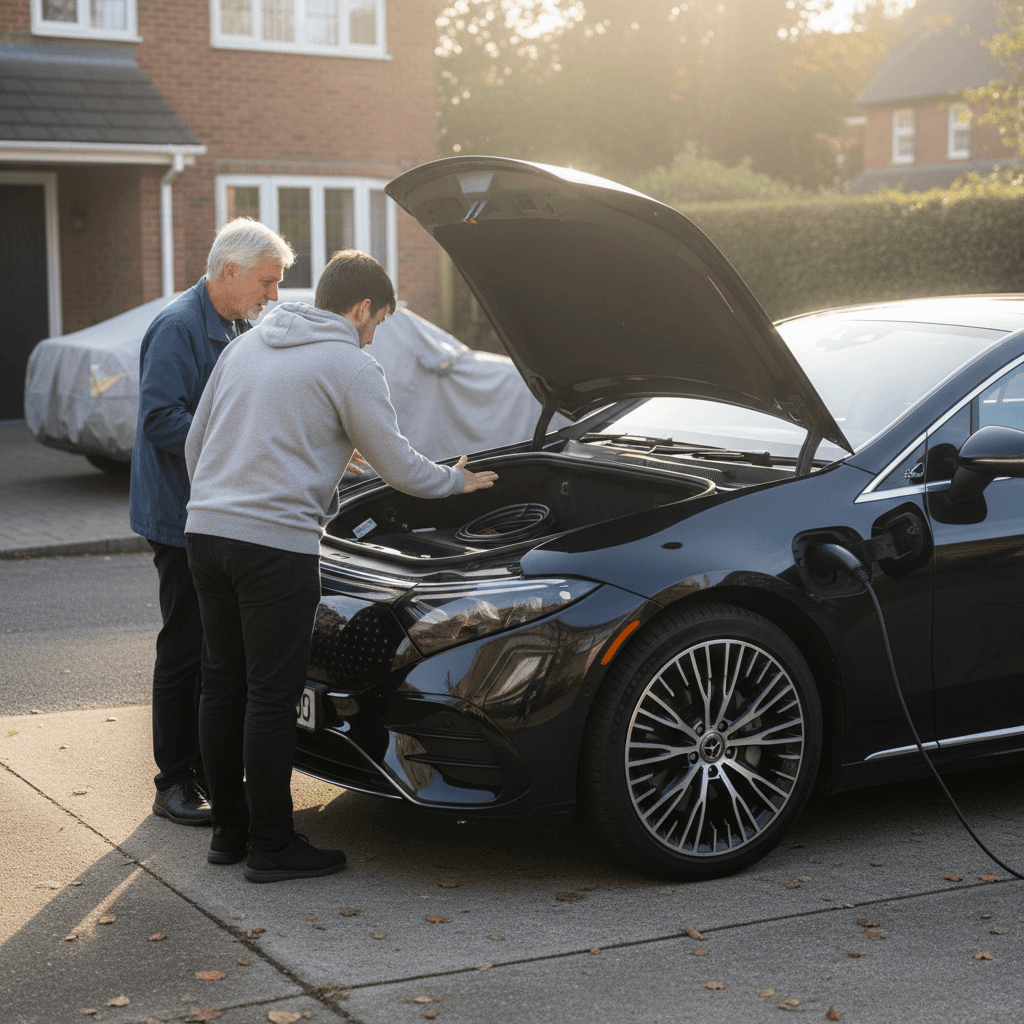
- If your EQE still delivers range close to its original EPA estimate in normal driving, you’re in a strong position.
- Documented DC fast‑charging habits (not living on fast chargers every day) are a plus, buyers increasingly understand this.
- Any warranty history or software updates related to the battery pack should be lined up and ready to share.
How Recharged helps here
Ready to find your next EV?
Browse VehiclesTrade-in vs. private sale for your Mercedes EQE
Once you’ve picked your moment, you still need to decide **how** to sell. Luxury EVs like the EQE sit in an awkward middle ground: traditional dealers sometimes misunderstand them, while private buyers may be anxious about batteries and software.
Traditional trade‑in
- Pros: Fast, simple, rolled into your next deal. No strangers at your house, no financing headaches.
- Cons: You’re paying for that convenience, offers often sit at the lower end of market value, especially if the dealer is lukewarm about used EV inventory.
- Best when: You’re upside‑down on your loan, or you want one transaction and you’re done.
Private sale or EV‑focused marketplace
- Pros: Typically higher sale price, especially if you can present strong battery data and service history.
- Cons: More work: photos, descriptions, screening buyers, and paperwork.
- Best when: You have some time, and your EQE is in a desirable spec (good color, sensible options, clean history).
Where Recharged fits in
Timing checklist before you list your EQE
If you’re within that 2.5–4.5‑year, sub‑60,000‑mile window and thinking about selling, walk through this checklist. It will help you decide whether to list now, or hold for another season.
Pre‑listing timing checklist
1. Confirm your age and mileage window
Is your EQE between roughly 2 and 5 years old and under about 60,000 miles? If yes, you’re already in a prime selling band. If you’re about to cross a big psychological number like 50k or 60k miles, that’s a nudge to act sooner.
2. Scan recent EQE sales, not just listings
Look at what similar EQEs are actually selling for on EV‑focused sites and major classifieds. If closed prices are stable or ticking up, it’s a supportive time to test the market.
3. Check the new‑car news cycle
Any talk of a big EQE refresh, range boost, or price cut? If rumors are swirling, consider moving ahead of that news. New tech announcements can make today’s car feel older overnight.
4. Look at the calendar and your local weather
If you’re in late winter or spring, that’s generally your A‑tier window. If it’s late fall and snowy where you live, either price more aggressively or plan ahead for an early‑year sale.
5. Get a battery health report in hand
Arrange a professional battery health diagnostic so you can show objective data. On Recharged, this is baked into the Recharged Score; elsewhere, be prepared to share documentation or let serious buyers test.
6. Decide on your selling channel
Be honest about how much time you have. If you want to maximize price and don’t mind effort, go private or use a marketplace like Recharged. If simplicity wins, lean toward trade‑in or an instant offer.
FAQs: best time to sell a Mercedes EQE
Frequently asked questions about selling a Mercedes EQE
Bottom line: the best time to sell a Mercedes EQE
The best time to sell a Mercedes EQE isn’t a single date on the calendar, it’s a convergence. You want the car in its value sweet spot (roughly 2.5–4.5 years old, under about 60,000 miles), a supportive season (late winter through early summer), and a market that hasn’t just been rocked by fresh price cuts or a major model update. Layer in a clean battery health report and a selling channel that understands EVs, and you’ve done just about everything you can to stack the deck in your favor.
If you’re on the fence right now, this is the moment to pull your records together, get a handle on your EQE’s battery health, and see what the market will bear. A platform like Recharged can give you a realistic valuation, help you compare a quick sale versus a marketed listing, and make sure that when you do decide to part ways with your EQE, you do it at the right time, and on your terms.