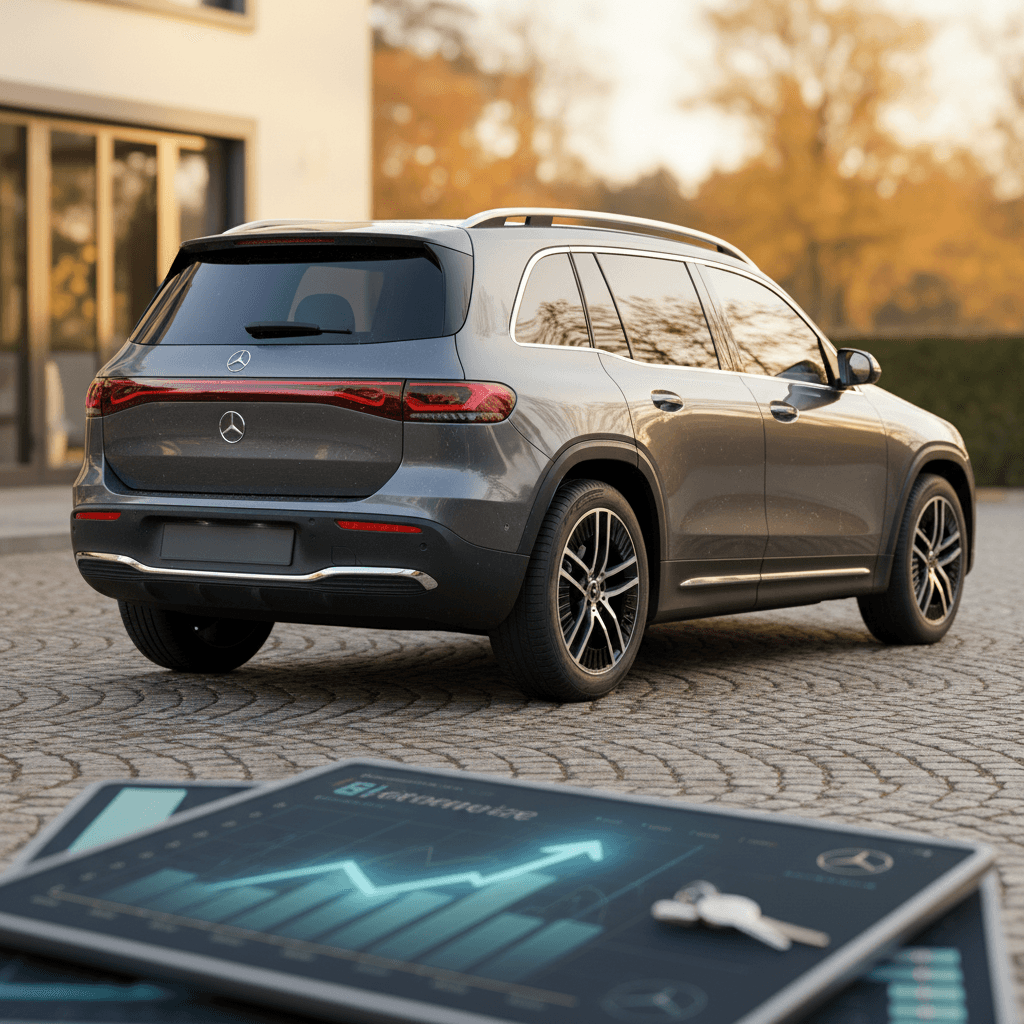
If you own a Mercedes EQB, you’re sitting on a vehicle that’s comfortable, practical, and relatively rare in the U.S. market. But electric SUVs like the EQB also depreciate differently than gas models, and choosing the best time to sell a Mercedes EQB can mean a difference of thousands of dollars either way. This guide walks you through timing your sale by age, mileage, season, and upcoming model changes so you can exit your EQB on your terms.
Key takeaway in 30 seconds
Why timing matters for your Mercedes EQB sale
Timing always influences resale value, but it’s especially important with electric SUVs like the EQB. EV prices respond quickly to changes in new‑car incentives, federal tax credits, battery tech, and even fast‑charging standards. On top of that, the EQB sits in a crowded field with rivals like the Tesla Model Y, Audi Q4 e‑tron, and BMW iX1, so small shifts in demand can show up immediately in used prices.
- EVs typically see their steepest value drop in the first 3 years, then depreciation slows.
- Seasonal demand for SUVs and family haulers tends to peak in late winter and spring as buyers prepare for road‑trip and car‑pool season.
- Upcoming model replacements and price cuts on new Mercedes EVs can push used EQB values down if you wait too long to sell.
Why waiting “one more year” can hurt
Quick answer: best time to sell a Mercedes EQB
Best time to sell your EQB at a glance
Age, mileage, and season all play a role
By vehicle age
Sweet spot: 2–4 years old. For many owners in 2026, that means selling a 2022–2024 EQB between now and 2028, before tech and range feel dated compared with the next generation of Mercedes EVs.
By mileage
Under 45,000–60,000 miles tends to bring the strongest interest and financing options. Values usually step down when buyers see odometer readings over about 60k, then again past 80k.
By season
Best months: late winter through spring (roughly February–May). That’s when used‑EV shoppers are most active and used‑car prices historically carry a seasonal premium compared with deep winter or late fall.
If you’re reading this in early 2026…
How the Mercedes EQB depreciates over time
To understand the best time to sell, you need a basic picture of how the EQB loses value. Like most premium EVs, it takes a substantial hit in the early years before leveling off. Pricing guides in early 2026 show 2024 EQB models trading tens of thousands below their original MSRPs, and forecasting tools expect around 50–57% value loss over the first five years for similar Mercedes EVs.
Typical value path for a Mercedes EQB
For most owners, that suggests a strategy: let someone else absorb the first‑year hit, then plan to exit before your EQB is considered “high‑mileage” or outdated next to the newer generation of Mercedes electric SUVs.
Best age to sell
From a value‑retention perspective, 2–4 years old is the sweet spot. At this point:
- You’ve already used the car through its steepest first‑year drop.
- Most examples are still under factory and battery warranties.
- Tech, range, and charging speeds still feel current to buyers.
Times it may still make sense to sell sooner
- You’re about to cross a big mileage threshold (e.g., 30k or 45k miles).
- Your life has changed, new commute, growing family, or you simply need cash.
- New‑car price cuts or incentives are pulling used values down and you want to get ahead of the next drop.
Seasonal timing: when demand peaks for used EQBs
Beyond age and mileage, seasonality can nudge your EQB’s sale price up or down a few percentage points. Data from millions of used‑car transactions shows that late winter through spring tends to be the strongest period for retail demand in the U.S., while late fall and December are generally softer for sellers.
Seasonal patterns for selling a Mercedes EQB
How timing within the year typically affects interest and pricing for a used electric SUV in the U.S.
| Season | Typical impact on price | Why it matters for EQB sellers | Suggested move |
|---|---|---|---|
| Jan–Feb | Mildly positive | Tax refunds and New Year “upgrade” resolutions start to bring shoppers out, and families are planning the year ahead. | Good time to list, especially in warmer states where test drives are easy. |
| Mar–May | Strongest | Historically one of the best periods to sell a used car. Weather improves, households have clarity on budgets, and family SUVs are in demand before road‑trip season. | Target this window if you can choose your timing. |
| Jun–Aug | Stable to slightly soft | Vacations and back‑to‑school expenses compete for budgets, but family buyers still need SUVs. | Perfectly workable, just price realistically and highlight range for road trips. |
| Sep–Nov | Mixed | Some buyers focus on new‑model deals; overall used‑car prices often soften into fall. | If you must sell, move quickly, don’t wait for December. |
| December | Weakest | Holiday spending and winter weather in many regions slow the market and stretch time‑to‑sale. | Avoid listing if you can; wait until late January or February instead. |
Use this as a guide, then adjust slightly for your own climate and local demand.
Align your EQB sale with life events
Mileage breakpoints that move your EQB’s price
Mileage still matters on an EV, even one with Mercedes’ build quality. Buyers use odometer readings as a shorthand for wear, even though battery health and charging history are just as important. When you’re working out the best time to sell your Mercedes EQB, watch for the mileage brackets that typically trigger price steps.
EQB mileage brackets to watch
Under 20,000 miles: “Like new” territory
If your EQB is still nearly new and you’re thinking about selling, you’re in a position to command top‑of‑market pricing. This is especially true if it’s less than 2 years old with full service records.
20,000–40,000 miles: Prime resale range
This is where many shoppers like to buy, most of the new‑car depreciation has happened, but the SUV still feels fresh. If you’re nearing the top of this band, consider selling before you cross 40k.
40,000–60,000 miles: Value‑conscious shoppers
Plenty of demand lives here, but buyers get more sensitive to service history and battery health. Selling before you roll past 60k can preserve a noticeable chunk of value.
60,000–80,000 miles: Discounts expected
In this range, most buyers expect a meaningful discount vs. low‑mileage EQBs and will scrutinize charging habits and battery reports closely. If you don’t plan to keep the vehicle long‑term, it’s often better to sell before entering this bracket.
80,000+ miles: Long‑term keeper or budget buy
At this point, the EQB becomes a value play. It can still be a great vehicle, but if you’re chasing top dollar, you usually don’t want to wait this long to sell.
Battery health > odometer for many EV shoppers
Model changes & discontinuation: what they mean for value
Unlike some mainstream EVs that will be around, largely unchanged, for a decade, the EQB is in the middle of an evolution. Mercedes has already signaled that the current EQB will be phased out globally by the end of 2025, with a new GLB‑style electric SUV on a more advanced MMA platform slated for around 2026. That has two important implications.
- Once the next‑generation electric GLB/EQB successor launches, shoppers will compare your EQB’s range, charging speed, and tech directly against the new model.
- Price cuts and aggressive leases on the new SUV can pull used EQB values down, just as we’ve seen across the EV market whenever new‑car incentives spike.
Don’t linger too long after the replacement arrives
Personal timing: finance, warranty, and battery health
Market timing is only half the story. The best time to sell your Mercedes EQB is also when it fits your finances, your warranty coverage, and the real condition of the battery pack.
Loan and lease milestones
- End of lease: Compare your buyout to current market value. If your buyout is lower, you may be able to buy the EQB and resell or trade for a profit.
- When you reach positive equity: For financed EQBs, check when your loan balance finally dips below what the vehicle is worth, that’s a strong time to sell or trade.
Warranty windows
- Most EQBs carry a high‑voltage battery warranty of around 8–10 years or a set mileage limit. Staying under that mileage ceiling makes your vehicle more attractive.
- Having some factory bumper‑to‑bumper coverage left can also help justify a higher asking price.
Battery health & use pattern
- If you’ve fast‑charged heavily or see noticeable range loss, it may pay to sell sooner rather than later.
- If you’re barely using the car, say, you now work from home, selling while the pack is still healthy converts that dormant value back into cash.
Document how you treated the battery
Choosing how to sell: trade‑in, private sale, or marketplace
Once you’ve identified the right time, the next decision is how to sell your EQB. Each route balances price, effort, and risk differently, and EVs introduce a few wrinkles that traditional gas‑car buyers and dealers don’t always understand.
Ways to sell your Mercedes EQB
Pick the path that fits your priorities
Dealer trade‑in
Best for simplicity. You hand the EQB to a dealer when buying your next vehicle, and they roll the numbers into your deal.
- Fast and convenient.
- Usually the lowest price.
- Many dealers still undervalue EVs and battery health.
Private sale
Best for top dollar if you’re willing to do the work: listing, meeting buyers, answering questions, and handling paperwork.
- Often yields the highest price.
- Takes time; requires screening buyers.
- You must explain EV ownership, charging, and range to some shoppers.
EV‑focused marketplace
Best balance of price and convenience. Platforms that specialize in used EVs understand how to price battery health and range, and they already attract EV‑savvy buyers.
This is where services like Recharged come in, more on that next.
Watch out for generic online offers
How Recharged can help you sell your Mercedes EQB
If you’d rather not reinvent the wheel on your own, Recharged is built from the ground up to make buying and selling used EVs, EQBs included, as simple and transparent as possible.
- Recharged Score battery report: Every vehicle listed on Recharged gets a detailed, third‑party battery health assessment. That reassures EQB buyers and lets you justify your price with real data instead of guesswork.
- Fair market pricing guidance: EV‑specialist advisors look at real‑time EQB sales and incentives to help you pick a number that’s aggressive but realistic for your timing, mileage, and options.
- Multiple ways to sell: Get an instant offer, use consignment, or trade your EQB toward another EV. You can sell fully online or visit the Recharged Experience Center in Richmond, VA if you prefer to do things in person.
- Nationwide audience: Because Recharged focuses on EVs, you’re not limited to a small pool of local buyers who may not understand electric ownership or be comfortable evaluating battery health.
Turn timing into a plan, not a guess
FAQ: best time to sell a Mercedes EQB
Frequently asked questions about selling a Mercedes EQB
Selling a Mercedes EQB at the right time is part art, part science. On the “science” side, you can lean on what we know about depreciation, mileage brackets, seasonal demand, and upcoming model changes. On the “art” side, you’ll balance those factors against your own life, finances, and appetite for change. If you’d like a data‑driven starting point, and a partner that understands EVs inside and out, Recharged can help you evaluate your EQB today and choose the path that turns timing from a guess into a strategy.