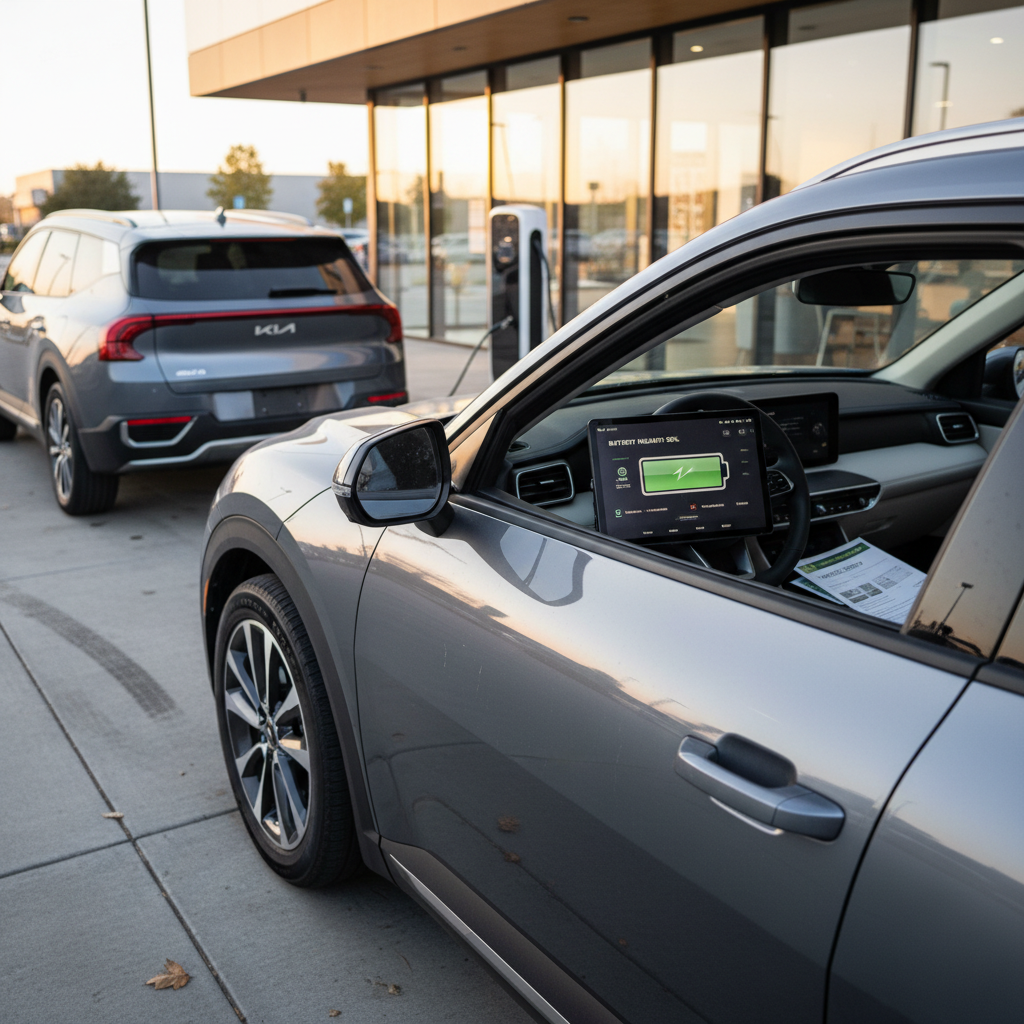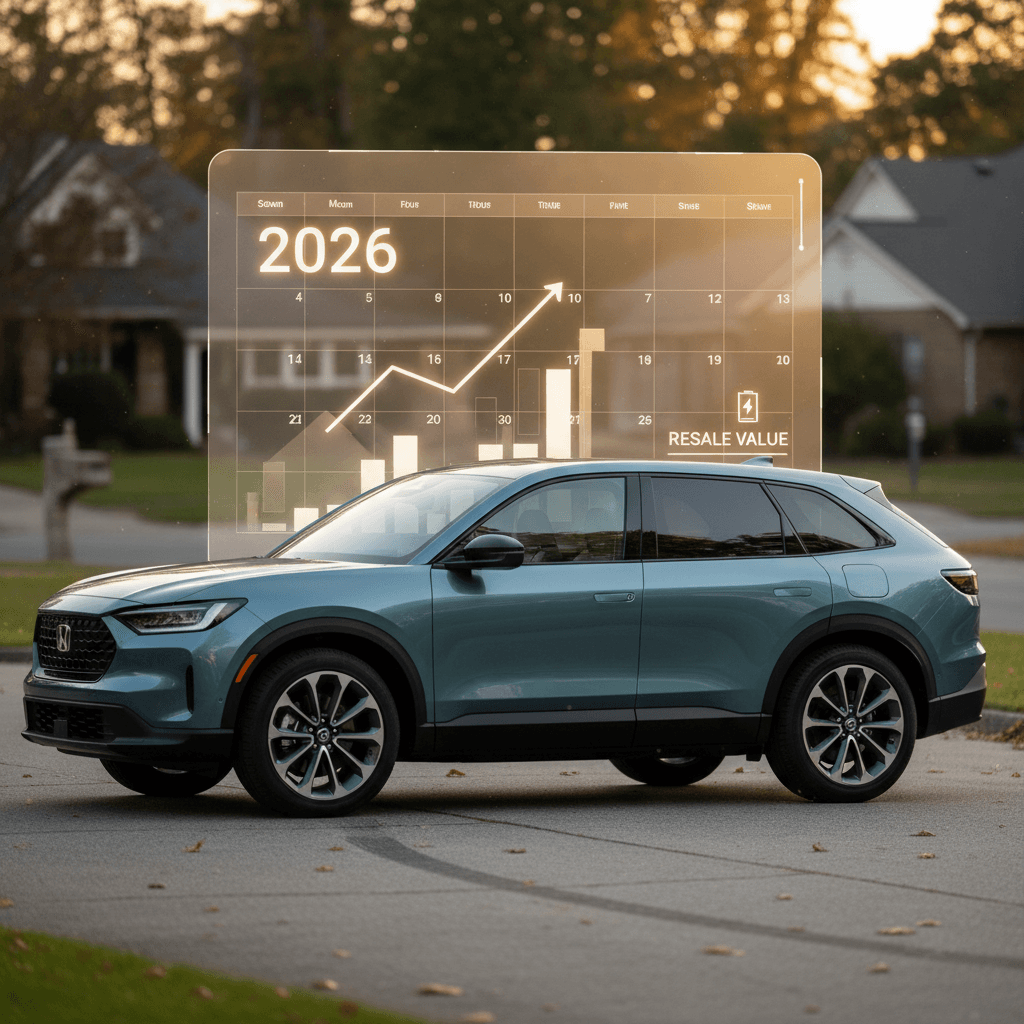
If you’re wondering about the best time to sell a Honda Prologue, you’re not alone. Early Prologue buyers have watched EV prices swing, incentives come and go, and even seen a major factory price cut for 2026 models. All of that directly affects what your Prologue is worth today, and what it might be worth six or 12 months from now.
Quick takeaway
Why timing matters for Honda Prologue sellers
Timing has always mattered in the used-car world, but with EVs, and the Honda Prologue in particular, the stakes are higher. Depreciation is steeper in the first few years, factory incentives can swing thousands of dollars overnight, and new software or range updates can make last year’s model feel old fast.
Honda Prologue & EV resale snapshot (early 2026)
Why the recent price cut matters
How the Honda Prologue depreciates in its early years
The Prologue is still a relatively new nameplate, but we already have a clear picture of its early depreciation curve thanks to price guides, transaction data, and the broader EV market. Like most electric SUVs, it loses value fastest in the first two to three years, then levels off.
What Prologue depreciation typically looks like
Approximate pattern for a well-kept, average‑mileage Prologue
Year 0–1: Steep initial drop
Once you drive off the lot, your Prologue takes its biggest percentage hit.
- Large incentives and discounts on new EVs anchor lower resale expectations.
- Tech moves fast, so newer range and software features quickly steal attention.
Years 2–3: Still falling, but slower
By year 2, many EVs have lost close to half of their original MSRP.
- Depreciation slows compared with year 1.
- This is often the sweet spot for selling: you exit before the warranty clock and miles pile up.
Years 4–6: Plateau phase
Once the big early drop is behind you, values become more predictable.
- Mileage, condition, and battery health matter more than model year alone.
- If you’ve kept miles low and the pack healthy, value holds better from this point on.
Battery health is the wild card
Best time to sell a Honda Prologue by model year
The best time to sell a Honda Prologue depends on which model year you own, how you bought it (cash, finance, lease), and how heavily you drive it. Below is a timing roadmap based on what we’re seeing in early 2026.
Suggested selling windows by Honda Prologue model year
Use this as a starting point. Local market conditions, incentives, and your personal situation may shift the optimal timing by 6–12 months.
| Model year | Current age (early 2026) | General timing sweet spot | Why it makes sense |
|---|---|---|---|
| 2024 | ~2 years | Sell between 2–3.5 years | You’ve already taken the steepest hit. Selling soon can beat additional declines as more discounted 2026s and used inventory hit the market. |
| 2025 | ~1 year | Watch market; aim for 2–3 years | If you got big incentives or a low payment, you may be upside‑down today. Revisit value around year 2, especially if miles are low. |
| 2026 | Brand‑new | Plan for 2–4 years out | You’re at the very top of the depreciation curve now. Focus on preserving condition and mileage if you want options in a few years. |
Assumes typical U.S. driving of ~12,000 miles per year and average condition.
Leasing vs. owning changes the equation
Scenario 1: 2024 Prologue owner
You bought early, likely at a higher MSRP than today’s 2026 models, and may or may not have captured a federal tax credit.
- If you’re sitting near 55–60% depreciation by year 2, the curve is already flattening.
- Selling between year 2 and 3.5 often balances getting out before mileage and age push values even lower.
- If you can, try to sell before major new incentives or another big price cut lands on new inventory.
Scenario 2: 2025–2026 Prologue owner
You likely benefited from stronger discounts or more competitive pricing from day one.
- Your effective cost basis (MSRP minus incentives) may be much lower than early buyers.
- In this case, hanging on for 3–4 years can make sense, especially if you’re content with the range and tech.
- Re‑evaluate if Honda announces a dramatically updated successor with longer range or if your lifestyle changes.
Market factors that can shift the “best” time to sell
Even the smartest resale plan can be upended by market news. For Prologue owners, a few forces matter more than others: automaker pricing strategy, EV incentives, and the broader supply–demand balance for electric SUVs.
Key forces that can move Honda Prologue values
Keep an eye on these before you commit to selling
1. New‑car price cuts & incentives
Honda’s recent decision to slash 2026 Prologue prices by about $7,500 instantly changed the used landscape.
- Cheaper new models reset buyer expectations.
- Late‑model used examples have to undercut those prices to move.
- If more cuts appear, values for older years can dip again.
2. Federal & state EV incentives
When federal tax credits or state rebates come and go, it shifts demand between new and used.
- Strong incentives on new EVs can pull buyers away from used examples.
- When incentives tighten, used EVs often become more attractive overnight.
3. EV depreciation trends overall
In 2024–2025, EVs, especially crossovers and luxury models, were among the fastest depreciating vehicles.
By 2026, analysts are seeing depreciation stabilize closer to gas cars as the market matures and battery data builds confidence.
4. Technology and range updates
If Honda or competitors launch a significantly longer‑range electric SUV at a similar price, the Prologue’s appeal may soften.
Minor software updates are less of a concern, but big range jumps can accelerate depreciation of earlier models.
Big red flag for timing
Personal signals that it’s time to sell your Prologue
The market side is only half the story. The “best” time to sell also depends on what’s happening in your driveway and your budget. Even if depreciation models say you should hold, life can say otherwise.
Checklist: Is it time to sell your Honda Prologue?
1. Your warranty clock is ticking
If you’re approaching the end of key coverage, especially battery and electric‑drive warranties, selling beforehand can preserve more value and give the next owner extra peace of mind.
2. Your driving needs changed
Maybe your commute shrank, you need a third row, or you moved somewhere with poor public charging. When the Prologue no longer fits your life, that’s a strong signal to sell, even if the numbers are only “okay.”
3. You’re consistently stretching its range
If road trips or winter weather regularly push you to public fast chargers, you may be better off moving into a longer‑range EV rather than waiting for the Prologue to drop deeper in value.
4. Your equity finally turned positive
If you financed with little money down during the high‑MSRP era, it may have taken time to get right‑side‑up. Once your loan balance dips below your estimated trade‑in value, doors open to sell or trade without rolling negative equity forward.
5. Repair costs or annoyances are piling up
While the Prologue hasn’t shown widespread reliability issues, even minor repairs, rattles, or software frustrations can add up. If you’re visiting the service department more than you’d like, it may be worth exiting before resale weakens further.
6. You can lock in a genuinely better deal
If a newer EV with more range, better charging speed, or lower total cost of ownership pencils out clearly in your favor, that can justify selling even if you’re earlier than the “ideal” curve.
How to maximize your Honda Prologue resale price
Whatever year you own, the way you prepare and present your Prologue can make a bigger difference than squeezing out a perfectly timed sale month. Here’s how to protect every dollar you can.

- Keep mileage in check. Staying under major mileage thresholds (24k, 36k, 48k, 60k miles) helps your Prologue appraise better. If you’re close to a big milestone, consider selling beforehand.
- Document every service visit. Save digital and paper records. Buyers and dealers pay more when they can see consistent maintenance, even on relatively low‑maintenance EVs.
- Fix obvious cosmetic issues. Curb‑rashed wheels, small dents, and badly scuffed interiors are negotiation fuel. Cheap reconditioning can often add more than it costs back into your sale price.
- Detail it like a dealer would. A professional interior and exterior detail makes listing photos pop and signals that you’ve taken care of the vehicle.
- Highlight tech and safety. Prologue buyers care about features like Google‑based infotainment, driver‑assist systems, and range. Call them out clearly in your listing or when you talk to dealers.
- Time your listing for demand peaks. Early spring and early fall often bring stronger used EV demand than the deep winter months, especially in colder regions.
Leverage a battery health report
Should you sell, trade in, or consign your Prologue?
Once you’ve decided it’s time to move on, you still have to choose how to sell. Each route changes how much time you invest, how much risk you take on, and how precisely you can hit the top of the market.
Ways to sell your Honda Prologue: pros and cons
Compare selling options for a late‑model electric SUV like the Prologue.
| Method | Best for | Pros | Cons |
|---|---|---|---|
| Instant cash offer | Owners who want speed and simplicity | Fast, low‑effort, no strangers test‑driving your EV; you get a clear number up front. | Usually the lowest dollar amount; not much room to negotiate. |
| Dealership trade‑in | Drivers replacing the Prologue with another vehicle | Convenient one‑stop transaction; can reduce sales‑tax hit in many states. | Trade value may lag private‑party pricing, especially if the dealer is heavy on EV inventory. |
| Consignment / marketplace partner | Owners who want retail‑level pricing without DIY hassle | Professionals handle photos, listings, test drives, and buyer vetting; you tap into broader EV‑focused demand. | Takes more time than an instant sale, and you share a portion of the final price as a fee. |
| Private‑party sale | Experienced sellers with time and patience | Potentially the highest price if you market it well and price aggressively. | Requires the most effort and risk: advertising, screening buyers, managing payment and paperwork. |
Your ideal path depends on whether you value speed, simplicity, or squeezing out every last dollar.
Think total transaction value, not just sticker price
How Recharged helps Honda Prologue owners sell smarter
Selling a late‑model EV in a fast‑moving market isn’t simple. That’s exactly the problem Recharged was built to solve, especially for vehicles like the Honda Prologue, where battery health, incentives, and new‑car pricing all shape what your SUV is truly worth.
What you get when you sell or trade through Recharged
Built from the ground up for used EV owners
Verified battery health
Every vehicle sold through Recharged includes a Recharged Score Report, our battery‑health and vehicle‑condition snapshot that helps justify your asking price and builds buyer confidence.
Flexible sale options
Choose the path that fits your timing:
- Instant offer or trade‑in for quick exits
- Consignment‑style selling to pursue higher prices
- All with EV‑specialist support along the way
Nationwide reach & delivery
Recharged’s digital marketplace and nationwide delivery mean your Prologue isn’t limited to buyers in your zip code, useful if local EV demand is soft.
Financing for your next EV
If you’re stepping into another electric vehicle, Recharged can help you finance your next EV and structure the deal around your Prologue’s trade‑in or sale value.
In‑person Experience Center
Near Virginia? You can visit our Experience Center in Richmond, VA to see vehicles in person, get questions answered, and explore trade‑in options face‑to‑face.
Data‑driven pricing guidance
Because Recharged focuses on used EVs, our team tracks real‑world transaction data and market trends for vehicles like the Prologue and can help you pick a strategy and price that reflect today’s market, not last year’s.
Ready to find your next EV?
Browse VehiclesYou can’t control factory price cuts, tax‑credit rules, or where EV values head next. But you can decide when to exit, how to present your Honda Prologue, and which selling path fits your goals. For most owners, that means targeting years 2–4 of ownership, watching the news for fresh incentives or price moves, and using tools like battery‑health reports and EV‑focused marketplaces to stand out. If you want a second set of eyes on your timing and value, Recharged can help you map out the next move, whether that’s selling now or waiting for a better window.