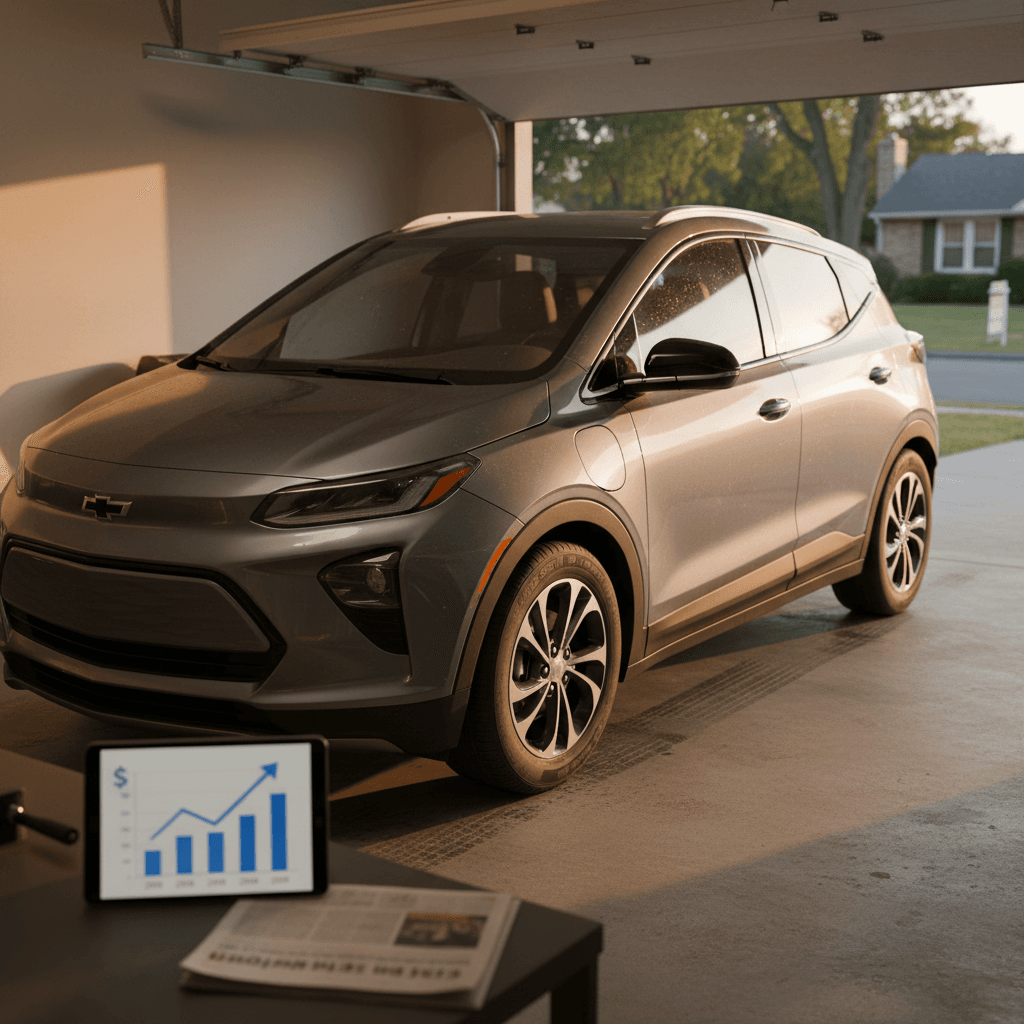
If you own a Chevrolet Bolt EUV, you’re sitting on one of the most affordable long‑range EVs ever sold in the U.S. That also makes timing your sale important. The best time to sell a Chevrolet Bolt EUV depends on your model year, mileage, battery health, and how quickly the used‑EV market is shifting between 2026 and 2030.
Key context for Bolt EUV sellers
Why timing your Chevrolet Bolt EUV sale matters
Timing matters more for EVs than for most gas cars because values are pulled in several directions at once: steep early depreciation, fast‑moving tax rules, and rapid technology improvements. The Bolt EUV sits at the center of all three trends. Sell too early and you hand someone else years of low‑cost driving; wait too long and you risk bigger price drops as newer, longer‑range EVs show up used in the same price bracket.
- EVs tend to lose a larger share of value in the first 3–5 years than comparable gas vehicles.
- Battery health and warranty coverage have an outsized impact on used pricing.
- Federal used‑EV tax credits can make or break demand under key price thresholds.
- GM’s decision to discontinue this generation of Bolt EUV after 2023 fixed supply, but didn’t stop tech from marching on.
Rule of thumb
How Chevrolet Bolt EUV values are trending in 2026
Chevy Bolt EUV depreciation snapshot
Used EVs, including the Bolt EUV, were hammered by rapid price resets in 2023–2024 as new‑EV discounts and tax credits undercut older inventory. Since then, depreciation has cooled but hasn’t vanished. By early 2026, much of the worst early‑life drop is behind first‑owner 2022–2023 Bolt EUVs, and prices are stabilizing into a more typical curve where condition and battery health matter more than calendar age.
Watch the competition
Best time to sell a Chevrolet Bolt EUV by model year
“Best time” isn’t one date on the calendar; it’s a window where you’ve enjoyed enough low‑cost driving but haven’t run into the next wave of depreciation or expensive maintenance. Here’s how that typically looks for the most common Bolt EUV model years on the road in 2026.
Timing windows by Bolt EUV model year
Use this as a planning guide, then adjust for your mileage and battery health.
2021 Bolt EUV
Age in 2026: 5 years
- Most early depreciation is already taken.
- Still inside battery warranty but aging out of basic coverage.
Suggested window: Sell between now and 2027 if you want to move before the car feels “old tech” to most buyers.
2022 Bolt EUV
Age in 2026: 4 years
- Prime balance of remaining life and price.
- Attractive to value‑focused commuters and first‑time EV buyers.
Suggested window: 2026–2028 is ideal, especially before you cross 80,000 miles.
2023 Bolt EUV
Age in 2026: 3 years
- Last model year and youngest of the generation.
- Still viewed as "new enough" by most buyers.
Suggested window: 2027–2029, or earlier if you’re piling on miles quickly.
If you want maximum resale value
High‑mileage drivers
If you drive 15,000–20,000 miles per year, mileage will hit your value faster than calendar age. In that case, it often makes sense to sell earlier, around years three to four, before you cross six figures on the odometer.
Low‑mileage drivers
If you’re closer to 6,000–8,000 miles per year, you can comfortably hold a 2022–2023 Bolt EUV into years six or seven without punishing depreciation, as long as you keep up on maintenance and document battery health.
Seasonality: when during the year to sell
Within any model‑year window, seasonality still matters. EV demand isn’t as weather‑driven as pickup trucks or sports cars, but there are still better and worse times during the calendar year to list your Bolt EUV.
Seasonal patterns for selling a Bolt EUV
How buyer interest and pricing typically shift across the year in the U.S.
| Season | Market behavior | Impact on selling your Bolt EUV |
|---|---|---|
| Late winter (Jan–Feb) | Tax‑refund shopping ramps up; winter range headlines can spook some buyers. | Decent time to list, especially if you price aggressively and highlight real‑world winter range. |
| Spring (Mar–May) | Many buyers plan road‑trip and commuting upgrades. | Often the strongest demand and best prices for used EVs. |
| Summer (Jun–Aug) | Road‑trip season; heat‑related range anxiety balances out by more travel. | Good time to sell, though competition from other used cars also rises. |
| Fall (Sep–Nov) | Demand can soften as people focus on school and year‑end expenses. | List early in fall or wait until late winter if you’re flexible. |
Use this as a guide; local weather and incentives can move the peaks a bit.
Listing strategy
Tax credits and policy shifts that affect your timing
Even though new Bolt EUVs no longer qualify for the federal new‑EV credit, many used examples can still benefit from the used clean vehicle tax credit, up to $4,000, as long as the buyer and vehicle meet IRS rules. That credit is available through at least the late 2020s unless Congress changes the law.
Key used‑EV tax credit factors that shape demand
1. Price cap under $25,000
To qualify for the federal used‑EV credit, the sale price must be $25,000 or less and the buyer has to meet income limits. If your Bolt EUV is worth just above that line, you may actually see <strong>more demand by pricing slightly under</strong> the cap than by chasing a few hundred extra dollars.
2. At least two model years old
A 2024‑calendar‑year sale requires a 2022 model year or older to qualify; by 2026, your 2024 sale must be for a 2024‑2 = 2022 or older model year. That makes early‑build EUVs permanently credit‑eligible, while younger ones age into eligibility over time.
3. Dealer participation
The credit is easiest to claim when the purchase goes through a <strong>registered dealer</strong> that can apply it at the point of sale. Many private‑party buyers will still value credit‑eligible vehicles, but may push for lower prices to compensate for the extra paperwork risk.
4. Policy changes ahead
Rules around leasing incentives and battery‑content requirements are tightening through 2025 and beyond. Any changes that make <strong>new EVs more expensive</strong> can support used Bolt EUV values temporarily, and vice versa.
Don’t build your whole timing plan on a credit
Battery health: the single biggest value driver
On a used Bolt EUV, shoppers are really buying two things: remaining battery life and a reliable daily‑driver. That’s why two EUVs of the same year and mileage can be thousands of dollars apart if one has rock‑solid battery documentation and the other is a question mark.
How battery condition changes what your Bolt EUV is worth
Think like a buyer comparing your EUV against others online.
Unverified battery
- Only dashboard range estimates, no recent diagnostics.
- Buyer fears range loss or hidden issues.
- Likely to attract low‑ball offers or sit longer on the market.
Verified battery health
- Recent third‑party or OEM‑level test report.
- Clear documentation of recall work and warranty status.
- Buyers more willing to pay a premium for peace of mind.
How Recharged helps on battery transparency
Where to sell your Bolt EUV for the best outcome
Once you’ve decided the timing is right, the next question is where to sell. Each channel trades off between convenience, control over price, and how EV‑savvy the buyer base is.
1. Traditional dealer trade‑in
- Pros: Fast, easy, rolls into your next purchase.
- Cons: Many dealers still under‑value EVs and may ignore battery condition.
- Best for: Owners who prioritize simplicity over squeezing out every dollar.
2. Private‑party sale
- Pros: Highest potential price if you find the right buyer.
- Cons: More time, paperwork, and test‑drive logistics; buyers may be nervous about EVs.
- Best for: Sellers comfortable managing listings, messaging, and negotiations.
3. EV‑specialist marketplaces
- Pros: Audience that understands EVs, structured inspections, and battery reports.
- Cons: Slightly more process than a same‑day trade‑in.
- Best for: Owners who want transparent pricing and EV‑savvy buyers without doing everything solo.
How Recharged fits in
Ready to find your next EV?
Browse VehiclesPricing benchmarks: what your Bolt EUV might be worth
Exact numbers will always depend on your VIN, mileage, options, location, and battery report, but it helps to know what a “typical” Bolt EUV looks like in today’s market. Use these ranges as directional benchmarks, not quotes.
Illustrative 2026 pricing bands for Chevy Bolt EUVs
Real‑world values may be higher or lower; this is a starting point for setting expectations.
| Model year | Odometer range | Condition snapshot | Rough private‑party range | Typical dealer trade‑in |
|---|---|---|---|---|
| 2023 | 25,000–45,000 miles | Well‑maintained, strong battery report, last model year | $15,000–$18,000 | $13,000–$15,500 |
| 2022 | 35,000–65,000 miles | Normal wear, documented recall work, verified range | $13,000–$16,000 | $11,000–$14,000 |
| 2021 | 50,000–80,000 miles | Higher mileage, still under battery warranty | $11,000–$14,000 | $9,000–$12,000 |
Assumes clean title, no major accidents, and average equipment for each trim.
Important disclaimer on prices
Step-by-step checklist before you list or trade
Pre‑sale prep for your Chevrolet Bolt EUV
1. Pull your service and recall records
Download or request records that show completed battery‑related recalls and routine maintenance. Buyers and EV‑savvy marketplaces will expect to see this, and it reassures them that your Bolt EUV has been cared for properly.
2. Get a fresh battery health assessment
Schedule a battery diagnostic, ideally from a shop that understands EVs or through a service like the Recharged Score battery health test. A recent report is one of the strongest value drivers you have.
3. Address obvious cosmetic issues
Take care of inexpensive items that create bad first impressions: missing wheel covers, small dents, curb rash, or a dirty interior. You don’t need a full respray, but a professional detail can make your EUV feel newer.
4. Plan your pricing around the $25,000 cap
If your Bolt EUV’s realistic value is near $25,000 or below, think about how pricing might interact with the used‑EV tax credit. Listing slightly under the cap could expand your buyer pool more than squeezing out a few hundred extra dollars.
5. Decide where you’ll sell
Compare a dealer trade‑in number, an instant offer from an EV‑specialist marketplace like Recharged, and rough private‑sale comps. Knowing all three gives you leverage, whether you value convenience or top‑end price more.
6. Capture EV‑specific photos
Photograph the charging port, charge screen, range estimate at a high state of charge, included charging cables, and any home‑charging gear. Buyers who are new to EVs rely on these cues to feel confident clicking “buy.”
Common mistakes to avoid when selling a Bolt EUV
- Waiting for a ‘perfect’ price spike. The market for used EVs is maturing, not booming. It’s rare to see sustained price jumps on older models once the first big depreciation wave has passed.
- Ignoring battery documentation. Relying only on your dash range number leaves thousands of dollars on the table compared with showing a proper health report.
- Letting maintenance pile up. Worn tires, overdue brake fluid, or a lit warning light make EV buyers nervous and give dealers an excuse to slash their offers.
- Listing without EV‑savvy descriptions. Ads that read like a gas‑car listing don’t answer a buyer’s core questions about range, charging, and warranty.
- Underestimating out‑of‑state buyers. Compact, affordable EVs like the Bolt EUV draw interest from across the country, especially when shipped through marketplaces that offer remote inspections and delivery.
FAQ: best time to sell a Chevrolet Bolt EUV
Frequently asked questions about selling a Bolt EUV
Bottom line: should you sell your Bolt EUV now or wait?
If your main goal is maximizing what you get for your Chevrolet Bolt EUV, the best time to sell is usually between years three and six of ownership, while your mileage and battery health still look strong on paper and before a wave of newer used EVs crowds the same price bracket. From 2026 onward, that puts most 2022–2023 Bolt EUV owners squarely in the decision zone.
You don’t have to guess, though. Start by checking recent comps in your area, then compare a dealer trade‑in number with an instant offer or consignment estimate from an EV‑focused marketplace like Recharged. Pair that with a fresh battery health report, and you’ll know, objectively, whether it’s smarter to cash out your Bolt EUV today or keep enjoying low‑cost electric miles for a few more years.