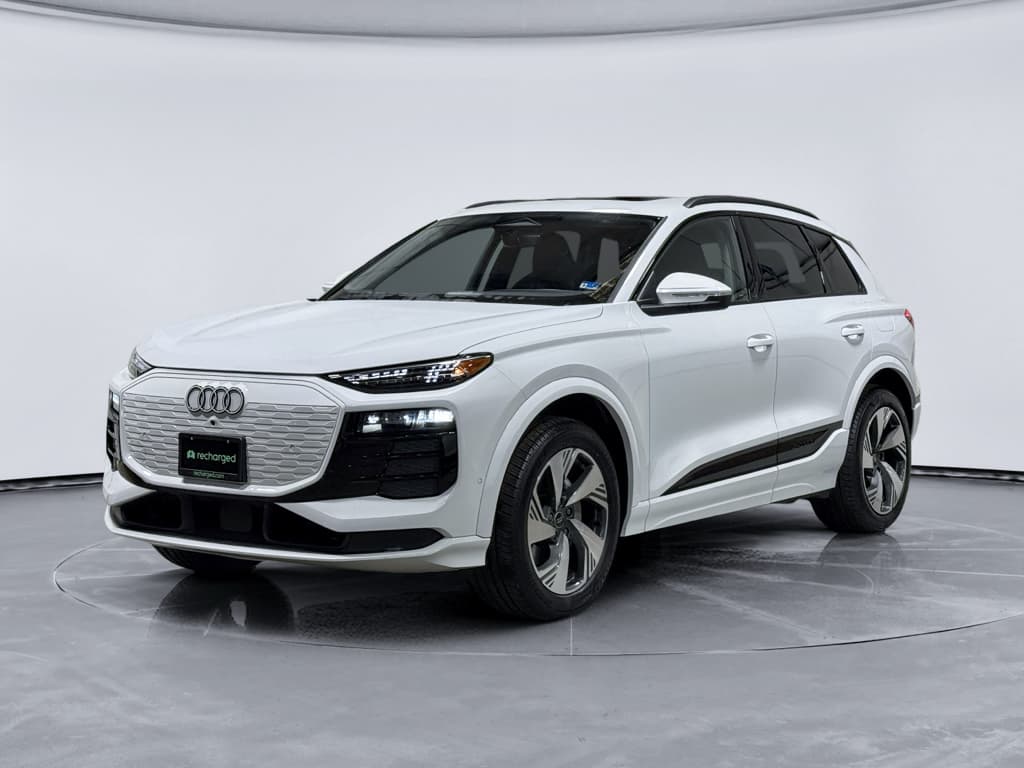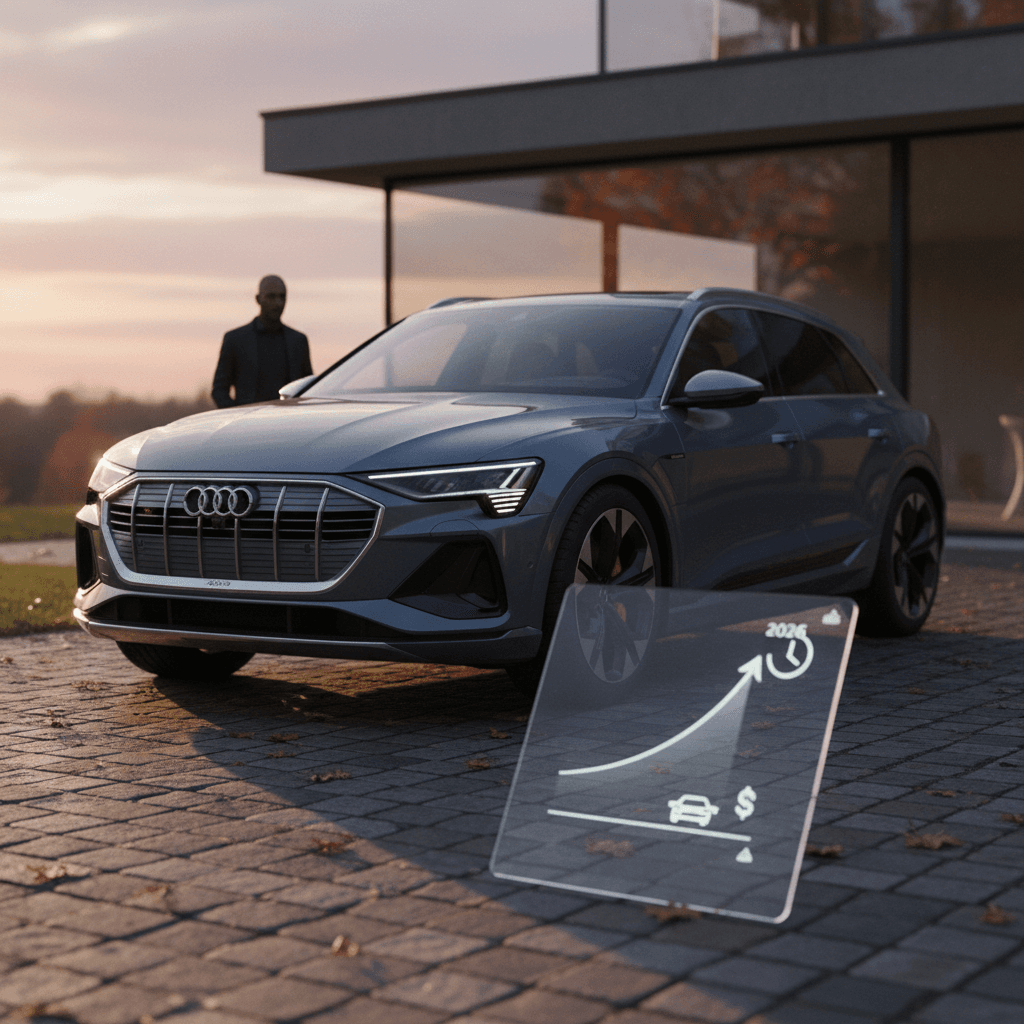
If you own an Audi Q8 e-tron, you’re sitting on one of the most comfortable electric SUVs on the road, and one of the fastest‑depreciating luxury EVs. Picking the best time to sell an Audi Q8 e-tron can easily mean thousands of dollars gained or lost, especially in today’s choppy EV market.
Quick answer
Why timing matters for Audi Q8 e-tron sellers
Timing always matters when you sell a vehicle, but it matters more with the Q8 e-tron for three reasons: steep early depreciation, complex battery concerns, and a rapidly shifting EV market.
Three forces shaping your Q8 e-tron resale value
Understand these before you decide when to sell
Aggressive early depreciation
Battery health questions
Volatile EV pricing
What’s unique about Q8 e-tron depreciation
How the Audi Q8 e-tron depreciates over time
You don’t need to memorize a depreciation curve, but you should know roughly how the Q8 e-tron loses value over time. Data from valuation guides and auction results show that the Q8 e-tron typically follows a pattern similar to other high‑end EVs, but with a steeper slope than the average gas SUV.
Typical Audi Q8 e-tron depreciation snapshot
These aren’t hard rules, but they explain why selling an Audi Q8 e-tron in that 3–5‑year window usually makes the most financial sense. You’ve gotten real use out of an expensive vehicle, yet you’re exiting before buyers start to worry about aging batteries and outdated tech.
Use tools, not guesses
Mileage and age: the sweet spot to sell
Age and mileage still matter for an Audi Q8 e-tron, but buyers read them differently than on a gas SUV. They’re really asking one big question: “How much life is left in this battery and this interior?”
When should you consider selling your Audi Q8 e-tron?
How age and mileage interact with buyer expectations.
| Age of Q8 e-tron | Typical Mileage | Buyer Perception | What it means for you |
|---|---|---|---|
| Year 1–2 | Under 25,000 miles | Like‑new, but buyers may prefer new incentives | Only worth selling if you must exit early or market prices are unusually strong. |
| Year 3–4 | 25,000–45,000 miles | “Lightly used” luxury EV sweet spot | Often the best blend of value realized and value retained, strong time to sell. |
| Year 5 | 45,000–60,000 miles | Still desirable if battery health is strong | Good time to sell before most buyers mentally shift it into “high‑mileage EV” territory. |
| Years 6–7+ | 60,000+ miles | Heavier depreciation; more questions about repairs | Consider selling sooner rather than later, holding longer doesn’t usually save you much money. |
Use this as a guide, not a rulebook, condition and battery health can move you up or down a row.
The 60,000‑mile psychological barrier
Questions to ask yourself about timing
1. Will you cross 60,000 miles in the next 12 months?
If yes, and you’re already thinking about selling, it usually makes financial sense to list before you hit that milestone.
2. Is your warranty coverage about to end?
Losing major warranty coverage can spook buyers. Selling a few months before coverage expires can support a stronger asking price.
3. Has your commute or usage changed?
If you’re suddenly driving much more each year, you’ll stack miles (and depreciation) quickly. That can be a sign to sell sooner.
4. Are repairs or tires looming?
Big‑ticket maintenance items, tires, brakes, suspension, are expensive on a heavy luxury EV. Buyers won’t pay a premium if they see bills coming.
Battery health: the make‑or‑break factor
With a Q8 e-tron, you’re not just selling a luxury SUV, you’re selling a high‑voltage battery pack. Range is the new “engine compression test,” and informed buyers want proof.

Why buyers care so much
- Daily range: They want to know if the Q8 e-tron can still comfortably cover their commute without constant fast charging.
- Longevity: A healthy battery signals they won’t be shopping again in two years.
- Charging behavior: A history of mainly DC fast charging can make some shoppers nervous, even if the pack is still strong.
How to prove your battery is healthy
- Use a professional diagnostic rather than a dashboard guess.
- Document your real‑world range at various states of charge.
- Show consistent service records and software updates.
Recharged includes a Recharged Score Report with verified battery health on every vehicle we sell, so your Q8 e-tron doesn’t have to “just trust me” its way through negotiations.
Turn battery health into a selling feature
Market timing: 2024–2026 used EV trends
The best time to sell an Audi Q8 e-tron isn’t just about your odometer. It’s also about what the wider EV market is doing around you. Between 2022 and early 2025, used EV prices dropped dramatically as new‑EV incentives, rising inventory, and quick tech turnover pushed values down. That correction phase has started to calm, but we’re not back to the predictable “gas‑SUV” world yet.
What the current market means for your Q8 e-tron
Put simply: 2026 is a better time to sell a used EV than 2023–early 2025 was, but luxury EVs like the Q8 e-tron are still sensitive to interest rates, fuel prices, and sentiment around new‑EV incentives. If gas prices spike or new‑EV deals dry up in your area, more shoppers start looking hard at used options, exactly when you want your Q8 e-tron to be on the market.
Watch for local “micro‑peaks”
Seasonality: best months to sell your Q8 e-tron
Seasonality hasn’t disappeared just because we added batteries. Most of the same rhythms that moved gas SUVs still affect an Audi Q8 e-tron, with a few EV‑specific twists.
How the calendar affects your sale
Typical patterns in the U.S. market (including 2026)
Late spring & summer: usually strongest
Late fall & winter: slower, but not dead
Early fall: back‑to‑school bump
Weather and gas price shocks
If you’re selling in 2026…
Life events and ownership milestones that signal it’s time
Most people don’t sell an Audi Q8 e-tron because a depreciation curve told them to. They sell because life changed. The smart move is to line those life changes up with the financial sweet spots we’ve just covered.
- Growing family or downsizing: If you suddenly need a third row or no longer need such a large vehicle, that’s a natural sale moment, especially if you’re in the 3–5‑year window.
- New commute or no commute: Moving closer to work (or working from home) can make a big, expensive EV feel like overkill. Selling sooner often beats letting it sit and depreciate.
- Tech envy: If you’re itching for more range, faster charging, or advanced driver‑assist tech, waiting multiple years for trade‑in values to fall further rarely makes that upgrade cheaper.
- Budget reset: If interest rates or life events have made the payment uncomfortable, it’s better to sell while your Q8 e-tron is still highly desirable rather than waiting until you’re underwater.
Don’t chase sunk costs
Pricing strategy and where to sell your Q8 e-tron
Once you’ve decided the time is right, how you price and where you sell your Audi Q8 e-tron can matter as much as when you sell it.
Common ways to sell
- Trade‑in to a dealer: Fast and convenient, but often the lowest number on the table, especially if the dealer isn’t comfortable pricing used EVs.
- Private sale: Typically the highest price if you’re willing to handle photos, listings, questions, test‑drives, and paperwork yourself.
- EV‑specialist marketplace: Platforms like Recharged focus on used EVs, battery health, and transparent pricing, bridging the gap between dealer convenience and private‑sale value.
Smart pricing strategy
- Look at comparable Q8 e-tron listings within 250 miles, not just national averages.
- Price your vehicle slightly below stale listings with worse photos or weaker descriptions.
- Highlight fresh tires, recent service, and battery health documentation right in the title or first lines of your ad.
- Adjust if you’re getting views but no messages, by far the clearest sign you started too high.
Timing‑friendly listing tips that actually move the needle
Lead with what EV buyers care about
Range, battery health, charging speed, and home‑charging setup should be front and center, luxury features come second.
Photograph it like a new‑car ad
Clean the car thoroughly, shoot in daylight, and show both the charging port and the instrument cluster with state of charge and range visible.
Be honest about flaws
Minor cosmetic issues are rarely deal‑breakers, but surprising a buyer at the curb is a great way to kill a deal, or invite renegotiation.
Have your paperwork lined up
Title, payoff amount (if any), service records, and any remaining warranty details should be ready before you hit “list.”
Why EV‑focused buyers pay more attention
How Recharged can help you time (and simplify) the sale
Selling a luxury EV shouldn’t require you to become a data analyst. Recharged was built from the ground up around used electric vehicles, including premium models like the Audi Q8 e-tron.
What Recharged brings to your Q8 e-tron sale
More than just a listing, end‑to‑end EV expertise
Recharged Score battery health report
Data‑driven, fair pricing
Multiple ways to sell
Ready to find your next EV?
Browse VehiclesNear Richmond, VA? See it in person
FAQ: best time to sell an Audi Q8 e-tron
Common questions about timing your Audi Q8 e-tron sale
The best time to sell an Audi Q8 e-tron is when the numbers, the market, and your life all point in roughly the same direction: you’re in that 3–5‑year, sub‑60,000‑mile window; your battery health is strong and documented; and local EV demand is healthy. You don’t have to hit a perfect bullseye to come out ahead, you just have to avoid the obvious pitfalls. If you’re on the fence, getting a real‑world valuation, a battery health report, and a sense of current buyer demand from an EV‑focused partner like Recharged can turn guesswork into a clear plan.