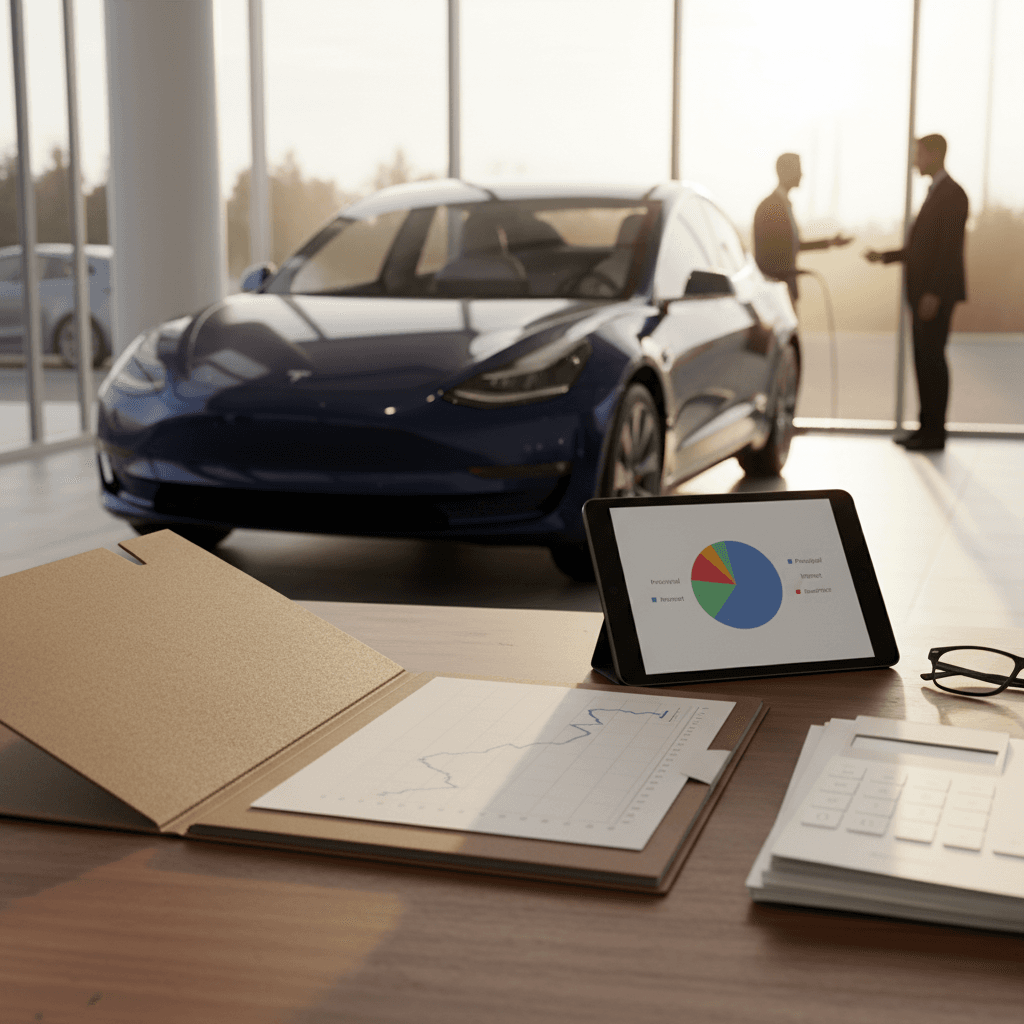
If you’re wondering when the best time to buy a used Tesla in 2026 is, you’re asking the right question. Timing your purchase around tax credits, seasonal price swings, and Tesla’s own pricing moves can easily be the difference between overpaying by thousands of dollars and landing a great deal on a Model 3, Model Y, Model S, or Model X.
Why 2026 is unusual for used Teslas
Why timing your used Tesla purchase matters in 2026
Used Teslas have gone through a rollercoaster since 2022. After a spike in values during the pandemic, Tesla’s aggressive new-car price cuts pushed used prices down. Then, as new EV demand cooled and some tax rules changed, used Teslas started firming up again while many other used EVs kept getting cheaper. In 2026, you’re dealing with a market that’s no longer blindly rising or falling, it reacts to incentives, headlines, and Tesla’s own decisions.
What good timing can save you
Buying during the right month or ahead of a policy change can mean:
- Lower asking prices and more motivated sellers
- Access to tax credits that effectively cut the price
- Better selection of trims, colors, and mileage bands
What bad timing can cost you
Poor timing might mean:
- Competing with a rush of buyers chasing a credit deadline
- Buying right before Tesla cuts prices again
- Settling for a weaker battery or sparse service history because options are thin
Quick 2026 timing takeaways
At-a-glance timing guide for 2026
Big picture for 2026
Tax credits and 2026 deadlines for used Teslas
Before you even look at months and seasons, you need to understand how federal tax credits for used EVs interact with timing in 2026. U.S. rules have evolved rapidly, and some key provisions phase out based on when a vehicle is acquired.
Key federal timing rules that matter in 2026
Always confirm current IRS guidance or speak with a tax professional before you buy, but these are the broad timing themes shaping 2026.
| Timing factor | What it means for 2026 used Tesla buyers | Practical timing takeaway |
|---|---|---|
| Previously owned clean vehicle credit (Section 25E) | For qualifying buyers and vehicles, this credit has been available up to $4,000 or 30% of the sale price, with income caps and a $25,000 price ceiling. Vehicles acquired after September 30, 2025, are no longer eligible for clean vehicle credits under current IRS instructions. | If you want a credit, you needed to have acquired the vehicle on or before September 30, 2025. In 2026, you may still see vehicles advertised with old credit language, verify carefully; do not assume the $4,000 is still on the table. |
| Point-of-sale credit transfers | Dealers could apply the credit at the point of sale to reduce upfront cost once the system went live, but only while the underlying credit remained in effect. | In 2026, be cautious with older marketing claims. Make the dealer show you how any discount is structured and whether it’s a true credit or just a price concession. |
| State & local incentives | Some states and utilities offer their own used-EV rebates or low-rate loans, often with funding pools that open and close on specific dates. | Check your state and utility programs early in the year and time your purchase window around application or funding openings. These can be worth hundreds or thousands of dollars. |
Federal EV tax rules are highly date-sensitive, so build your shopping timeline around them.
Don’t rely on outdated tax-credit ads
In other words, 2026 is less about chasing a federal used-EV tax credit cut-off, those dates are already behind you, and more about not being misled by stale marketing. State and utility incentives, however, still introduce real timing considerations, so if you have a generous local program, align your shopping window with its funding cycles.
Seasonality: Best months to buy a used Tesla
Even without incentives, car prices are seasonal. The used Tesla market is no exception, though EV-specific factors like range in cold weather and tax season add a few twists.
How different parts of the year affect used Tesla pricing
Think in quarters and life events, not just calendar months.
Winter (Jan–Feb)
Pros: Cold-weather range concerns and post-holiday budgets can soften demand, especially in colder states. Sellers who need to move cars before tax season may accept lower offers.
Cons: Inventory can be thinner, and it’s harder to properly test range and efficiency if roads are icy or wet.
Tax season (Mar–Apr)
Pros: Some buyers use refunds to buy, increasing demand; others sell to cover taxes, adding supply.
Cons: Extra retail demand can bump prices, especially for the most desirable Model 3 and Model Y configurations.
Late spring & summer (May–Aug)
Pros: Strong inventory, better test-drive weather, and fewer budget shocks. Great time to buy if you want the car for road trips.
Cons: Road-trip season can tighten supply of well-optioned cars near travel corridors.
Back-to-school (Sep)
Pros: Families reshuffle vehicles; some trade into SUVs or crossovers, adding Model Y inventory.
Cons: Limited, short-lived window; you need to be ready with financing.
Fall (Oct–Nov)
Pros: Historically, dealers like to clean up inventory before year-end. For EVs, cooler weather exposes weaker batteries during test drives, which helps your due diligence.
Cons: Fewer shopping days if you’re trying to avoid holiday chaos.
Year-end (Dec)
Pros: Some sellers want cars off the books before January; others chase personal or business tax goals.
Cons: Tesla sometimes runs year-end promotions on new cars, which can quickly re-price parts of the used market, good if you time it right, bad if you buy the week before.
Seasonal sweet spot
Tesla price cuts & market shocks: when to pounce
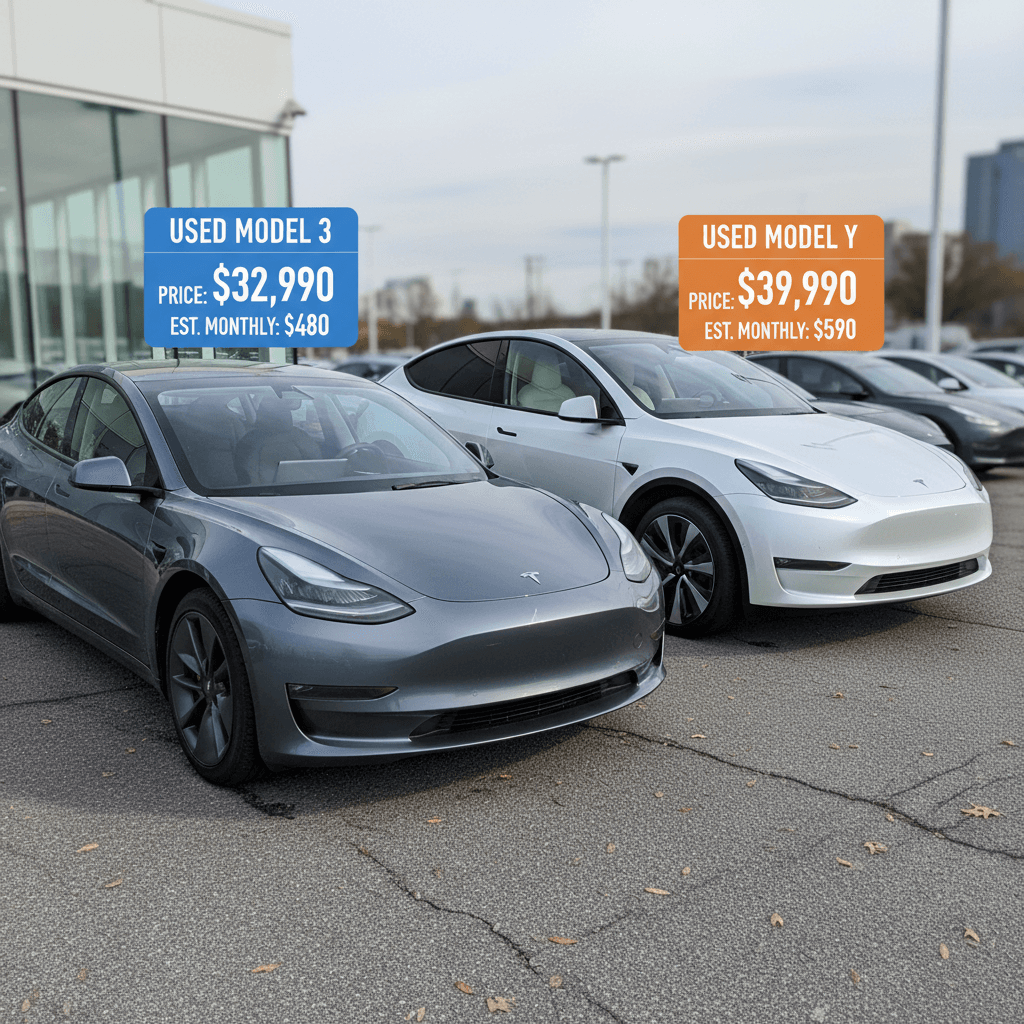
Tesla has a history of sudden, headline-grabbing price cuts on new vehicles, and every move ripples instantly into the used market. When new Model 3 or Model Y prices drop, used values usually soften over the next few weeks as sellers and dealers adjust. The reverse can also happen: if Tesla trims production or announces the end of a model or variant, used prices can firm up or even jump.
- Watch for major Tesla announcements about price cuts, discontinued trims, or significant software/hardware updates.
- Expect a 2–8 week lag as private sellers and smaller dealers catch up to new price realities.
- Use that window to compare older listings (still priced for the old market) with fresher ones to see where negotiation room really is.
How to use Tesla volatility to your advantage
Model cycles: which used Teslas are best-timed in 2026?
Model cycles matter because they determine how “old” your car feels relative to the latest version and how much tech you give up in exchange for a lower price. In 2026, the Tesla lineup is in a different phase than it was during the first big wave of used demand in 2020–2021.
How each Tesla model fits into the 2026 used market
Think in terms of age, tech changes, and supply.
Model 3 (2018–2023)
By 2026, early Model 3s are mainstream used cars, not tech novelties. That means:
- Plenty of supply under $25,000 for higher-mileage cars.
- Strong value in 2019–2021 Long Range and Performance trims with verified battery health.
- Some earlier cars missing newer driver-assistance hardware or comfort tweaks.
Model Y (2020–2024)
Model Y entered the used market later but in huge volumes. In 2026:
- Crossovers remain in high demand, supporting prices.
- Family buyers often prioritize clean history and interior condition over cutting-edge tech.
- Good timing here is more about seasonal family demand (summer & back-to-school).
Model S & Model X (legacy luxury)
Older S and X can look like bargains, but timing is tightly linked to major refreshes and discontinuation rumors.
- When Tesla hints at ending or overhauling a variant, used values can spike.
- Maintenance history and battery health matter more than month-to-month timing.
Special cases: Cybertruck & others
Low-volume or headline models behave differently:
- Hype cycles and limited supply keep prices lumpy.
- Don’t expect rational, seasonal pricing, watch longer-term trends.
- Most value-focused buyers are better off with a Model 3 or Y.
Model-year sweet spot
How long should you wait vs buying now?
The hardest timing question isn’t "Which month?" but "How long should I keep waiting for a better deal?" The reality is that used EV prices can go sideways for long stretches and then move quickly on news or incentives. Your goal isn’t to buy at the exact bottom; it’s to avoid buying at a local peak when waiting a bit would clearly help.
Signs you should wait
- You don’t urgently need a car and can rely on another vehicle or transit for a few more months.
- You see high prices and low inventory for your target spec, plus recent Tesla rumors of upcoming price cuts or hardware changes.
- Your state or utility has a new incentive window opening later in 2026.
Signs you should buy soon
- Your current car is costing you money in repairs or fuel, and a Tesla would reduce monthly operating costs.
- You’ve tracked listings for 30–60 days and see stable or slowly declining prices with healthy inventory.
- You’ve lined up financing and know your budget, including insurance and charging setup.
A practical rule of thumb
Balancing timing, price & Tesla battery health
One trap in a falling or volatile market is fixating on shaving off another $1,000 while ignoring what matters most long term: battery health. A slightly cheaper Tesla with a tired pack is rarely a better deal than a fairly priced one with strong diagnostics and history.
Timing vs quality: how to avoid false bargains
1. Prioritize verified battery health over timing perfection
Use tools like a Recharged Score battery health report or a detailed range test to understand real-world capacity. A healthy battery will matter more over 5–8 years than whether you bought in May instead of July.
2. Use seasonality to stress-test the car
If you shop in colder months, range and charging behavior will reveal any weak cells or thermal-management issues. In warmer months, you can better evaluate cooling performance and long-drive comfort.
3. Time your purchase around your inspection capacity
Don’t schedule a transaction when you’re too busy to read the history, ask questions, and arrange a pre-purchase inspection if needed. The best month in the market is a bad month for you if you’re rushed.
4. Don’t chase a bottomless discount curve
Electric vehicles depreciate, but not in a straight line forever. Once a used Tesla has reached a stable market level for its age, condition, and hardware, further declines tend to slow.
Be skeptical of "too cheap" Teslas
Financing, insurance & total cost timing
The “best time” isn’t only about the sticker price. It’s about your total cost of ownership, loan interest, insurance, charging, maintenance, and how long you’ll keep the car. In 2026, interest rates, insurance underwriting for EVs, and even electricity prices vary regionally and over time.
Timing levers beyond the purchase price
Consider these before circling a date on the calendar.
Interest rates
Even a 1–2 point move in interest rates can outweigh a small change in vehicle price over a 5–7 year loan. Shop lenders (including EV-focused providers) before you commit. Recharged can help you pre-qualify for EV financing online with no impact to your credit.
Insurance
Insurers have been updating EV repair assumptions and rates. Get quotes on specific VINs where possible; some trims, wheel packages, or Autopilot options can shift premiums.
Charging setup
If you need a home Level 2 charger or panel upgrade, coordinate your car purchase with electrician availability and any local rebates so you’re not stuck trickle-charging at 120V for months.
Use timing to stack savings
Step-by-step checklist for timing your used Tesla purchase
Timing your 2026 used Tesla purchase in 10 steps
1. Define your must-haves and deal-breakers
Decide on model (3, Y, S, X), drivetrain, must-have features, and maximum mileage. This frames your search before you start chasing deals.
2. Map your personal timing constraints
Look at your lease end date, upcoming moves, job changes, or family needs. The best market moment is irrelevant if it doesn’t line up with your life.
3. Research incentives and local programs
Check federal, state, and utility sites for any remaining EV incentives, loan programs, or charging rebates that apply in 2026, and note their deadlines or funding windows.
4. Get pre-qualified for financing
Use a marketplace like Recharged to <strong>pre-qualify with no impact to your credit</strong>. Knowing your real budget in advance keeps you from overreacting to short-lived price dips.
5. Track the market for 30 days
Save searches for your target models across multiple platforms. Note asking prices, mileage, and how long good listings stay up. This becomes your reality check when it’s time to negotiate.
6. Watch for Tesla and policy news
Follow reliable coverage of Tesla price moves, hardware changes, and any significant EV-policy announcements. If a big change looks imminent, wait for the dust to settle before buying.
7. Choose a 4–8 week shopping window
Aim for late spring to early fall if you have flexibility, or align with your personal milestones and local incentive calendars if you don’t.
8. Shortlist vehicles with strong diagnostics
Focus on used Teslas with transparent history and objective battery health information, such as a <strong>Recharged Score Report</strong> that shows verified pack condition and fair market pricing.
9. Move quickly, but not rashly, on the right car
When a car checks your boxes and is fairly priced relative to recent comps, schedule a test drive and inspection promptly. Good used Teslas don’t sit forever in a rationally priced market.
10. Re-evaluate if you hit your time limit
If you reach the end of your planned window with no suitable car, either adjust your criteria (price or features) or extend the search into the next seasonal window rather than panic-buying.
FAQs: Best time to buy a used Tesla in 2026
Frequently asked questions about timing a used Tesla purchase in 2026
Bottom line: The best time to buy a used Tesla in 2026
There’s no single magic date on the 2026 calendar when every used Tesla suddenly becomes a bargain. Instead, the best time to buy a used Tesla in 2026 is when three things line up: the market is reasonably favorable (often late spring through early fall), your own finances and incentives are in order, and you’ve found a well-documented car with strong battery health at a fair price.
If you structure your search around those fundamentals rather than chasing the perfect week, you’ll almost always end up in a better position. A marketplace like Recharged can make this much easier by pairing you with used Teslas that already include a Recharged Score Report, covering verified battery health and fair-market pricing, plus EV-specialist support, financing help, trade-in options, and nationwide delivery. That way, timing becomes a tool you use to your advantage, not a gamble that keeps you stuck on the sidelines.
Tesla on Recharged
See all →

Related Articles
Chevy Blazer EV Recalls List: Dates, Fixes, and What Owners Should Do
See the full Chevy Blazer EV recalls list, including software, parking brake wiring, and chassis harness issues. Learn how to check your VIN and get repairs free.
EV Commuting Cost vs Gas Per Month: What You’ll Really Pay
See how much you can save per month commuting in an EV vs gas car. Clear formulas, real US averages, and examples at different commute distances.
Volkswagen ID.4 Reliability in 2026: Problems, Recalls & What to Expect
How reliable is the Volkswagen ID.4 in 2026? See common problems, recalls, battery warranty, and tips if you’re buying a used ID.4 or planning to keep yours long term.