If you own a Chevy Blazer EV or you’re shopping for one used, you’ve probably heard about software glitches, a stop‑sale, and now a parking‑brake recall. This guide compiles the most important Chevy Blazer EV recalls list items from launch through early 2026, plus how to tell if your specific SUV is affected and what to do next.
Quick note on recalls vs. stop‑sales
Chevy Blazer EV recalls at a glance
Blazer EV issues, in numbers (through early 2026)
Broadly, Blazer EV issues fall into two buckets: 1. Software quality and infotainment/charging glitches, which triggered the December 2023 stop‑sale and a series of software updates. 2. Hardware recalls around the rear parking brake wiring and chassis harness, which carry real safety implications if they’re not fixed. Next, we’ll walk through each major recall or campaign in date order so you can see exactly what happened and when.
Full Chevy Blazer EV recalls list and timeline
Below is a plain‑English timeline of the big events affecting the Blazer EV from launch through early 2026. Exact VIN eligibility is always determined by GM’s systems and NHTSA, but this gives you a clear roadmap of what to ask about.
December 2023: Software issues and stop‑sale (not a formal recall)
In late December 2023, just weeks after the Blazer EV launch, GM paused sales of the 2024 Blazer EV because early owners and reviewers reported serious software bugs. These included frozen or blank infotainment screens, error messages, and difficulty charging at DC fast‑charging stations. This was handled as a stop‑sale and service campaign, not an official NHTSA safety recall, because GM said the problems weren’t safety‑critical and didn’t involve the Ultium battery or Google Built‑In system at a hardware level. Still, the bugs made the SUV frustrating and, for some owners, undriveable on longer trips until fixed.
Why this matters for used buyers
Early 2024: Dealer software update campaign
In March 2024, GM rolled out a full‑vehicle software update and restarted Blazer EV sales. Dealers were instructed to bring every affected Blazer EV in for a day‑long session where technicians checked and updated essentially every control module in the vehicle. Owners who had the work done reported that the most disruptive bugs, blank screens, random error messages, and some charging issues, were largely resolved, though minor glitches and infotainment quirks have continued to pop up for some drivers as GM refines its Ultium software stack.
How to confirm the software campaign was done
2025–2026: Parking brake wiring harness recall and re‑repair
By mid‑2025, GM had identified a hardware issue affecting a large population of 2024 and 2025 Blazer EVs: the rear parking brake wiring harness. The harness could be routed in a way that allowed it to flex, rub, or corrode over time, potentially damaging the wiring that controls the electric parking brake. The risk: the parking brake might activate unexpectedly while driving or, on the flip side, fail to engage when parked. Either scenario can increase the risk of a crash or roll‑away incident. GM’s first recall campaign instructed dealers to inspect the harness, reroute it, and add anti‑abrasive tape, and to replace damaged harnesses where needed. But a cataloging error meant some dealers ordered the wrong replacement harness, which did not fully solve the flexing problem for a subset of vehicles.
Parking‑brake recall = safety critical
February 2026: Chassis harness recall for previously repaired vehicles
In early February 2026, Chevrolet issued another, more targeted recall for a small number of 2024–2025 Blazer EVs that had already been through the earlier parking‑brake harness repair. Those SUVs received an incorrect chassis harness during the first recall visit, leaving the wires still vulnerable to flexing and potential damage. GM’s fix this time is to install a new harness with an overmold sleeve at the bend where movement was causing failures. Dealers also have updated part numbers and instructions so the wrong harness can’t be ordered again. The number of vehicles in this follow‑up chassis harness recall is small compared with the original campaign, but if you’re looking at a 2024 or 2025 Blazer EV that already shows a completed parking‑brake recall, it’s worth verifying whether the chassis harness follow‑up recall was also performed.
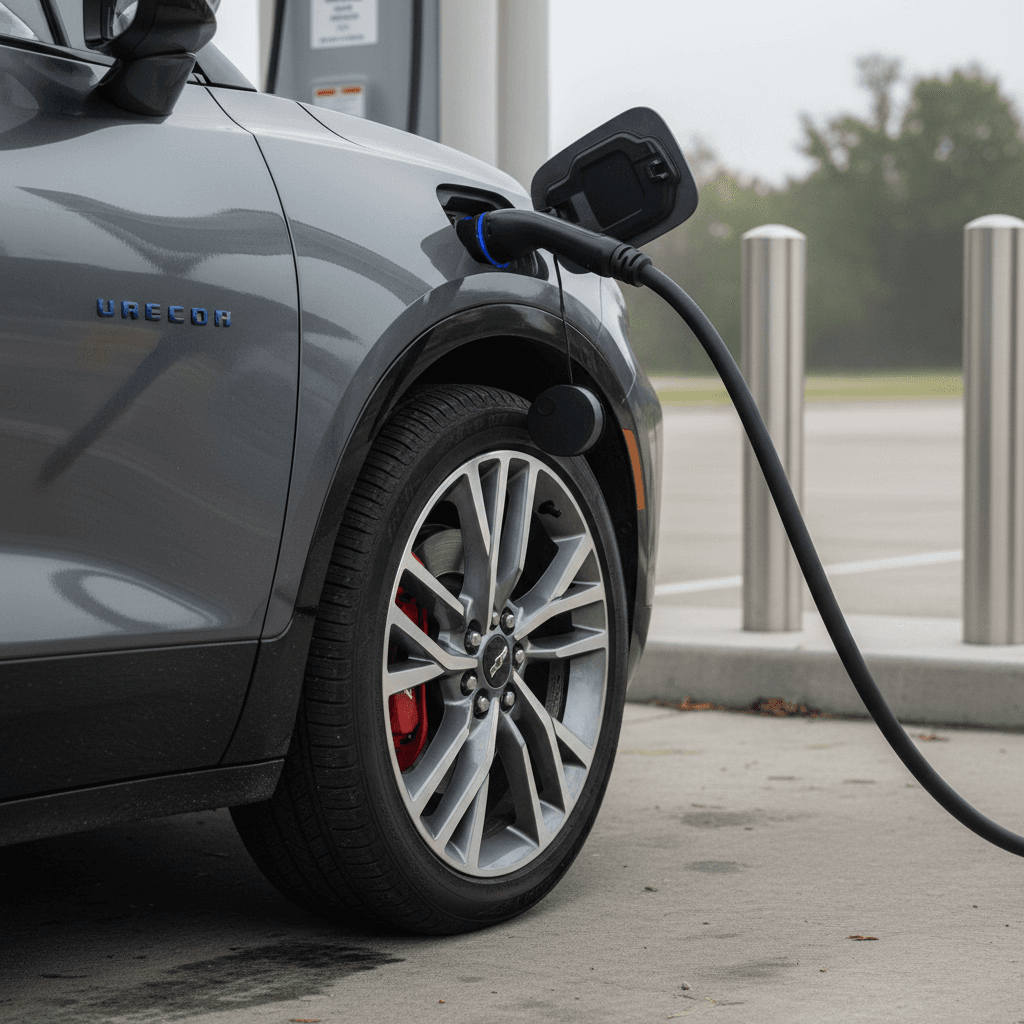
Other known Blazer EV service campaigns and software fixes
Ongoing software refinements
Even after the 2024 software campaign, Blazer EV owners have continued to see over‑the‑air (OTA) and dealer‑installed software updates. These address items like charging reliability, infotainment stability, and integration with Google apps and GM’s own connected‑services platform.
Not every update is labeled a recall. Some are customer satisfaction programs or standard software revisions that improve the experience over time.
Drive motor module customer program
For select 2025 Blazer EVs, GM has launched a customer satisfaction bulletin related to the drive motor power distribution control module. While not flagged as a safety recall, the fix is performed free of charge through 2027 and is worth confirming if your VIN qualifies.
As a shopper, you’ll mostly see this listed as a special coverage item on dealer printouts rather than a formal NHTSA recall.
Good news for owners
How to check your Blazer EV for open recalls
Regardless of what you’ve heard online, the only way to know whether your specific Blazer EV is affected is to run your VIN through the official databases. Here’s how to do that in a few minutes.
Step‑by‑step: See if your Blazer EV has open recalls
1. Locate your 17‑digit VIN
You’ll find it on the lower driver‑side windshield, on a label inside the driver’s door jamb, and on your registration or insurance card. Make sure you enter all 17 characters exactly, letters and numbers.
2. Search the NHTSA recall lookup tool
Go to NHTSA’s online recall lookup and enter your VIN. This will show any <strong>open safety recalls</strong> that legally must be completed. If nothing appears, you’re clear on current safety recalls, but not necessarily on service campaigns.
3. Check GM’s owner website or app
Create or log in to a GM / Chevrolet owner account and add your Blazer EV by VIN. The portal often shows additional <strong>service campaigns or customer satisfaction programs</strong> that don’t appear in NHTSA’s recall tool.
4. Call a Chevy dealer and ask for a VIN history check
Ask the service department to pull an "Investigate Vehicle History" (IVH) report. This shows completed and outstanding recalls, campaigns, and bulletins specific to your VIN, based on GM’s internal systems.
5. For used shoppers, get copies of repair orders
If you’re buying from a dealer, ask for printed repair orders showing that recall and software work was completed. For private‑party sales, request service records or allow your trusted shop to inspect the vehicle before you buy.
Save everything in your digital glovebox
How these recalls affect Blazer EV ownership and value
Recalls can feel scary, but with EVs, especially early‑generation Ultium products, they’re also part of the reality of buying cutting‑edge tech. What matters most isn’t whether a recall happened, but how well it was addressed and whether the vehicle in front of you has been brought up to current standards.
Blazer EV recalls: What they mean for you
Balancing risk, value, and long‑term ownership
1. Early software stigma
Those early software headlines dented the Blazer EV’s reputation. For you, that can mean more negotiating power on price, especially on 2024 builds, if you confirm the big updates were done.
2. Long‑term safety confidence
Parking‑brake and chassis‑harness recalls are serious, but once fixed properly, they can actually increase your confidence that the vehicle has been inspected and updated by the factory network.
3. Resale and depreciation
EVs already depreciate faster than many gas SUVs. A documented history of completed recalls, good battery health, and clean Carfax can help your Blazer EV stand out in the used market.
Where Recharged fits in
Buying a used Chevy Blazer EV? Checklist before you sign
If you’re eyeing a used Blazer EV, you’re shopping in a segment where headlines and reality don’t always match. This quick checklist will help you sort a trouble‑free SUV from one that still has unresolved issues.
Used Blazer EV pre‑purchase checklist
Confirm all recall work is complete
Use the VIN steps above, then ask for service records. Specifically, look for the <strong>parking‑brake wiring harness recall</strong>, any follow‑up chassis harness recall, and the major 2024 software update campaign.
Ask about software update history
Has the SUV received both dealer‑installed and over‑the‑air updates? On a test drive, cycle through Google Built‑In apps, navigation, and driver‑assist features. Laggy or crash‑prone screens can hint at outdated software or modules that need reprogramming.
Inspect for warning lights or messages
At startup and during your drive, watch for any <strong>brake, ABS, or parking‑brake</strong> warnings, as well as propulsion or charging alerts. Even if they disappear, have a dealer or trusted shop scan for stored fault codes.
Test DC fast‑charging if possible
If there’s a public fast‑charger nearby, plug in and verify that the Blazer EV initiates and maintains a session reliably. Early software builds were finicky with DC charging; updated vehicles should behave more predictably.
Evaluate battery health and range
Compare the indicated full‑charge range to what the trim should deliver when new, accounting for weather and driving style. On Recharged listings, the <strong>Recharged Score</strong> gives you an objective battery‑health snapshot.
Price in the context of history
A 2024 Blazer EV that’s been fully updated, has clean records, and shows good battery health can be a smart value, especially if the price reflects its recall history. Don’t overpay for a vehicle missing documentation or open work.
Chevy Blazer EV recalls: Frequently asked questions
Common questions about Chevy Blazer EV recalls
Bottom line: Should Blazer EV recalls scare you away?
The Chevy Blazer EV’s launch was messy, no way around it. Software bugs triggered a stop‑sale, and a large parking‑brake wiring recall highlighted the growing pains of building a brand‑new Ultium‑based SUV at scale. But the story isn’t just about problems; it’s about the fixes that followed and how carefully you shop today.
If you verify that all recalls and major software campaigns have been completed, and you pair that with a solid battery‑health check and road test, a Blazer EV can be a compelling used buy with plenty of range and tech for the money. Skipping those checks, on the other hand, is where shoppers get burned, stuck with outdated software, unresolved wiring issues, or a vehicle that spends too much time at the dealer.
If you’d rather not navigate that alone, Recharged can help. Every Blazer EV we sell comes with a Recharged Score Report, verified recall status, and guidance from EV specialists who live this stuff every day. Whether you buy through Recharged or elsewhere, use this Chevy Blazer EV recalls list as your roadmap, and don’t sign anything until the SUV in front of you matches the paper trail.